
🔍 Read the full analysis: Sunday Braise: Brasato Al Barolo For The First Cold Weekend on Mad Tasting

Get kitchen staples and gadgets delivered free — and shop member deals
- Fast, free delivery on millions of items
- Access to Prime Big Deal Days deals on October 6–7
- Prime Video, Amazon Music and more included
TL;DR
Brasato al Barolo is a Piedmontese dish of beef slowly braised with Barolo wine, vegetables and aromatics until tender. A collagen-rich cut, gentle heat and doneness checks by feel help produce tender slices and a rounded sauce; making it a day ahead can also make the sauce easier to defat.
Mad Tasting’s seasonal cooking guide presents brasato al Barolo, a Piedmontese beef braise cooked with wine, vegetables and aromatics, as a practical Sunday meal for colder weather. The guide says the dish needs several hours of gentle cooking, but most of that time is hands-off, and recommends judging the beef by tenderness rather than following the clock alone.
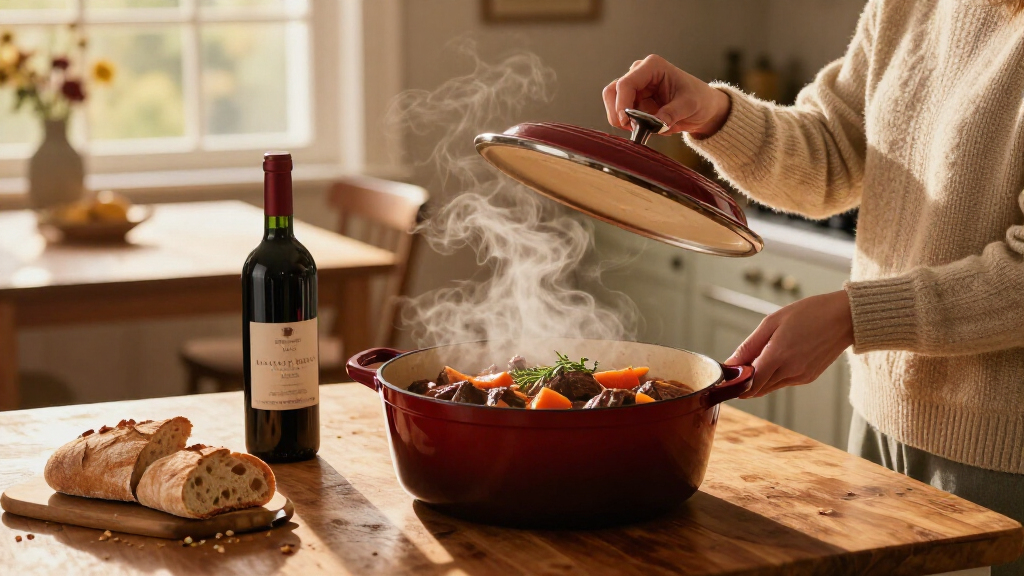
The dish is made with a larger piece of beef that is browned, then cooked slowly in a covered pot with Barolo or another dry, robust red wine. The source recommends collagen-rich cuts such as chuck, shoulder, brisket or beef cheek, which can soften during a long braise. Leaner beef may dry out before it becomes tender. The finished meat is sliced and served with sauce, distinguishing the dish from a stew made with small cubes.
The cooking sequence is straightforward: pat the beef dry and brown it on several sides in a heavy pot, soften the vegetables and aromatics, add measured wine and any other recipe liquids, then return the beef to the pot. It may be only partly covered by liquid. Cook it covered in a low oven or at a quiet stovetop simmer, turning it occasionally if needed. The source does not give ingredient quantities or a universal cooking time, since the pot and roast shape affect both.
Marinating the beef overnight in wine and aromatics is optional, according to the guide. Browning and slow cooking provide much of the dish’s flavor. For the wine, it recommends Barolo as the traditional choice, while allowing another dry red that is pleasant to drink. A sweet wine can leave the sauce cloying, and a strongly oaked wine may become prominent as the liquid cooks down.
Piedmont · Slow Sunday Cooking
Sunday Braise:
Brasato al Barolo
for the First Cold Weekend
A larger cut of beef, Barolo and aromatics become a deeply flavored meal with a long, mostly hands-off braise. Let tenderness guide the finish, and make it ahead if Sunday is busy.
Judge doneness by tenderness rather than the clock.Mad Tasting cooking guide
01 / Why it works
A braise built for Sunday
A few hours of gentle cooking turn a substantial roast into a relaxed centerpiece. Most of the time is hands-off once the pot is covered.
Collagen softens
Chuck, shoulder, brisket and beef cheek can become tender over a long braise. Leaner cuts may dry out before they soften.
One pot, steady heat
Brown the whole piece, soften vegetables and aromatics, add the liquids, then cook covered in a low oven or at a quiet simmer.
Slices with sauce
Brasato is served as sliced braised beef with sauce, rather than as a stew of small cubes.
02 / Choose your roast
Start with a braising cut
The guide favors cuts with collagen that can soften during extended cooking.
Good candidates
03 / The cooking sequence
Build flavor, then let time work
Use your recipe for quantities and cooking conditions. Roast shape and pot dimensions change how the braise behaves.
Dry and brown
Pat the beef dry. Brown it on several sides in a heavy pot.
Soften vegetables
Cook the vegetables and aromatics in the same pot to build the base.
Add wine and return beef
Add measured wine and recipe liquids. The meat may be only partly covered.
Cook until tender
Cover and cook gently, turning occasionally if needed. Check with a fork.
An overnight wine-and-aromatic marinade can add another layer of wine flavor. Browning and slow cooking build plenty of flavor too, so you can go straight to the pot.
04 / Wine and timing
Keep the wine dry; trust the texture
Barolo is traditional. A different dry, robust red can make a satisfying braise with a flavor of its own.
Use a red you enjoy drinking
Sweet wine can leave the sauce cloying. A strongly oaked wine may become prominent as the liquid reduces. Another dry red works when Barolo is not practical.
Look for easy entry
A fork should slip easily into the meat. Roast size, shape and pot dimensions affect the cooking time, so there is no universal clock setting.
05 / Make-ahead plan
Give Sunday a head start
Cooking ahead makes the sauce easier to defat and lets the flavors settle, according to the guide.
Braise the beef until tender, then chill it and the sauce according to a tested recipe and food-safety guidance.
Remove the solidified fat from the chilled sauce. Reheat the beef and sauce, then slice and serve.
Serve the sliced beef and reheated sauce with polenta or potatoes. If cooking the same day, allow enough time for the beef to become fork-tender.
06 / Key questions
Quick answers for the cook
Use a tested recipe for quantities, oven temperature and safe storage details.
Does the beef need to marinate overnight?
No. Marinating in wine and aromatics is optional. It adds another layer of wine flavor, while browning and slow cooking also build flavor.
Can another wine replace Barolo?
Yes. Choose a dry, robust red. The braise can still be satisfying, though its flavor will differ from the traditional version.
How can I tell when it is done?
Check tenderness: a fork should slip easily into the meat. Cooking time varies, so use texture rather than the clock alone.
Can I make it ahead?
Yes. The guide recommends cooking a day ahead when possible. Chilled sauce is easier to defat, and the flavors have time to settle.
07 / The idea in a line
From roast to Sunday table
Collagen-rich beef
Chuck, shoulder, brisket or cheek.
Wine + aromatics
Brown first, then add the braising liquid.
Gentle, covered heat
Let the beef soften; check by feel.
Slices + sauce
Add polenta or potatoes for the meal.
A Braise Built for Sunday
The recipe fits a cold-weather weekend because it turns a few hours of mostly unattended cooking into a substantial meal. Once the beef is browned and the pot is in the oven, the cook can prepare other parts of dinner or step away from the stove. That makes the dish a practical option for a slower Sunday meal, though it still requires planning for the long cook.
The make-ahead advice also changes the workload. The guide recommends cooking the brasato a day before serving when possible. Chilling the sauce makes it easier to remove solidified fat, and the source says the flavors have time to settle. Served with polenta or potatoes, the sliced beef and sauce can anchor dinner without last-minute cooking beyond reheating and preparing accompaniments.
heavy-duty Dutch oven for braising
As an affiliate, we earn on qualifying purchases.
As an affiliate, we earn on qualifying purchases.
Piedmont’s Wine-Braised Beef
Brasato al Barolo comes from Piedmont in northwest Italy, a region whose food and wine traditions include Barolo. The name describes the method and main liquid: “brasato” means braised, while “al Barolo” means with Barolo wine. The wine cooks with the beef and later forms the basis of the sauce.
Recipes differ on whether to marinate the beef before cooking. The source describes both an overnight wine-and-aromatic marinade and going directly to browning as valid approaches. It characterizes Barolo as traditional but says a different dry red can still make a satisfying braise, with a flavor that will not be identical to the classic version.
““Judge doneness by tenderness rather than the clock.””
— Mad Tasting cooking guide
collagen-rich beef cuts for slow cooking
As an affiliate, we earn on qualifying purchases.
As an affiliate, we earn on qualifying purchases.
Timing Depends on the Roast
The source does not set a single cooking time or provide exact ingredient amounts. Roast size, shape and pot dimensions affect how much liquid is needed and how long the beef takes to soften, so cooks should follow a tested recipe for proportions and check the meat for tenderness. The supplied material also gives no specific oven temperature or storage duration; those details should come from the recipe and applicable food-safety guidance.
As an affiliate, we earn on qualifying purchases.
Plan Ahead for Serving
For a Sunday meal, the guide suggests starting the braise on Saturday, chilling it after cooking, and removing the solidified fat from the sauce before reheating. Otherwise, cooks can begin the same day, allowing enough time for the beef to become fork-tender. Serve sliced beef with the reheated sauce and a side such as polenta or potatoes. The next step is to choose a suitable roast and use a tested recipe for quantities and cooking conditions.
meat thermometer for tender roasts
As an affiliate, we earn on qualifying purchases.
As an affiliate, we earn on qualifying purchases.
Key Questions
What cut of beef works well for brasato al Barolo?
The guide recommends chuck, shoulder, brisket or beef cheek, which contain collagen and can become tender during a long braise. Lean cuts are more likely to dry out.
Does the beef have to marinate overnight?
No. The source says marinating in wine and aromatics is optional. It can add another layer of wine flavor, while browning and slow cooking also build flavor.
Can another wine replace Barolo?
Yes. A dry, robust red wine is the suggested alternative if Barolo is not practical. The result can be satisfying, though its flavor will differ from the traditional version. Avoid sweet wine, which can make the sauce cloying.
How can I tell when the beef is done?
Check for tenderness: a fork should slip easily into the meat. Cooking time varies with the roast and pot, so the guide advises using texture rather than the clock alone.
Can brasato al Barolo be made ahead?
Yes. The guide recommends making it a day ahead when possible. Chilling the sauce makes it easier to remove solidified fat, and the source says the flavors have time to settle.
Source: Mad Tasting
Halloween Picks
halloween
As an affiliate, we earn on qualifying purchases.