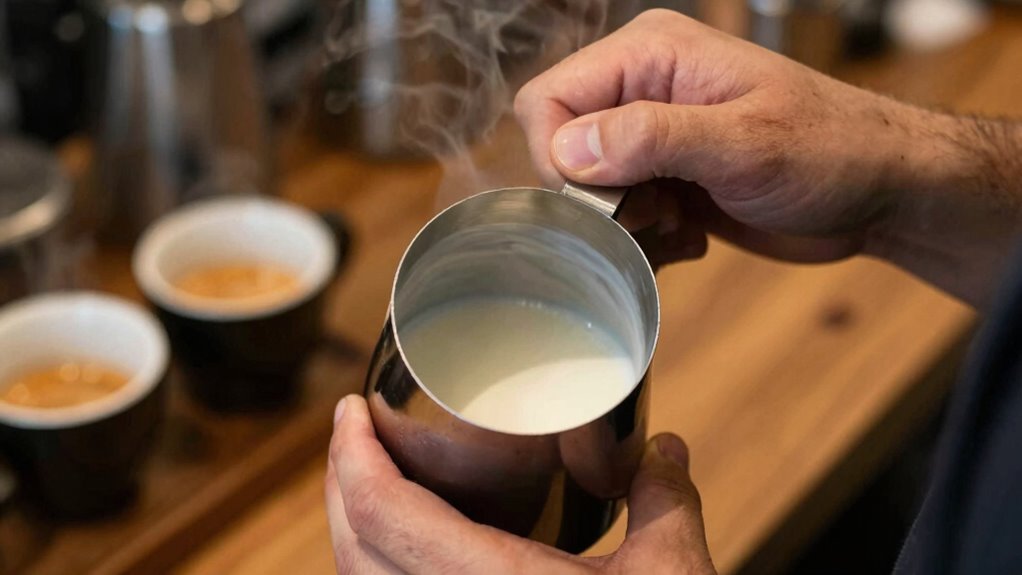

Frothing your milk feels easy on some days and impossible on others due to variations in milk freshness, composition, and temperature. Fresher milk, especially with higher fat content, froths more easily because of stable proteins and sugars. If the milk is cold, it may be harder to create good foam, while overly hot milk destroys proteins needed for stability. Paying attention to these factors and maintaining proper temperature can make a big difference—discover more tips below to perfect your froth every time.
Key Takeaways
- Milk freshness and quality significantly affect frothing ease and stability.
- Variations in milk temperature during steaming influence foam consistency.
- Different milk compositions and brands respond uniquely to frothing techniques.
- Improper steaming techniques or overheating can destroy proteins needed for stable foam.
- Texture variability is affected by how well temperature and initial milk conditions are managed.
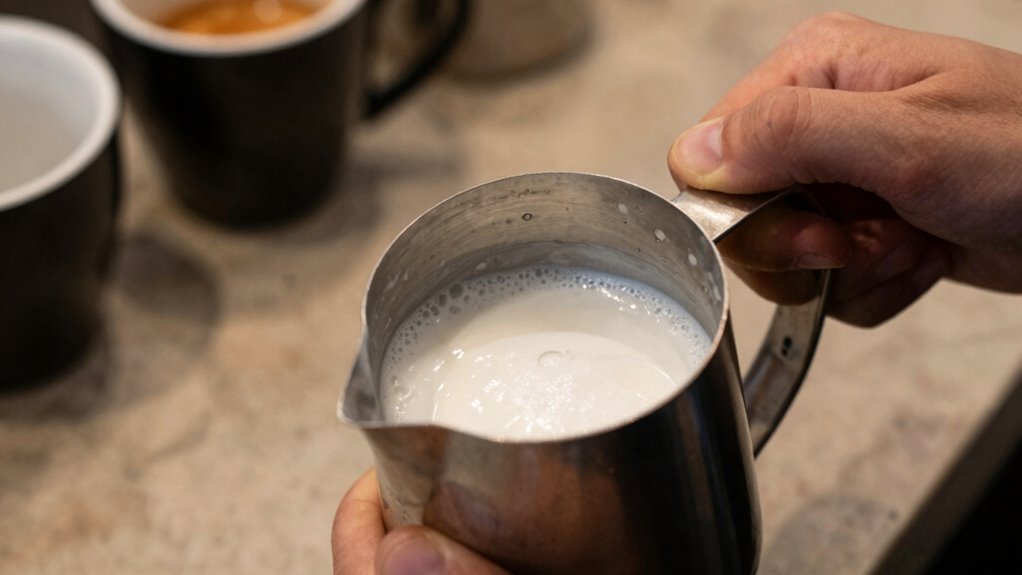
Have you ever noticed how some days your milk froths perfectly, creating those silky, velvety textures, while other times it refuses to cooperate? This inconsistency often puzzles even seasoned baristas. The key lies in understanding the subtle factors that influence milk frothing, especially texture variability and temperature control. When you’re struggling with frothing, it’s usually because these elements aren’t aligned.
Texture variability is the first thing to consider. Milk’s ability to produce a rich, stable foam depends on its composition and freshness. Whole milk tends to froth more easily because of its higher fat content, which helps create that creamy texture. Skim milk, on the other hand, can produce lighter foam but may be more finicky. Fresh milk contains more proteins and natural sugars that are essential for forming stable bubbles. When milk is near its expiration or has been stored improperly, these proteins can break down, leading to inconsistent frothing. Sometimes, even the type of milk brand can affect texture, as different brands have varying processing methods that influence how well they foam.
Fresh, high-quality milk with proper fat and protein levels is key for consistent, velvety froth.
Temperature control plays a crucial role in whether your milk froths smoothly or not. Milk temperature impacts the proteins and fats responsible for foam stability. If the milk is too cold, the proteins aren’t activated enough to form a stable foam, resulting in flat or uneven froth. Conversely, if it’s too hot—above 150°F or 65°C—you risk scorching the milk, which destroys those delicate proteins and ruins the texture altogether. The ideal temperature for frothing is around 140°F (60°C). Using a thermometer can help you hit that sweet spot consistently. Additionally, pre-warming your milk pitcher and steam wand can aid in achieving better results because it reduces the temperature shock that can cause uneven frothing. Proper temperature management is essential for consistent results. Being aware of how milk composition affects frothing can help you choose the best milk for your specific needs and improve your technique.
Another common cause of inconsistent frothing is not paying attention to the milk’s initial temperature or not adjusting your steaming technique accordingly. You might find that when you start with cold milk straight from the fridge, it takes longer to reach the right temperature and develop the proper foam. Properly monitoring milk temperature during steaming can significantly enhance your results. When you’re mindful of these factors—adjusting your steaming time, maintaining proper temperature, and choosing fresh, high-quality milk—you’ll notice a significant improvement in your frothing consistency. Also, understanding the role of milk composition can help you select the best milk for your frothing needs. Recognizing the importance of milk freshness can further improve your ability to produce a consistent foam, as fresher milk generally foams better than older varieties.
In the end, mastering milk frothing isn’t just about technique; it’s about understanding how texture variability and temperature control influence the process. With a little attention to these details, you’ll find that creating smooth, velvety foam becomes easier and more predictable, turning your coffee into a true barista-quality experience.

Nespresso Aeroccino 3 Milk Frother, Black, Steel
- High-Quality Milk Frother: Creates hot, cold, and foam milk
- Easy One-Touch Operation: Simple button press for different functions
- Fast Heating Performance: Heats milk to 160-170°F quickly
As an affiliate, we earn on qualifying purchases.
As an affiliate, we earn on qualifying purchases.
Frequently Asked Questions
Does the Type of Milk Affect Frothing Success?
Yes, the type of milk considerably affects your frothing success. Milk composition, like fat and protein levels, influences how well it froths, with whole milk typically producing creamier foam. Skim milk creates lighter froth, while plant-based milks vary widely. Use proper frothing techniques tailored to each milk type, such as adjusting steam pressure and positioning, to achieve consistent, velvety froth every time.
How Does Ambient Temperature Influence Milk Frothing?
Ambient temperature can considerably influence your milk frothing. When the environment is too warm or cold, it disrupts temperature consistency, making it harder to achieve the perfect froth. You might find your frothing technique needs adjustment; for instance, you may need to froth for longer or shorter periods. Maintaining a stable ambient temperature helps your milk reach the ideal temperature, ensuring smoother, creamier froth every time.
Can the Age of the Milk Impact Froth Quality?
You’ll notice that older milk often produces less froth quality because milk freshness declines, affecting its ability to foam well. For example, a barista might struggle to create a creamy microfoam with milk that’s a day past its prime. The age of milk impacts froth because fresh milk has ideal fat content and protein structure, which are essential for stable, velvety foam. Always use fresh milk for the best frothing results.
What Role Does Frothing Equipment Maintenance Play?
Frothing equipment maintenance is vital. You should regularly check equipment calibration to guarantee consistent froth quality, as miscalibrated devices can lead to poor results. Additionally, sticking to thorough cleaning routines prevents milk residue buildup, which can clog or impair the frother’s performance. When your equipment is well-maintained and calibrated, you’ll find milk frothing becomes more predictable and easier, boosting your coffee-making confidence.
Is There an Optimal Time of Day for Better Frothing Results?
You might find mornings are the secret weapon for perfect frothing—your milk’s at its freshest, and your frothing techniques feel effortless. The best time of day depends on milk temperature and your routine. When your milk is slightly warmer and you’re alert, frothing becomes a breeze. Avoid late nights or early mornings if fatigue hampers your frothing techniques. Timing truly makes all the difference!

TempPro TempSwift 1 Sec Digital Food Thermometer for Kitchen Cooking
- Fast and Accurate Readings: 1 second readout, ±0.9°F accuracy
- Long Probe for Safety: 5.3-inch stainless steel probe
- User-Friendly Design: Instant readings, auto shut-off, batteries included, Celsius/Fahrenheit toggle
As an affiliate, we earn on qualifying purchases.
As an affiliate, we earn on qualifying purchases.
Conclusion
So, next time milk frothing feels like an uphill battle, remember—sometimes, it’s less about your skills and more about the dance of temperature, steam, and patience. Like a fickle lover, milk responds unpredictably, reminding you that perfection isn’t always in your control. Embrace the quirks, stay curious, and trust that with a little practice, you’ll soon tame the froth and turn chaos into creamy art. After all, mastery is just a froth away.

Milk Frothing Pitcher, 8.5oz/12oz/20oz/32oz/50oz/66oz Milk Frother Cup Stainless Steel, Espresso Accessories, Milk Steaming Pitchers Coffee Cappuccino Latte Art Barista Milk Jug Cup with Art Pen,12oz
- Multi-functional Milk Frothing Pitcher: Froths, steams, measures, serves milk
- Includes Latte Art Pen: Create beautiful coffee patterns
- Premium Stainless Steel Construction: Rust-proof, stain-proof, heat-resistant
As an affiliate, we earn on qualifying purchases.
As an affiliate, we earn on qualifying purchases.

SIMPLETASTE Milk Frother, 4-in-1 Electric Automatic Milk Steamer, Blue
- Creamy Milk Froth: Quickly creates smooth, velvety foam
- 4-in-1 Functionality: Froths, warms, and makes cold foam
- Large Capacity: Froths up to 130 ml, heats 300 ml
As an affiliate, we earn on qualifying purchases.
As an affiliate, we earn on qualifying purchases.