
The perfect rice water ratio isn’t universal because it depends on the rice type, cooking method, and your preferred texture. For example, short-grain rice needs less water for a sticky finish, while long-grain rice requires more to stay fluffy. Cooking equipment and environmental factors like humidity or altitude also play a role. To get it just right, you’ll want to experiment and adjust based on these factors—there’s more to discover that can help perfect your rice every time.
Key Takeaways
- Different rice varieties have unique starch content and surface moisture, affecting water absorption and ideal ratios.
- Cooking methods like boiling, steaming, or pressure cooking influence water evaporation and absorption, changing water needs.
- Texture preferences (fluffy, sticky, soft) require adjusting water amounts accordingly.
- Environmental factors such as humidity and altitude impact rice water absorption, altering ideal ratios.
- Accurate measurement, technique, and small adjustments are essential, as no single ratio suits all rice types and conditions.

Daiso Japanese Rice Measuring Cup(180cc = 1 Gou Cup) Stainless Steel
Stainless Steel Rice Measurement Cup – perfect 180 mL size needed for all cookers.
As an affiliate, we earn on qualifying purchases.
As an affiliate, we earn on qualifying purchases.
Why Different Types of Rice Need Different Water Ratios

Different types of rice vary in their grain structure and starch content, which directly affects how much water you need to cook them properly. For example, short-grain varieties tend to be stickier because of their higher starch levels, requiring less water for a firm texture. Long-grain rice, with its lower starch, usually needs more water to achieve fluffy grains. Additionally, rice aging influences water absorption; aged rice often needs slightly less water because it has lost surface moisture, making it cook faster and with a firmer texture. Different grain varieties respond uniquely to water quantities, so understanding these differences helps you avoid undercooking or overcooking. Adjusting the water ratio based on rice type ensures consistently perfect results every time.

COMFEE' Rice Cooker, Japanese Large Rice Cooker with Fuzzy Logic Technology, 11 Presets, 10 Cup Uncooked/20 Cup Cooked, Auto Keep Warm, 24-Hr Delay Timer
Smart Rice Cooker – COMFEE' has devised a smart 6-step cooking process that enables the steam valve and…
As an affiliate, we earn on qualifying purchases.
As an affiliate, we earn on qualifying purchases.
How Cooking Methods Change the Rice Water Ratio You Should Use
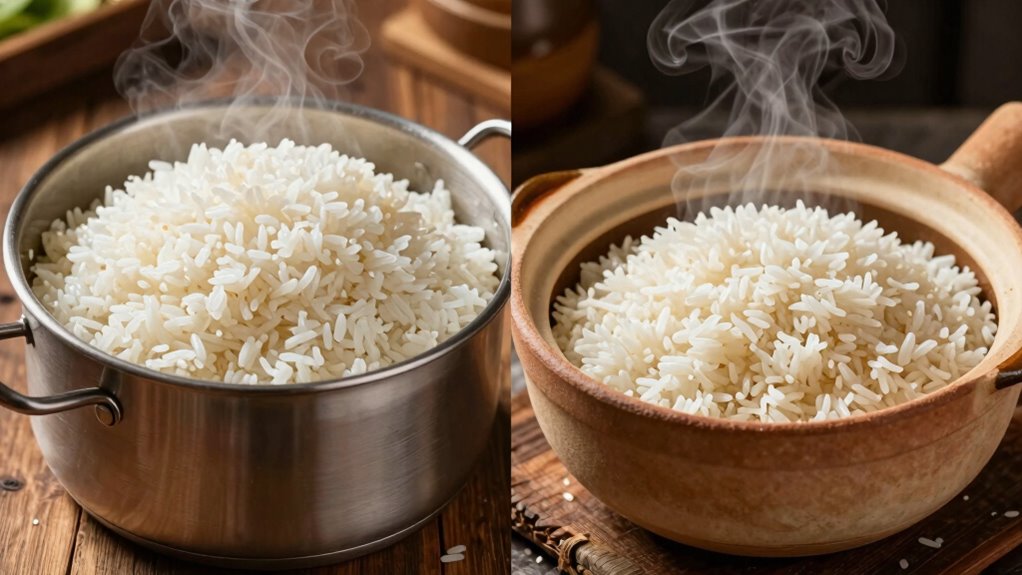
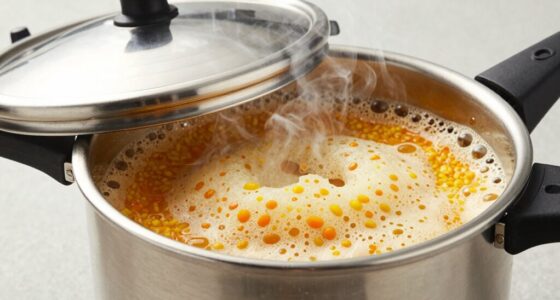
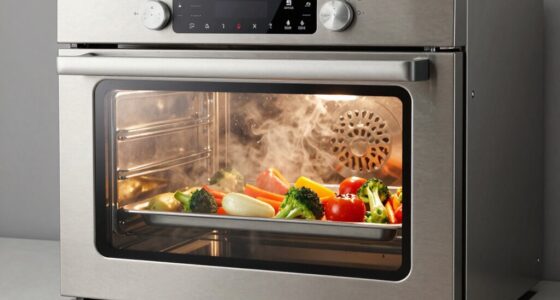
The way you cook rice considerably impacts the water ratio needed for perfect results. Different methods affect grain absorption and water evaporation, altering how much water you should use. For example: 1. Boiling rice in a large pot allows excess water to evaporate, so you might need more water initially. 2. Using a rice cooker traps moisture, requiring less water because of minimal evaporation. 3. Simmering rice in a small amount of water promotes maximum grain absorption, so you should start with a precise ratio. Each technique influences how much water is absorbed by the grains versus how much escapes as steam. Understanding the cooking method helps you adjust water ratios accurately for optimal texture and consistency. The water absorption rate varies depending on the method, which directly impacts the amount of water needed. Adjusting your water based on your chosen method guarantees the rice cooks evenly and achieves the desired texture without becoming mushy or undercooked. Additionally, cooking techniques can influence the final flavor and texture of the rice, making it important to tailor your water ratio accordingly. Recognizing the cooking environment, such as temperature and humidity, can also help refine your water adjustments for consistent results.

52USA Sushi Rice 2 Pound (32 Ounce), Premium Short Grain Rice, White Sticky Rice for Sushi and Japanese Food, Gluten-Free, Vegan
Premium Japonica Rice – Made from high-quality, short-grain Japonica rice, perfect for creating the ideal sticky texture required…
As an affiliate, we earn on qualifying purchases.
As an affiliate, we earn on qualifying purchases.
How Your Texture Preferences Influence the Water Amount

Your preferred rice texture directly influences the amount of water you should use. If you like rice that’s fluffy and separate, use less water. For sticky or creamy rice, add more water. Grain size also plays a role—shorter grains absorb water differently than long grains. Water temperature impacts absorption speed; hotter water cooks faster, affecting your texture outcome. Additionally, precise water-to-rice ratios are essential for consistent results across different cooking methods. Consider this table:
| Texture Preference | Water Amount & Tips |
|---|---|
| Fluffy, separate | Less water, rinse rice thoroughly. Adjust water based on how the rice absorbs and your altitude. Proper rinsing can remove surface starch that affects stickiness. Using proper rinsing techniques helps achieve the desired texture. |
| Sticky, creamy | More water, cook at a consistent temperature. Proper soaking can also influence stickiness. Using consistent cooking temperatures helps achieve the desired creaminess. |
| Chewy | Slightly more water, cook for longer. Monitoring simmering times ensures the desired chewiness. The grain’s water absorption rate affects cooking duration. |
| Soft, tender | Even more water, lower heat during simmering. Using water temperature control can help achieve uniform softness. Being mindful of free floating in your cooking environment can also help maintain consistent results and prevent uneven absorption. |
Adjust water based on your desired texture, grain size, and water temperature for perfect results.

GreenLife Rice Cooker with Removable PFAS-Free Ceramic Nonstick Pot, 3-Cups Uncooked/6-Cups Cooked, Grains & Oatmeal Multicooker, Compact One-Switch Design, Auto Keep Warm, Easy Clean, Gray
HEALTHY CERAMIC NONSTICK INTERIOR: GreenLife’s healthy and easy-to-clean ceramic nonstick is PFAS-free, derived from sand and delivers effortless…
As an affiliate, we earn on qualifying purchases.
As an affiliate, we earn on qualifying purchases.
When and How to Adjust Water Ratios Based on Your Equipment and Environment
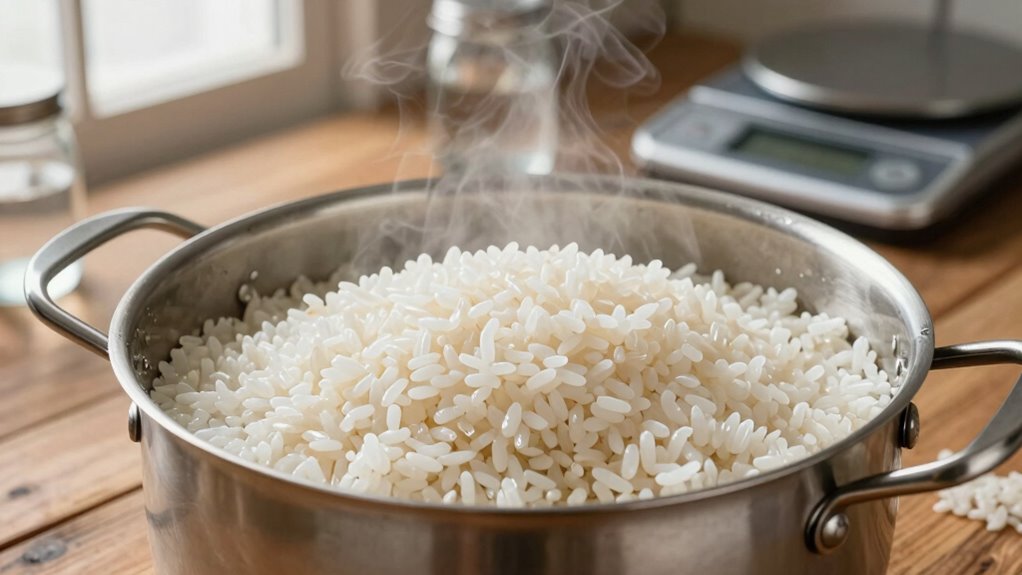
Adjusting water ratios isn’t just about your recipe; it also depends on your cooking setup and environment. For example, if your rice storage is humid, you might need slightly less water, as moisture is already present. If you’re using a rice cooker, the heat distribution differs from stovetop methods, affecting how much water your rice absorbs. Consider these factors: proper water ratio—understanding this concept can help you adapt more effectively to different conditions. Additionally, if you add rice seasoning or other ingredients, you might need to tweak water levels further. Recognizing these factors helps you refine your water ratio for perfect rice every time, regardless of your equipment or environment. Keep in mind that cooking environment—such as humidity and altitude—can also impact water absorption and cooking time, so adjustments may be necessary. Being aware of micromobility concepts like route choices and weather conditions can serve as an analogy for how environmental factors influence cooking outcomes, emphasizing the importance of adjustments. Furthermore, understanding ambient conditions such as room temperature and airflow can also influence how rice cooks and absorbs water, making these considerations essential for consistent results. Additionally, paying attention to storage conditions can help determine the initial moisture content, aiding in better water ratio adjustments.
Common Mistakes That Lead to Over- or Under-Watered Rice

One common mistake is misjudging the amount of water needed, which can result in rice that’s too watery or too dry. Rushing the cooking process can also cause uneven texture and don’t give the rice enough time to absorb the water properly. Paying close attention to water levels and cooking times helps you avoid these pitfalls.
Misjudging Water Volume
Misjudging the amount of water needed is a common mistake that can ruin perfectly good rice. If you don’t measure water accurately, your rice can turn out mushy, dry, or uneven. To avoid this, focus on water measurement based on rice volume. Imagine these scenarios:
- Pouring too much water, making rice soggy and sticky.
- Using too little, resulting in undercooked, hard grains.
- Guessing without measuring, creating unpredictable results.
Getting the right water-to-rice ratio depends on understanding your rice volume and adjusting accordingly. Overestimating can lead to excessive moisture, while underestimating leaves the rice undercooked. Precise water measurement is key to consistently perfect rice texture every time. Additionally, different types of rice may require adjusted water ratios to achieve the ideal consistency.
Rushing the Cooking Process
Rushing through the cooking process is a common mistake that can easily throw off your rice’s texture. If you skip steps like proper rice rinsing techniques, you risk ending up with sticky or undercooked grains. Quick rice prep might seem convenient, but rushing can cause uneven cooking and excess water absorption. Take the time to rinse your rice thoroughly to remove surface starches, which helps prevent clumping and ensures a fluffier texture. Once the water starts boiling, resist the urge to lift the lid or stir frequently, as this interrupts the cooking process and affects water absorption. Patience is key—allow the rice to cook undisturbed until it’s fully done. Proper timing and technique make all the difference in achieving perfect rice.
Tips to Experiment and Find Your Perfect Rice Water Ratio
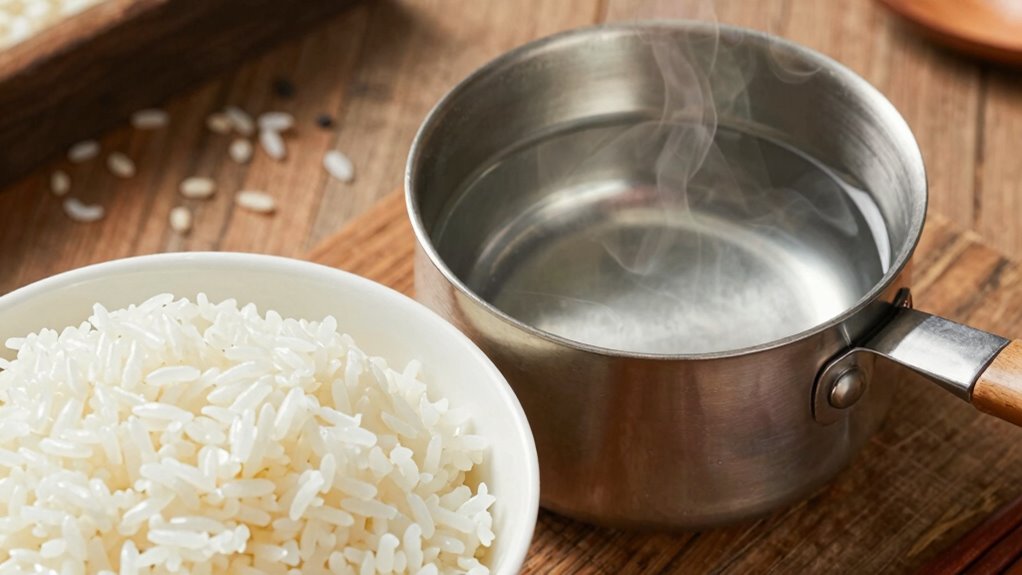
To find your ideal rice water ratio, start by adjusting based on the rice type you’re using. Measure carefully and make small tweaks, noting how different cooking methods affect the outcome. With some experimentation, you’ll discover the perfect balance for consistently fluffy rice. Incorporating proper water purification techniques can also ensure your cooking water is clean and safe, enhancing overall food quality. Additionally, understanding biography details of influential figures can inspire more mindful cooking practices and attention to detail in your culinary experiments. Paying attention to nutritional information can help you tailor your rice cooking process to meet dietary needs and preferences. Exploring traditional cooking methods can also offer insights into rice preparation that may influence your water ratio choices. Being aware of local training resources can provide access to expert advice and hands-on guidance to refine your technique.
Adjust Based on Rice Type
Different types of rice absorb water differently, so it’s important to adjust your water ratio accordingly. For example, short-grain rice tends to need less water, while long-grain varieties require more for fluffiness. Consider these factors:
- Grain varieties: Sticky sushi rice needs a different ratio than fluffy basmati, so experiment based on the specific rice.
- Flavor profiles: Aromatic jasmine rice may absorb water differently than plain white rice, affecting how much water you add.
- Cooking method: Stove-top, rice cooker, or instant pot all influence water absorption and may require adjustments.
- Water absorption rates can also vary depending on the water-to-rice ratio, so adjusting the amount of water based on your preferred texture is key.
Measure Carefully, Tweak Gradually
Since finding the perfect rice water ratio often involves some trial and error, it’s important to measure carefully and make small adjustments over time. Pay close attention to how your rice absorbs water—if it’s too dry or sticky, tweak the amount slightly. Keep track of your measurements so you can identify patterns and improve accuracy. Remember, water evaporation during cooking can affect the final texture, so it’s best to start with a slightly conservative amount and adjust gradually. Small changes, like adding a tablespoon more or less, can make a big difference in achieving the ideal consistency. Understanding absorption can help you better anticipate how different rice varieties will respond to water adjustments. Being aware of variety differences in rice can guide you in customizing your water ratios for different types. Additionally, cooking methods such as steaming or boiling can influence how water interacts with the rice, so adjusting your approach based on these techniques can improve results. Patience is key; with each batch, you’ll learn how your rice interacts with water and fine-tune your ratio for perfect results.
Note Cooking Methods Effects
Cooking methods substantially influence how much water your rice needs. Different techniques alter absorption and flavor infusion, affecting the perfect water ratio. For example, with a stovetop, you might need less water because evaporation is controlled. Using a rice cooker often requires a consistent ratio since it’s designed for ease. When employing a pressure cooker, you can use less water because steam builds quickly. Each method impacts moisture retention and flavor infusion, so experiment to find what works best. Try adjusting water levels based on your cooking technique:
- Stovetop: slightly less water for fluffier rice
- Rice cooker: standard ratio, but tweak for texture
- Pressure cooker: less water, faster cooking, intense flavor infusion
When to Use Standard Ratios or Make Custom Adjustments for Consistent Results
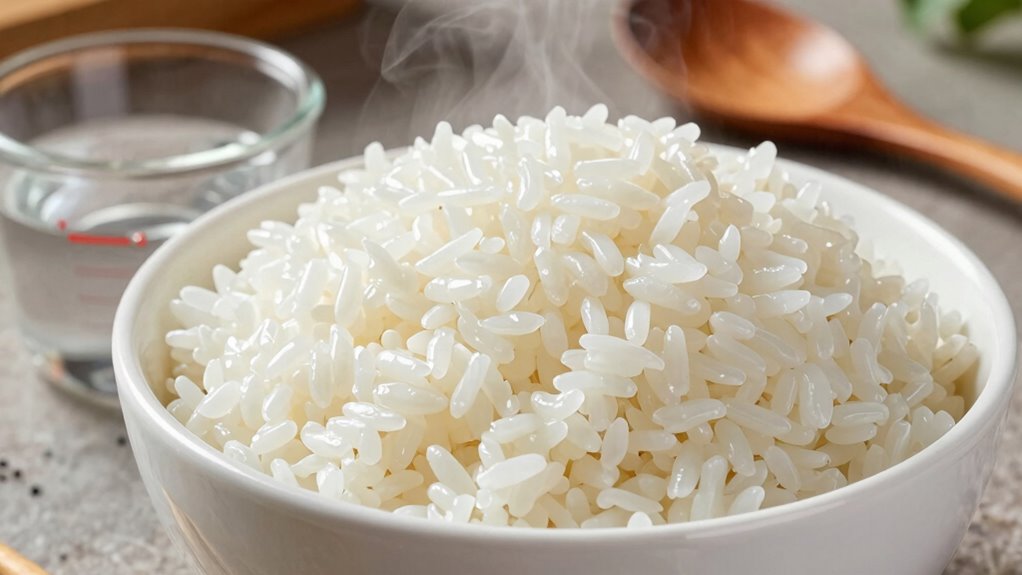
While standard rice water ratios work well for most types of rice, you should consider making adjustments when your results aren’t consistent or if you’re using different grain varieties. Variations in grain size, texture, and moisture content can affect how much water you need. If your rice turns out too firm or mushy, tweak the ratio accordingly. Additionally, seasoning influences like salt, broth, or spices can impact water absorption, so you might need to modify the amount of water to achieve the desired consistency. When cooking unfamiliar grain varieties or experimenting with flavors, don’t hesitate to adapt the ratio. Making small changes based on your specific rice and seasoning preferences ensures consistent, perfect results every time.
Frequently Asked Questions
Can Altitude Affect the Ideal Rice Water Ratio?
Yes, altitude effects can influence the ideal rice water ratio. At higher altitudes, the air is drier, which can cause rice to absorb water differently. You might find you need slightly more water to achieve the perfect texture, as rice tends to cook faster and absorb less moisture. Adjusting the rice water ratio based on altitude effects guarantees your rice cooks evenly and retains the right consistency.
Does Rice Brand Influence Water Measurement Needs?
Yes, rice brand can influence your water measurement needs. Different brands may have varying grain sizes and absorbency levels, so you need to modify your measurements for accurate results. Pay attention to measurement precision—using a consistent method helps ensure your rice cooks perfectly every time. Experiment a little with each brand to find the ideal water ratio, and you’ll achieve consistently fluffy, well-cooked rice.
How Does Adding Ingredients Like Salt or Oil Impact Water Ratios?
Adding ingredients like salt or oil affects your rice water ratios by requiring seasoning adjustments to maintain flavor and texture. Salt can slightly increase water absorption, so you might need a bit more water. Oil impacts cooking by making grains less sticky but doesn’t considerably change water needs. Keep in mind the oil effects and seasoning adjustments, and tweak your water ratio accordingly to achieve perfectly cooked rice every time.
Is Microwave Cooking of Rice Affected by Water Ratios?
Microwave cooking of rice is definitely affected by water ratios because microwave adjustments are essential for proper water absorption. If you use too much water, the rice becomes mushy; too little, and it’s undercooked. To get it right, you need to find the right balance for your microwave’s power and the rice type. Experimenting with small batches helps you perfect your water ratio for consistently fluffy rice.
Can Storage Conditions of Rice Change Its Water Absorption?
Think of rice storage like a secret recipe—your grain quality and moisture content can subtly change if conditions aren’t just right. Store rice in a cool, dry place, and it stays firm and easy to cook. If stored improperly, it might absorb excess moisture or lose its natural quality, making it tricky to find the perfect water ratio later. Proper storage keeps your rice ready for that ideal, fluffy cook every time.
Conclusion
Remember, finding the perfect rice water ratio is like tuning a musical instrument—you need to listen and adjust until it sings just right. Don’t be afraid to experiment and trust your senses, because every type of rice and kitchen environment is a new landscape to explore. With patience and a little practice, you’ll master the art of fluffy, tender rice that’s tailored perfectly to your taste. Happy cooking!