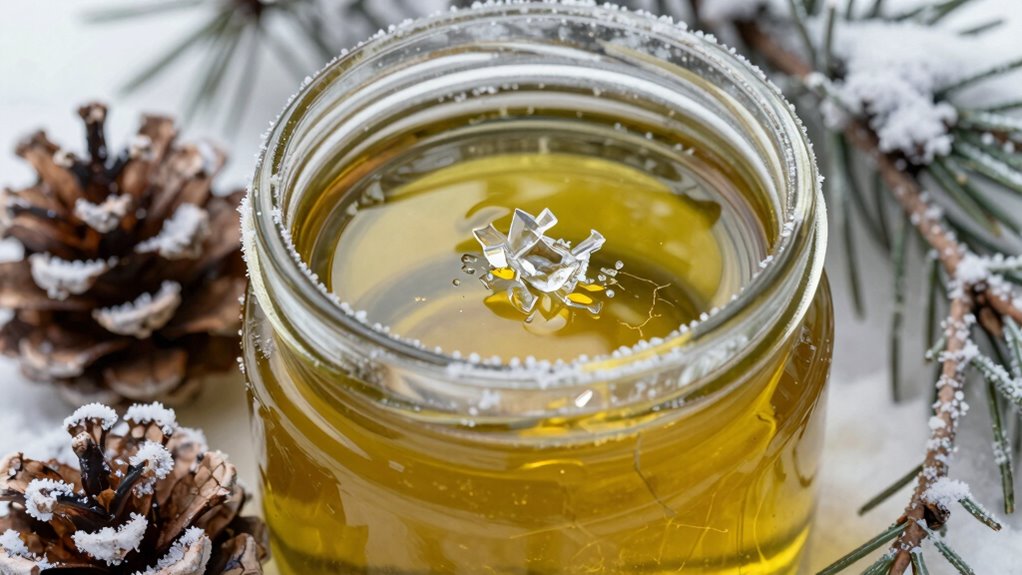

In winter, some oils solidify because their chemical makeup and molecular structure cause them to become less fluid at lower temperatures. Oils high in saturated fats, like coconut oil, tend to solidify first as molecules pack tightly together when cooled. Unsaturated fats, with double bonds, stay liquid longer. If you want to understand how different oils react in cold weather and how to manage them, keep exploring.

Get kitchen staples and gadgets delivered free — and shop member deals
- Fast, free delivery on millions of items
- Access to Prime Big Deal Days deals on October 6–7
- Prime Video, Amazon Music and more included
Key Takeaways
- Oils with high saturated fat content solidify at higher temperatures, causing them to solidify in winter.
- Lower temperatures reduce molecular energy, prompting crystalline structures to form in certain oils.
- Unsaturated fats remain liquid at colder temperatures, while saturated fats tend to solidify.
- Refining processes can alter an oil’s melting point, influencing its solidification in cold weather.
- Seasonal temperature drops cause oils to lose fluidity, especially those with higher melting points.
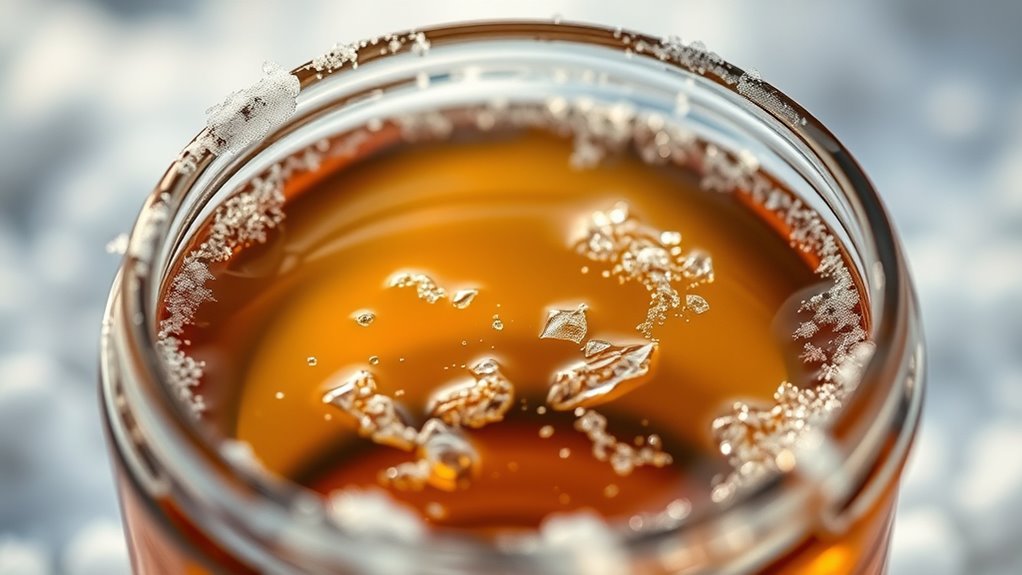
During winter, many oils naturally solidify as temperatures drop, which can affect their usability and performance. This phenomenon primarily results from temperature effects on the oil’s chemical composition. When the temperature decreases, the molecules within the oil lose energy and slow down, causing the oil to change from a liquid to a solid or semi-solid state. This process is a typical physical change but can significantly impact the oil’s usability. The specific temperature at which this occurs depends largely on the chemical makeup of the oil. Oils with higher saturated fat content tend to solidify at higher temperatures because their molecules pack more tightly together, forming a firm structure more easily. On the other hand, oils rich in unsaturated fats, which contain double bonds in their chemical chains, remain liquid over a broader temperature range due to their more flexible molecular structure.
Oils with higher saturated fats solidify at higher temperatures, while unsaturated fats stay liquid over broader temperature ranges.
Understanding the chemical composition helps explain why some oils are more prone to solidification than others. For example, coconut oil, which is high in saturated fats, solidifies at just around 76°F (24°C). Conversely, oils like olive or canola, which contain higher levels of monounsaturated and polyunsaturated fats, stay liquid at lower temperatures. When temperatures fall below these oils’ melting points, their molecules arrange themselves into crystalline structures, leading to solidification. This process is purely physical but can considerably impact the oil’s usability. For instance, cooking oils that have solidified may become difficult to pour or measure accurately and may need to be gently warmed to restore their liquid state. Recognizing the chemical composition of your oils can help you better predict their behavior in cold weather. Additionally, understanding temperature effects can guide proper storage practices to prevent unwanted solidification. It is also helpful to be aware of how refining processes can influence an oil’s melting point and stability in cold conditions. Some oils also undergo seasonal variations in their physical properties, which can affect how they behave during winter months.
Temperature effects on oils are also influenced by how they’re processed and refined. Refined oils usually have fewer impurities and may have different melting points compared to unrefined versions, which retain more of their natural chemical compounds. These differences can alter how quickly an oil solidifies in cold weather. It’s also worth noting that some oils, like essential oils or certain specialty cooking oils, are particularly sensitive to temperature changes because their chemical structures are more delicate. Additionally, color stability in oils can be affected by temperature fluctuations, impacting the visual quality of the oil.
In practical terms, understanding these factors helps you manage oils better during winter. If you know your oil’s chemical composition, you can store it in a warm place or gently warm it before use, preventing solidification from disrupting your cooking or other applications. Recognizing the temperature effects on different oils allows you to choose the right type for winter use, ensuring your recipes and routines aren’t hindered by unexpected solidification.
coconut oil solidifies in winter
As an affiliate, we earn on qualifying purchases.
As an affiliate, we earn on qualifying purchases.
Frequently Asked Questions
Do All Oils Solidify at the Same Temperature?
Not all oils solidify at the same temperature because their oil composition varies. The freezing point depends on the types of fatty acids present; saturated fats tend to solidify at higher temperatures, while unsaturated fats stay liquid longer. When temperatures drop, oils with higher saturated fat content are more likely to solidify. So, your choice of oil influences whether it remains liquid or becomes solid in cold weather.
Can Solidified Oil Be Safely Used After Warming?
Imagine pouring warm sunlight over solidified oil, and it instantly liquefies—yes, you can safely reuse it after warming. Just guarantee you heat it gently, avoiding overheating to maintain heating safety. Warming restores oil’s usability, allowing you to reuse it without compromising quality or safety. Always check for signs of spoilage, and don’t reuse oil that smells off or shows changes in color. Proper warming preserves oil reusability and keeps your cooking safe.
How Can I Prevent Oils From Solidifying in Winter?
To prevent oils from solidifying in winter, you should focus on proper oil storage and temperature management. Store your oils in a cool, but not cold, place away from direct sunlight and drafts. Keep the storage area at a consistent temperature, ideally above the oil’s solidification point. Using insulated containers or a warm room can also help maintain the oil’s liquid state, ensuring you can use it without issues.
Does Solidification Affect an Oil’s Nutritional Value?
Solidification doesn’t affect an oil’s nutritional integrity or health impact. When oils turn solid in winter, it’s just a physical change, not a sign of spoilage or nutrient loss. The vitamins, antioxidants, and healthy fats remain intact. You can safely use solidified oil once it warms up. So, don’t worry—its nutritional value stays the same, and it continues to support your health as intended.
Are There Oils That Don’T Solidify Even in Cold Temperatures?
In winter storage, you’ll find some oils refuse to solidify, almost like they have icy armor. Oils with high monounsaturated fats, like olive or avocado oil, resist solidifying because of their unique oil composition. These oils stay liquid even in freezing temperatures, making them perfect for cold weather cooking. So yes, certain oils won’t turn solid, and their composition keeps them flowing smoothly no matter how cold it gets.
liquid cooking oils for cold weather
As an affiliate, we earn on qualifying purchases.
As an affiliate, we earn on qualifying purchases.
Conclusion
Understanding why oils solidify in winter helps you appreciate their behavior in colder months. Did you know that most cooking oils begin to solidify below 50°F (10°C)? This natural change isn’t a flaw but a sign of their chemical composition. So, next time your oil thickens in the fridge or on a chilly day, remember it’s just reacting to the cold—an elegant reminder of nature’s influence on everyday essentials.
refined vs unrefined cooking oils
As an affiliate, we earn on qualifying purchases.
As an affiliate, we earn on qualifying purchases.
As an affiliate, we earn on qualifying purchases.
Fall Picks
fall essentials
As an affiliate, we earn on qualifying purchases.