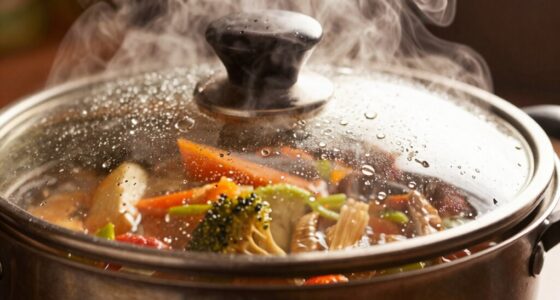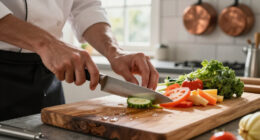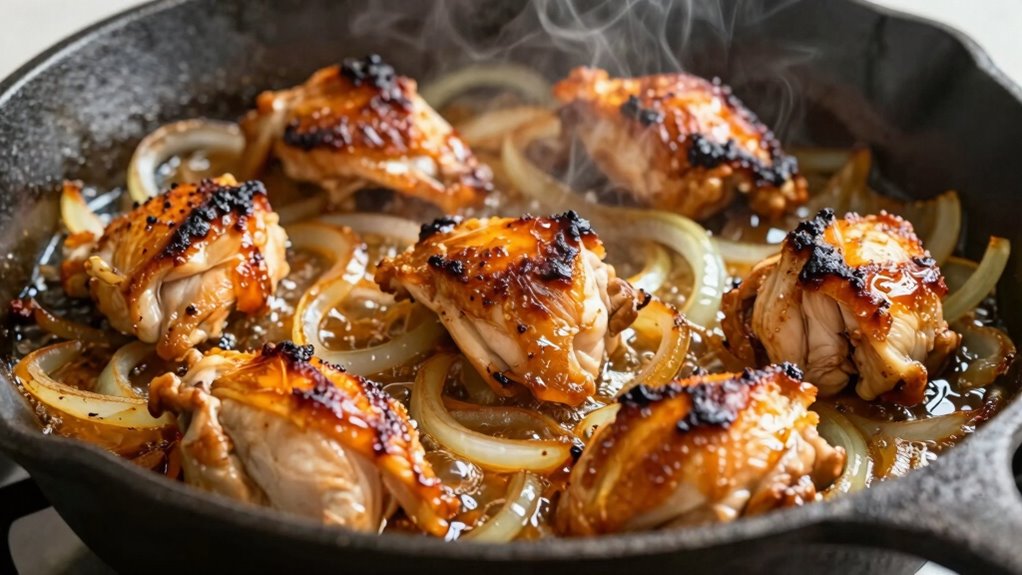

Food browns because of a chemical process called the Maillard reaction, which happens when heat causes amino acids and sugars to bond. This reaction transforms raw ingredients into more flavorful, appealing dishes by creating new molecules that develop rich flavors and a desirable color. It’s not just cooking; it’s a chemical change that makes food tastier and more enticing. To discover how to master this process and improve your cooking, keep exploring further.

Get kitchen staples and gadgets delivered free — and shop member deals
- Fast, free delivery on millions of items
- Access to Prime Big Deal Days deals on October 6–7
- Prime Video, Amazon Music and more included
Key Takeaways
- Food browns due to the Maillard Reaction, a chemical process involving amino acids and sugars reacting under heat.
- Browning occurs at temperatures above 300°F (150°C), transforming raw ingredients into flavorful, appealing foods.
- The Maillard Reaction creates complex molecules that develop rich flavors and appealing color in cooked foods.
- Proper control of heat and cooking time enhances browning while preventing burning or over-charring.
- Browning signifies chemical changes that improve taste, aroma, and visual appeal beyond simple cooking.
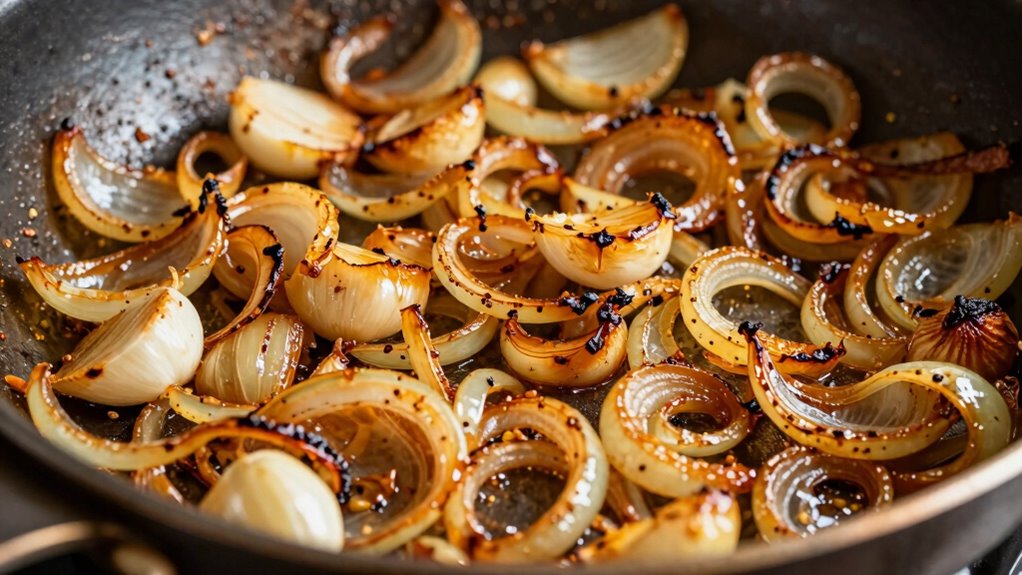
Have you ever wondered why your food turns brown when cooked? It’s not just about heat transforming ingredients; there’s a fascinating chemical process behind that rich, appealing color. When you cook food, a key process called the Maillard reaction kicks in, leading to flavor development and that characteristic browning. This reaction happens when amino acids and sugars in your food react under heat, creating complex molecules that give browned foods their distinctive taste and aroma. It’s what makes roasted coffee smell so inviting, toasted bread so satisfying, and seared steak so flavorful.
The Maillard reaction transforms amino acids and sugars into rich flavors and appealing browning when cooked.
The Maillard reaction is a form of non-enzymatic browning, meaning it occurs without enzymes but requires a specific combination of heat, moisture, and the right chemical ingredients. As you cook, the heat accelerates these chemical reactions, transforming raw ingredients into something that looks and tastes more appealing. It’s a chemical process that significantly enhances flavor development. The molecules formed during the Maillard reaction produce a variety of rich, savory notes, adding depth and complexity to your dishes. That’s why a well-browned piece of meat or crusty bread tastes so much better than its pale counterpart.
You can think of the Maillard reaction as the culinary magic that turns simple ingredients into something extraordinary. When cooking proteins with sugars at temperatures above 300°F (150°C), these molecules begin to bond, creating new compounds that weren’t there before. This not only results in the appealing browning but also develops a savory, umami flavor that you wouldn’t get with boiling or steaming. This chemical transformation is what makes frying, roasting, and grilling produce such intensely flavorful foods compared to boiling or steaming. Additionally, understanding the chemical processes behind browning can help you optimize cooking techniques for better flavor and appearance.
Understanding this process helps you control the outcome of your cooking. For instance, if you want a deeper flavor, you’ll aim for higher temperatures and proper timing to maximize the Maillard reaction without burning the food. Proper temperature control is essential for balancing flavor and preventing over-browning or charring. On the other hand, if you need to keep food lighter and less browned, you might cook at lower temperatures or use methods that limit browning. But overall, it’s the Maillard reaction that makes your food look appetizing and taste complex, turning simple ingredients into culinary delights. Recognizing the importance of chemical reactions like browning can help you become a more skilled and mindful cook.
Maillard reaction cooking thermometer
As an affiliate, we earn on qualifying purchases.
As an affiliate, we earn on qualifying purchases.
Frequently Asked Questions
Why Does Food Sometimes Burn Instead of Brown?
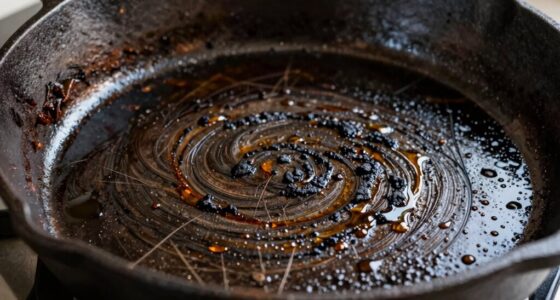
Food burns instead of browning because the heat is too high, causing the surface to char before proper flavor development. When you cook, chemical reactions like Maillard reactions and caramelization create that appealing brown color and rich flavor. But if the temperature’s excessive, these reactions happen too quickly, leading to burning. To achieve even browning and flavor, you need to control the heat and monitor cooking time carefully.
How Does Sugar Affect Browning?
Did you know that sugar dramatically influences browning? When you add sugar, caramelization chemistry kicks in—sugar molecules break down and form complex flavors and colors. Too much sugar can lead to sugar crystallization, causing uneven browning or even burning. This process enhances the flavor and color of baked goods, but if uncontrolled, it can ruin your dish. So, managing sugar helps you achieve perfect, evenly browned, delicious results every time.
Can Browning Occur at Low Temperatures?
Browning can occur at low temperatures through chemical reactions like the Maillard reaction, but it’s usually slower and less intense. Heat transfer is essential; even gentle warmth can trigger these reactions over time. If your food browns at low temps, it’s likely because the chemical reactions are happening gradually, especially with the presence of sugars and amino acids. Patience and consistent heat guarantee proper browning without high temperatures.
What Role Does Moisture Play in Browning?
Moisture is like a gatekeeper to flavor; it influences the Maillard reaction and caramelization process, which are responsible for browning. When moisture is high, it creates a barrier that slows these reactions, preventing browning. As moisture evaporates, the temperature rises, allowing the Maillard reaction and caramelization to proceed, turning food golden and flavorful. So, controlling moisture levels is key to achieving perfect browning.
Why Do Different Foods Brown Differently?
Different foods brown differently because of their unique composition, moisture levels, and natural sugars. As heat applies, flavor development accelerates, creating complex tastes, while texture changes enhance the overall experience. For instance, proteins and sugars react uniquely, leading to varied browning patterns. You’ll notice that some foods develop a deep, caramelized crust, while others remain lighter. Understanding these differences helps you control browning for perfect flavor and texture in your dishes.
As an affiliate, we earn on qualifying purchases.
Conclusion
So, next time your food turns golden-brown, remember it’s not just about heat—it’s a chemical reaction called the Maillard reaction, transforming flavors and colors like a magician’s trick. Think of it as nature’s way of adding a beautiful, tasty finish to your dishes. Embrace the browning process, because it’s the secret sauce behind all those mouthwatering, perfectly cooked meals you love to make. It’s like turning plain clay into a work of art.
As an affiliate, we earn on qualifying purchases.
As an affiliate, we earn on qualifying purchases.
Fall Picks
fall essentials
As an affiliate, we earn on qualifying purchases.