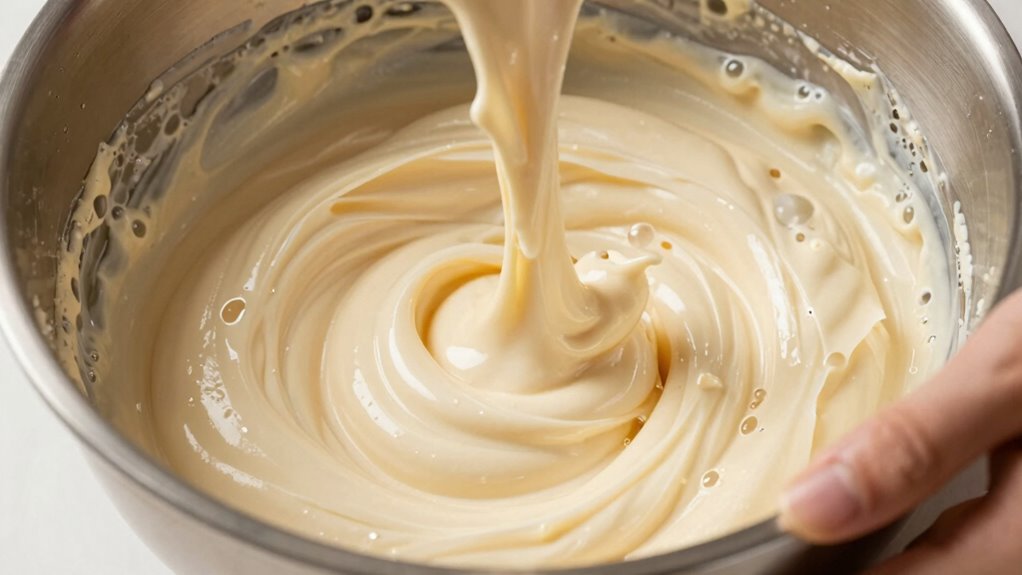
The key mixing step that determines your cake’s texture is stopping at just the right moment when the batter is smooth, slightly thick, and homogeneous. You want to mix until ingredients are combined without overdoing it, which can develop excess gluten and make your cake tough. Gently fold or mix on low speed until you see a silky, uniform batter—just enough to avoid streaks or dry spots. Keep going, and you’ll discover more tips to perfect your cake.

Get kitchen staples and gadgets delivered free — and shop member deals
- Fast, free delivery on millions of items
- Access to Prime Big Deal Days deals on October 6–7
- Prime Video, Amazon Music and more included
Key Takeaways
- The critical mixing step is when ingredients are just combined, avoiding overmixing or undermixing.
- Properly stopping mixing ensures gluten development is controlled, resulting in a tender cake crumb.
- Gradually incorporating ingredients with gentle, steady motions helps achieve the right batter consistency.
- Scraping down the bowl regularly prevents dry pockets and promotes even mixing.
- Recognizing the batter’s smooth, slightly thick, homogeneous state indicates the ideal moment to stop mixing.
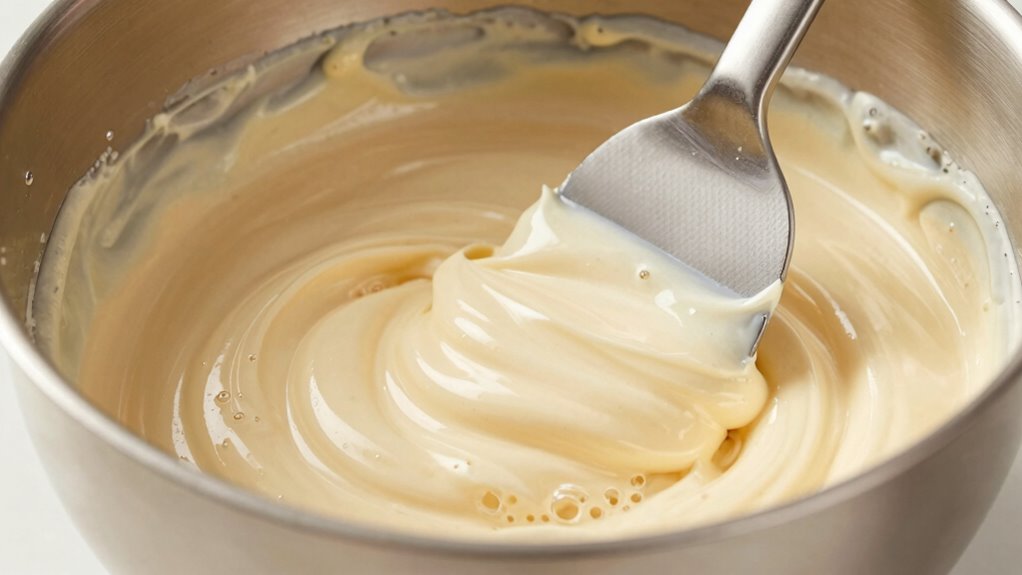
The key to achieving your ideal cake texture often hinges on one essential step: mixing. This process influences whether your cake turns out tender and light or dense and tough. When you get mixing right, you set the foundation for a perfect crumb. But if you overmix or undermix, you risk ruining the entire batter. Understanding how to strike the right balance is vital.
Overmixing is a common mistake that can lead to a chewy, rubbery cake. When you beat the batter too much, especially after adding the flour, you develop excess gluten, which toughens the final product. It’s tempting to keep stirring, thinking it will make the batter smooth, but this overzealous mixing alters the delicate structure. To avoid this, mix just until the ingredients are combined, and don’t continue once the batter is homogeneous. A few streaks of flour are okay; the key is to stop before the batter becomes overly smooth. Proper mixing technique also helps prevent the formation of excess gluten, which is a common culprit behind dense cakes.
Overmixing develops excess gluten, making your cake chewy and tough—stop mixing as soon as ingredients are combined.
On the other hand, undermixing can leave your cake with a dense, uneven texture. If you don’t incorporate the ingredients thoroughly, pockets of flour or butter can remain, resulting in uneven rising and a crumbly structure. This often happens when you’re in a hurry or unsure if the batter is mixed enough. To prevent undermixing, scrape down the sides of your mixing bowl regularly and ensure that all ingredients are fully integrated before proceeding. The batter should be smooth, with no visible streaks of dry ingredients, but it shouldn’t be so mixed that it appears glossy or overly uniform. Paying attention to the batter’s consistency helps you recognize the right point to stop mixing and avoid common mistakes.
The ideal mixing technique involves gentle, steady motions. When combining wet and dry ingredients, start on low speed or fold the mixture gently with a spatula. Stop frequently to check the batter’s consistency and scrape the sides of the bowl. Remember, it’s better to undermix slightly than to overdo it; you can always give a few final folds to ensure everything is evenly incorporated. As soon as the ingredients are just combined, and the batter is smooth and slightly thick, you’re ready to pour it into the pan. Recognizing the importance of mixing technique helps prevent common pitfalls and ensures a better final product.
Getting this step right makes all the difference. It’s about understanding when to stop mixing and how to do it carefully. With practice, you’ll develop a feel for the perfect consistency, and your cakes will consistently come out with the tender, airy texture you’re aiming for. Mastering the balance between overmixing and undermixing ensures your cake has just the right crumb—light, moist, and irresistible.
As an affiliate, we earn on qualifying purchases.
Frequently Asked Questions
How Does Temperature Affect the Mixing Process?
Temperature control considerably impacts the mixing process because it influences batter consistency and ingredient behavior. When you maintain proper temperature, you can mix at the right speed, preventing overmixing or undermixing. Cold ingredients tend to resist incorporation, requiring gentle mixing, while warm ingredients blend more easily at higher speeds. Keeping an eye on temperature helps you achieve a smooth, well-incorporated batter, resulting in a better cake texture.
Can Different Mixing Tools Change Cake Texture?
Different mixing tools are like artists’ brushes, shaping your cake’s texture with each stroke. Using a spatula allows gentle folding, creating a tender crumb, while beaters whip air into your batter for lightness. The creaming technique, combined with the right tool, guarantees sugar and butter blend smoothly, resulting in a moist, fluffy cake. Choose your tools wisely, and you’ll craft a dessert that’s as delightful as a painter’s masterpiece.
What Are Common Mistakes During the Mixing Step?
You should avoid overmixing, as it’s a common mistake that leads to dense, tough cakes. Overmixing pitfalls include incorporating too much air or developing excess gluten, which can ruin texture. To prevent this, mix just until ingredients are combined and evenly incorporated. Be mindful not to overwork the batter, especially after adding flour, ensuring a light, tender cake with proper ingredient integration.
How Long Should I Mix for Optimal Results?
Did you know that over-mixing can lead to a dense cake? For ideal results, mix your batter for about 2-3 minutes, just until ingredients are combined smoothly. This helps preserve the delicate air bubbles that create a light, fluffy texture, ensuring your cake’s flavor shines through. Remember, a quick, gentle mix during the final stages keeps baking time on track, preventing overworked batter that can ruin your cake.
Does Mixing Order Impact Cake Consistency?
Yes, mixing order impacts cake consistency because it influences how ingredients combine and develop flavor. When you add ingredients in a specific sequence, you guarantee proper flavor enhancement and better texture. Proper mixing order also makes ingredient substitution easier, as you can adjust the process to maintain the desired cake quality. So, pay attention to the sequence to achieve a consistent, flavorful, and well-textured cake.
silicone mixing bowls for baking
As an affiliate, we earn on qualifying purchases.
As an affiliate, we earn on qualifying purchases.
Conclusion
So, remember, the mixing step is your secret weapon in baking perfect cakes. It’s the tiny moment that can make or break your masterpiece, turning a good cake into an unforgettable one. Skimp or rush through it, and your cake might end up as flat as a pancake in a tornado. Pay attention, mix with love, and trust that this small step holds the power to elevate your baking game to legendary status!
handheld electric mixer for baking
As an affiliate, we earn on qualifying purchases.
As an affiliate, we earn on qualifying purchases.
As an affiliate, we earn on qualifying purchases.
NFL season / tailgating Picks
team gear
As an affiliate, we earn on qualifying purchases.