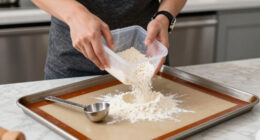
Your frying results depend heavily on oil temperature because it controls the food’s texture, flavor, and safety. If the oil is too cold, foods absorb more oil, becoming greasy and soggy. Too hot, and the outside burns before the inside cooks. Maintaining the right temperature guarantees even cooking, crispiness, and prevents harmful compounds from forming. Getting this balance right is key, and there’s much more to discover if you keep exploring how to master frying techniques.
Key Takeaways
- Proper oil temperature ensures ideal food texture, crispiness, and prevents sogginess or burning.
- Temperature fluctuations affect oil viscosity, impacting water release and even cooking.
- Overheating beyond smoke point degrades oil quality and produces harmful compounds.
- Maintaining consistent temperature optimizes oil lifespan and ensures healthier frying.
- Precise temperature control guarantees uniform cooking and desirable flavor in fried foods.
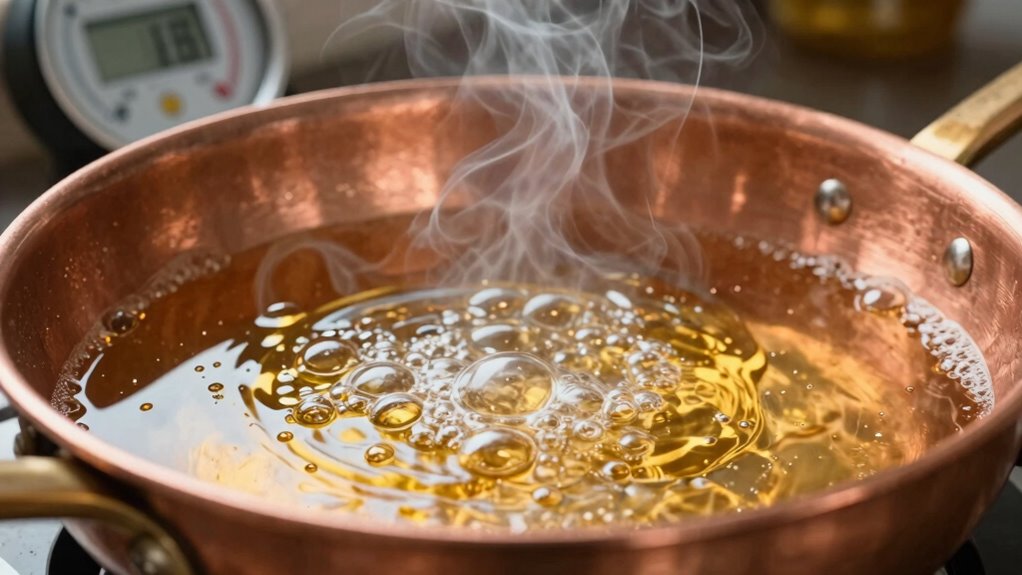
Have you ever wondered why some fried foods turn out perfectly crispy while others end up greasy or soggy? The secret lies in controlling oil temperature. When you fry, the temperature of the oil plays a pivotal role in determining the final texture and taste of your food. If the oil isn’t hot enough, your food absorbs too much oil, leading to a greasy, heavy result. Conversely, if it’s too hot, the exterior can burn before the inside cooks properly. Achieving and maintaining the right temperature guarantees that your food develops that desirable crispiness without becoming oily or soggy.
Understanding oil viscosity is fundamental here. Oil viscosity refers to how thick or thin the oil is, which directly affects how it interacts with food during frying. When oil is heated, its viscosity decreases, making it easier for water inside the food to escape quickly, creating a crispy exterior. If the oil isn’t at the right temperature, its viscosity might be too high or too low, hindering this process. Proper temperature management guarantees that the oil’s viscosity is ideal for quick, even cooking, resulting in a perfectly crispy crust. Additionally, monitoring oil viscosity can help you fine-tune your frying process for consistently better results. Maintaining the correct oil temperature also minimizes the formation of harmful compounds and ensures your fried foods are both tasty and healthy. Recognizing the importance of temperature fluctuations can help you respond quickly to changes during frying and maintain optimal conditions.
Oil viscosity decreases with heat, ensuring quick, even frying and a perfect crispy crust.
Another essential factor is the smoke point of the oil you’re using. The smoke point is the temperature at which oil starts to break down and produce smoke. When oil reaches or exceeds its smoke point, it not only imparts an unpleasant flavor to your food but also generates harmful compounds. Knowing the smoke point of your chosen oil helps you avoid overheating, which can cause the oil to degrade and ruin your dish. Keeping the oil temperature below its smoke point guarantees that the oil remains stable, maintains its quality, and produces a clean, crisp finish on your fried foods.
Maintaining a steady temperature might seem tricky at first, but it’s indispensable for successful frying. Using a thermometer helps you monitor the oil’s temperature precisely. When you put food in, the temperature tends to drop temporarily; adjusting the heat slightly upward ensures the oil stays within the ideal range. This steady temperature keeps the cooking process uniform, avoiding sogginess or burning. Additionally, understanding oil temperature management can help you prevent common frying mistakes and improve your overall technique. Consistently managing the temperature also helps extend the lifespan of your cooking oil, saving you money and reducing waste.
In the end, understanding how oil viscosity and smoke point influence frying gives you the power to produce consistently excellent results. When you pay attention to these factors, you control the environment in which your food cooks, leading to crispy, golden, and delicious fried foods every time.
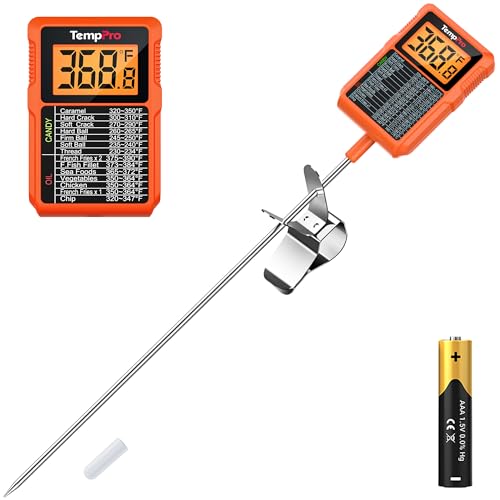
TempPro TempDip 1 Sec Digital Candy Thermometer with Pot Clip & 10" Probe
- Rotating Backlit Display: Adjustable for clear visibility in any angle
- Fast Accurate Readings: Provides precise temperature in 1 second
- Waterproof and Easy to Clean: IPX5 rated for quick rinsing
As an affiliate, we earn on qualifying purchases.
As an affiliate, we earn on qualifying purchases.
Frequently Asked Questions
How Does Oil Temperature Affect Frying Oil Lifespan?
You’ll notice that higher oil temperatures accelerate oil degradation, shortening its lifespan. Temperature fluctuations cause repeated expansion and contraction, which break down the oil’s structure faster. When you fry at too high a heat, the oil oxidizes quickly, creating harmful compounds and off-flavors. To extend your frying oil’s life, keep the temperature steady and within the recommended range, avoiding unnecessary fluctuations that hasten deterioration.
What’s the Best Way to Monitor Oil Temperature Accurately?
A stitch in time saves nine, so you should use a reliable thermometer to monitor oil temperature accurately. To guarantee precision, opt for a digital probe thermometer with good thermistor accuracy, and avoid guesswork. Use temperature control techniques like maintaining a steady heat and adjusting flame or burner as needed. Regularly calibrate your thermometer, and keep a close eye on the dial to prevent overheating and ensure perfect frying results.
How Does Oil Temperature Influence Food Moisture Retention?
When you cook at the right oil temperature, you help your food retain moisture, making it juicy inside. Too hot, and the exterior crisps up too quickly, trapping moisture inside for a crispy texture. Too cool, and moisture escapes, resulting in soggy, less flavorful food. Maintaining a suitable oil temperature guarantees your dishes stay moist and crispy, giving you perfect texture and flavor every time.
Can Inconsistent Oil Temperature Cause Health Risks?
Inconsistent oil temperature can pose health risks because temperature fluctuations promote oil contamination, leading to harmful compounds. When oil isn’t steady, food may absorb more oil or cook unevenly, increasing the risk of consuming unhealthy fats or carcinogens. Keep the oil at the right temperature to prevent contamination and guarantee safe, healthier frying. Regularly monitoring and maintaining steady heat minimizes these risks and promotes better food safety.
How Does Oil Type Impact Temperature Stability During Frying?
You might not realize it, but your choice of oil dramatically influences temperature stability during frying. Oil composition varies, affecting how well the oil maintains heat. Oils with a higher smoke point resist breaking down at high temperatures, ensuring consistent cooking and preventing dangerous smoke. Choosing the right oil means your frying stays precise, safe, and delicious, revealing how essential oil type truly is for perfect, stable frying.
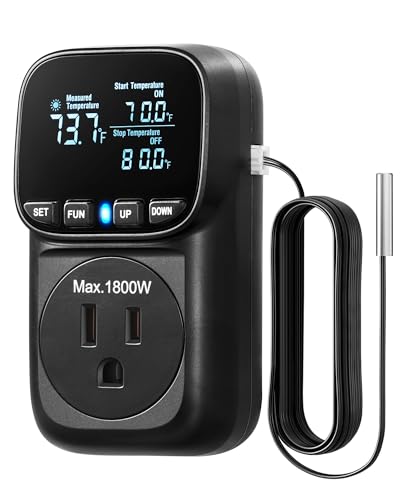
DEWENWILS Temperature Controller Outlet 15A Thermostat Plug, -40~210°F
- High Power Output: Supports up to 1800W heating capacity
- Safe and Reliable: Overload protection for high-power heaters
- Clear VA Display: Self-illuminating screen for easy reading
As an affiliate, we earn on qualifying purchases.
As an affiliate, we earn on qualifying purchases.
Conclusion
If you ignore the importance of oil temperature, you’re basically inviting culinary chaos into your kitchen. A few degrees off can turn perfect crispy fries into soggy disasters or cause your chicken to burn faster than a flash. Mastering oil temperature isn’t just a tip—it’s the secret weapon that transforms your frying game from mediocre to mind-blowingly delicious. So, keep that thermometer handy, or risk turning your culinary masterpiece into a fiery, flavorless fiasco!
TempPro TempDip 1 Sec Digital Candy Thermometer with Pot Clip & 10" Probe
- Rotating Backlit Display: Adjustable for clear visibility in any angle
- Fast Accurate Readings: Provides precise temperature in 1 second
- Waterproof and Easy to Clean: IPX5 rated for quick rinsing
As an affiliate, we earn on qualifying purchases.
As an affiliate, we earn on qualifying purchases.

Algae Cooking Club Chef-Grade 100% Algae Cooking Oil – Avocado Oil Alternative – 535°F High Smoke Point – Omega-9 Rich, Neutral Buttery Flavor – Seed Oil-Free – For Searing, Baking, Frying (2, 16 fl oz)
- Flavor Profile: Light buttery, neutral taste
- Health Benefits: Rich in Omega-9 fats, low saturated fat
- High Smoke Point: 535°F for high-heat cooking
As an affiliate, we earn on qualifying purchases.
As an affiliate, we earn on qualifying purchases.