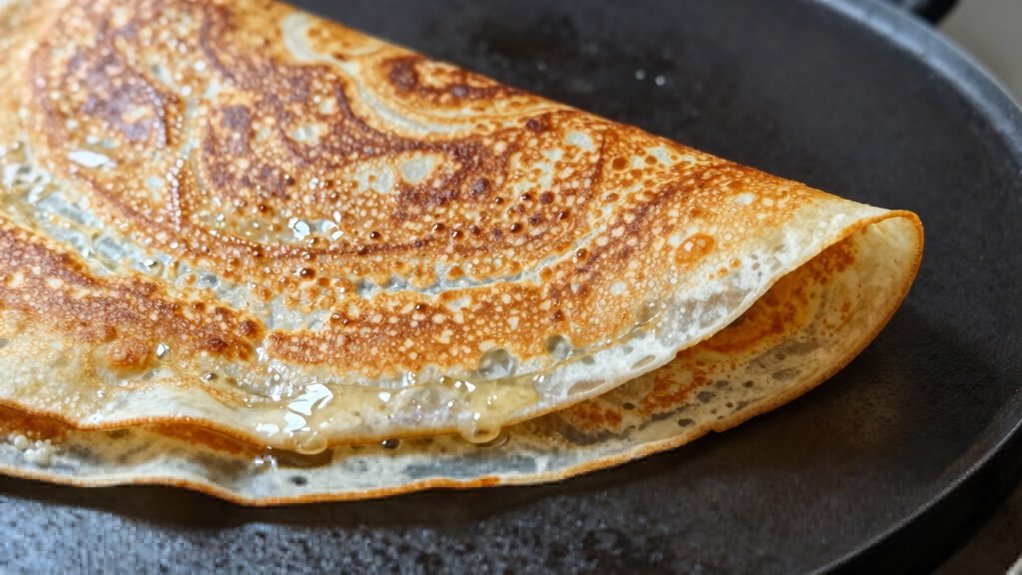
Your dosa sticks not just because of oil but also due to uneven heat, poor surface seasoning, or improper batter consistency. If your tawa isn’t preheated well, or if the surface isn’t maintained properly, sticking can happen. Material and surface smoothness also matter—cast iron, when seasoned right, helps, while damaged non-stick coatings can cause problems. To avoid sticking, you’ll want to check your heat and surface care, and find out more tips below.
Key Takeaways
- Improper or uneven heating causes sticking, regardless of the type of oil used.
- A poorly seasoned or damaged tawa surface increases the likelihood of dosas sticking.
- Batter that is too thick, uneven, or not well-fermented affects release from the surface.
- Insufficient preheating or inconsistent temperature leads to sticking and tearing.
- Surface texture and material of the tawa influence non-stick performance beyond just oil application.
Why Does Dosa Stick? Common Causes Beyond Oil
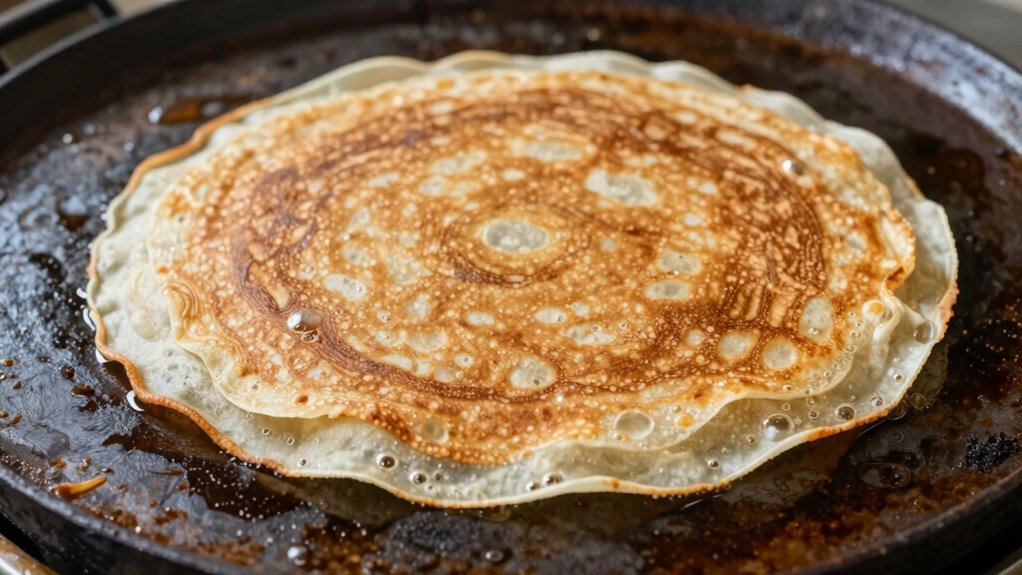
If your dosa sticks to the tawa even when you’ve used oil, several other factors could be at play. One common cause is the type of cooking oil you use; some oils don’t create a good non-stick surface. Additionally, insufficient or uneven heating can cause sticking, so verify your tawa is properly preheated. Tawa seasoning is also essential—if your tawa isn’t well-seasoned, the surface may be rough or sticky, making dosa removal difficult. Repeated use without proper seasoning can create a sticky buildup that prevents easy release. Moreover, color accuracy in your cooking surface can influence how well heat is distributed across the tawa, affecting sticking. Proper tawa maintenance and regular seasoning help maintain a smooth, non-stick surface, preventing sticking beyond just adding oil. Ensuring the correct batter consistency is crucial, as a batter that is too thick or too thin can also contribute to sticking issues. Regularly inspecting your tawa for seasoning quality can help identify when it needs reconditioning to keep your dosas perfectly non-stick. Additionally, using a BTU calculator to ensure your stove provides adequate heat can improve overall cooking results.
Does Your Tawa Material Affect How Easily Dosa Comes Off?
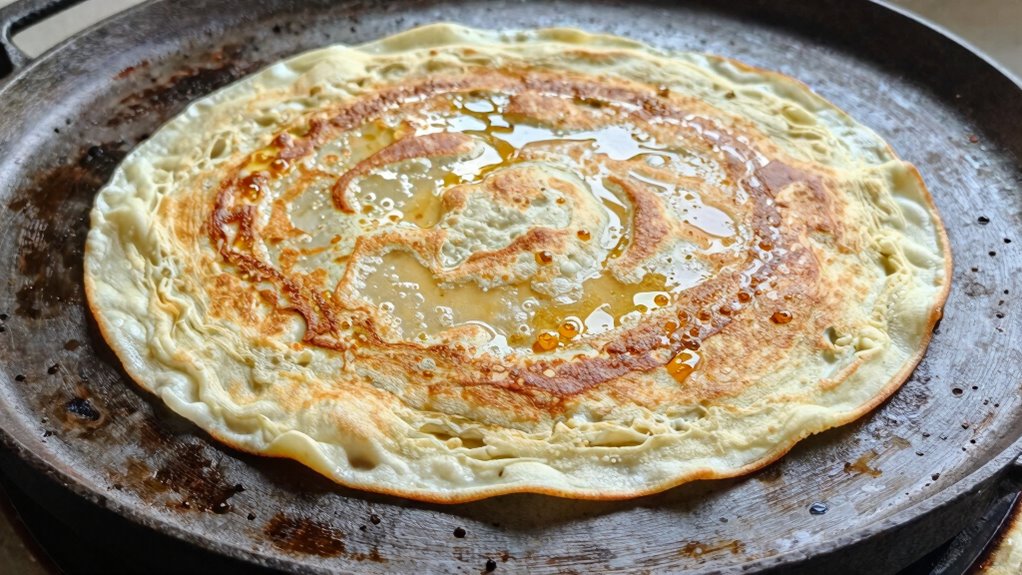
The material of your tawa plays a big role in how easily your dosa releases. Non-stick surfaces, smooth textures, and proper maintenance can make a difference. Paying attention to cleaning habits and surface condition helps prevent sticking and guarantees perfect dosas every time. Additionally, understanding local cooking techniques can enhance your results and ensure your dosa comes out just right.
Tawa Material’s Non-Stick Qualities
Your tawa’s material plays a crucial role in how easily a dosa can be removed without tearing or sticking. The Tawa coating markedly influences its non-stick qualities, affecting how smoothly the dosa slides off. Materials like cast iron develop a natural non-stick surface over time, enhancing the dosa texture and making removal easier. Non-stick Tawa coatings, such as Teflon or ceramic, are designed specifically to prevent sticking, reducing the need for excessive oil. However, the effectiveness depends on the quality and maintenance of the coating. If the coating wears out or gets scratched, sticking issues may return. Ultimately, choosing a Tawa with good non-stick properties tailored to your cooking style can make a substantial difference in achieving perfect, tear-free dosas.
Surface Texture and Dosa Release
Surface texture particularly impacts how easily a dosa releases from the Tawa. A smooth surface encourages better release, while rougher textures can cause sticking. If your Tawa has high surface roughness, the batter may cling more firmly, making it harder to flip or remove the dosa smoothly. Batter consistency also plays a vital role; a batter that’s too thick or uneven can stick more, regardless of surface texture. For ideal results, ensure your Tawa’s surface is adequately smooth and well-seasoned. Adjust your batter to a slightly thinner, even consistency to reduce sticking. Remember, a combination of a smooth Tawa surface and proper batter consistency helps your dosa come off effortlessly, avoiding tears or tearing during removal.
Maintenance and Cleaning Impact
Different Tawa materials respond uniquely to cleaning and maintenance practices, which directly influence how easily a dosa releases. For example, seasoned cast iron benefits from regular oiling after cleaning, especially in humid conditions. Non-stick Tawas require gentle cleaning to prevent surface damage, while traditional stone Tawas need careful scraping and drying. Seasonal humidity and storage conditions also impact maintenance; high humidity can cause rust or mold, making cleaning more intensive. Proper storage—like keeping Tawas dry and covered—helps maintain their release properties. Here’s a quick comparison:
| Material | Maintenance Tips |
|---|---|
| Cast Iron | Oil after cleaning, avoid soap |
| Non-stick | Gentle washing, avoid abrasive scrubbers |
| Stone | Dry thoroughly, avoid soaking |
| Aluminum | Hand wash, dry immediately |
| Copper | Regular polishing, dry after cleaning |
How Temperature and Heat Distribution Impact Dosa Release
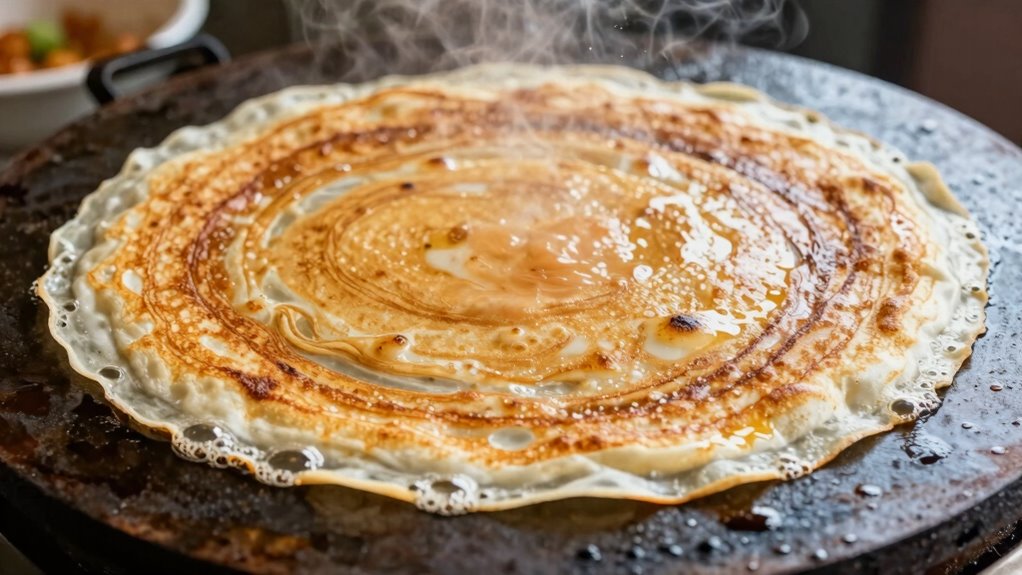
You need to guarantee your tawa heats evenly to prevent sticking, as hot spots can cause uneven cooking. Maintaining a consistent surface temperature helps the dosa release smoothly without tearing or sticking. Proper temperature control and uniform heat distribution are key to achieving perfect, non-stick dosas every time. Additionally, using the right type of cooking surface material can also promote better heat conduction and help prevent sticking issues. Ensuring your thermal conductivity is adequate can significantly improve heat transfer and cooking performance. Using appropriate cookware materials that have high thermal conductivity can make a noticeable difference in how evenly your dosas cook and release. Regularly seasoning your non-stick surface can also help create a natural non-stick layer, further aiding in smooth release. Incorporating proper filtration and pump protection into your cookware maintenance routine can help keep your tawa in optimal condition, preventing residue buildup that might affect heat distribution.
Even Heat Distribution
Achieving even heat distribution across the tawa is essential for preventing dosa sticking. When heat is uneven, certain spots become too hot while others remain cool, making it difficult for the dosa to cook properly and release easily. To improve heat spread, focus on the thermal conductivity of your pan; a well-made tawa with high thermal conductivity distributes heat more uniformly. Proper seasoning techniques also help create a smooth, non-stick surface that promotes even cooking. Regularly seasoning your tawa ensures a consistent layer of oil that fills in micro-porosities, aiding heat transfer. Additionally, using a consistent heat source helps maintain uniform temperature across the entire surface. By optimizing heat distribution through quality materials and proper seasoning, you’ll prevent hot spots and promote effortless dosa release every time. Ensuring proper pan maintenance also contributes to better heat retention and distribution, further reducing sticking issues.
Proper Temperature Control
Proper temperature control is essential because even heat distribution can’t compensate for temperatures that are too high or too low. If your tawa isn’t at the right temperature, your dosa will stick or turn rubbery. Effective heat management ensures consistent results. To achieve this, you need good temperature regulation—adjusting the flame and monitoring the heat carefully. Visualize these scenarios:
- The tawa heats evenly, with steam gently rising.
- The surface glows just enough to sizzle when tested.
- The batter sizzles softly upon contact.
- The edges crisp up without burning.
- The heat stays steady throughout cooking.
Mastering heat management means you control the temperature precisely, preventing hot spots and ensuring your dosas don’t stick or tear. Consistent heat is key to perfect, release-ready dosas every time.
Surface Temperature Consistency
Maintaining a consistent surface temperature across the tawa is key to guaranteeing your dosa releases smoothly. Uneven heat distribution or temperature fluctuations can cause sticking, regardless of oil quantity. Humidity effects also influence how the batter behaves; high humidity can make the batter stickier and harder to cook evenly, while lower humidity helps achieve better release. To prevent sticking, ensure your tawa heats uniformly before pouring batter, avoiding hot spots. Adjust heat as needed to keep the surface temperature steady, especially when weather conditions change. Additionally, batter consistency plays a crucial role—thinner, well-mixed batter spreads more evenly and releases more easily at the right temperature. Heat distribution is essential for consistent cooking results. Consistent surface temperature combined with proper batter preparation minimizes sticking and results in perfect, fluffy dosas.
Tips to Prepare Batter and Tawa for Non-Stick Dosas
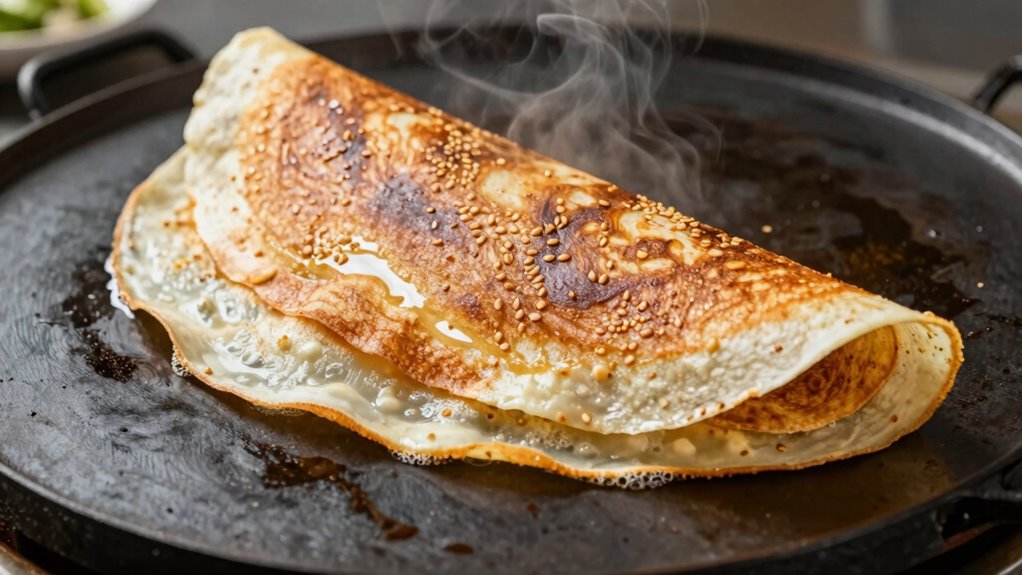
To prevent your dosas from sticking, start by preparing a smooth, well-fermented batter. Proper batter fermentation enhances elasticity and creates a light, airy texture, reducing sticking. Before cooking, season your tawa with a thin layer of oil and heat it until slightly smoky—this process, known as tawa seasoning, builds a natural non-stick surface over time. Confirm your batter is of pouring consistency, not too thick or thin. When pouring the batter, spread it evenly with the back of a ladle for a thin layer. Keep the tawa at the right temperature, not too hot or cold. Regularly maintaining your tawa’s seasoning and using freshly fermented batter are key to achieving perfect, non-stick dosas. Additionally, utilizing technological integration tools like the Études Architect App can inspire innovative kitchen solutions and optimize your cooking setup.
How to Properly Clean and Maintain Your Tawa
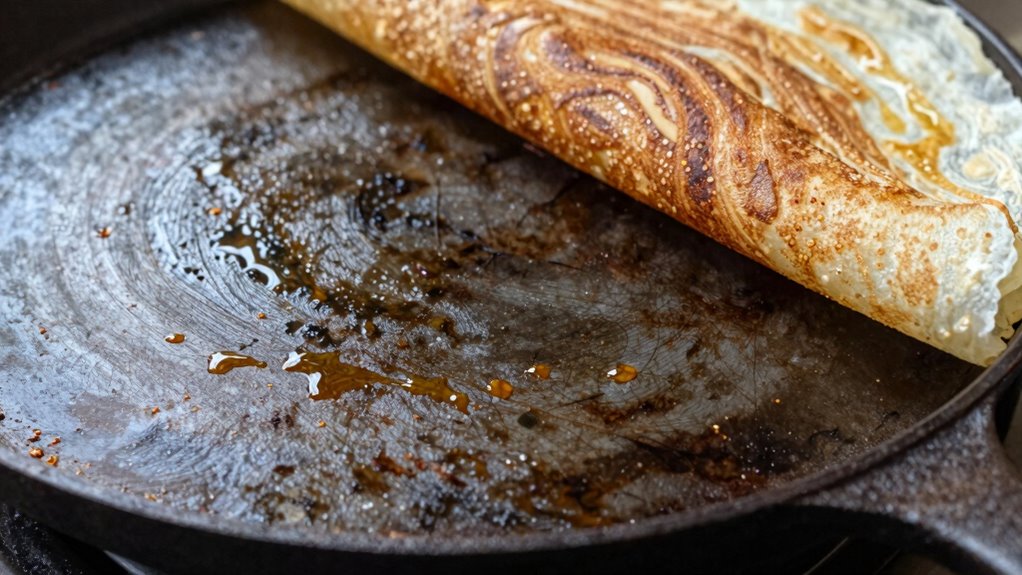
Cleaning your tawa thoroughly after each use is essential to keep it in top condition and prevent food from sticking in future batches. Use a soft brush or dry cloth to remove residue without harsh soaps that can strip seasoning. Once clean, apply a light coat of oil using your seasoning techniques; this helps maintain a natural non-stick surface and prevents rust. Avoid using abrasive scrubbers that can damage the tawa’s surface. When not in use, follow proper storage tips—store it in a dry, well-ventilated area, preferably with a paper towel underneath to absorb moisture. Proper storage practices can further prolong the life of your tawa and prevent corrosion. Regular maintenance, including periodic re-seasoning, keeps your tawa in excellent shape and ensures your dosas always come out perfectly crisp and non-sticky. Additionally, understanding proper storage practices can further prolong the life of your tawa and prevent corrosion. Incorporating sound healing science techniques, such as placing your tawa in a space with harmonious frequencies, can promote overall metal health and longevity. Regularly inspecting for rust and addressing it promptly can also extend the lifespan of your cookware and maintain its optimal performance. A mindful approach to maintenance routines will ensure your tawa remains a reliable tool in your kitchen for years to come.
Simple Techniques to Prevent Dosa From Sticking Without Using Excess Oil
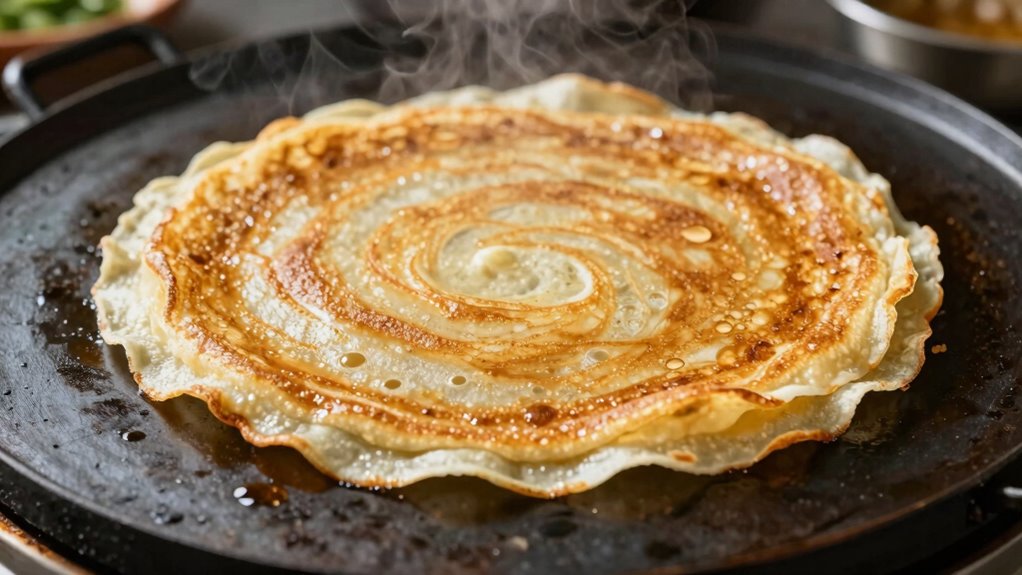
After cleaning and drying your tawa, the next step is to prevent dosa from sticking without adding excess oil. Achieving this depends on proper dosa batter consistency and effective tawa seasoning methods. Confirm your batter is smooth, not too thick or thin, for better spreadability. Before pouring, heat the tawa well and lightly season it with a thin layer of oil, then wipe off the excess. This creates a natural non-stick surface. Additionally, you can:
- Use a well-seasoned tawa that’s been properly maintained
- Keep the heat at medium to prevent sticking
- Spread the batter quickly and evenly
- Avoid over-flipping the dosa
- Use a thin, even layer of batter each time
Ensuring the tawa has a consistent temperature helps prevent sticking and improves the overall quality of your dosa. Proper tawa seasoning techniques build a durable, non-stick surface that reduces the need for excess oil. Regularly maintaining and re-seasoning your tawa enhances its non-stick properties, making your cooking experience more successful. Incorporating proper cleaning and maintenance practices is essential for sustaining a well-seasoned surface and achieving perfect dosas. These techniques help your dosa release smoothly without relying on excess oil.
Troubleshooting Sticky Dosa: Quick Fixes and Best Practices
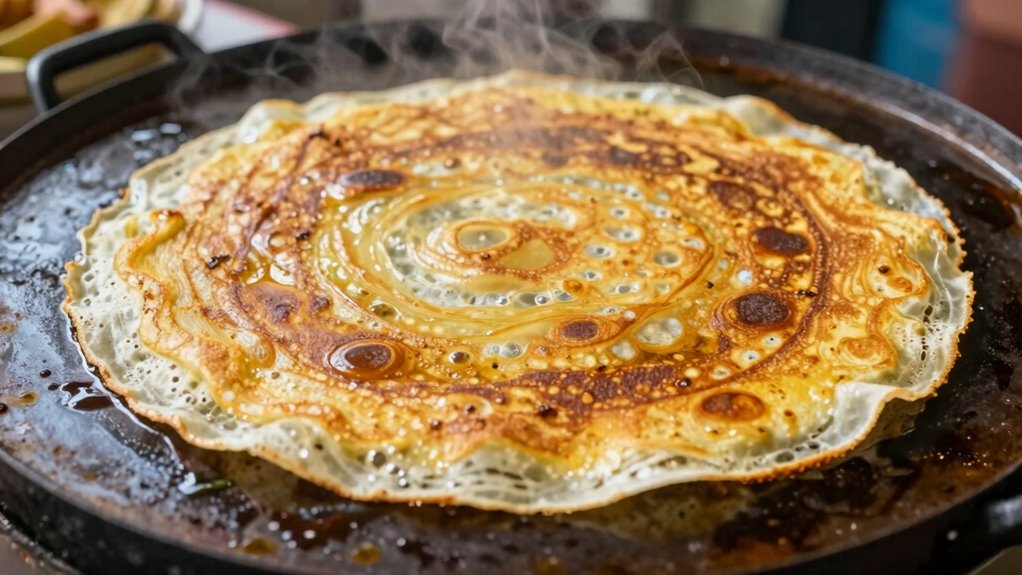
When your dosa sticks despite your efforts, quick fixes can save the batch and prevent frustration. First, check the batter consistency; it should be smooth and slightly thinner than pancake batter. If it’s too thick, it won’t spread evenly and may stick. Adjust moisture control by adding a little water and mixing well. Also, let the batter rest for 20-30 minutes to improve texture. Before pouring, ensure your tawa is properly heated and lightly greased, but avoid excess oil. If sticking persists, use a paper towel or a cloth to wipe the surface with a tiny amount of oil, creating a non-stick layer. These quick fixes help maintain proper moisture and batter consistency, reducing sticking and ensuring perfect dosas every time.
Frequently Asked Questions
Does Batter Consistency Influence Dosa Sticking?
Yes, batter consistency substantially influences whether your dosa sticks to the tawa. If your batter isn’t well-fermented or too thick, it’s more likely to stick. Proper fermentation improves the batter’s texture, making it smoother and easier to spread. Additionally, a well-seasoned tawa prevents sticking. Keep your batter at the right consistency—slightly runny but not watery—and make sure your tawa is properly seasoned for perfect, non-stick dosas every time.
Can Moisture in Batter Cause Sticking Issues?
Moisture in your batter can cause serious sticking problems, almost like your dosa is fighting to cling to the tawa! Too much moisture from poor fermentation or excess water ruins the perfect crispness and makes flipping a nightmare. To prevent this, guarantee proper batter fermentation and moisture control—let the batter rest long enough and avoid adding extra water. This keeps your dosa smooth, non-sticky, and picture-perfect every time!
Are Non-Stick Coatings Effective on Traditional Tawa?
Non-stick coatings can be somewhat effective on a traditional tawa, but their limitations include reduced coating durability over time. You might find that the coating wears off with frequent use, especially if you use metal utensils or scrub harshly. While they help prevent sticking initially, you should still season and maintain your tawa properly for the best results, as non-stick limitations mean it’s not a permanent solution.
How Does Altitude Affect Dosa Sticking?
Sure, altitude effects your dosa mastery—higher elevations make sticking more likely. You’ll find batter density needs adjusting because thinner batter evaporates faster, leaving a sticky mess. At higher altitudes, the reduced air pressure slows cooking, causing batter to cling instead of slide. So, embrace your inner scientist—modify batter consistency and cooking time, and you’ll conquer those altitude-induced sticking issues with the finesse of a seasoned chef.
Is It Necessary to Preheat the Tawa Every Time?
Yes, you should preheat the tawa every time you cook. This guarantees proper Tawa seasoning and maintains the right oil temperature, which helps prevent sticking. Preheating creates a smooth, non-stick surface and distributes heat evenly. Always warm the tawa before pouring batter, and lightly oil it to enhance seasoning. Consistent preheating and proper oil temperature are key to perfect, non-sticky dosas every time.
Conclusion
If your dosas keep sticking despite using oil, it might be time to reassess your tawa’s condition and your technique. For example, a home cook noticed her dosas stuck every time until she switched to a well-seasoned cast iron tawa and adjusted her heat. Regular cleaning, proper batter consistency, and correct temperature are key. With these tweaks, you’ll enjoy perfectly crisp, non-sticky dosas every time—just like a professional chef.