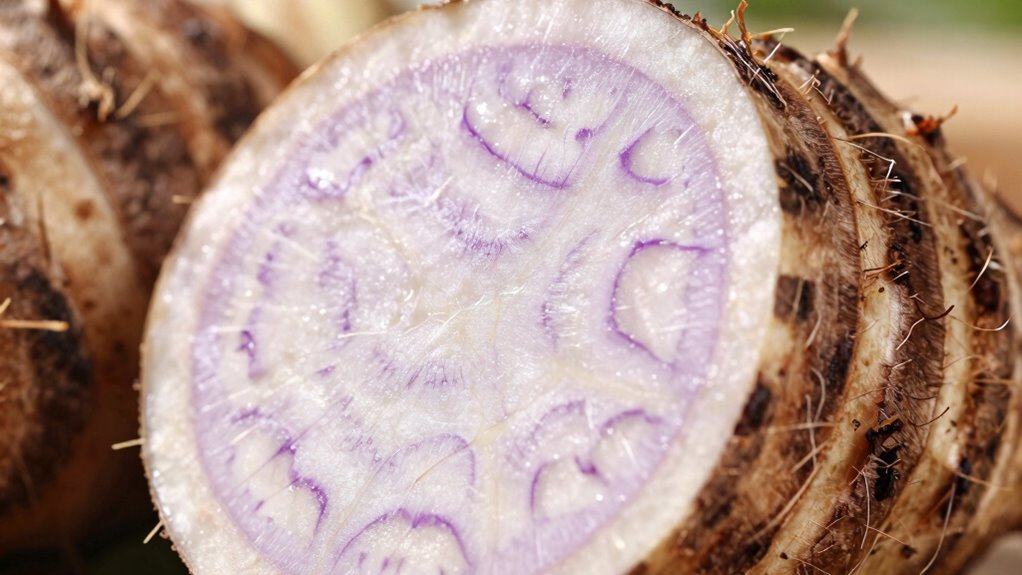

When you cut into taro root (arbi), your skin might itch or feel irritated because it contains calcium oxalate crystals. These natural crystals can cause a burning sensation or itching if they come in contact with your skin. Proper handling, like wearing gloves and thoroughly cooking the tuber, helps neutralize these irritants. If you want to understand more about how to handle taro safely, keep going for useful tips.

Get kitchen staples and gadgets delivered free — and shop member deals
- Fast, free delivery on millions of items
- Access to Prime Big Deal Days deals on October 6–7
- Prime Video, Amazon Music and more included
Key Takeaways
- Taro contains calcium oxalate crystals that can cause itchiness and irritation upon contact.
- Cutting or bruising taro releases these tiny crystals, making the skin or mouth feel itchy or burning.
- Proper peeling and thorough cooking neutralize calcium oxalate, reducing itchiness and irritation.
- Wearing gloves during handling prevents skin irritation caused by calcium oxalate crystals.
- Washing hands after cutting taro helps remove residual crystals and minimizes skin discomfort.
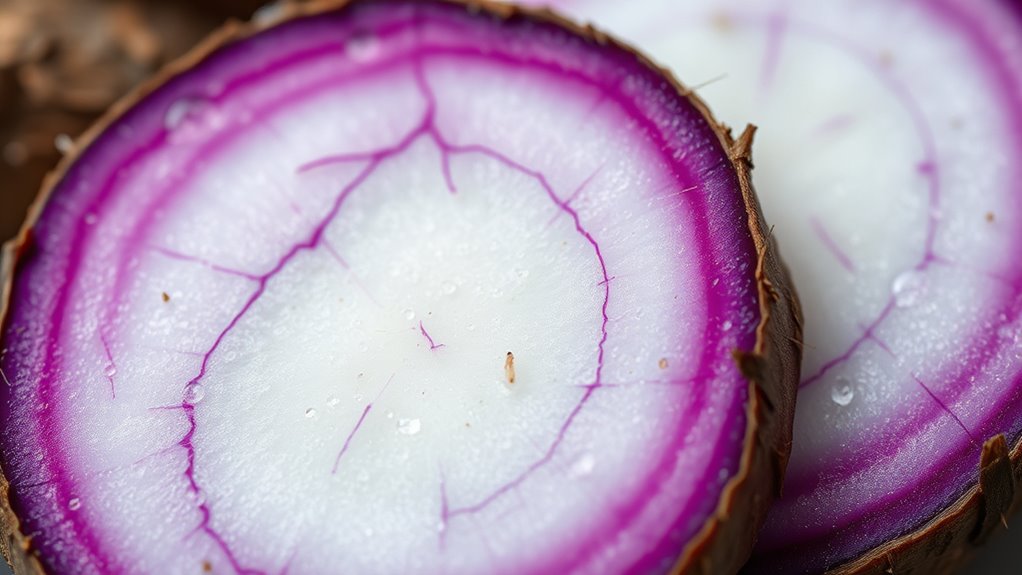
Taro root, also known as arbi, is a versatile tuber beloved in many cuisines around the world. Its starchy, slightly sweet flavor makes it a popular ingredient in dishes ranging from Asian stir-fries to Caribbean stews. Beyond its taste, taro offers notable nutritional benefits. It is rich in dietary fiber, which supports digestion and helps maintain healthy blood sugar levels. It also provides essential minerals like potassium, magnesium, and iron, contributing to overall cardiovascular health and energy production. Taro is naturally gluten-free and low in fat, making it a nutritious addition to various diets.
When preparing taro, you need to be mindful of its unique cooking techniques, which are vital to making it safe and enjoyable to eat. Raw taro contains calcium oxalate crystals, which can cause skin irritation and a burning sensation in the mouth if not properly handled. To avoid this, you should always peel and cook taro thoroughly before consuming. Boiling, steaming, or frying are common methods that effectively neutralize these crystals. For boiling, cut the taro into manageable pieces, rinse them well, and immerse them in boiling water for about 15-20 minutes until tender. Steaming is a gentle alternative that preserves more nutrients; simply place the cut pieces in a steamer basket over boiling water and steam until soft. Frying, especially in crispy chips or fritters, involves deep or shallow frying the sliced taro until golden brown, which also enhances its flavor and texture. Remember, cooking not only makes taro safer to eat but also improves its taste and texture, allowing you to enjoy its full potential. Proper handling techniques are essential for safe preparation. Additionally, using appropriate kitchen tools can help prevent injury and ensure even cooking.
Once cooked, taro can be incorporated into a variety of dishes. It can be mashed, added to soups, made into chips, or even used in desserts like puddings and cakes. Its starchy nature makes it an excellent thickening agent, and its subtle sweetness pairs well with both savory and sweet ingredients. Keep in mind that overcooking can lead to a mushy texture, so aim for tender but firm pieces. Additionally, because of its itchy reaction when raw, always wear gloves during preparation if you have sensitive skin, and wash your hands thoroughly afterward. Proper handling and cooking techniques reveal taro’s nutritional benefits while ensuring it’s safe and delightful to eat. With the right approach, you can enjoy this nutritious tuber in countless delicious ways.
food-grade rubber gloves for handling taro
As an affiliate, we earn on qualifying purchases.
As an affiliate, we earn on qualifying purchases.
Frequently Asked Questions
Can Taro Root Cause Allergic Reactions in Some People?
Yes, taro root can cause allergic reactions in some people. You might experience skin irritation, redness, or itching after handling or eating it. If you’re allergic, exposure could trigger more serious symptoms like swelling or difficulty breathing. To stay safe, wash your hands thoroughly after touching taro, and avoid eating it if you notice any skin irritation or allergic symptoms. Always consult a doctor if you’re unsure about allergies.
How Should I Store Taro Root to Keep It Fresh?
Think of your taro root as a prized treasure: store it in a cool, dark place or in the fridge’s crisper drawer to extend its shelf life. Keep it in a perforated bag to allow airflow and prevent moisture buildup. Proper storage tips like these help maintain freshness for up to a week or more, ensuring you enjoy its starchy goodness whenever you’re ready to cook.
Is Taro Root Safe for Pregnant Women to Eat?
Yes, you can eat taro root safely during pregnancy when cooked thoroughly. It offers nutritional benefits like fiber, vitamins, and minerals, supporting your health and your baby’s development. You might use it in culinary dishes like soups, stews, or desserts. Just make certain it’s cooked well, as raw taro can cause irritation or discomfort. Always wash it carefully before cooking to enjoy its benefits safely.
What Are the Best Cooking Methods for Taro Root?
You should use boiling, steaming, or roasting as the best cooking techniques for taro root. These methods effectively cook the root, making it safe and reducing its itchiness. Boiling and steaming preserve its natural flavor, while roasting adds a smoky depth. To enhance flavor, consider adding spices or herbs during cooking. Properly cooked taro develops a tender texture and a delightful flavor, making it a versatile ingredient in many dishes.
Does the Itchy Sensation Vary Between Different Taro Varieties?
You might notice that the itchy sensation varies between taro varieties, especially depending on the taro skin. Some varieties have higher levels of calcium oxalate crystals, which cause itchiness, making the sensation more intense. Others contain fewer crystals, resulting in a milder experience. The variety differences in taro skin influence how itchy you feel when cutting or preparing it, so choosing the right type can help reduce discomfort.
As an affiliate, we earn on qualifying purchases.
Conclusion
So, next time you cut into taro root, remember it’s like revealing a hidden treasure, with the itch acting as a gentle reminder of its potent nature. Just as Pandora’s box holds surprises inside, the irritation warns you to handle it with care. Embrace the process, knowing that beneath that itchy exterior lies a delicious, earthy flavor waiting to be savored. Taro’s mystery is part of its charm, inviting you to discover its true essence.
stainless steel vegetable steamer basket
As an affiliate, we earn on qualifying purchases.
As an affiliate, we earn on qualifying purchases.
As an affiliate, we earn on qualifying purchases.
NFL season / tailgating Picks
team gear
As an affiliate, we earn on qualifying purchases.