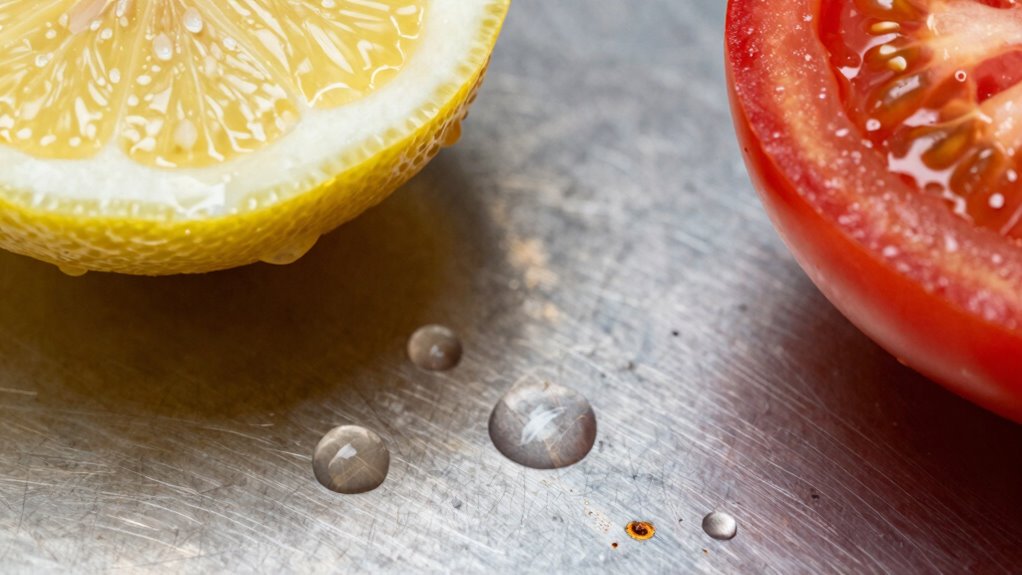

When you cook with acidic foods like tomatoes, tamarind, or lemon, the acids react with metals in your cookware, especially reactive ones like copper, aluminum, and silver. These acids break down protective layers on the metal surface, causing pitting, discoloration, and even corrosion. This process weakens the metal over time and can lead to metal leaching into your food. Keep watching to discover how to protect your cookware and prevent damage.
Key Takeaways
- Acidic foods lower the pH, increasing metal dissolution and promoting pitting corrosion on reactive metals.
- Acids react chemically with metal surfaces, breaking down protective oxide layers and exposing the metal to further damage.
- Citric, ascorbic, and tartaric acids in these foods accelerate metal leaching and corrosion during cooking or storage.
- Metals like copper, aluminum, and silver are especially vulnerable to pitting and tarnishing when exposed to acids.
- Continuous exposure to acids causes surface deterioration, discoloration, and formation of pits on susceptible metals.

Small Sauce Pan with Lid, 2.13 QT Nero (Black) Sauce Pot, Small Pot with Stay Cool Helper Handle and Tight-Fitting Lid, Warmer Pan- Segretto Cookware
EASY TO CLEAN. The three-layer enamel coating makes cleaning the Segretto Sauce Pan easy and convenient. Clean it…
As an affiliate, we earn on qualifying purchases.
As an affiliate, we earn on qualifying purchases.
Why Do Acidic Foods Damage Metal Cookware?

Acidic foods can cause damage to metal cookware because they react chemically with the metal surfaces. When you cook acidic ingredients like tomatoes or citrus, the acids can break down the metal’s protective layer, leading to metal leaching into your food. This process not only risks altering the flavor and color but also raises concerns about cookware safety. Metal leaching occurs as the acids dissolve small particles from the cookware, which can then contaminate your meal. Over time, this reaction causes pitting, discoloration, and deterioration of the cookware’s integrity. To protect your health and extend the life of your pots and pans, it is crucial to understand how acidic foods interact with different metals and choose appropriate cookware materials. Additionally, being aware of corrosion processes can help in selecting durable, corrosion-resistant cookware options that will last longer. Recognizing metal reactivity is essential for preventing damage and ensuring safe cooking practices. Understanding metal corrosion can also help you identify when cookware needs replacement before it becomes unsafe to use. Being knowledgeable about protective coatings can further enhance the longevity of your cookware against acidic reactions. Moreover, understanding cost-effective materials can aid you in choosing cookware that is both durable and affordable.

Viking 3-Ply Pots and Pans Set, 10 Piece Copper Kitchen Cookware with Glass Lids, Hammered Copper
10 PIECE COOKWARE SET: This pot and pan set includes 8 inch and 10 inch frying pans, 5.25…
As an affiliate, we earn on qualifying purchases.
As an affiliate, we earn on qualifying purchases.
Which Metals Are Most Vulnerable to Pitting and Tarnishing?

Copper, aluminum, and silver are especially prone to pitting and tarnishing when exposed to acidic foods. You’ll notice copper reacts quickly, forming corrosion, while aluminum’s surface can weaken over time. Silver, on the other hand, easily tarnishes, developing a dull layer that affects its appearance. Additionally, understanding the corrosion process can help in selecting appropriate cookware materials. Being aware of metal sensitivity can guide you in choosing safer options for cooking with acidic ingredients. Recognizing metal reactivity can further aid in preventing damage to your kitchenware. Being aware of reactivity levels can help you determine which metals are safest for specific culinary uses. For example, certain metal coatings may offer added protection against corrosion but could wear off over time, exposing the base metal.
Copper and Its Corrosion
Metals like copper are especially vulnerable to corrosion when exposed to acidic environments, leading to pitting and tarnishing over time. Copper corrosion occurs because acids in foods like tomatoes, lemon, and tamarind react with its surface, causing acidic metal reactions that weaken the metal’s integrity. You might notice greenish or bluish stains, known as patina, forming on copper surfaces after prolonged exposure to acids. These reactions accelerate pitting, creating tiny holes that compromise the metal’s strength. Since copper reacts readily with acids, storing or cooking with highly acidic foods can hasten its deterioration. A copper patina can develop more quickly in humid environments, further contributing to corrosion. To prevent damage, it’s best to avoid prolonged contact between copper utensils and acidic ingredients, or use protective coatings to slow down copper corrosion caused by acidic metal reactions. Additionally, understanding metal vulnerabilities can help in choosing appropriate cookware materials for acidic foods.
Aluminum’s Vulnerability Risks
Aluminum is particularly susceptible to pitting and tarnishing when exposed to acidic substances, making it one of the more vulnerable metals. Acidic foods can cause metal leaching, leading to corrosion and potential health risks. To understand its vulnerability, consider how acids interact with aluminum’s protective oxide layer, breaking it down and exposing the metal underneath. Here’s a quick comparison:
| Metal | Pitting Resistance | Common Uses |
|---|---|---|
| Aluminum | Low | Cookware, Foil |
| Copper | Moderate | Wiring, Pipes |
| Stainless Steel | High | Cutlery, Appliances |
| Iron | Low | Construction |
| Silver | Moderate | Jewelry, Tableware |
For corrosion prevention, avoiding acidic foods in aluminum containers is key to minimizing metal leaching and preserving the metal’s integrity. Additionally, understanding metal corrosion mechanisms can help in choosing appropriate materials for specific applications.
Silver Tarnishing Factors
Silver is particularly prone to tarnishing when exposed to sulfur-containing compounds in the environment or certain foods. This exposure causes surface corrosion, which results in the formation of a dull, blackish layer on your silverware or jewelry. Metal leaching occurs as silver reacts with these compounds, releasing ions that accelerate tarnishing. Acidic foods like lemon, tamarind, and tomatoes can intensify this process, especially if they come into direct contact with silver surfaces. Over time, this leaching weakens the metal and damages its appearance. To minimize tarnishing, keep silver away from acidic foods and store it in airtight containers. Regular cleaning with appropriate polishing agents can also help remove surface corrosion and preserve the metal’s shine.

Lenox Silverware Set, Ashbridge 80-Piece Flatware Set, Service For 12, Rust Resistant 18/10 Stainless Steel, Dishwasher Safe, Knives Spoons And Forks Sets, Home And Kitchen Utensils (Silver, 80 Piece)
Ashbridge flatware is built to be used everyday and special occasions with its double bands and "X" knot…
As an affiliate, we earn on qualifying purchases.
As an affiliate, we earn on qualifying purchases.
How Do Tomatoes, Lemons, and Tamarind Speed Up Metal Corrosion?

When you cut into tomatoes, lemons, or tamarind, their acidic juices come into direct contact with metal surfaces, speeding up corrosion. The acids lower the pH, creating an environment that promotes metal ion leaching, where metal atoms dissolve into the liquid. This process weakens the metal structure over time. The table below illustrates how different acids influence corrosion:
| Acid Type | pH Level | Effect on Metals |
|---|---|---|
| Citric (Tomatoes) | 4-5 | Accelerates leaching |
| Ascorbic (Lemons) | 2-3 | Promotes rapid corrosion |
| Tartaric (Tamarind) | 3-4 | Enhances metal breakdown |
Lower pH levels increase metal ion leaching, making metals more vulnerable to pitting and deterioration during cooking or storage. Additionally, understanding metal corrosion helps in choosing appropriate cookware and storage methods to prevent damage.

Sliced Citrus and Tomatoes Silicone Oven Gloves Pair – Heat Resistant Oven Mitts with Non-Slip Grip for Kitchen, Baking, BBQ, Microwave & Grill, Durable & Comfortable
【Superior Heat Protection】 These Are Not Ordinary Oven Gloves. Designed As Heat Resistant Oven Mitts, They Feature A…
As an affiliate, we earn on qualifying purchases.
As an affiliate, we earn on qualifying purchases.
How Can You Prevent Metal Pitting When Cooking With Acidic Ingredients?

To prevent metal pitting while cooking with acidic ingredients, you should choose cookware made from corrosion-resistant materials such as stainless steel, glass, or ceramic. These materials have a protective metal coating that shields against acid-induced damage, enhancing cookware durability. Avoid using reactive metals like aluminum or uncoated cast iron, which can develop pits when exposed to acids. Properly maintaining your cookware also helps; promptly cleaning after use prevents acid residue from causing corrosion. Additionally, seasoning or applying a non-reactive coating can add an extra layer of protection. Being aware of corrosion resistance properties in cookware materials can help you select the best options for acidic cooking. Understanding how different materials react with acids can guide you in making informed choices and prevent damage. For example, choosing acid-resistant cookware can significantly reduce the risk of pitting. Using cookware with non-reactive surfaces ensures that acids do not corrode the material, extending the lifespan of your pots and pans. Paying attention to the chemical composition of your cookware can further help in selecting the most suitable options. By selecting the right materials and maintaining your cookware well, you minimize metal pitting, ensuring your pots and pans last longer and retain their integrity when cooking with acidic ingredients.
What Are the Best Cookware Options for Acidic Foods?

Choosing the right cookware for acidic foods is essential to prevent corrosion and preserve the flavor of your dishes. Non-reactive materials are your best option because they won’t chemically interact with acids like tomatoes, tamarind, or lemon. Look for cookware made from stainless steel, enameled cast iron, or glass, as these materials offer excellent non-reactive properties. They also tend to be highly durable, meaning they’ll withstand frequent use without degrading or leaching harmful substances into your food. Avoid reactive metals like aluminum or uncoated copper, which can react with acids and cause metallic taste or damage. Investing in high-quality, non-reactive cookware ensures your meals stay safe, flavorful, and true to their original taste, while also offering long-lasting durability. Additionally, choosing corrosion-resistant surfaces can help maintain the integrity and nutritional quality of your dishes over time. Using cookware with Non-reactive materials can help preserve the natural flavors and prevent unwanted metallic tastes in your recipes. Furthermore, selecting cookware with durable, non-reactive coatings can extend their lifespan and ensure consistent performance.
How Can You Detect and Address Metal Damage in Your Cookware?

To spot metal damage in your cookware, start with a thorough visual inspection for discoloration, cracks, or pitting. You can also use simple testing methods or schedule regular maintenance to catch issues early. Addressing damage promptly guarantees your cookware stays safe and effective for cooking.
Visual Inspection Methods
Inspecting your cookware visually is an effective way to spot metal damage early. Focus on surface inspection for visual cues like discoloration, pitting, or surface roughness. These signs indicate corrosion or deterioration caused by acidic foods. To assess your cookware:
- Look for discoloration or dark spots on the surface
- Check for pitting or small holes
- Feel for rough or uneven patches
- Examine handles and seams for cracks or looseness
Perform regular surface inspections after cleaning or cooking. Catching damage early helps prevent metal leaching into your food and extends your cookware’s lifespan. Remember, visual cues are often the first indicators of corrosion or wear, so keep a close eye on your pots and pans to maintain safe and healthy cooking conditions.
Testing and Maintenance Tips
Regularly testing your cookware for metal damage helps catch issues before they worsen. pH testing is a simple way to check how your cookware reacts to acidic foods; if the pH levels shift unexpectedly, it could indicate corrosion or damage. Incorporate regular maintenance practices like cleaning with non-abrasive materials and inspecting for discoloration or pitting. Keep an eye on the cookware’s surface after cooking acidic ingredients, and consider using pH test strips to monitor any changes. If you notice signs of damage, such as rough spots or discoloration, stop using the cookware until it’s properly repaired or replaced. Consistent testing and maintenance help prolong your cookware’s lifespan and ensure safe, healthy cooking.
Frequently Asked Questions
Can Acidic Foods Cause Health Risks From Metal Leaching?
Yes, acidic foods can cause health risks from metal leaching. When you consume foods like tomatoes, tamarind, or lemon, the acidity triggers acid reactions that dissolve metals from cookware or containers. This metal leaching can lead to ingestion of harmful metals such as lead or cadmium, which may accumulate in your body over time. To minimize risks, use non-reactive cookware like glass or stainless steel for acidic foods.
How Long Does It Take for Metals to Corrode in Acidic Environments?
Imagine you leave a copper spoon in lemon juice overnight. Metal corrosion rates depend on acid exposure duration and acidity level. In such environments, corrosion can start within hours for highly reactive metals, but for less reactive ones, it might take days or weeks. Generally, the longer the acid exposure duration, the faster metals corrode, especially in highly acidic foods like lemon or tamarind.
Are Coated or Non-Metallic Cookware Safer With Acidic Ingredients?
Coated or non-metallic cookware is generally safer with acidic ingredients because they reduce metallic reactions that can occur with uncoated metals. Non-metallic options, like ceramic or glass, avoid corrosion and potential leaching, ensuring better cookware safety. Coated cookware provides a barrier against acidic foods, preventing metallic reactions and preserving the taste and quality of your dishes. Always choose cookware that minimizes reactive metals for safer, healthier cooking.
Do Commercial Cookware Coatings Prevent Metal Pitting Effectively?
Commercial cookware coatings do help prevent metal pitting effectively, but their durability varies. You benefit from improved coating durability, which protects the underlying metal from acidic ingredients, thereby maintaining cooking performance. High-quality coatings resist corrosion longer, ensuring your cookware stays intact even with frequent use of acidic foods. However, over time, coatings can wear down, so regular inspection and proper care are essential to keep your cookware performing well and avoid metal pitting.
What Are Natural Remedies to Restore Pitted Metal Cookware?
Think of your pitted cookware as a rough battlefield needing gentle healing. You can use natural cleaning and home remedies like baking soda paste or lemon juice mixed with salt to scrub away rust and restore shine. These remedies act like a soothing balm, filling in pits and smoothing rough edges. Regularly applying these natural solutions helps repair and protect your cookware, keeping it functional and looking great without harsh chemicals.
Conclusion
To protect your pots and pans, practice patience and prioritization. Avoid acidic adventures in vulnerable vessels, and regularly inspect for signs of tarnish or pitting. By choosing the right cookware and maintaining mindful methods, you’ll master the art of avoiding damage and delighting in durable, dazzling dishes. Remember, with wise handling and vigilant vigilance, you can ward off wear and worry, ensuring your cookware remains pristine and your culinary creations continue to impress.