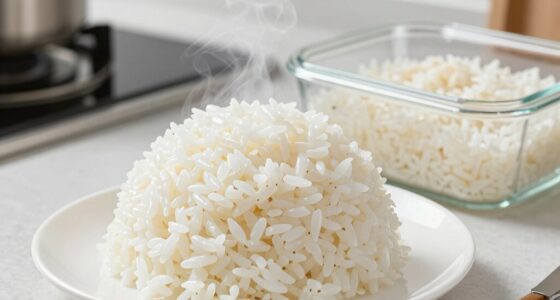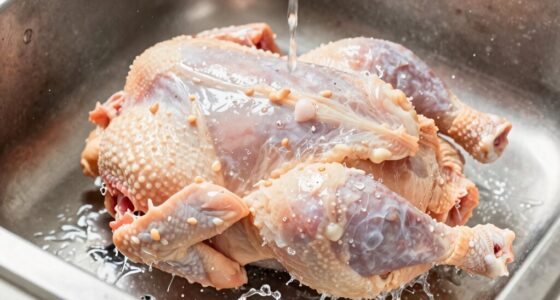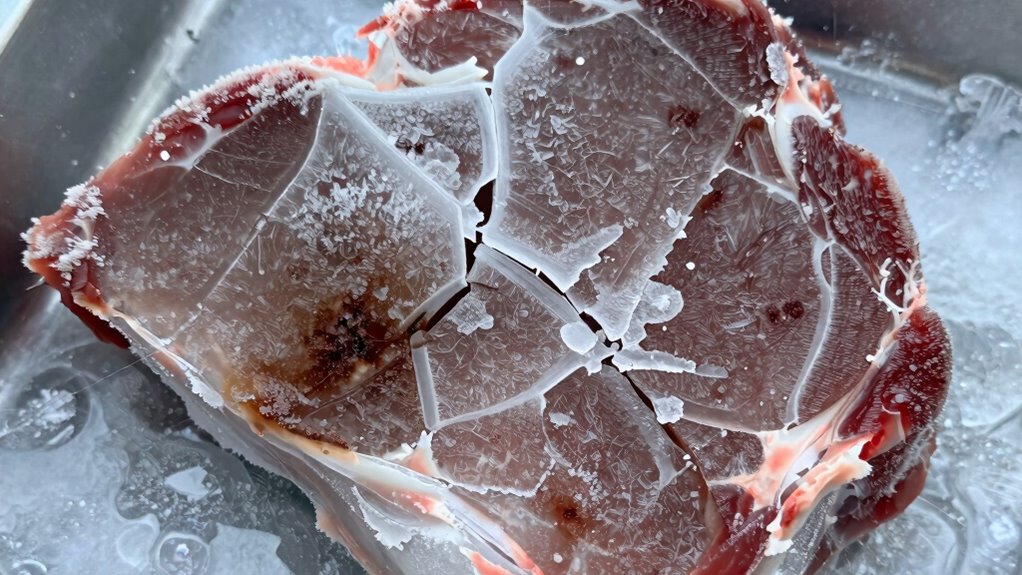

Freezer burn looks ugly because ice crystals form on food when moisture escapes or freezes improperly, causing dry, tough, and leathery areas. This happens when packaging deteriorates, or temperatures fluctuate, exposing food to air and moisture. Although it doesn’t make food unsafe, it affects taste and texture badly. Understanding what causes freezer burn helps you prevent it more effectively. Keep exploring to find out useful tips on how to protect your food from this common issue.

Get kitchen staples and gadgets delivered free — and shop member deals
- Fast, free delivery on millions of items
- Access to Prime Big Deal Days deals on October 6–7
- Prime Video, Amazon Music and more included
Key Takeaways
- Freezer burn appears as dry, discolored patches on frozen food’s surface, caused by ice crystal formation and packaging deterioration.
- It results from moisture loss and cell damage, leading to tough, leathery textures and unappealing appearance.
- Freezer burn is not unsafe but significantly reduces flavor, texture, and overall food quality.
- Fluctuating temperatures and inadequate packaging accelerate ice crystal growth and surface dehydration.
- Proper sealing, stable freezer temperatures, and minimizing door openings prevent freezer burn and preserve food look and taste.
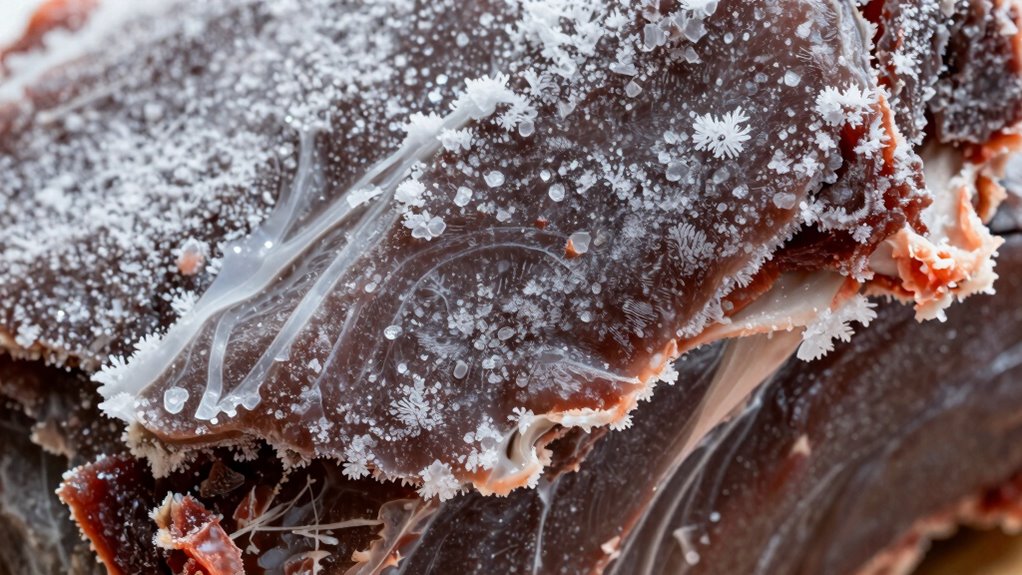
Have you ever noticed strange ice crystals or a dry, leathery texture on your frozen food? That’s often a sign of freezer burn, and it can make your food look unappealing and change its texture. But what exactly is freezer burn, and what causes it? At its core, freezer burn results from ice crystal formation and packaging deterioration. When food is improperly stored or left in the freezer too long, moisture inside the food migrates to the surface and freezes into large ice crystals. Over time, these crystals damage the food’s cellular structure, leading to that dry, tough, or leathery feel you see and feel when you open the package. Proper storage practices can significantly reduce the risk of freezer burn. Ice crystal formation is a key part of the process. When food is exposed to fluctuating temperatures—say, if the freezer isn’t consistently cold or if the door is opened frequently— moisture inside the food sublimates. Instead of staying locked inside, moisture escapes and refreezes on the surface, creating those large, visible ice crystals. These crystals puncture the cell walls of the food, which explains the dry, leathery texture you notice after thawing. The more ice crystals form, the more the food’s quality diminishes, making it less flavorful and more prone to freezer burn.
Freezer burn causes dry, leathery textures by damaging food cells with ice crystals from improper storage.
Packaging deterioration also plays a significant role in freezer burn. If your food isn’t stored in airtight, moisture-proof packaging, the environment inside your freezer can become dry and harsh. Over time, the packaging material may develop small tears or become less effective at sealing out air. When this happens, moisture escapes from the food and interacts with the cold air in the freezer. This ongoing exchange of moisture and air accelerates ice crystal formation and increases the likelihood of freezer burn. Weak or inadequate packaging fundamentally exposes your food to the dry, cold air, which strips away moisture and causes the characteristic dry patches and leathery texture.
To prevent freezer burn, you need to focus on both proper packaging and storage practices. Use airtight containers or vacuum-sealed bags to keep moisture in and air out. Wrap food tightly, removing as much air as possible before sealing. Keep your freezer at a consistent temperature, ideally 0°F (-18°C), and avoid opening the door excessively. When you follow these steps, you minimize ice crystal formation and prevent packaging deterioration, preserving the quality and appearance of your frozen foods. While freezer burn might not make food unsafe, it definitely affects its taste and texture, so taking precautions helps ensure your frozen items stay fresh and appealing.
As an affiliate, we earn on qualifying purchases.
Frequently Asked Questions
Can Freezer Burn Affect Food Safety?
Freezer burn doesn’t typically affect food safety, but it does impact food texture and taste deterioration. When your food develops freezer burn, it’s caused by moisture loss, leading to dry, tough spots, and flavor changes. While it’s safe to eat, the compromised texture and flavor may make it less enjoyable. To prevent this, guarantee proper packaging and airtight seals, so your food stays fresh and safe longer.
Does Freezer Burn Change the Nutritional Value?
Freezer burn doesn’t substantially change the food’s nutritional value, but it does cause flavor degradation and texture alteration. You might notice a loss of taste and a change in consistency, making the food less appealing. The nutrients largely stay intact, so you still get the vitamins and minerals. While it’s not harmful, freezer burn impacts quality, so you’re better off consuming the food sooner rather than later for the best flavor and texture.
How Can I Prevent Freezer Burn on Specific Foods?
To prevent freezer burn on specific foods, you should wrap them tightly in airtight packaging, like plastic wrap or freezer bags, squeezing out excess air. Use vacuum-sealing machines if possible. Proper wrapping helps maintain food texture and flavor preservation by reducing moisture loss and exposure to air. Also, label and date your items to guarantee you use them within ideal timeframes, keeping your food fresh and tasty longer.
Is Freezer Burn More Common in Certain Types of Packaging?
Yes, freezer burn is more common with certain packaging materials, especially those that aren’t airtight or moisture-proof. Flexible plastic wraps and thin bags often allow air and moisture to seep in, increasing the risk during extended storage durations. To prevent this, choose high-quality, airtight packaging like vacuum-sealed bags or heavy-duty foil containers, and be mindful of storage durations to keep your food fresh and minimize freezer burn.
Can Freezer Burn Be Reversed or Repaired?
Freezer burn can’t be fully reversed because ice crystal formation causes moisture loss, which damages the food’s texture and appearance. Once freezer burn occurs, the affected areas won’t regain their original moisture or quality. However, you can trim away the dry, discolored parts and use the remaining food in cooked dishes where texture matters less. To prevent freezer burn, use airtight packaging to minimize moisture loss.
As an affiliate, we earn on qualifying purchases.
Conclusion
So, next time you spot freezer burn, remember it’s just a sign of moisture loss, not spoiled food. It’s a visual reminder to wrap tightly, store properly, and consume sooner. Don’t let the ugly appearance scare you away from enjoying your frozen favorites. Instead, see it as an opportunity to refresh your storage habits, protect your food, and savor every bite. Because with proper care, your frozen goods can stay fresh, tasty, and inviting.
freezer-safe food storage containers
As an affiliate, we earn on qualifying purchases.
As an affiliate, we earn on qualifying purchases.
temperature controller for freezer
As an affiliate, we earn on qualifying purchases.
As an affiliate, we earn on qualifying purchases.
NFL season / tailgating Picks
team gear
As an affiliate, we earn on qualifying purchases.