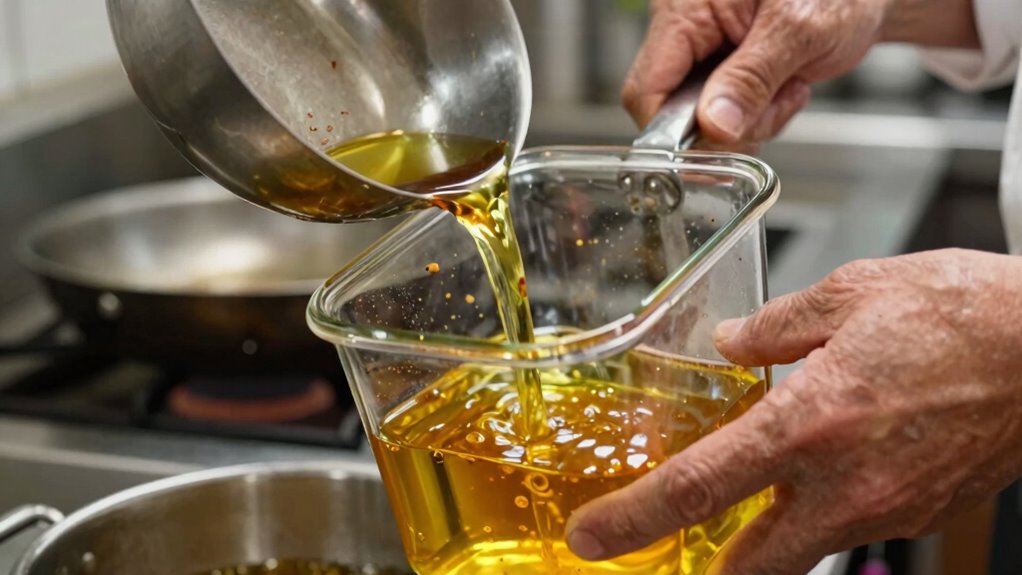

You can safely reuse frying oil if you filter out food particles after each use, store it in a clean, airtight container in a cool, dark place, and use it within a few weeks. Keep an eye on signs of degradation like darkening, bad smell, or smoking—if these appear, it’s time to toss the oil. Proper techniques extend its life, but knowing when to discard guarantees your food stays safe and tasty. Keep exploring for more tips.
Key Takeaways
- Filter oil thoroughly after each use to remove debris and prevent residue buildup, extending its safe lifespan.
- Store used oil in a cool, dark, airtight container and use within a few weeks to avoid rancidity.
- Discard oil if it darkens, develops a foul smell, smokes, foams, or becomes sticky, indicating degradation.
- Limit reuse cycles; generally, oil should be replaced after 3-4 uses to minimize health risks.
- Rely on sensory cues—smell, color, and appearance—to determine if the oil is still safe for frying.
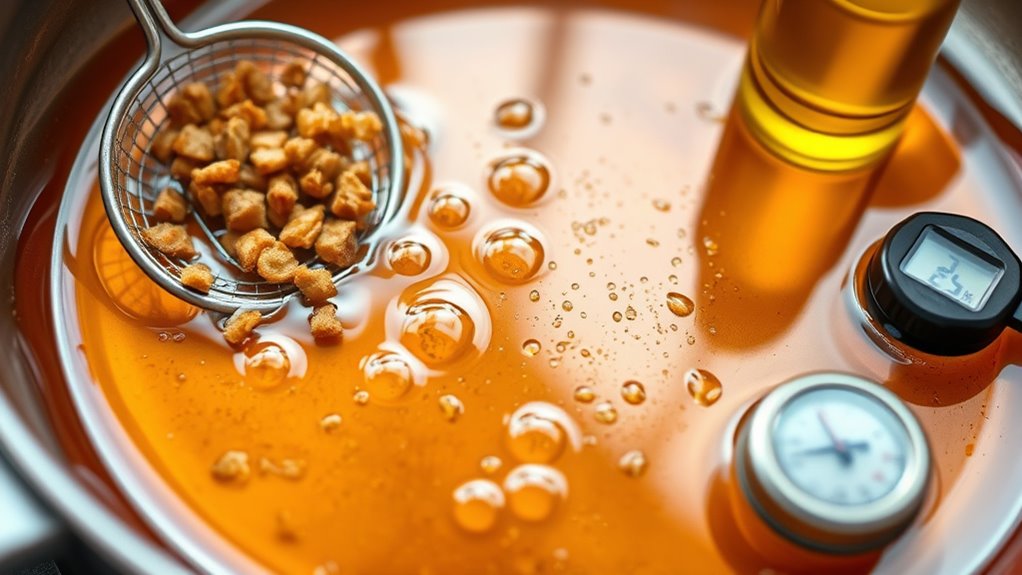
Reusing oil in frying can be a practical way to save money and reduce waste, but it also raises important questions about safety and health. When you’re considering whether to reuse your frying oil, the first step is understanding how to keep it clean and safe for future use. Proper oil filtration is essential in this process. After each batch, allow the oil to cool slightly, then pour it through a fine-mesh strainer or a specialized oil filter to remove food particles, crumbs, and debris. This simple step prevents residue buildup, which can cause the oil to break down faster and develop off-flavors. Using a dedicated filter cone or cheesecloth can also help trap small particles, ensuring that the oil remains clear and less likely to degrade prematurely.
Filter and store frying oil properly to extend its freshness and safety for reuse.
Once filtered, storage techniques become vital to maintaining the oil’s quality. You should transfer the cleaned oil into a clean, airtight container—preferably a glass or metal one—that’s resistant to heat and odors. Store the container in a cool, dark place, away from direct sunlight and heat sources. Exposure to light and heat accelerates oxidation, which deteriorates the oil and makes it unsafe for reuse. Label the container with the date of the last use to keep track of how long the oil has been stored. Ideally, you should use the oil within a few weeks, as prolonged storage increases the risk of rancidity and harmful compounds developing.
While reusing oil can be economical, it’s important to recognize the signs that indicate it’s time to toss it. No matter how carefully you filter and store the oil, each cycle of heating and cooling breaks down its molecular structure. Over time, the oil will darken, develop a foul smell, or become sticky and thick. These are clear indicators that the oil has degraded beyond safe use. Additionally, if you notice smoking or foaming during frying, it’s a sign that the oil has reached its limit. Consuming fried foods cooked in compromised oil can pose health risks, including ingestion of harmful free radicals and trans fats.
Ultimately, practicing good oil filtration and following proper storage techniques can extend the life of your frying oil, but there’s a limit. Trust your senses and adhere to recommended reuse guidelines. When in doubt, it’s safer to discard the oil and start fresh. This approach not only ensures your food remains delicious but also protects your health from potential hazards associated with degraded cooking oils.

5 Inch Stainless Steel Funnel with Strainer and 200 Fine Mesh Filter, Food Grade Metal Funnel, Cooking Oil Filter, Oil Strainer for Deep Fryer, Milk Strainer, Funnels for Kitchen Use Filling Bottles
Safe & Durable: The metal funnel made of high-quality Food-Grade stainless steel. Stainless steel funnel is safe, non-toxic,…
As an affiliate, we earn on qualifying purchases.
As an affiliate, we earn on qualifying purchases.
Frequently Asked Questions
How Many Times Can I Reuse Frying Oil Safely?
You can typically reuse frying oil 3 to 4 times, but watch for oil odor and smoke point. If the oil develops a rancid smell or starts smoking sooner than usual, it’s time to toss it. Each reuse slightly lowers the smoke point, increasing the risk of burning food or producing harmful compounds. To stay safe, strain the oil after each use and avoid reusing it if it shows signs of degradation.
Does Filtering Oil Extend Its Usability?
Filtering oil can extend its usability, but it’s not a magic fix. While filtering improves effectiveness by removing food particles, it doesn’t halt oil degradation. Over time, smoke points lower, and harmful compounds build up, making reuse risky. You feel the difference between fresh and old oil — one promises crispness, the other potential health hazards. So, filter wisely, but don’t rely solely on filtering to keep your oil safe.
Can I Mix Different Oils for Frying?
You can mix different oils for frying, but be cautious with oil blending. Combining oils may alter the flavor and could cause unwanted flavor transfer between foods. Stick to oils with similar smoke points to prevent burning or smoking. Mixing oils can sometimes improve frying performance, but always consider how the flavors will interact. If you’re unsure, it’s safer to use a single, high-quality oil to guarantee the best taste and safety.
What Are the Health Risks of Reusing Oil?
Reusing oil is like playing with fire—you risk getting burned by health effects. When you reheat oil multiple times, it can form carcinogens, which are harmful compounds linked to cancer. These toxins can settle into your food, increasing your risk for health issues. To stay safe, avoid reusing oil excessively, and always discard it if it smells rancid or looks dark and sticky. Better safe than sorry!
How Do I Store Used Frying Oil Properly?
You should store used frying oil in a clean, airtight container like a glass jar or a metal container to prevent contamination. Keep it away from heat, light, and moisture, ideally in a cool, dark place. Make sure to strain out food particles before sealing. Proper oil storage helps maintain quality and reduces health risks, so always label the container with the date you stored it to track freshness.
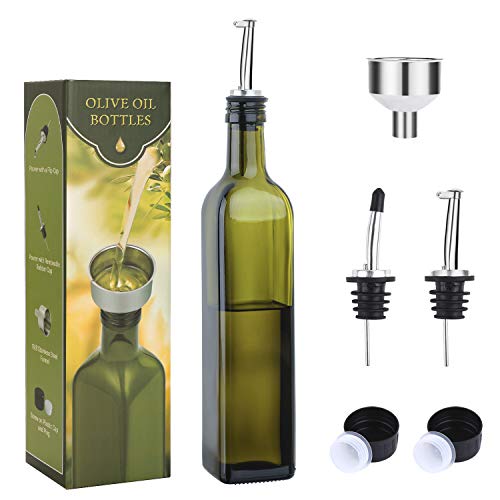
AOZITA 17oz Glass Olive Oil Bottle Dispenser – 500ml Green Oil and Vinegar Cruet with Pourers and Funnel – Olive Oil Carafe Decanter for Kitchen
ELEGANT OLIVE OIL DISPENSER BUNDLE – Our glass olive oil bottle with spout stoppers make it easy to…
As an affiliate, we earn on qualifying purchases.
As an affiliate, we earn on qualifying purchases.
Conclusion
Remember, you are what you eat—and that includes your fried foods. Reusing oil can be safe if you monitor its color, smell, and smoke point, but don’t push your luck. When in doubt, it’s better to toss it and start fresh. After all, a wise person once said, “An ounce of prevention is worth a pound of cure.” Keep your health in mind, and enjoy your crispy treats responsibly.
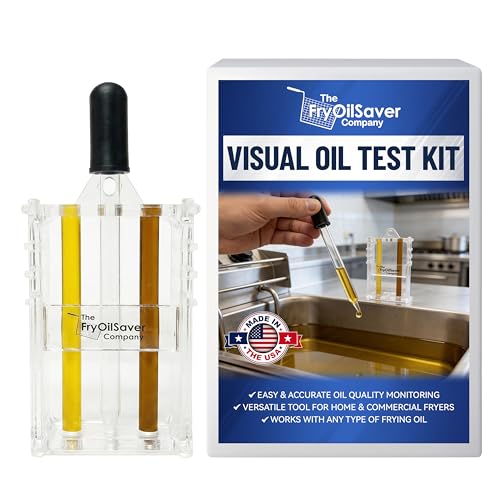
Fryer Oil Test Kit – Visual Two Color Analysis – Deep Fryer Oil Analysis Kit w/Eye Dropper – Monitor Frying Grease Quality for Kitchen, Restaurant, Food Truck – FC3017B FMP 538-1000 by FryOilSaver Co
EASY & ACCURATE OIL QUALITY MONITORING – Perfect for both home kitchens and commercial deep fryers, the FryOilSaver…
As an affiliate, we earn on qualifying purchases.
As an affiliate, we earn on qualifying purchases.

FastRack 5 Gallon Hedpak with Cap | BPA-free, Food-Grade, and Leak-Proof | White Water Container | Ideal for brewing, fermentation, or storage
[What’s Included?] With this purchase, you'll receive one 5-Gallon Hedpack with cap, made with Food-Grade & BPA-Free material…
As an affiliate, we earn on qualifying purchases.
As an affiliate, we earn on qualifying purchases.