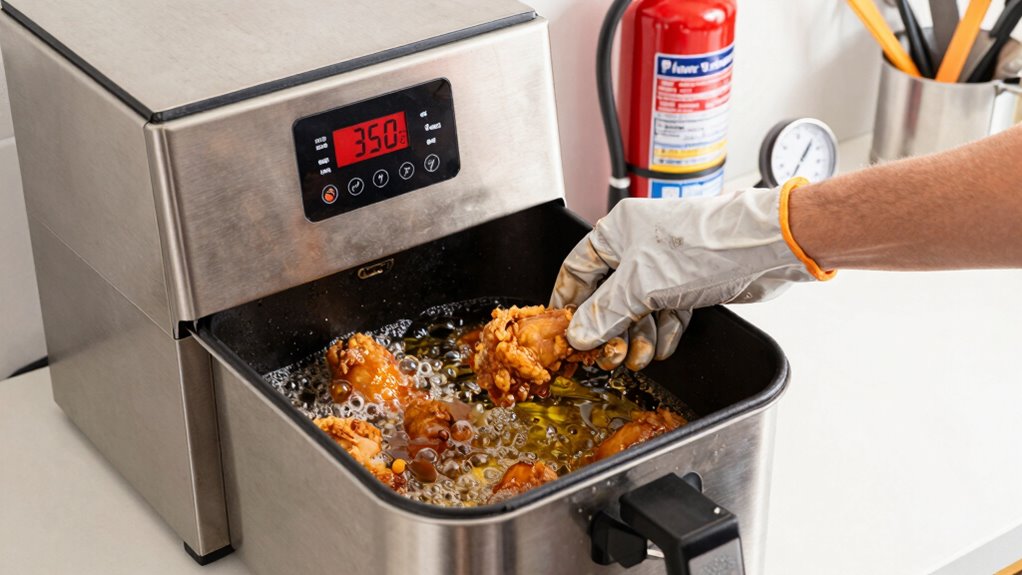

To deep fry safely at home, keep a thermometer handy and maintain oil temperature between 350°F and 375°F for crispy results. Use a sturdy, deep pot and never leave hot oil unattended. Avoid overcrowding to prevent drops in temperature and splatters. Always handle hot oil with care, wearing protective gear, and keep safety devices like fire extinguishers nearby. Following these tips helps guarantee your frying is both delicious and safe—learn more for perfect, stress-free results.
Listen free for 30 days with Audible
Thousands of audiobooks and originals — cancel anytime.
As an affiliate, we earn on qualifying purchases.
Key Takeaways
- Use a reliable thermometer to monitor oil temperature between 350°F-375°F and adjust heat accordingly.
- Always keep a fire extinguisher nearby and never use water on an oil fire for safety.
- Do not overcrowd the pot to maintain consistent oil temperature and prevent soggy, unevenly cooked food.
- Select oils with a smoke point above 400°F and check labels for additives that may affect frying.
- Allow used oil to cool completely, strain it, and dispose of it properly; never pour down drains.
As an affiliate, we earn on qualifying purchases.
Why Oil Temperature Is Critical for Perfect Deep Frying
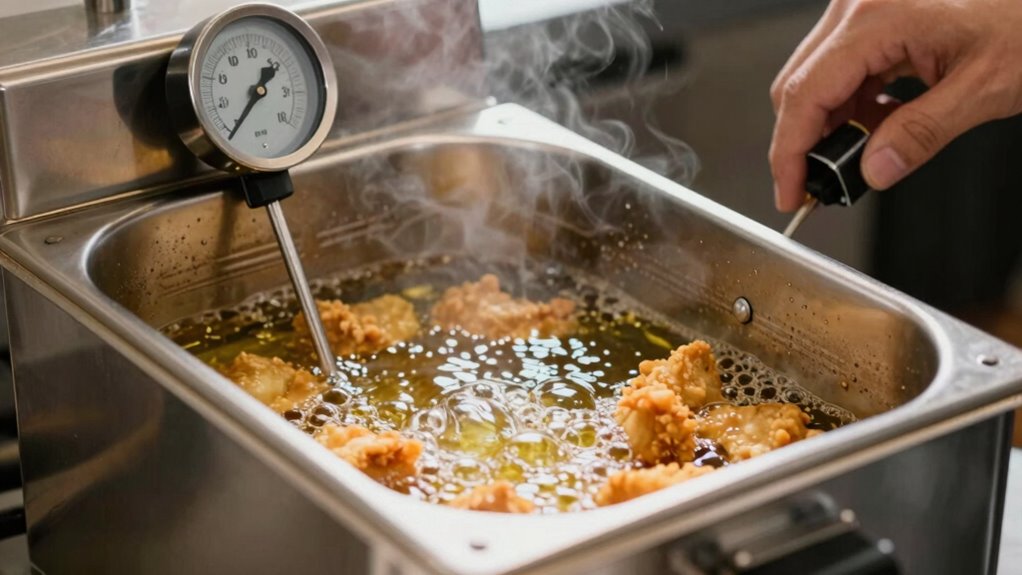
Maintaining the right oil temperature is essential because it directly affects the quality of your fried foods. When you control the temperature, you promote oil stability, preventing it from breaking down or becoming burnt. Proper temperature control ensures that food cooks evenly, resulting in a crispy exterior and a moist interior. If the oil is too hot, it can cause over-browning or burning, compromising flavor and safety. Conversely, if the temperature is too low, your food absorbs excess oil, becoming greasy and soggy. Consistent temperature management helps you achieve consistent results, making your frying process more predictable. Using a thermometer and monitoring the oil throughout cooking is key to maintaining ideal heat and ensuring your fried foods come out perfect every time. Additionally, understanding oil breakdown and how heat impacts oil longevity can help you choose the right type of oil for your deep frying needs. Properly managing oil temperature also reduces oil smoking, which can negatively affect flavor and safety during frying. Regularly checking that the oil remains within the optimal temperature range can also prevent oil degradation, ensuring healthier and tastier fried foods. Being aware of oil stability can further aid in extending the life of your cooking oil and maintaining consistent quality.
As an affiliate, we earn on qualifying purchases.
How to Choose the Best Oil for Deep Frying (With Smoke Point Tips)
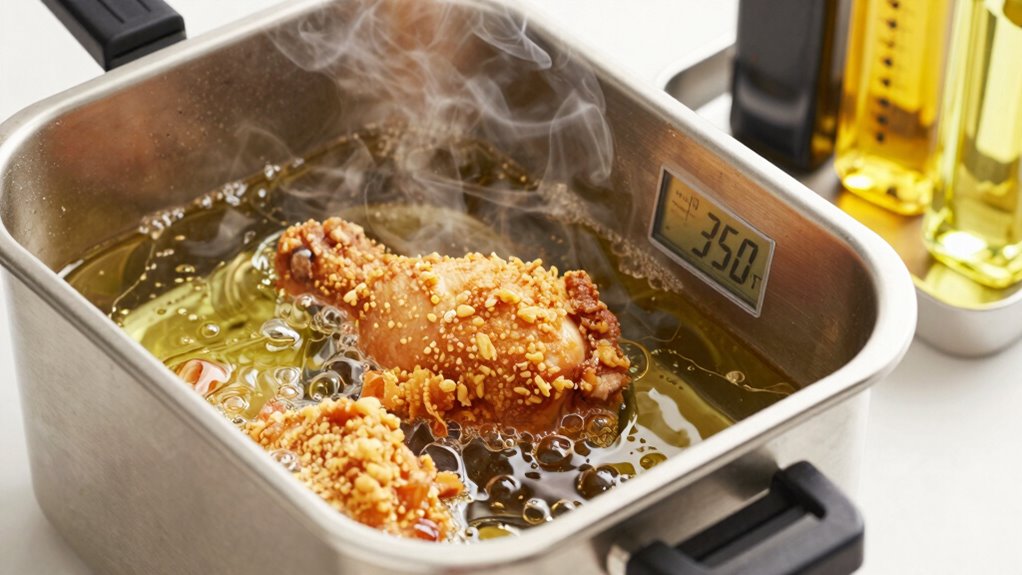
Choosing the right oil is essential for successful deep frying because it affects both the flavor and safety of your foods. When choosing oil, prioritize a high smoke point to prevent burning and dangerous smoke. Oils like peanut, vegetable, canola, and sunflower are excellent options. Consider the following when selecting your oil:
- Opt for oils with a smoke point above 400°F for safer, more stable frying.
- Avoid oils that break down easily at high temperatures, which can compromise taste and safety.
- Think about flavor: neutral oils won’t interfere with your dish’s taste.
- Check labels for additives or impurities that might affect frying performance.
- Remember that Free Floating techniques can help prevent oil splatters and improve safety during deep frying.
- Incorporating oil stability knowledge can help you choose oils that maintain quality over multiple uses, enhancing safety and efficiency.
- Additionally, understanding frying safety practices can help you prevent accidents and ensure a safe cooking environment.
- Understanding thermal degradation of oils can further assist in selecting options that retain their integrity at high temperatures, contributing to overall safety and quality.
As an affiliate, we earn on qualifying purchases.
How Do You Check and Keep the Right Oil Temperature?
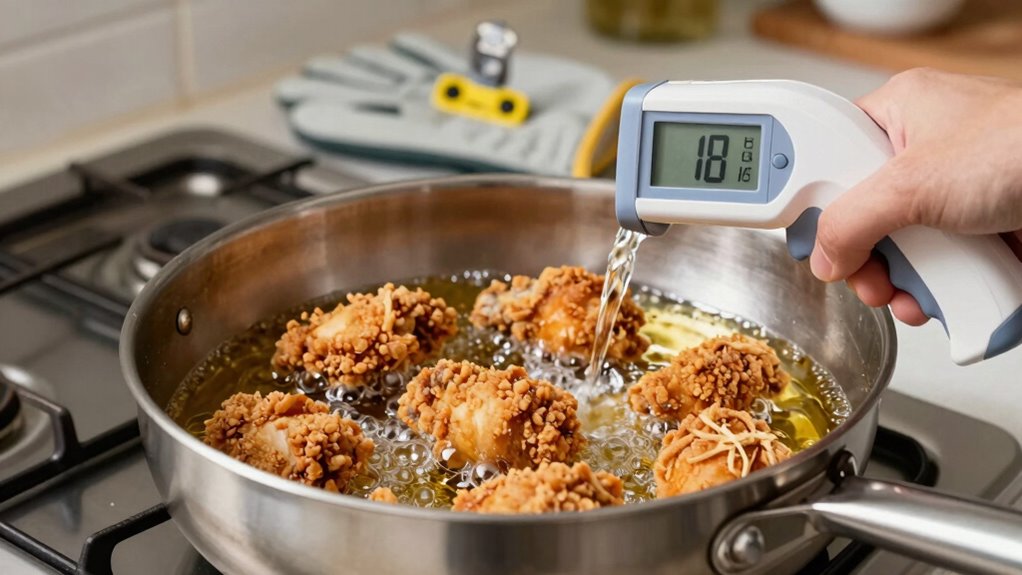
To get perfect results, you need to keep the oil at the right temperature. Use a thermometer to check it frequently and adjust the heat as needed. Staying attentive and maintaining consistent heat guarantees your fried food turns out crispy and golden every time. Additionally, understanding safe installation practices can help prevent accidents when setting up your deep fryer. Proper equipment maintenance is essential for reliable performance and safety during frying. Being aware of smart technology can also help you monitor and control your cooking environment more precisely, ensuring optimal oil temperature and safety throughout the process.
Use a Thermometer
Using a thermometer is essential for ensuring your food cooks evenly and safely when deep frying. It helps you monitor the oil temperature accurately, preventing dangerous temperature fluctuations that can lead to burnt or undercooked food. To get the best results, choose a thermometer with high accuracy and keep it clean for reliable readings. Regularly check the temperature, especially if you notice the oil bubbling more or less than usual, indicating fluctuation. This keeps your frying consistent and prevents accidents. Monitoring the temperature also helps optimize the use of Glycolic Acid in skincare routines, ensuring safe and effective application. Additionally, understanding affiliate disclosure and privacy policies can help you make informed decisions about your online interactions. Proper temperature control also supports sound design practices by ensuring the right conditions for recording or working with audio equipment. Maintaining a consistent oil temperature is also crucial for food safety, reducing the risk of harmful bacteria growth during frying.
Maintain Consistent Heat
Maintaining a consistent oil temperature is key to achieving perfect deep-fried foods. To do this, keep a reliable thermometer in the oil at all times, so you can monitor the temperature closely. Adjust the heat control on your stove to maintain the ideal oil temperature, usually between 350°F and 375°F, depending on what you’re frying. If the oil starts to cool down, increase the heat slightly; if it gets too hot, reduce it immediately. Avoid overcrowding the pan, as adding too much food can cause the temperature to drop. Stir gently if needed, and watch the thermometer continuously to keep the oil at a steady temperature. Incorporating proper kitchen tools can help you monitor and manage temperature more effectively. Additionally, understanding thermal stability of your oil can aid in maintaining steady heat during frying. Being aware of oil turnover rate can also help prevent temperature fluctuations during extended frying sessions.
Monitor Oil Carefully
Checking and keeping the right oil temperature requires your full attention. Use a reliable thermometer to monitor the oil’s heat, guaranteeing it stays within the ideal frying range. Regularly check the oil quality; fresh oil maintains consistent temperature and prevents dangerous splatters. Use appropriate frying utensils—long tongs or a slotted spoon—to handle food safely and avoid splashes.
Be alert for signs of overheating, like smoking or darkening oil, and adjust the heat immediately. Keep a close eye on the temperature as you cook, avoiding sudden drops or spikes. Remember, maintaining the right temperature not only ensures crispy results but also keeps your kitchen safe.
- Stay vigilant with your thermometer for precise readings
- Use proper frying utensils to handle food safely
- Replace oil promptly to preserve quality and safety
- Never leave hot oil unattended
As an affiliate, we earn on qualifying purchases.
Safety Tips for Handling Hot Oil and Preventing Accidents
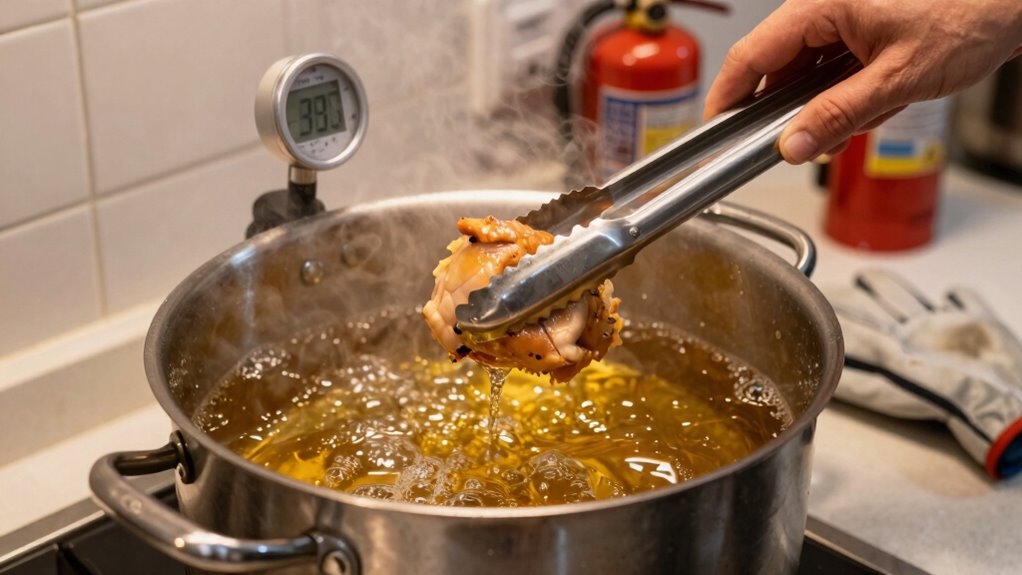
Because hot oil can cause serious burns and fires, it’s essential to handle it with care and attention. Always use a deep, sturdy pot and avoid overfilling it to prevent oil splatter. When adding food, do so slowly to minimize splashes. Keep a close eye on the temperature to avoid overheating, which increases fire hazards. Never leave hot oil unattended, and keep a fire extinguisher nearby, specifically a Class K extinguisher for kitchen fires. Be cautious when moving or pouring hot oil, using heat-resistant gloves if needed. Keep flammable objects away from the stove and ensure children and pets are out of reach. Regularly monitoring oil temperature helps prevent overheating and accidents. Following these safety tips helps prevent accidents and keeps your deep frying experience safe.
A Step-by-Step Guide to Deep Frying Safely at Home
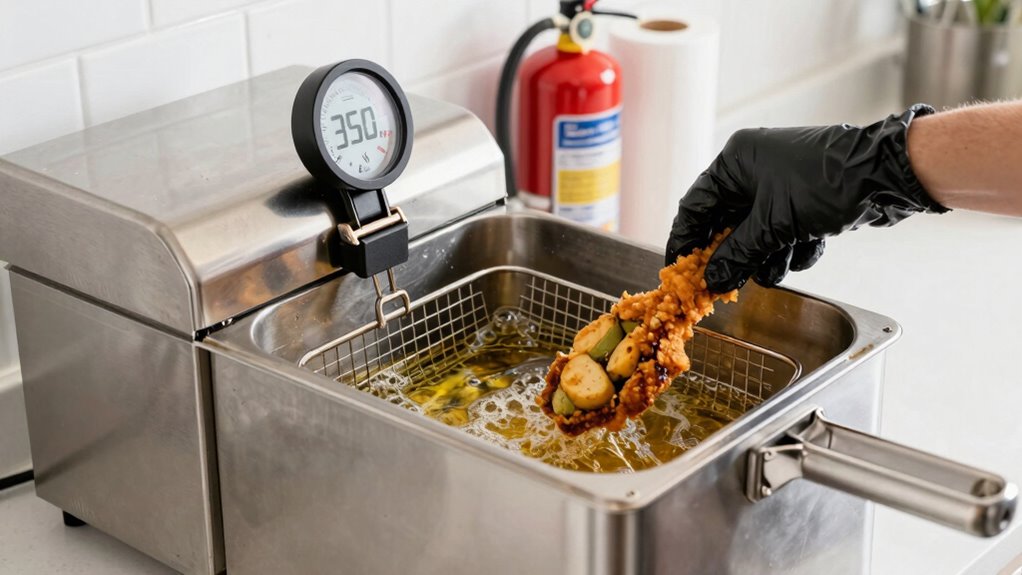
To fry safely at home, you need to keep a close eye on the oil temperature and use a thermometer for accuracy. Make sure you have the right safety equipment, like a splatter guard and fire extinguisher, nearby. Following proper steps and precautions helps prevent accidents and makes sure your food turns out just right. Regularly monitoring the temperature ensures optimal frying conditions and reduces the risk of oil fires, especially when managing temperature control during deep frying. Understanding oil chemistry can also help you choose the best oils for high-temperature frying and improve safety.
Proper Oil Temperature Monitoring
Maintaining the correct oil temperature is essential for achieving crispy, evenly cooked fried foods and ensuring safety. When you monitor temperature accurately, you prevent excessive oil absorption that can make your food greasy and dull the crispy texture you desire. Using a reliable thermometer helps you keep the oil within the ideal range, typically between 350°F and 375°F. This control creates a perfect golden crust and prevents burning or undercooking.
- Feel confident knowing your food turns out perfectly every time
- Enjoy that satisfying crunch without sogginess
- Protect yourself and your loved ones from oil splatters and accidents
- Achieve restaurant-quality results right in your kitchen
Safety Precautions and Equipment
Deep frying at home can be safe and straightforward when you follow essential precautions and use the right equipment. First, always keep a fire extinguisher nearby and never pour water on an oil fire, as it worsens fire hazards. Use a sturdy, deep pot with a securely fitting lid to contain splatters and prevent accidents. Wear protective gear like oven mitts and long sleeves to shield your skin from hot oil splashes. Keep children and pets away from the frying area. Never leave hot oil unattended, and ensure your smoke detector functions properly. By taking these safety precautions and using appropriate equipment, you minimize risks and enjoy deep frying with confidence.
Common Deep Frying Mistakes and How to Avoid Them
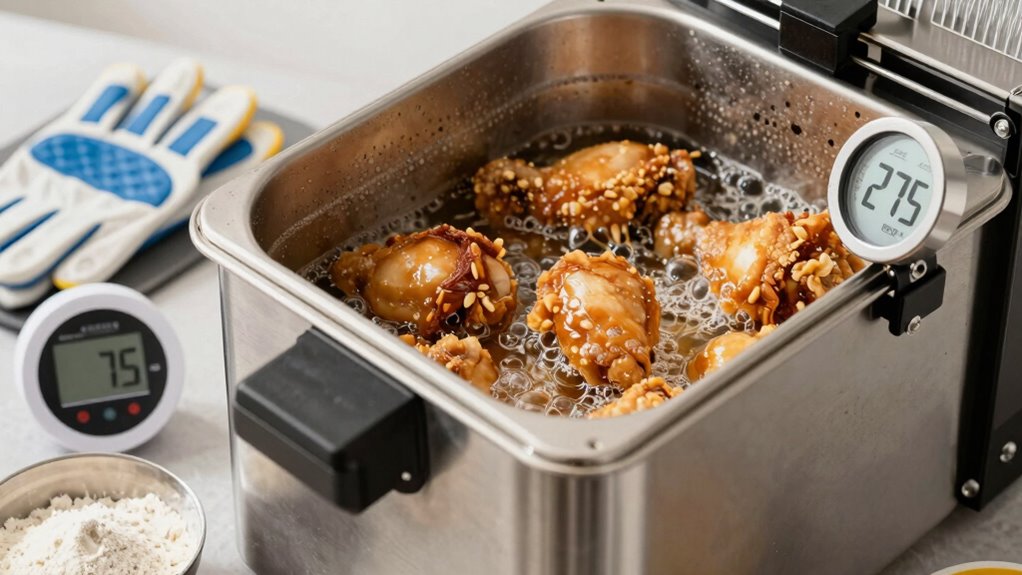
Frying at home might seem straightforward, but common mistakes can ruin your results and even pose safety risks. One mistake is overcrowding the pot, which lowers oil temperature and results in soggy, greasy food. Always fry in small batches to maintain proper heat. Another mistake is using cold oil; adding food to cold oil causes oil splatters and uneven cooking. Be sure to heat the oil to the correct temperature before frying. Also, avoid rushing the process, as impatience can lead to accidents or burnt food. Lastly, neglecting safety precautions, like not using a thermometer, can result in dangerous spills or fires. To keep your fry experience safe and delicious, pay attention to these common pitfalls and take the time to do it right.
How to Clean and Dispose of Used Frying Oil Properly
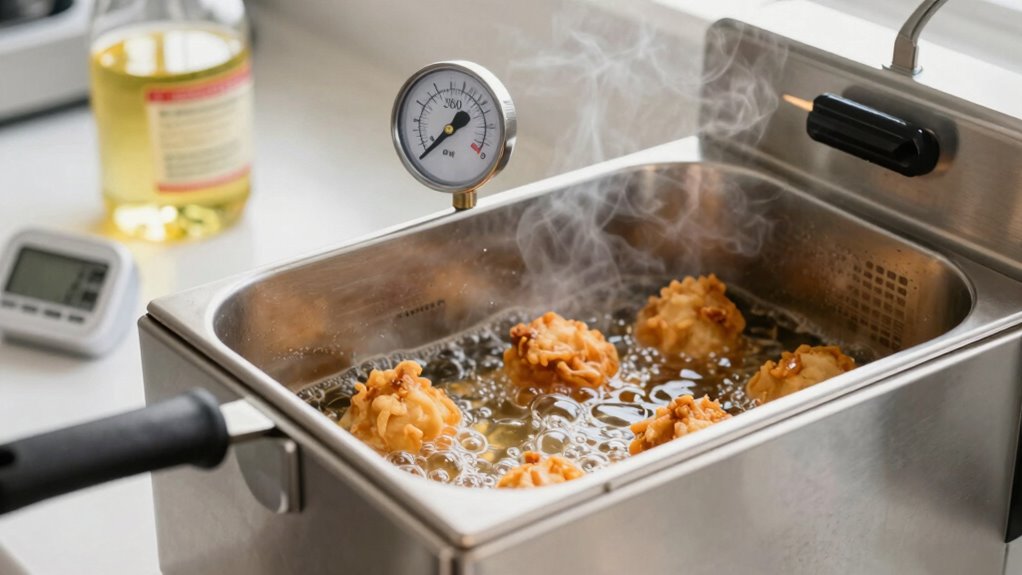
After you finish frying, it’s important to clean and dispose of the used oil properly to stay safe and protect the environment. Start by letting the oil cool completely, then strain it through a fine mesh or cheesecloth to remove food particles. For safe disposal, consider oil recycling; many communities have local centers that accept used cooking oil for conversion into biofuel. If recycling isn’t available, use designated disposal methods like sealing the cooled oil in a leak-proof container and discarding it in the trash. Never pour oil down the drain, as it clogs pipes and pollutes water systems. Proper disposal methods help prevent environmental damage and keep your home safe. Recycling and responsible disposal are key steps in maintaining eco-friendly cooking habits.
Frequently Asked Questions
How Long Does It Take for Oil to Reach the Ideal Temperature?
It typically takes about 5 to 10 minutes for your oil to reach the ideal temperature, depending on your stove and the amount of oil. During heat-up time, you should consistently monitor the temperature with a thermometer to guarantee accuracy. Avoid rushing this process, as uneven heating can affect cooking results. Once the oil hits the target temperature, you’re ready to start frying safely and effectively.
Can I Reuse Frying Oil Multiple Times Safely?
You can absolutely reuse frying oil multiple times if you take proper steps, like oil filtration after each use to remove food particles, which helps prevent rancidity. Store it in airtight containers in a cool, dark place to maintain quality. Just remember, if the oil smells off, smokes at high temperatures, or turns dark, it’s time to discard and start fresh to keep your frying safe and tasty.
What Are the Signs of Overheated or Burnt Oil?
You’ll notice overheated or burnt oil when it starts to smoke beyond its smoke point, signaling it’s too hot. Discoloration is another sign—you might see a darkening or unusual hue in the oil. If it smells rancid or has a strange odor, that’s a clear warning too. Avoid using oil that shows these signs, as it can affect your food’s taste and safety.
How Do I Prevent Oil Splatters During Frying?
Oh, the thrill of oil splatters—who doesn’t love a little kitchen chaos? To prevent oil splatters, use a splatter screen or cover the frying surface with a lid, leaving a small gap. Keep the food dry before adding it to the oil, and don’t overcrowd the pan. These simple steps will protect your surface and keep your kitchen cleaner, making frying safer and less messy.
Is It Safe to Fry With Electric or Gas Stoves?
Frying with an electric stove is generally safe if you follow proper precautions, such as monitoring oil temperature and guaranteeing stability. Gas stoves require extra attention to avoid open flames and accidental ignitions. Both stove types can be safe for deep frying if you keep a fire extinguisher nearby, stay attentive, and prevent oil spills. Prioritize electric stove safety and consider gas stove considerations to prevent accidents and ensure a safe frying experience.
Conclusion
Mastering deep frying at home transforms your kitchen into a bustling fry shop, with sizzling oil bubbling like a lively river. When you keep the temperature just right and handle the hot oil with care, you create crispy, golden treats that tempt every sense. With safety and technique on your side, you’ll turn simple ingredients into irresistible favorites. So, get your oil simmering at the perfect temp and enjoy the delicious, crispy results that follow.
NFL season / tailgating Picks
team gear
As an affiliate, we earn on qualifying purchases.