
Rust spots on knives happen when moisture and oxygen cause corrosion, especially if you don’t dry or store them properly. To remove rust, soak the blade in vinegar or lemon juice, then gently scrub with a soft brush or use baking soda paste for stubborn spots. Regular cleaning, thorough drying, and proper storage can prevent future rust. Keep an eye out for tips on keeping your knives rust-free as you explore further.
Listen free for 30 days with Audible
Thousands of audiobooks and originals — cancel anytime.
As an affiliate, we earn on qualifying purchases.
Key Takeaways
- Rust spots are caused by exposure to moisture, oxygen, and harsh cleaning conditions, especially if blades aren’t dried properly.
- Early rust signs include reddish-brown spots, dullness, or discoloration near the blade edge and spine.
- Regularly drying, avoiding dishwasher cleaning, and storing knives in dry, ventilated areas prevent rust formation.
- To remove rust, soak the blade in vinegar or lemon juice, then gently scrub with a soft brush or apply a baking soda paste.
- After rust removal, sharpen, polish, and apply a light layer of oil to protect against future rust.
As an affiliate, we earn on qualifying purchases.
What Causes Rust Spots on Knives?

Rust spots on knives occur mainly because moisture and oxygen interact with the metal surface, leading to corrosion. When your knife is exposed to moisture, especially in humid environments or after washing, water settles on the blade. This moisture exposure accelerates metal corrosion, especially if the knife isn’t dried thoroughly. The oxygen in the air then reacts with the exposed metal, creating rust. This process weakens the blade’s surface, causing unsightly spots and potential damage over time. Poor storage practices, such as leaving knives damp in a drawer or exposing them to humid conditions, increase the risk of rust formation. To prevent this, always dry your knives completely after cleaning and store them in a dry, well-ventilated area. Incorporating proper sound healing principles into your routine can also promote overall health, including the health of your metal tools. Additionally, using appropriate cleaning methods can help maintain the integrity of your blades and prevent rust development. Regularly applying a light coating of mineral oil or specialized knife oil can provide an extra layer of protection against moisture and metal corrosion. Implementing proper knife maintenance routines is essential for longevity and safety of your blades.
As an affiliate, we earn on qualifying purchases.
How Can You Recognize Early Rust Signs on Your Blades?
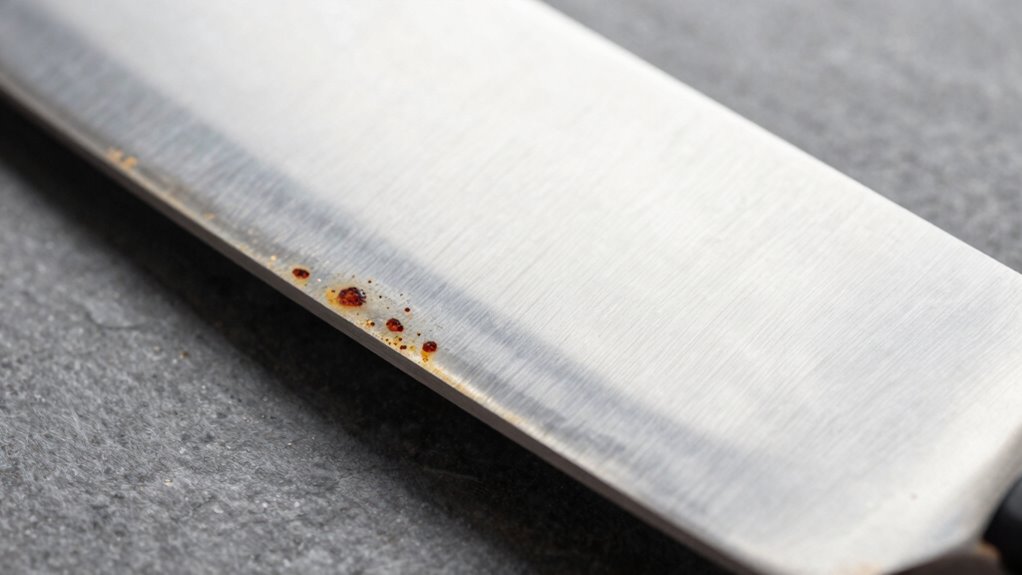
Detecting early rust signs on your blades is essential to prevent further damage. Look for subtle blade discoloration, such as dull spots or a slight change in color, which can indicate initial rust formation. Pay close attention to areas near the edge and along the spine, where rust tends to develop first. Handle corrosion is another sign to watch for; if the handle feels sticky, swollen, or shows discoloration, rust may be spreading from the blade to the handle. Early rust often appears as tiny, reddish-brown specks or patches that are easy to overlook. Addressing these signs promptly can save your knife from extensive corrosion and preserve its sharpness and functionality. Regular inspection is your best defense against rust progression. Incorporating knowledge about essential oils for maintaining metal and blade care can help prevent rust and extend the life of your knives. Additionally, understanding anti-corrosion coatings and proper storage techniques, such as using desiccant packs, can further safeguard your blades from rust development over time. Using proper cleaning techniques, including thorough drying after washing, can also significantly reduce the risk of rust formation. Being aware of metal composition can help you choose the best maintenance methods for your specific blades.
As an affiliate, we earn on qualifying purchases.
What Are the Common Mistakes That Speed Up Rust Formation?

One of the quickest ways to accelerate rust formation on your knives is neglecting proper cleaning and drying after use. Moisture exposure is a major culprit because it creates the perfect environment for rust to develop. When you don’t thoroughly dry your blades, residual water lingering on the surface promotes oxidation. Improper drying, such as leaving blades damp or wiping with a rough cloth that leaves fibers behind, can trap moisture and increase rust risk. Additionally, storing knives in humid environments or in a damp drawer worsens the problem. Using protective styling techniques on your knives, such as applying a thin layer of oil, can help create a barrier against moisture. Applying appropriate oils designed for metal preservation is essential for preventing rust. Ensuring proper storage practices, like using knife blocks or sheaths that promote air circulation, further reduces the risk of rust. Regularly inspecting and maintaining your knives by cleaning and oiling them can also extend their lifespan and prevent rust buildup. Introducing rust-resistant coatings can provide an extra layer of protection against moisture and oxidation. Avoid these mistakes by immediately rinsing, drying completely, and storing your knives in a dry, well-ventilated space. Taking these precautions helps slow down rust formation and keeps your knives in prime condition.
baking soda paste for knife rust
As an affiliate, we earn on qualifying purchases.
As an affiliate, we earn on qualifying purchases.
How Can You Effectively Remove Rust From Knives?

To effectively remove rust from your knives, start by gathering basic supplies like white vinegar, baking soda, or lemon juice, along with a soft cloth or a gentle scrub brush. Soak the rusty blade in vinegar or lemon juice for about 15 minutes to loosen corrosion. Use the scrub brush to gently scrub away rust spots, applying more vinegar or lemon juice as needed. Afterward, rinse and dry thoroughly. For stubborn rust, create a paste with baking soda and water, then apply it to the affected areas, gently polishing the surface to remove corrosion. Once the rust is gone, sharpen the blade to restore its edge, and finish with blade polishing to bring back the knife’s shine. Proper cleaning and maintenance help prevent future rust formation. Incorporating professional services can ensure your knives are maintained properly and prevent recurring rust issues over time. Additionally, considering proper storage solutions, such as storing knives in a dry environment or using protective sheaths, can help minimize rust development in the future. Using rust-resistant coatings can also provide an extra layer of protection and prolong the lifespan of your knives.
How to Prevent Rust on Knives With Proper Maintenance Tips

After removing rust from your knives, adopting proper maintenance habits can keep them rust-free longer. Regular knife maintenance is essential for rust prevention. Always dry your knives thoroughly after use, especially if they’ve been washed or exposed to moisture. Apply a light coat of food-safe oil or mineral oil to the blade to create a protective barrier against humidity. Store your knives in a dry, well-ventilated area, preferably in a knife block or on a magnetic strip, to prevent moisture buildup. Avoid leaving knives in damp environments or in the sink. Additionally, sharpen your knives regularly to reduce the chances of corrosion. Using a high-quality sharpening system can ensure your blades are properly maintained and less susceptible to rust. Incorporating proper storage techniques is equally important to maintain the integrity of your blades. Good air circulation around your knives can help prevent moisture accumulation in storage areas. Implementing rust-resistant coatings can also provide an extra layer of protection against moisture and corrosion. By practicing consistent knife maintenance, you markedly reduce the risk of rust formation and extend the lifespan of your blades.
What Are the Best Cleaning and Storage Practices to Keep Knives Rust-Free?

Proper cleaning and storage are essential to keeping your knives rust-free. Regular blade maintenance involves washing your knives with warm, soapy water immediately after use, then thoroughly drying them to prevent moisture buildup. Avoid dishwasher cleaning, as harsh detergents and high heat can damage the blade and promote rust. When storing, choose the right storage solutions—knife blocks, magnetic strips, or knife guards—that allow air circulation and prevent moisture exposure. Keep blades dry, and consider applying a light coat of mineral oil or food-safe oil for extra protection, especially if you don’t plan to use the knife for a while. Proper storage not only prevents rust but also maintains sharpness and overall blade integrity. Consistent blade maintenance and smart storage are key to prolonging your knives’ lifespan.
When Should You Consider Professional Rust Removal or Restoration?
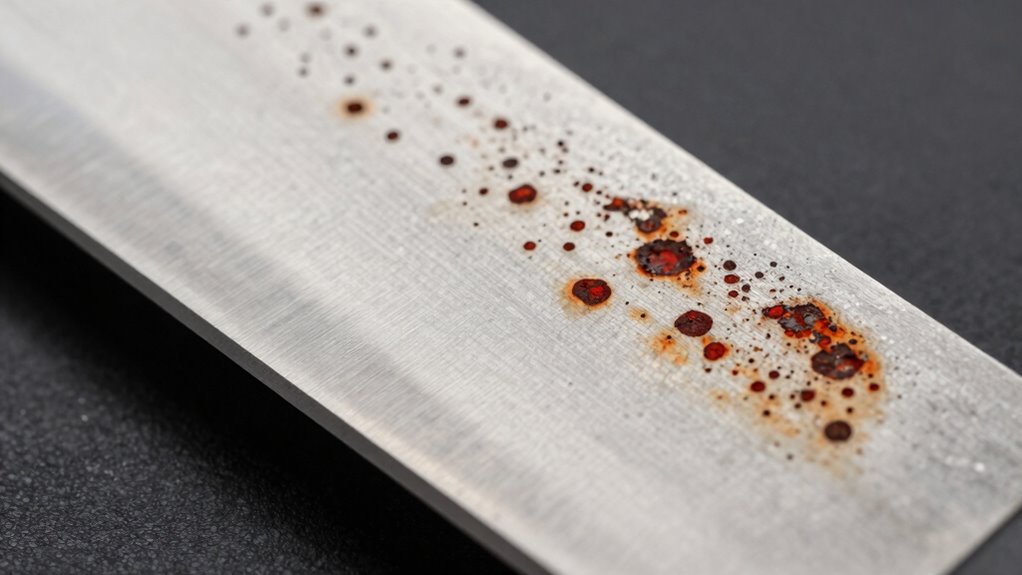
Knowing when to seek professional rust removal or restoration can save your knives from further damage and extend their lifespan. If rust spots are deep, widespread, or stubborn despite your efforts, it’s time to think about professional restoration. Attempting DIY rust removal on severely corroded blades may cause more harm than good. You should also seek experts if your knife has intricate designs or handles that could be damaged during cleaning. Professional restoration ensures thorough rust removal without compromising the blade’s integrity. Contemplate professional help if you notice pitting, discoloration, or rust that resists standard cleaning methods. Additionally, proper surface maintenance is essential to prevent further corrosion and preserve your knives’ condition.
Frequently Asked Questions
Are Certain Knife Materials More Prone to Rust Than Others?
Yes, certain knife materials are more prone to rust. Carbon steel knives, for example, are more susceptible because they lack the corrosion-resistant properties of stainless steel. If you don’t dry and clean them properly, rust spots can develop quickly. Stainless steel knives are more resistant to rust, but they can still develop spots if exposed to moisture for too long. Always maintain good care to prevent rust regardless of material.
Can Dishwashers Cause or Worsen Rust Spots on Knives?
Dishwashers are like harsh weather for knives, and yes, they can cause or worsen rust spots. Dishwasher risks include high heat, moisture, and detergent exposure, which accelerate knife rusting. These conditions strip away protective coatings and weaken the metal, making rust more likely. To keep your knives in top shape, hand wash and dry them thoroughly instead of relying on the dishwasher.
How Long Does It Typically Take for Rust to Develop?
Rust can develop in as little as a few days to weeks, depending on oxidation speed and environmental factors. If you leave your knives in humid, salty, or wet conditions, oxidation accelerates, making rust spots appear faster. To prevent this, dry your knives thoroughly after use, store them properly, and avoid exposing them to moisture. Regular maintenance helps slow down rust formation, keeping your blades sharp and rust-free longer.
Does Exposure to Acidic Foods Increase Rust Risk?
Yes, exposure to acidic foods can increase rust risk because food acidity accelerates rust formation by breaking down protective layers on your knife. When you cut or prepare highly acidic foods like citrus or tomatoes, you expose the metal to conditions that promote rust. To prevent this, clean and dry your knives promptly after contact with acidic foods, and avoid prolonged exposure, helping to keep your knives rust-free.
Are Homemade or Natural Remedies Effective for Rust Removal?
DIY solutions and natural remedies can be effective for rust removal if you choose the right methods. You might try using lemon juice or vinegar, which naturally break down rust, or create a paste with baking soda to scrub away spots. Remember, these natural remedies are often gentler than chemical cleaners, making them a good option for preserving your knife’s blade while effectively removing rust.
Conclusion
So, now you know the secrets to dodging rust’s sneaky grip. Keep your knives dry, clean, and well-loved, or risk turning them into rusty relics faster than you can chop an onion. Follow these tips, avoid common mistakes, and maybe—just maybe—you’ll keep your blades shiny and sharp for years. Or, you know, you could always surrender to rust’s charm and embrace the vintage look. Your call, but your knives deserve better.
Evergreen bestsellers Picks
bestsellers
As an affiliate, we earn on qualifying purchases.