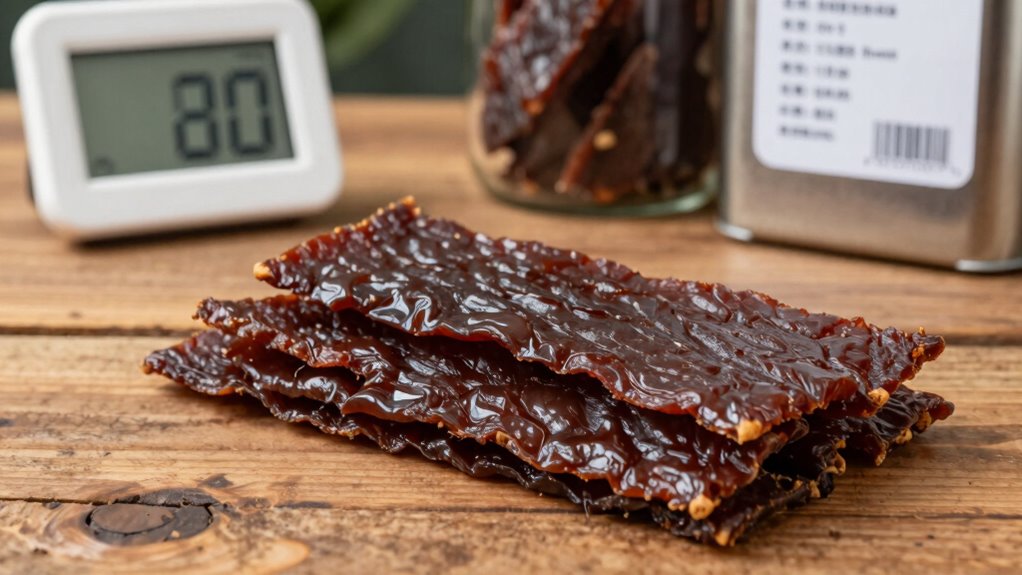

To keep your jerky safe, control the temperature by drying meat at around 160°F to prevent bacteria growth. Aim for a drying time of 4 to 8 hours until it’s firm and dry but not overly tough. Store your jerky in airtight containers in a cool, dark place away from moisture and heat. Regularly check for signs of spoilage like mold or strange odors. If you want to master these safety tips, there’s more to discover.
Key Takeaways
- Maintain an internal meat temperature of at least 160°F (71°C) during drying to ensure safety.
- Dry jerky for 4–8 hours until it is firm, dry, and properly textured without cracking.
- Store jerky in airtight, vacuum-sealed containers in a cool, dark, and dry environment to prevent spoilage.
- Regularly check for signs of spoilage like mold, slime, or discoloration before consumption.
- Clean dehydrators and equipment thoroughly to prevent bacterial contamination and ensure safe storage.

COSORI Food Dehydrator, Bigger Than 7 Trays with Large 6.5 ft² Drying Space, Stainless Steel Trays, 600W Faster Drying, 165°F Dehydrated Dryer for Jerky, Dog Treats, Herbs, Meat, Fruit, Yogurt, Silver
𝗕𝗜𝗚𝗚𝗘𝗥 𝗧𝗛𝗔𝗡 𝟳 𝗧𝗥𝗔𝗬𝗦: With 6 stainless steel trays providing 6.5 ft² of drying space, this dehydrator is…
As an affiliate, we earn on qualifying purchases.
As an affiliate, we earn on qualifying purchases.
Why Proper Temperature Control Is Critical for Jerky Safety
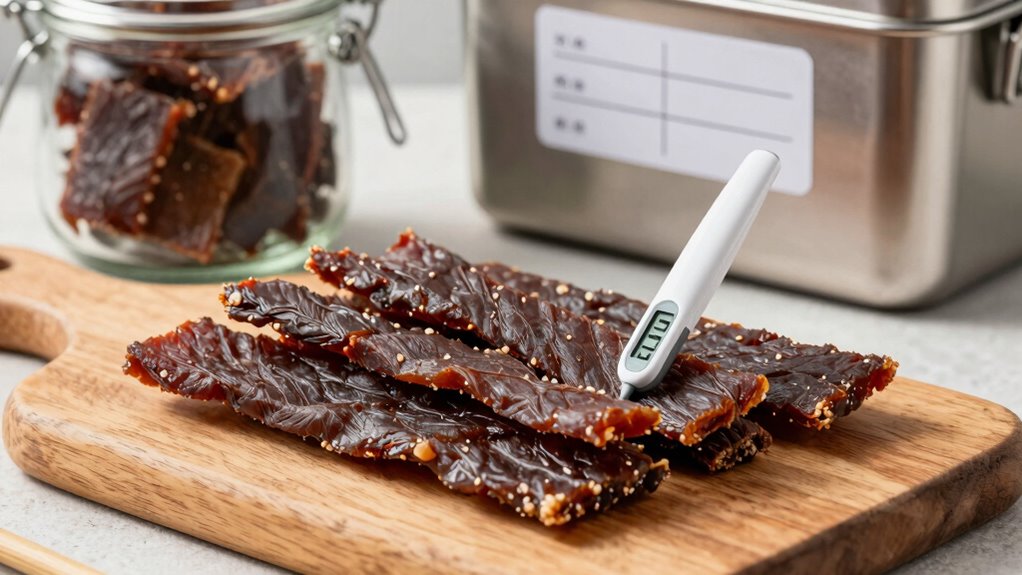
Proper temperature control is essential when making jerky because it directly affects the safety of the final product. If the temperature isn’t maintained properly, meat spoilage becomes a real risk, leading to unpleasant flavors and potential health hazards. Bacterial growth can occur rapidly at unsafe temperatures, especially in the early stages of drying. Keeping the meat at the right temperature inhibits bacteria from thriving, ensuring the jerky remains safe to eat. Too low a temperature can prolong drying time and allow bacteria to develop, while too high can cook the meat unevenly. By controlling the temperature carefully, you minimize the risk of foodborne illnesses and create a safe, high-quality jerky. Proper temperature management is key to achieving both safety and preservation. Additionally, understanding safe drying temperatures helps in selecting the appropriate equipment and techniques for optimal results. Maintaining consistent temperature levels also prevents uneven drying, which can compromise both safety and texture. Recognizing the importance of temperature regulation can further enhance the safety and quality of your jerky, especially considering how astrological signs are sometimes linked to perceptions of attractiveness, reminding us that precise control can influence outcomes in various areas. Properly monitoring food safety guidelines ensures the drying process remains effective and safe from bacterial contamination.

Food Vacuum Sealer Machine, 75kPa Compact Vacuum Sealer for Food, 4-in-1 Food Sealer with Digital Timer, Moist/Dry, Pulse, Seal Modes, Includes 20 Vacuum Bags, Perfect for Freezer Storage
Powerful Suction: 110W power & 75kPa strong suction seals tightly in 10-20 seconds. The food vacuum sealer machine…
As an affiliate, we earn on qualifying purchases.
As an affiliate, we earn on qualifying purchases.
How Long Should You Dry Jerky to Ensure Safety and Quality?
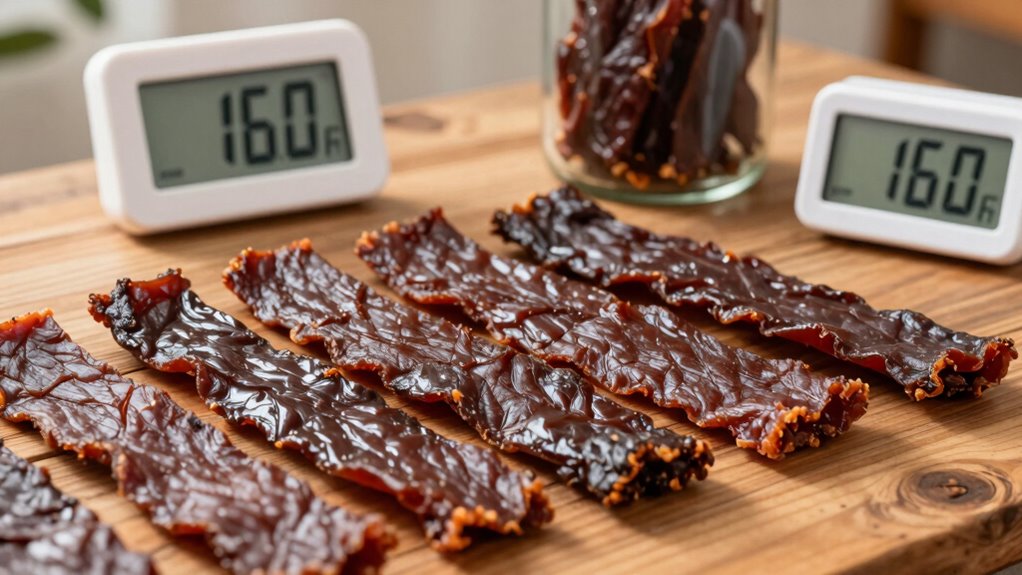
Determining the right drying time for jerky is key to ensuring it’s safe to eat and retains good quality. During meat curing, proper dehydration duration is essential to eliminate moisture that promotes bacterial growth. Typically, drying jerky takes about 4 to 8 hours, depending on the thickness of the meat, dehydration method, and humidity levels. Use a food dehydrator or oven set to the appropriate temperature—generally around 160°F (71°C)—to guarantee safety. Check for doneness by testing the texture; jerky should be firm, dry, and bendable without cracking. Over-drying can cause tough texture, while under-drying risks spoilage. Consistent dehydration duration, combined with proper meat curing, guarantees a safe, high-quality jerky. Proper airflow and moisture control are also crucial to achieve even drying and prevent spoilage. Additionally, understanding contrast ratio can help ensure even drying and prevent uneven texture or spoilage. Monitoring the temperature throughout the process is vital to maintain food safety standards. Incorporating temperature monitoring tools can further enhance the safety and consistency of your jerky drying process, especially when considering the net worth of related equipment.
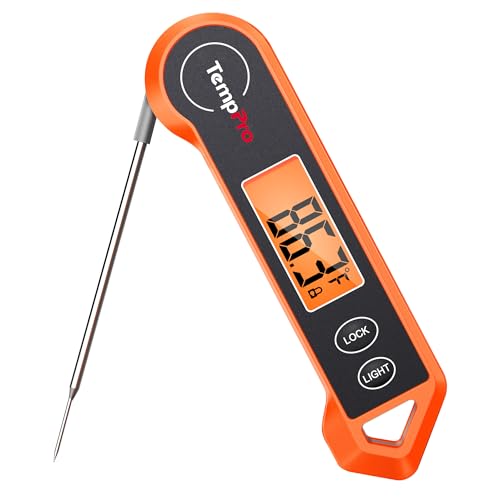
ThermoPro Digital Instant Read Meat Thermometer for Grilling Waterproof Kitchen Cooking Food Thermometer with Ambidextrous Backlit for BBQ Grill Smoker Oil Fry Candy Thermometer
2.0 inches large auto-rotating backlit display: Digital food thermometer has a 180° auto-rotating backlit display, making this kitchen…
As an affiliate, we earn on qualifying purchases.
As an affiliate, we earn on qualifying purchases.
Best Storage Practices to Keep Jerky Fresh and Safe
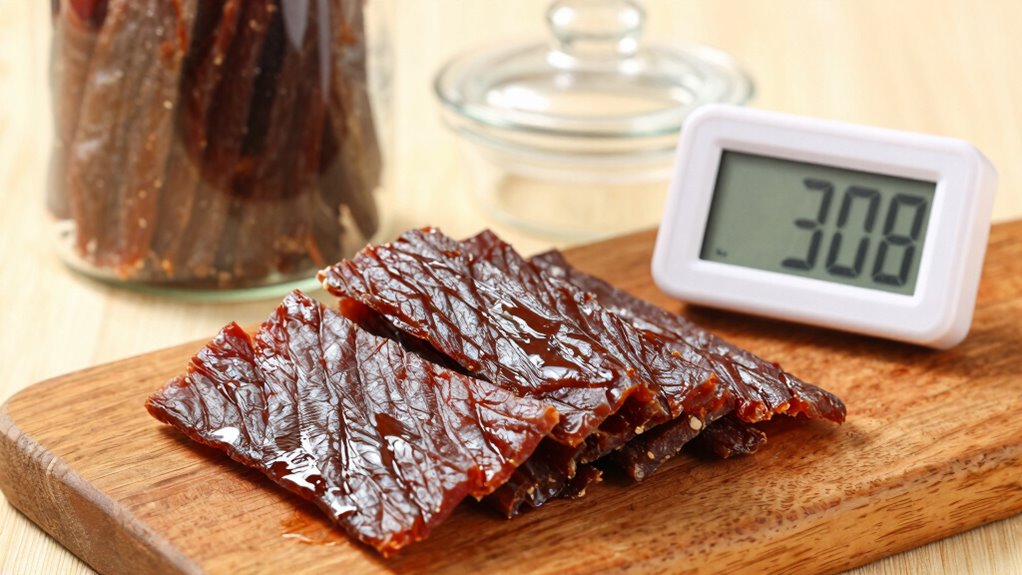
To keep jerky fresh and safe, storing it correctly is essential. Use airtight methods like vacuum packaging to prevent moisture and air exposure, which can cause spoilage. Humidity control is key; keep jerky in a cool, dry place to avoid mold and bacteria growth. For added protection, consider vacuum sealing individual portions before storing. Keep jerky away from direct sunlight and heat sources. Proper storage extends shelf life and maintains flavor. Additionally, monitoring environmental conditions helps ensure optimal storage. Maintaining the correct temperature during storage is crucial to prevent bacterial growth and spoilage. Ensuring good air circulation around stored jerky can also help reduce moisture buildup and inhibit mold formation. Incorporating proper storage techniques can further enhance longevity and safety. Here’s a simple guide:
| Storage Method | Benefits |
|---|---|
| Vacuum Packaging | Keeps jerky dry and prevents spoilage |
| Cool, Dry Environment | Slows bacterial growth |
| Airtight Containers | Protects from humidity and air |
Ensuring the storage area is well-ventilated can also help prevent moisture buildup that leads to spoilage.

Upgraded Stackable Cooling Rack for Baking,3 Tier Jerky Rack Cooling Racks for Cooking and Baking,Cookie Cooling Rack Baking Racks,Drying Racks,Oven Safe,17”x 11”
Package: 3 tiers of cooling racks, dimensions:17”x 11”. (43 x 28 cm).The racks are oven safe, you can…
As an affiliate, we earn on qualifying purchases.
As an affiliate, we earn on qualifying purchases.
How to Spot Unsafe Jerky and When to Toss It
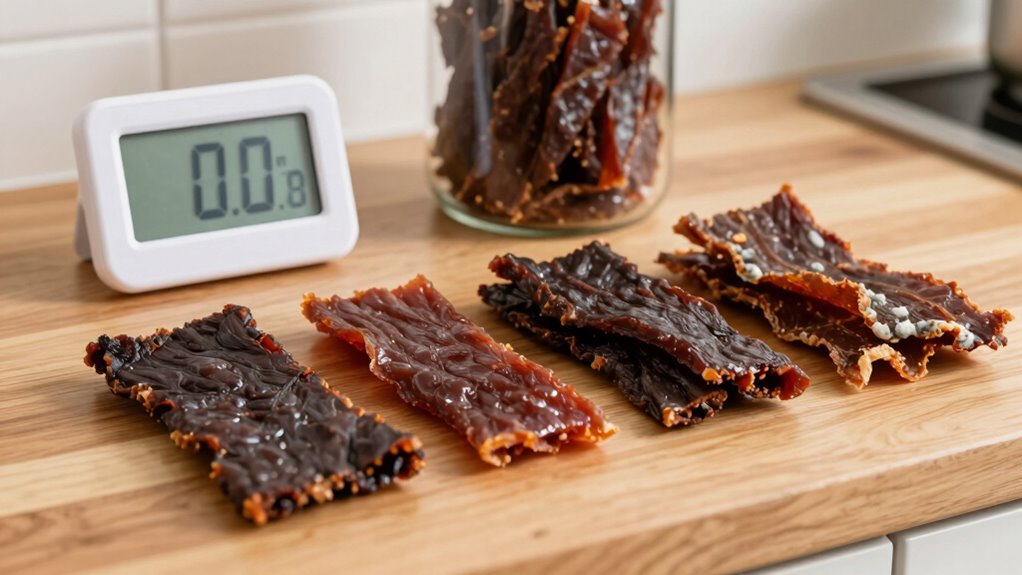
Even with careful storage, it’s important to recognize when jerky has gone bad. First, trust your nose—if it has a spoiled smell, it’s time to discard it. Next, inspect its appearance: mold can appear as fuzzy spots or discoloration on the surface. Also, check for texture changes; if the jerky feels sticky or slimy instead of dry and firm, toss it. Finally, examine the color—any unusual darkening or dullness signals spoilage. Proper storage and understanding of food safety can also help ensure food safety at home. Here’s what to look for:
Trust your senses: smell, appearance, texture, and color to identify spoiled jerky.
- Spoiled smell that’s sour or rancid
- Mold appearance, fuzzy or discolored spots
- Sticky, slimy, or overly soft texture
- Unusual darkening or dull color
A proper storage environment can significantly extend the shelf life of jerky and prevent spoilage. Additionally, it’s important to be aware of the temperature conditions, as improper temperature can accelerate bacterial growth and spoilage. Being familiar with food spoilage signs can help you better identify when jerky is no longer safe to eat.
Tips for Making Safe Homemade Jerky: Temperature, Drying Time, and Storage
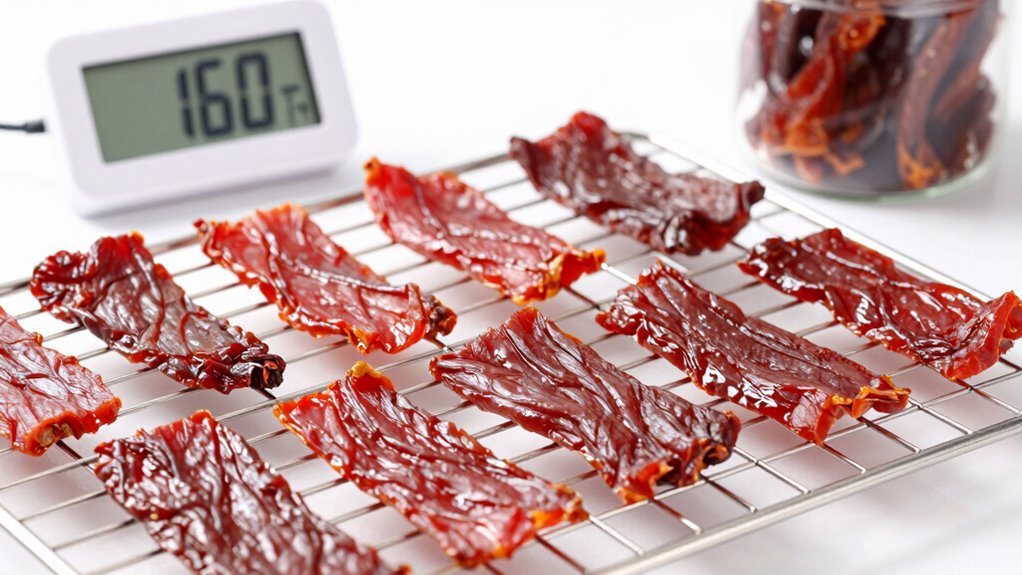
Ensuring your homemade jerky is safe to eat starts with paying close attention to temperature, drying time, and storage. Use a food thermometer to maintain an internal temperature of at least 160°F during drying to kill bacteria. Dry the meat for 4–6 hours, checking regularly until it’s firm and leathery. Proper storage is key: keep jerky in airtight containers in a cool, dark place or refrigerate for longer shelf life. Experiment with flavor variations, but avoid shortcuts that compromise safety. Remember, equipment maintenance guarantees consistent results—clean your dehydrator or oven regularly to prevent contamination.
| Tip | Why It Matters | Best Practice |
|---|---|---|
| Maintain proper temperature | Eliminates harmful bacteria | Use a reliable thermometer |
| Dry thoroughly | Prevents mold and spoilage | Check jerky’s texture regularly |
| Store correctly | Extends shelf life | Airtight containers in cool, dark spots |
| Maintain equipment | Ensures safety and consistency | Clean equipment after each use |
Frequently Asked Questions
Can Jerky Be Safely Eaten After the Expiration Date?
You can often eat jerky after the expiration date if there are no spoilage indicators like a strange smell, mold, or sliminess. Check the packaging for any bloating or tears, and inspect the jerky closely. While it might still be safe, consuming expired jerky always carries some risk, so trust your senses. If anything seems off, it’s best to discard it to avoid foodborne illness.
How Does Humidity Affect Jerky Preservation and Safety?
Humidity acts like a sneaky thief, stealing freshness from your jerky. When humidity levels rise, moisture management becomes a challenge, turning your savory snack into a breeding ground for mold and bacteria. To keep your jerky safe and long-lasting, humidity control is essential—store it in a cool, dry place, and seal it tightly. By managing moisture, you preserve both flavor and safety, ensuring each bite stays delicious and secure.
Are There Specific Types of Meat Safer for Jerky Making?
When making jerky, you should choose safe options like lean beef, turkey, or venison because they’re less prone to spoilage. Meat selection plays a key role in safety, so avoid fatty or processed meats. Opt for fresh, high-quality cuts and guarantee they’re properly stored before drying. Using safe meat options reduces the risk of bacteria growth, making your jerky safer and more delicious.
What Are Common Signs of Mold in Stored Jerky?
You notice a suspicious fuzz or discoloration on your jerky—could it be mold? Mold growth often appears as white, green, or black fuzzy spots, and it can develop quickly if stored improperly. Always perform a visual inspection before eating. If you see any signs of mold, discard the jerky immediately; don’t risk health issues. Staying vigilant guarantees your snack remains safe and enjoyable.
Is It Safe to Microwave Homemade Jerky for Quicker Drying?
Microwave drying homemade jerky isn’t recommended for jerky safety. While it might speed up drying, microwaves often heat unevenly, leaving some spots under-dried and vulnerable to bacteria. This can compromise safety and increase mold risk. For safe, properly dried jerky, use traditional oven or dehydrator methods, ensuring consistent temperature and thorough drying. Always prioritize safe drying techniques to prevent foodborne illnesses and spoilage.
Conclusion
Now that you know the essentials of jerky safety, are you prepared to master the perfect balance of temperature, drying time, and storage? One overlooked mistake could turn your delicious snack into a health risk. Stay vigilant, keep an eye on your jerky, and don’t let safety slip through the cracks. The next batch you make might just be your best yet—if you follow these simple steps. Will your jerky stand the test of time?