The pantry labeling trick that prevents waste is to clearly mark your containers with contents and purchase dates using durable, easy-to-read labels. This helps you quickly identify what’s inside, track expiration dates, and use ingredients before they spoil. Group similar items together and label shelf zones to stay organized. Proper labeling not only boosts visibility but also encourages mindful inventory management. Keep going to discover even more tips to maximize your pantry’s efficiency and reduce waste.
Listen free for 30 days with Audible
Thousands of audiobooks and originals — cancel anytime.
As an affiliate, we earn on qualifying purchases.
Key Takeaways
- Label containers with purchase and expiration dates to track freshness and prevent using spoiled ingredients.
- Use clear, uniform labels to quickly identify items and reduce unnecessary purchases.
- Organize pantry by grouping similar items and labeling sections for easy access and inventory awareness.
- Incorporate expiration date labels to prioritize using ingredients before they spoil.
- Regularly update labels and inventory to minimize waste and promote mindful ingredient usage.
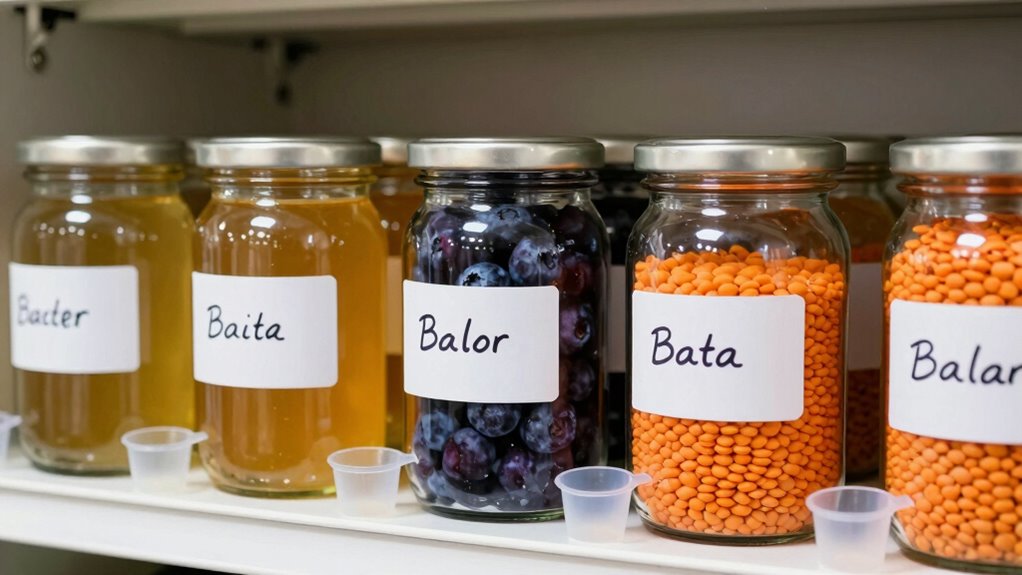
Organizing your pantry can feel overwhelming, but a simple labeling trick can make the process much easier. When you’re focusing on meal prep and storage organization, clarity is key to keeping everything accessible and reducing waste. By labeling your containers and shelves, you instantly know what’s inside without digging through jars or boxes, saving you time and preventing forgotten items from expiring. This straightforward step helps you stay on top of your ingredients and plan meals more efficiently. When you can see at a glance what’s available, you’re less likely to buy duplicates or overlook essentials, which directly cuts down on unnecessary waste.
Label your pantry containers and shelves to easily see what’s inside, saving time and reducing waste.
Start by choosing clear, uniform containers for staples like grains, nuts, or dried fruit. These containers should be airtight to maintain freshness, but the real magic happens when you add labels. Use a durable, easy-to-read label maker or simple masking tape and a permanent marker to mark each container with its contents and purchase date. This way, when you’re preparing meals, you won’t have to guess or open multiple jars to find what you need. The labels also help you keep track of expiration dates, so nothing gets forgotten or tossed out too late. Incorporating food storage best practices can further enhance your organization efforts.
In addition to individual containers, label sections of your pantry shelves. Group similar items together—baking supplies, snack foods, canned goods—and clearly mark each zone. This organized approach makes meal prep more streamlined because you know exactly where everything is. When you’re planning a week’s worth of meals, this prevents last-minute scrambling to find ingredients and minimizes the chance of buying duplicates. Plus, it encourages you to use what you already have before restocking, which is a good habit for reducing food waste. Implementing effective food organization techniques can also optimize your pantry layout for efficiency. Properly organizing and labeling your pantry can also help you incorporate sustainable storage solutions, reducing packaging waste and promoting eco-friendly habits.
Another benefit of labeling in storage organization is that it creates a visual reminder of what you need to replenish. When you see a label indicating a specific item is running low, you’re more likely to remember to restock it during your next shopping trip. This prevents panic buying and ensures you always have essential ingredients on hand, further supporting your meal prep routine. Consistent labeling also encourages mindful food inventory management, helping you track supplies more effectively. Over time, consistent labeling fosters a habit of mindful storage, making your entire kitchen more efficient. Incorporating biodiversity considerations into your pantry organization can also help you choose sustainable, eco-friendly packaging options that support conservation efforts.
In the end, this simple labeling trick isn’t just about neatness; it’s about smarter storage, better meal prep, and less waste. When everything has its place and is clearly marked, you take control of your kitchen. You’ll find it easier to plan meals, keep track of supplies, and reduce the chances of food going bad unnoticed. It’s a small change that makes a big difference, helping you save money and enjoy your meals without unnecessary hassle.
As an affiliate, we earn on qualifying purchases.
Frequently Asked Questions
Can This Labeling Method Be Used for Refrigerated or Frozen Foods?
Yes, you can use this labeling method for refrigerated and frozen foods. It helps with refrigerator organization and freezer management by clearly indicating contents and dates. You simply label each item with the date it was stored and its contents, making it easier to prioritize what to use first. This reduces waste, keeps your fridge and freezer tidy, and guarantees you consume foods before they spoil or freezer burn.
What Materials Are Best for Durable Pantry Labels?
For durable pantry labels, you should choose a weatherproof label material like vinyl or polyester, which resist moisture and tearing. Make certain the adhesive strength is high enough to stick firmly on various surfaces, including plastic and glass containers. These materials withstand handling and cleaning, making them perfect for pantry use. Avoid paper labels, as they tend to peel or tear easily, especially in humid or greasy environments.
How Often Should I Update the Labels for Accuracy?
You should update your pantry labels every three to six months to guarantee accuracy maintenance. Regular labeling frequency helps you stay organized, prevents expired items from lingering, and keeps your pantry neat. Check for any discrepancies or outdated information during these updates, especially if you notice missing or confused labels. Consistent updates make it easier to track inventory, plan meals, and reduce waste, keeping your pantry efficient and clutter-free.
Is This Trick Suitable for Shared or Communal Pantries?
Absolutely, this labeling trick works wonderfully for shared spaces and communal organization. You’ll find that clear, consistent labels reduce confusion, prevent unnecessary purchases, and promote proper pantry practices. When everyone follows the labeling system, it fosters a sense of shared responsibility and simplifies storage. Keep labels current and coherent, and you’ll create a tidy, transparent pantry that everyone can easily navigate, reducing waste and encouraging cooperation in communal kitchens.
Can Digital or Smart Labels Enhance This Pantry Trick?
Yes, smart technology and label customization can definitely enhance this pantry trick. With digital or smart labels, you can easily update expiration dates, ingredient details, or usage instructions without printing new labels. You also get the benefit of automated reminders, which help you stay on top of food freshness. This makes managing shared or communal pantries more efficient, reducing waste and ensuring everyone knows what’s available and safe to consume.
clear food storage containers with labels
As an affiliate, we earn on qualifying purchases.
As an affiliate, we earn on qualifying purchases.
Conclusion
By adopting this simple pantry labeling trick, you not only prevent waste but also cultivate mindful habits. It’s tempting to believe that organization alone solves food loss, but the real power lies in your commitment to clarity. When you take control of your space, you’re also taking responsibility for reducing waste. Ultimately, this practice shows that small, intentional actions can lead to significant, positive change—proving that lasting impact starts with a single, conscious step.
expiration date labels for pantry
As an affiliate, we earn on qualifying purchases.
As an affiliate, we earn on qualifying purchases.
organizer shelf labels for pantry
As an affiliate, we earn on qualifying purchases.
As an affiliate, we earn on qualifying purchases.
NFL season / tailgating Picks
team gear
As an affiliate, we earn on qualifying purchases.