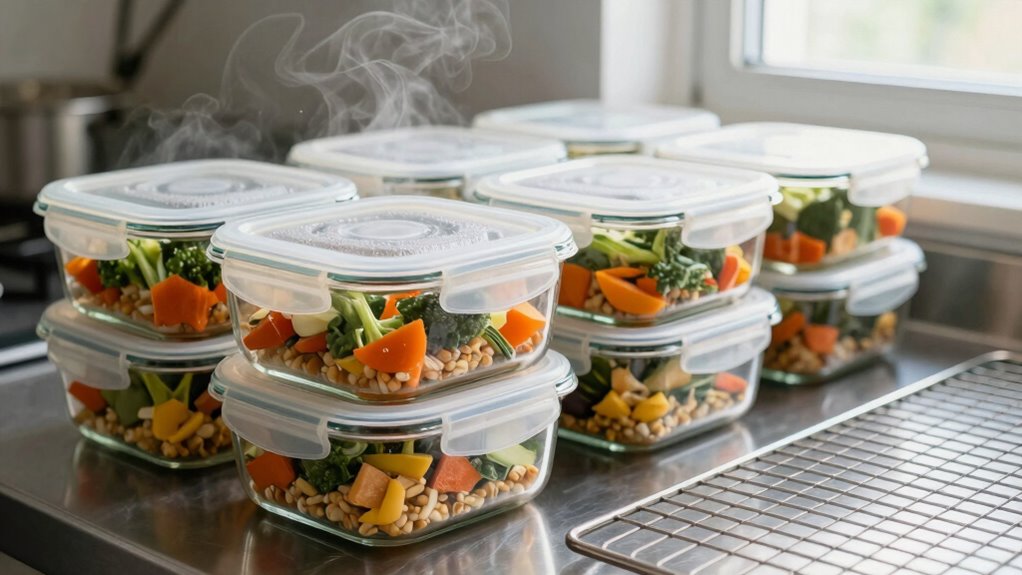
To prevent ice crystals in your meal prep, focus on cooling foods quickly and evenly before freezing. Use shallow containers, spread out your meals, or immerse large batches in ice water to speed up cooling. Stir hot foods and make sure proper packaging with airtight wraps. Maintaining the freezer at 0°F and limiting room temperature exposure also help. Keep going to discover expert tips that will keep your meals safe and fresh.

Get kitchen staples and gadgets delivered free with Prime
- Fast, free delivery on millions of items
- Prime Video, Amazon Music and more included
- Member-only deals all year
Key Takeaways
- Cool hot foods quickly using shallow containers or ice baths to prevent large ice crystal formation.
- Spread out food to increase surface area, promoting faster and more even cooling.
- Minimize headspace and use airtight containers to reduce moisture loss and ice crystal growth.
- Limit room temperature exposure to within 2 hours to prevent bacteria growth and texture damage.
- Maintain a freezer temperature of 0°F (-18°C) or lower for consistent freezing and optimal quality preservation.
As an affiliate, we earn on qualifying purchases.
Why Cooling Properly Is Key to Freezing Meal Preps
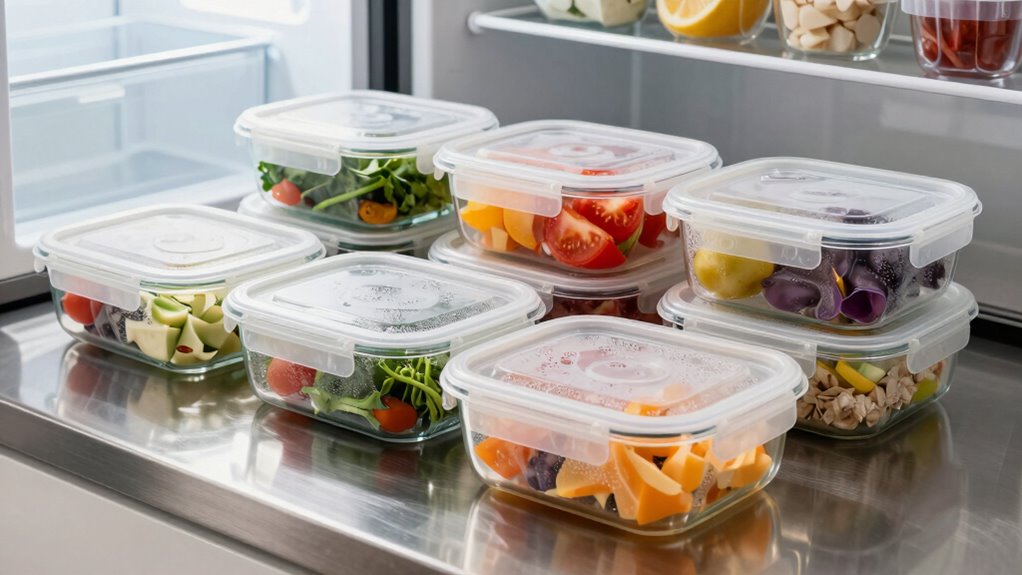
Cooling your meal prep properly is essential to maintaining food quality and safety. Using effective cooling techniques helps prevent bacterial growth and keeps your food safe to eat later. When you don’t cool your meals quickly enough, bacteria can multiply rapidly, increasing the risk of foodborne illnesses. Proper cooling involves spreading out hot food in shallow containers to release heat faster and avoid temperature zones where bacteria thrive. Ensuring your meal cools evenly also helps preserve its texture and flavor. Remember, the goal is to bring food from hot to safe storage temperatures as swiftly as possible. Prioritizing good cooling techniques not only safeguards your health but also maintains the freshness and taste of your meal prep. Additionally, using proper cooling methods can significantly reduce the formation of ice crystals, which helps preserve the texture of your meals during freezing. Incorporating temperature control strategies during cooling can further optimize food safety and quality. Implementing food safety guidelines during cooling is crucial for optimal results, and understanding the impact of cooling speed can guide you in choosing the best techniques for your needs. Proper cooling also minimizes freezer burn, keeping your food tasting fresh longer.
As an affiliate, we earn on qualifying purchases.
Easy Techniques to Cool Your Meals Quickly and Safely
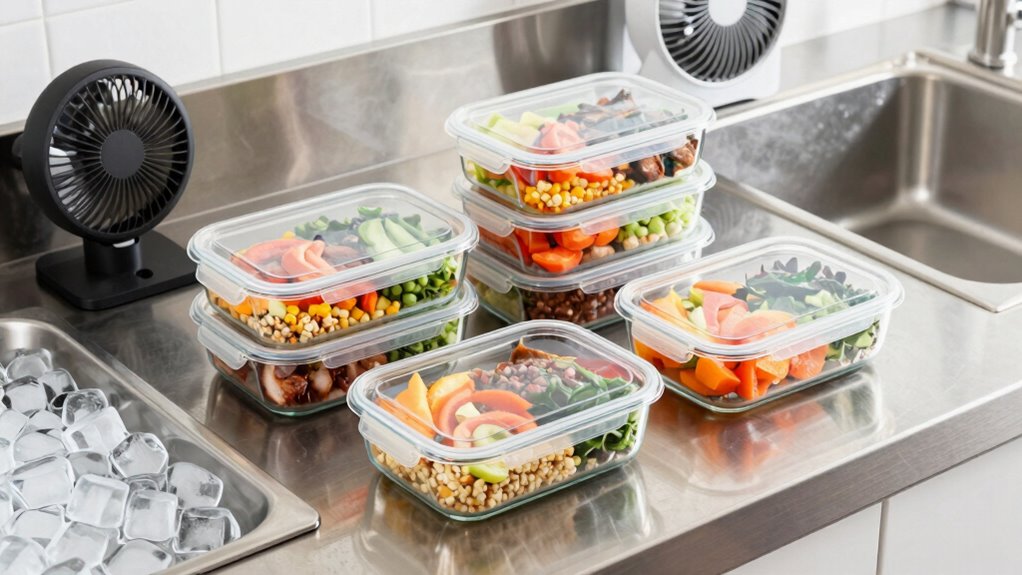
To cool your meals quickly and safely, start by dividing large portions into smaller, shallow containers. This promotes rapid chilling by increasing surface area, allowing heat to dissipate faster. For even quicker cooling, use steam cooling: place the containers in a sink filled with ice and water, ensuring the cold water surrounds the containers without spilling in. This method accelerates heat transfer and prevents bacteria growth. Avoid leaving food out at room temperature, as it slows down cooling and risks spoilage. Stirring hot food occasionally helps release heat faster. Always monitor temperatures to ensure they drop below 40°F within two hours. Proper airflow around the containers can also enhance cooling efficiency and prevent ice crystal formation during freezing. Ensuring proper temperature control is essential for food safety and quality. Additionally, maintaining consistent cooling rates helps preserve the texture and flavor of your meals, preventing freezer burn and ice crystals. Implementing these techniques will help you maintain both the safety and quality of your frozen foods while preventing ice crystal formation during freezing. Using proper storage containers designed for freezing can further improve the cooling process and food preservation.
airtight food storage containers
As an affiliate, we earn on qualifying purchases.
As an affiliate, we earn on qualifying purchases.
How to Prevent Ice Crystals When Freezing Cooked Food
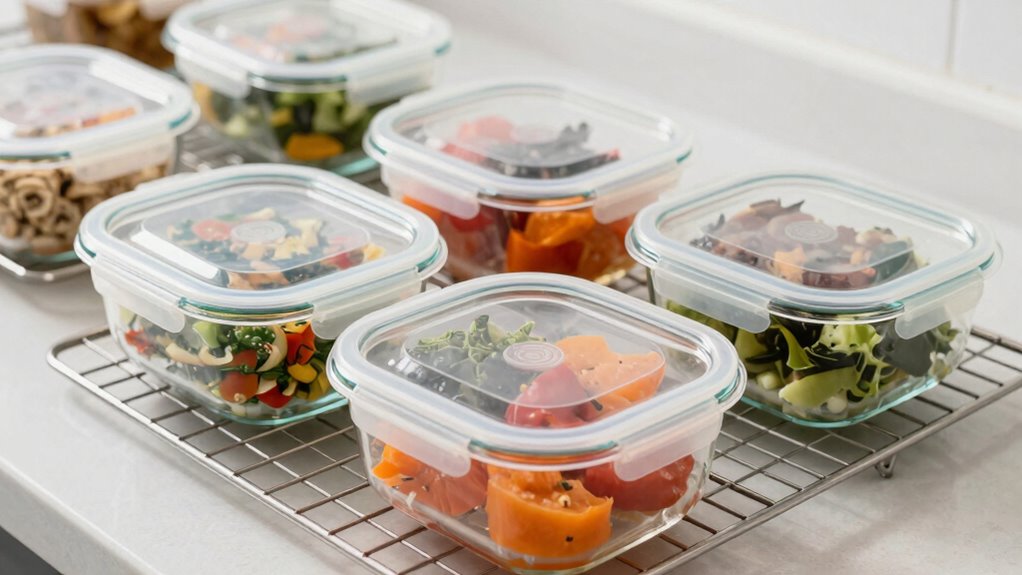
Preventing ice crystals in your frozen cooked food starts with proper preparation. To keep your meals tasting fresh and maintain quality, focus on these steps:
- Use airtight containers that promote good air circulation around the food.
- Ensure containers are insulated to prevent rapid temperature changes.
- Leave minimal headspace to reduce excess air and moisture.
- Wrap dishes tightly with plastic wrap or foil before placing them in containers, aiding insulation and reducing ice crystal formation.
- Incorporate smart kitchen tools that monitor and regulate temperature, ensuring consistent freezing conditions.
- Proper air circulation within your freezer is essential to prevent uneven freezing, which can lead to ice crystal development.
- Consider using herbal infusion machines to pre-treat or flavor foods, which can help preserve freshness and improve texture during freezing. Additionally, choosing appropriate storage methods can further minimize ice crystal formation.
Good air circulation prevents uneven freezing, while effective container insulation maintains a stable temperature. These practices help your cooked food freeze evenly, preventing ice crystals from forming and preserving texture and flavor. Proper preparation makes all the difference in achieving high-quality, freezer-friendly meals.
As an affiliate, we earn on qualifying purchases.
The Best Timing and Temperatures for Cooling and Freezing
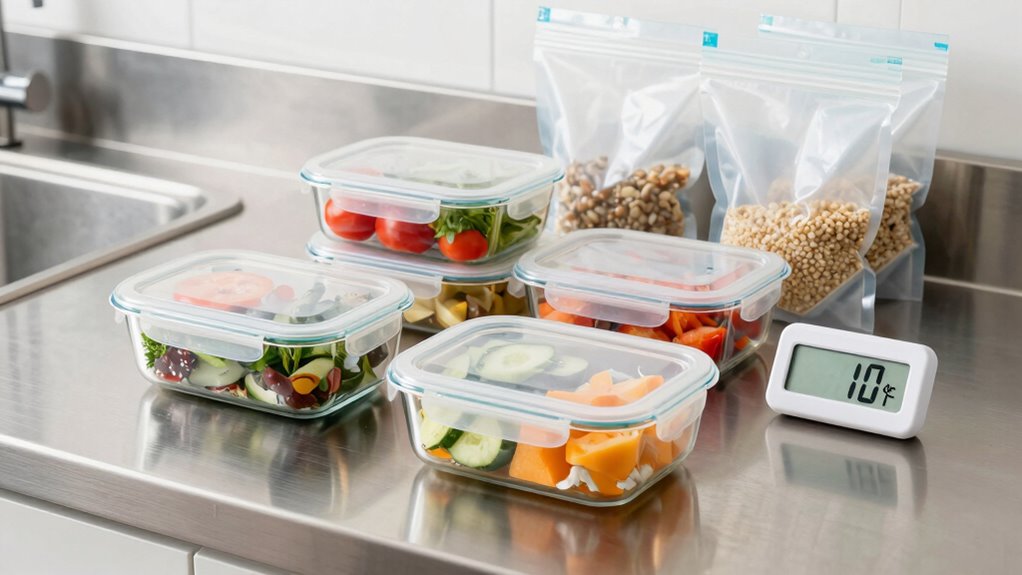
Have you ever wondered why timing and temperature matter so much when freezing cooked food? Proper cooling methods and freezing techniques are essential to prevent ice crystals and maintain food quality. For best results, cool your food quickly within two hours of cooking by using shallow containers or ice baths. This rapid cooling minimizes the temperature difference and reduces ice crystal formation. When it’s time to freeze, set your freezer to 0°F (-18°C) or lower for ideal preservation. Avoid leaving food out at room temperature for long periods. Efficient cooling methods combined with correct freezing techniques ensure your meals stay fresh, flavorful, and safe. Timing your cooling process properly and maintaining the right temperatures are key to successful meal prep freezing. Additionally, understanding water quality can play a role in preserving food quality during storage. Properly managing storage conditions helps prevent spoilage and extends the shelf life of frozen foods. Maintaining consistent temperature control during freezing is crucial for optimal food preservation. Moreover, monitoring freezer performance ensures that the temperatures remain steady and effective over time.
Troubleshooting Common Freezing and Cooling Problems
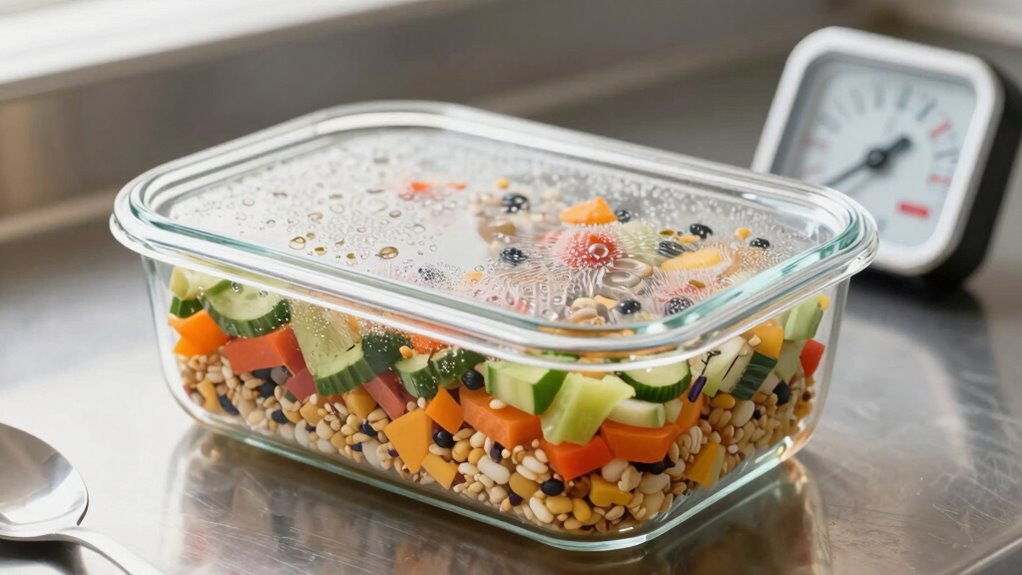
Even with proper cooling and freezing techniques, problems can still arise that compromise your food’s quality and safety. Common issues include ice crystals, uneven freezing, and spoilage. To prevent these, consider these solutions:
- Use flash freezing for delicate items—rapid cooling prevents large ice crystals that ruin texture.
- Ensure your freezer is at the right temperature, around 0°F, for consistent cooling.
- Avoid overloading your freezer, which hampers airflow and causes uneven cooling.
- When cooling large batches, break them into smaller portions to promote rapid cooling and prevent bacterial growth.
- Regularly monitor your freezer’s temperature stability to maintain optimal conditions and prevent freezer burn.
- Proper air circulation within the freezer helps ensure even freezing and reduces ice crystal formation.
- Maintaining proper humidity levels inside the freezer can also help in reducing ice crystal development and preserving food quality.
- Incorporating proper packaging techniques such as airtight containers or vacuum sealing can further reduce moisture loss and ice crystal formation. Additionally, using insulated containers during transfer can help maintain low temperatures and prevent warming that causes ice crystals to form.
Troubleshooting these problems helps maintain food quality, preserves flavor, and keeps your meal prep safe. Mastering these steps ensures your frozen meals stay fresh and delicious.
Frequently Asked Questions
Can Freezing Meals Affect Their Nutritional Content?
Freezing meals can affect their nutrient preservation, but the impact is usually minimal if you freeze properly. You might lose some vitamins, especially water-soluble ones like vitamin C and B vitamins, due to the freezing impact on cell structures. However, most minerals and macronutrients stay intact. To minimize nutrient loss, freeze meals quickly and store them at consistent, cold temperatures, ensuring they stay nutritious when you’re ready to eat.
How Long Can I Store Frozen Prepped Meals Safely?
Think of your frozen meals as treasures in a chest. You can store them safely for 3 to 6 months, depending on the ingredients. After that, they risk freezer burn and loss of flavor. To keep them fresh, label and date each container. Proper storage duration guarantees your meals stay delicious and nutritious, so you enjoy your prep without worry. Don’t let time turn your treasures into forgotten relics.
Is It Better to Freeze in Glass or Plastic Containers?
Choosing glass containers over plastic is better for freezing efficiency because they’re more durable and won’t absorb odors or stains. Glass also maintains consistent temperature transfer, helping your meals freeze evenly and prevent ice crystal formation. Plus, they’re safer for reheating, reducing chemical leaching. While plastic is lightweight and convenient, glass containers ensure your prepped meals stay fresh longer and maintain quality, making them the smarter choice for freezing.
How Do I Reheat Frozen Meals Without Compromising Quality?
You want your frozen meal to taste as fresh as when you first cooked it, right? For best results, use a microwave reheating for quick, even warming—stir halfway to keep textures intact. For larger portions, oven reheating at a low temperature prevents sogginess and preserves flavor. Always cover your food to trap moisture and prevent drying out. These steps keep your meal tasting just as amazing as when it was freshly made.
What Are the Signs of Improper Freezing or Cooling?
You’ll notice signs of spoilage like sour smells, slimy textures, or discoloration, which indicate improper freezing or cooling. Improper sealing can cause freezer burn, leading to dry, discolored spots and loss of flavor. Always check for ice crystals or ice buildup, as they can signal temperature fluctuations. If you see any of these signs, it’s best to discard the meal to avoid foodborne illness.
Conclusion
Proper cooling is essential to keep your meal preps fresh and prevent ice crystals, which can ruin texture and flavor. Did you know that freezing food too quickly or at the wrong temperature can cause ice crystals to form, affecting over 20% of home-cooked meals? By following the right cooling techniques and timing, you guarantee your meals stay delicious and safe to eat. Mastering this step makes meal prep more efficient and enjoyable, so don’t skip it!
NFL season / tailgating Picks
team gear
As an affiliate, we earn on qualifying purchases.