
Stainless steel grades 18/10 and 18/0 mainly differ in their nickel content—18/10 has 10% nickel, making it more durable, corrosion-resistant, and shiny, ideal for high-quality cookware and utensils. In contrast, 18/0 has no nickel, so it’s less resistant but more affordable and used for budget-friendly options. Understanding these differences helps you choose the right type for your needs, and if you continue exploring, you’ll find even more useful details.
Key Takeaways
- 18/10 stainless steel contains 18% chromium and 10% nickel, offering better corrosion resistance and a shiny, premium appearance.
- 18/0 stainless steel has 18% chromium but no nickel, making it less resistant to rust and more affordable.
- 18/10 is ideal for high-end cookware and utensils due to its durability and polished finish; 18/0 suits budget-friendly, utilitarian uses.
- Higher nickel content in 18/10 increases manufacturing costs but enhances longevity and ease of maintenance.
- Both grades are food-safe, but 18/10’s superior corrosion resistance reduces cleaning effort and extends product lifespan.
What Do 18/10 and 18/0 Mean in Stainless Steel?
In stainless steel terminology, the numbers 18/10 and 18/0 refer to the specific amounts of chromium and nickel in the alloy. These numbers are essential for understanding the metal alloy’s properties and are determined during the manufacturing process. For example, 18/10 stainless steel contains 18% chromium and 10% nickel, which enhances its corrosion resistance and shine. The manufacturing process involves precise alloying techniques to achieve these compositions, influencing how the steel performs in everyday use. The nickel in 18/10 stainless steel helps prevent rust and adds durability, while 18/0 lacks nickel, making it less resistant to corrosion but often more affordable. These designations serve as a quick guide to the stainless steel’s composition and overall quality. Additionally, the high nickel content in 18/10 stainless steel contributes to its luster and ease of cleaning, making it a popular choice for culinary and household items.
How Does Steel Composition Affect Durability and Rust Resistance?
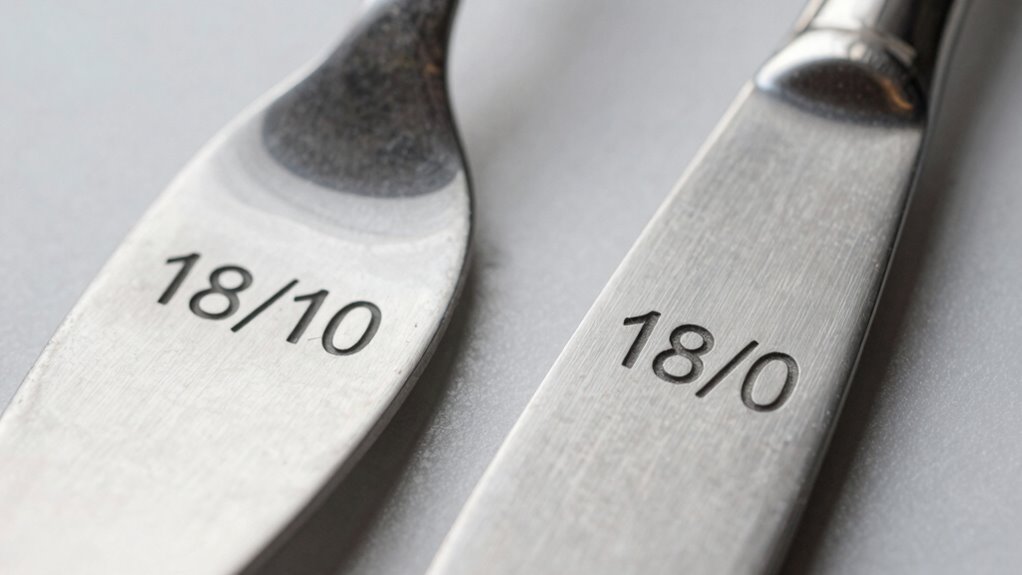
Your choice of steel composition directly impacts how well your item resists rust and lasts over time. Higher levels of chromium and nickel improve corrosion resistance and durability, making your cookware or utensils more reliable. Understanding these factors helps you select stainless steel that meets your needs for longevity and corrosion protection. Additionally, European cloud innovation emphasizes the importance of sustainable and secure materials, paralleling how selecting the right steel composition ensures the durability and rust resistance of your products. Moreover, steel grade classifications provide valuable insights into the specific properties and applications of different stainless steel types, guiding informed choices for various uses. Recognizing alloy content variations allows for better customization based on specific environmental and usage conditions.
Corrosion Resistance Factors
Steel composition plays a crucial role in determining its resistance to corrosion. Higher levels of chromium, like in 18/10 stainless steel, form a protective oxide layer that shields the surface from rust and corrosion. This layer enhances not only durability but also the surface finish, maintaining the aesthetic appeal over time. Conversely, 18/0 steel contains less chromium, making it more prone to corrosion and surface degradation. The surface finish also impacts corrosion resistance; a smooth, polished surface reduces spots where corrosion can initiate. Additionally, surface treatment techniques can further enhance corrosion resistance and extend the lifespan of stainless steel products. Proper surface finish can significantly reduce the likelihood of corrosion initiation, especially in environments prone to moisture and chemicals, and understanding steel grades helps in selecting the right material for specific conditions. Material properties such as hardness and corrosion resistance are affected by the composition, influencing overall performance in various applications.
Composition and Durability
The composition of stainless steel directly influences its durability and ability to resist rust. Alloy composition, especially the amount of chromium and nickel, plays a vital role in determining strength and corrosion resistance. For example, 18/10 steel contains about 18% chromium and 10% nickel, enhancing its durability and rust resistance. In contrast, 18/0 steel lacks nickel, making it slightly less resistant to corrosion and more prone to staining over time. Manufacturing processes, such as cold working or annealing, also impact the steel’s toughness and longevity. Properly processed steel with a balanced alloy composition will withstand daily wear, resist rust, and maintain its appearance longer. Understanding these factors helps you choose the right grade for your needs, ensuring better performance and longevity.
Which Stainless Steel Grade Is Best for Kitchen Utensils and Cookware?
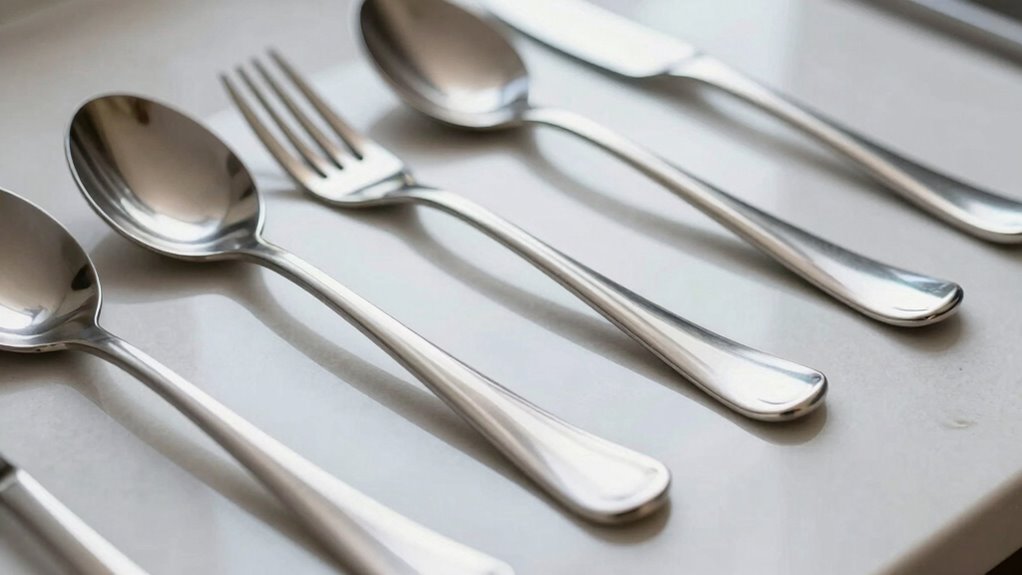
When choosing stainless steel for kitchen utensils and cookware, selecting the right grade is essential for durability, safety, and performance. You’ll want a grade that handles your cooking techniques well and meets storage considerations.
- 18/10 stainless steel offers high corrosion resistance, making it ideal for everyday use and frequent washing.
- 18/0 stainless steel is more affordable and resists rust but may scratch more easily and isn’t as durable.
- For versatile cooking techniques like simmering or sautéing, 18/10 provides better longevity and heat distribution.
- Consider storage needs; 18/10 tends to maintain its finish longer, preventing stains or discoloration.
Choosing between these grades depends on your cooking style, how often you use your utensils, and your maintenance preferences.
How Do 18/10 and 18/0 Stainless Steel Look and Finish?
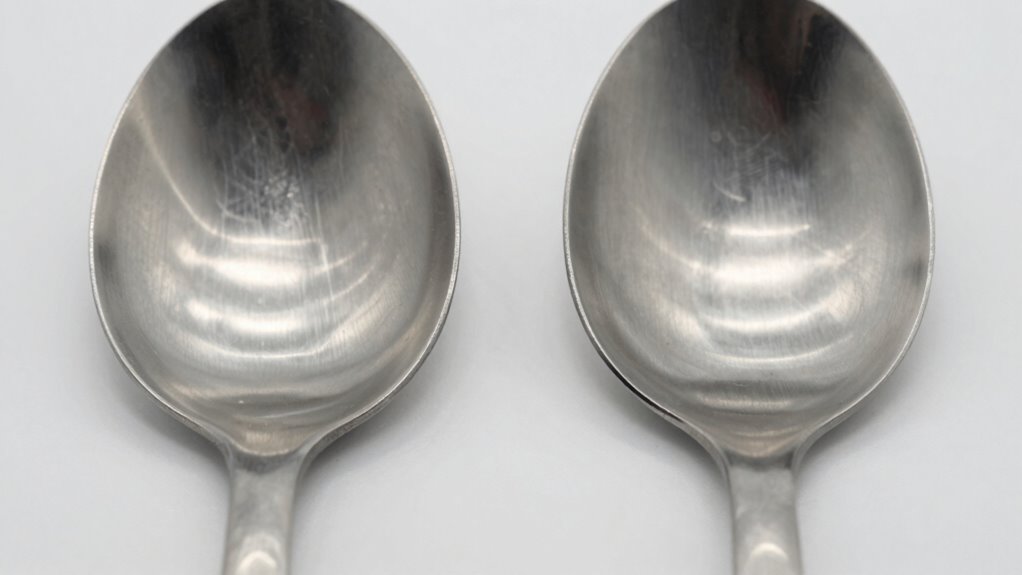
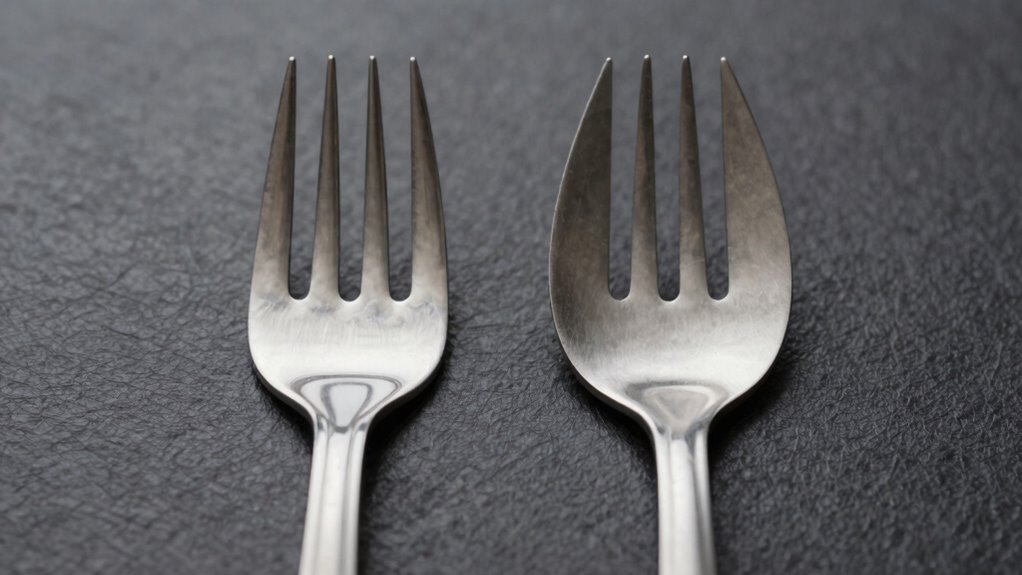
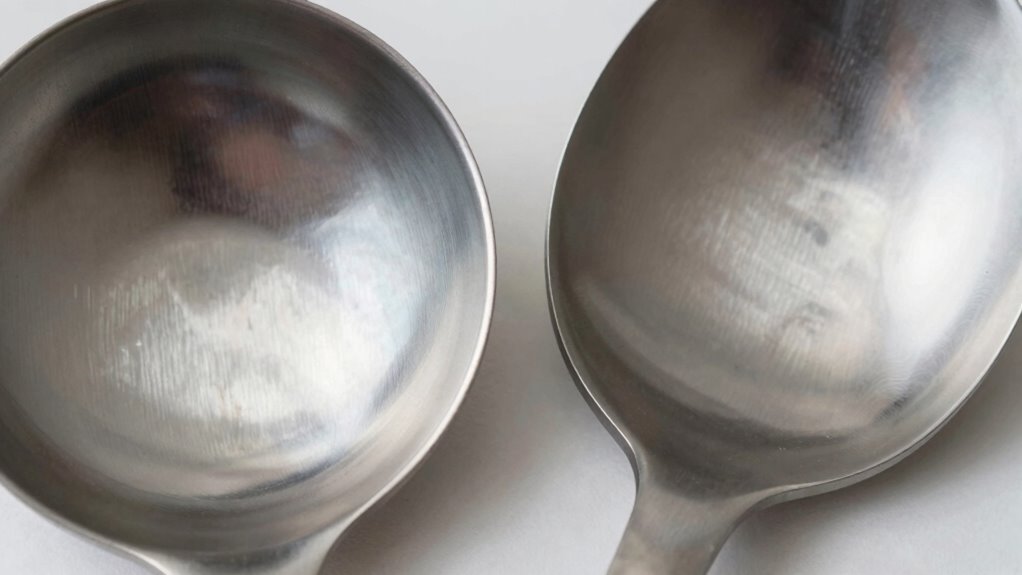
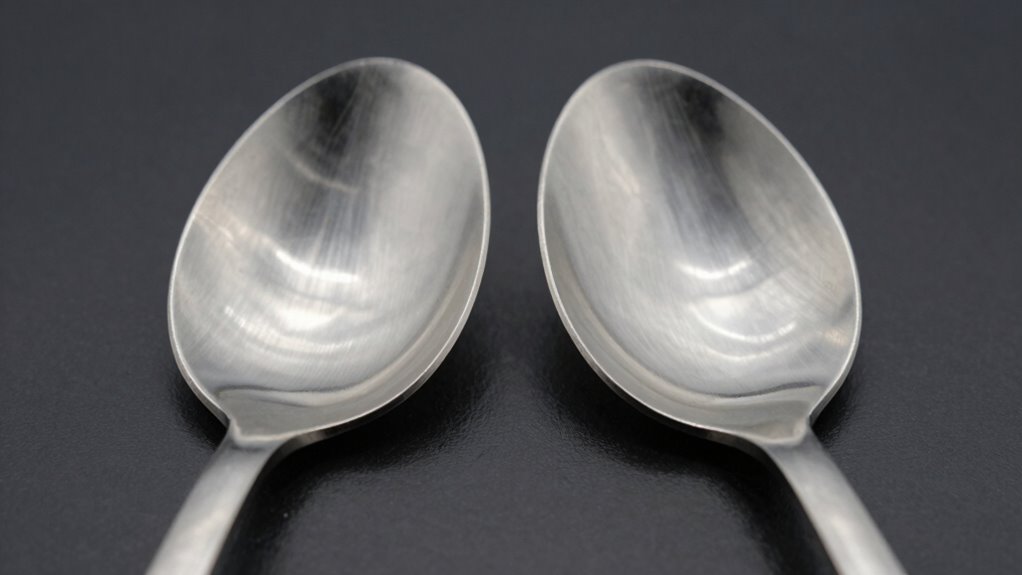
Although 18/10 and 18/0 stainless steel are both shiny and attractive, they differ noticeably in appearance and finish. 18/10 stainless steel usually features a brighter, more polished surface with a mirror-like shine that elevates the look of your utensils and cookware. Its surface textures often include smooth, uniform finishes that highlight stainless steel patterns, creating a sleek, sophisticated appearance. In contrast, 18/0 stainless steel tends to have a slightly duller, less reflective surface, with more subtle surface textures that don’t catch the light as vividly. The difference in finish quality makes 18/10 more visually appealing for presentation, while 18/0 may have a more utilitarian or matte appearance. These distinctions help you choose based on the desired aesthetic for your kitchenware. Additionally, the corrosion resistance of 18/10 stainless steel is generally higher due to its chromium and nickel content, making it more durable for everyday use. Moreover, the cost and application of each grade can vary significantly, influencing your choice depending on your budget and specific needs. Recognizing these differences can also guide you in selecting the right stainless steel for various home and professional settings. Furthermore, understanding the differences in composition can help in assessing the overall quality and longevity of your kitchen tools.
How Do the Costs of 18/10 and 18/0 Stainless Steel Compare?
Generally, 18/10 stainless steel tends to be more expensive than 18/0 because it contains a higher percentage of nickel, which adds to its cost. This results in price differences that reflect the materials used. When you compare costs, you’ll notice that 18/10 items typically carry a higher price tag due to their richer composition and better corrosion resistance. Additionally, brewing methods can influence the durability and longevity of stainless steel cookware, making the higher cost worth considering for long-term use. The composition of stainless steel directly impacts not only the cost but also the performance and maintenance of the cookware. A better understanding of steel grades can help consumers make more informed purchasing decisions based on value and longevity.
The added nickel increases manufacturing costs.
18/10 offers a more premium appearance, influencing price.
18/0 is more affordable, suited for budget-conscious buyers.
The cost comparison reflects durability and quality differences.
Material composition also affects how well the cookware withstands daily use and cleaning.
Understanding these price differences helps you decide based on your budget and needs, ensuring you choose the right stainless steel grade without overspending.
Is 18/10 Stainless Steel Easier to Maintain and Clean?
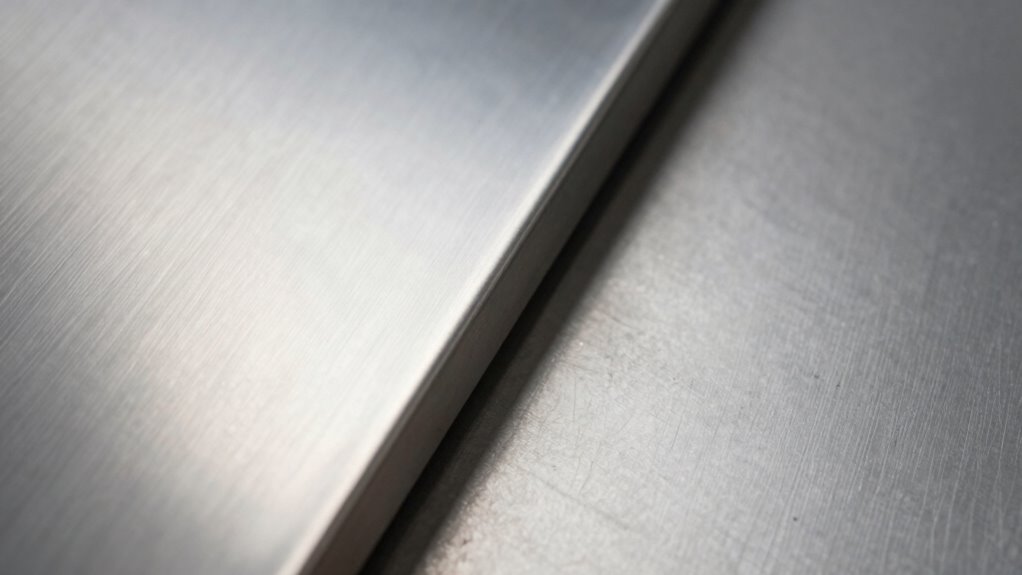
Is 18/10 stainless steel easier to maintain and clean than other grades? Generally, yes. Its higher chromium and nickel content create a smooth, resistant surface that’s less prone to staining and corrosion. For cleaning tips, use mild dish soap and a soft cloth to wipe away stains and fingerprints regularly. Avoid abrasive cleaners that can scratch the surface. Maintenance routines for 18/10 involve periodic polishing to preserve its shine and prevent dullness. Its durability means you won’t need to scrub aggressively, making cleaning quicker and simpler. Compared to lower-grade stainless steel, 18/10’s superior resistance to tarnish means less effort over time. Additionally, corrosion resistance makes it especially suited for environments exposed to moisture, such as saunas and cold plunges. Its ability to resist oxidation further enhances its longevity and ease of care. This ease of maintenance is also supported by its wear resistance, which helps it withstand daily use without showing signs of damage. This ease of maintenance makes it a popular choice for cookware, cutlery, and kitchenware, ensuring your items stay looking new with minimal work.
Is 18/0 Stainless Steel Right for Your Kitchen?
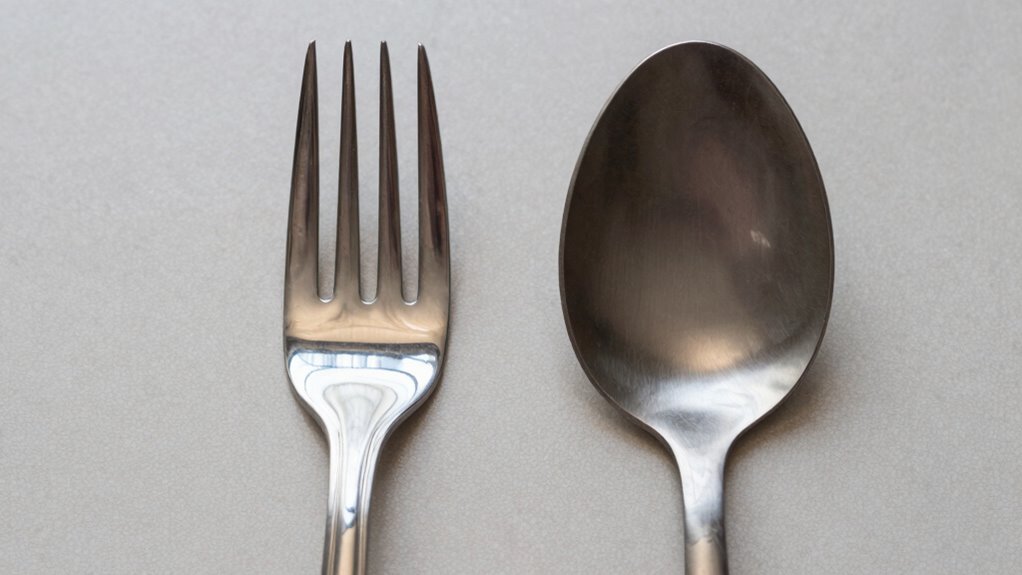
Considering whether 18/0 stainless steel is right for your kitchen depends on its durability and corrosion resistance. You should also think about the aesthetic options and finishes available, as they can impact the look of your cookware or utensils. Understanding stainless steel grades can help you make an informed choice based on your specific needs and preferences. Additionally, the compliance with safety standards ensures the material’s suitability for food contact and long-term use. Knowing the wear resistance of different stainless steel grades can further guide your decision for kitchen applications.
Durability and Corrosion Resistance
If you’re choosing between stainless steel options for your kitchen, understanding durability and corrosion resistance is essential. 18/0 stainless steel generally offers good resistance to rust and staining, but it’s less durable than 18/10 due to its lower nickel content. Surface finishes and manufacturing processes influence how well the steel withstands daily use and exposure to moisture. Researching companies thoroughly and verifying their manufacturing standards can help ensure you select a high-quality product.
- Lower nickel content makes 18/0 more prone to corrosion over time
- Surface finishes like brushed or polished can enhance resistance
- Manufacturing processes such as annealing improve durability
- Proper care extends lifespan, regardless of grade
While 18/0 may suffice for less demanding applications, for long-lasting durability and resistance to corrosion, 18/10 often outperforms.
Aesthetic and Finish Options
When choosing stainless steel for your kitchen, the finish and appearance play a crucial role in complementing your style. 18/0 stainless steel typically features a matte or brushed surface that delivers a sleek, modern look. However, it offers fewer options for polishing and decorative finishes compared to higher-grade steels like 18/10. This limits your choices if you want a highly polished, shiny, or mirror-like aesthetic appeal. The finish options for 18/0 are generally more subdued, making it suitable for a minimalist or industrial design. If you prefer a bright, reflective surface with a polished finish, you might find 18/0 stainless steel less versatile. Overall, your choice depends on whether you prioritize a subtle, understated look or a more decorative, glossy aesthetic for your kitchen.
Are 18/10 and 18/0 Stainless Steel Safe for Food Contact?
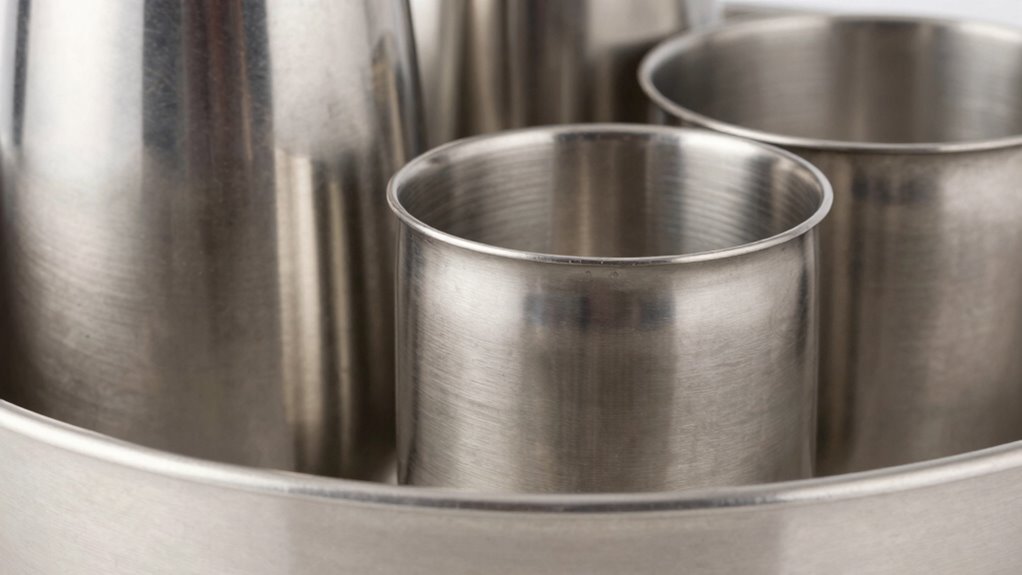
Are 18/10 and 18/0 stainless steel safe for food contact? Yes, both grades are widely used in cookware and utensils because they meet strict food safety standards. However, some stainless steel myths suggest that lower-grade steels might leach harmful substances, but this isn’t true when used properly.
- These steels are resistant to corrosion and do not rust easily.
- They’re non-reactive, meaning they won’t alter your food’s taste or safety.
- Food safety agencies approve their use in kitchenware.
- Proper maintenance guarantees their safety and longevity.
While 18/10 contains more nickel and chromium for extra durability, both grades are safe for daily use. Just follow cleaning guidelines to avoid any misconceptions about stainless steel and ensure your cookware remains safe.
Can You Upgrade From 18/0 to 18/10 Stainless Steel?
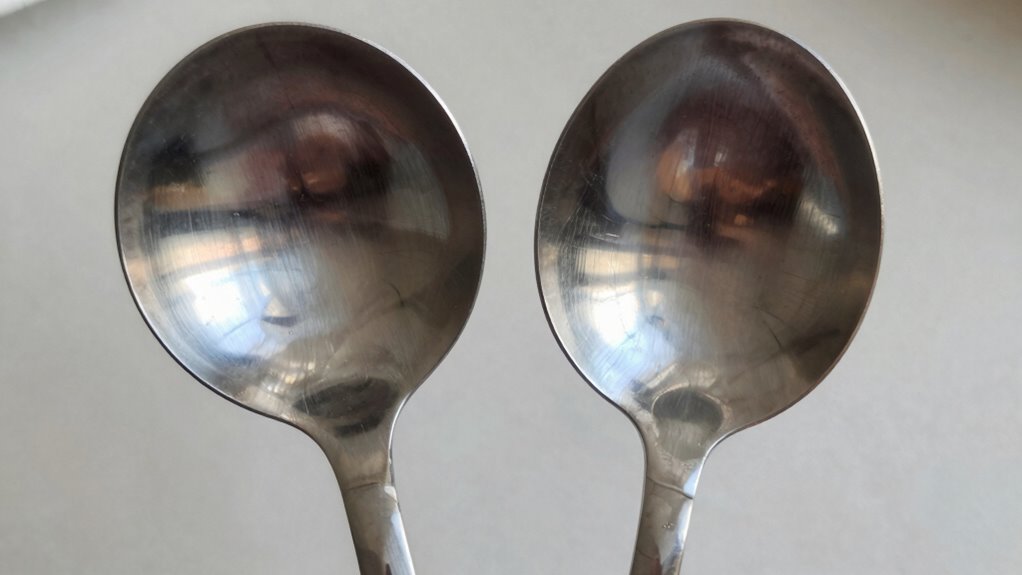
Upgrading from 18/0 to 18/10 stainless steel is possible, but it often depends on the type of cookware or utensils you have. If your current items are made from 18/0 stainless steel, upgrading may involve replacing them altogether since stainless steel grades are not easily altered. While some manufacturers offer upgrade options, most stainless steel cookware and utensils are manufactured with specific grades that aren’t interchangeable. To move from 18/0 to 18/10, you’ll typically need to purchase new items crafted from the higher-grade stainless steel. Keep in mind that stainless steel grades influence durability, corrosion resistance, and appearance. So, when considering an upgrade, evaluate your needs and choose products made from the appropriate stainless steel grade for long-lasting performance.
Common Mistakes to Avoid When Choosing Stainless Steel Kitchenware
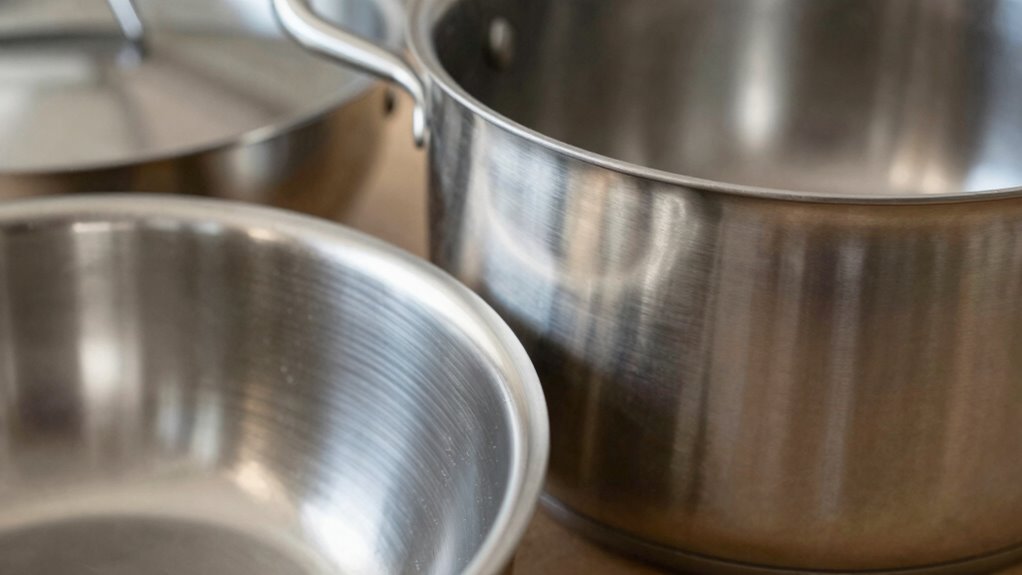
Choosing the right stainless steel kitchenware requires careful attention because many common mistakes can compromise durability and performance. One mistake is ignoring care instructions, which can lead to corrosion or discoloration over time. Another is selecting low-quality stainless steel without considering its grade, affecting both longevity and environmental impact. You should also avoid overlooking the importance of compatibility with your cooking habits and dishwasher safety. Additionally, neglecting to research the environmental impact of manufacturing processes can contribute to unnecessary pollution. To prevent these issues, always check the care instructions, understand the stainless steel grade, and prioritize eco-friendly options. Being mindful of these factors ensures your kitchenware lasts longer and minimizes environmental harm.
Frequently Asked Questions
What Are the Environmental Impacts of Manufacturing 18/10 vs. 18/0 Stainless Steel?
You might find that manufacturing 18/10 stainless steel has a slightly higher environmental impact than 18/0 because it contains more nickel, which requires more resource extraction. However, choosing brands committed to sustainable sourcing and eco-friendly manufacturing can reduce these impacts. Both grades can be environmentally responsible if produced with eco-conscious practices, helping you support sustainability while enjoying durable, high-quality stainless steel products.
How Does Alloy Composition Influence Stainless Steel’s Heat Conductivity?
Think of alloy composition as a secret recipe that determines how well stainless steel conducts heat. When you have higher nickel content, like in 18/10 steel, alloy properties enhance heat transfer, allowing it to heat evenly. Conversely, 18/0, with less nickel, offers poorer heat conductivity. So, your choice impacts how quickly and evenly your cookware heats, directly linked to these alloy properties shaping heat transfer efficiency.
Are There Health Considerations When Choosing Between 18/10 and 18/0 Steel?
When choosing between 18/10 and 18/0 stainless steel, health safety is a key concern. Both grades are generally safe, but 18/10 contains more nickel, which could cause allergic reactions or chemical leaching in sensitive individuals. If you’re worried about chemical leaching, especially with acidic foods, 18/0 might be a safer choice. Always opt for high-quality, food-grade stainless steel to minimize health risks.
Can 18/0 Stainless Steel Be Electro-Polished for Better Appearance?
Yes, 18/0 stainless steel can be electro-polished to improve its appearance. Electropolishing benefits include a smoother surface finish, which enhances corrosion resistance and creates a more attractive look. This process removes surface imperfections, giving your stainless steel a shiny, polished appearance. If you want a more refined, sleek finish for your cookware or utensils, electro-polishing is an effective way to achieve surface finish enhancement and elevate the overall look.
What Are the Recycling Options for 18/10 and 18/0 Stainless Steel?
You might wonder if 18/10 and 18/0 stainless steel can be recycled—well, they definitely can! Their recycling processes are straightforward and eco-friendly options abound. Both grades are highly recyclable, often melted down and repurposed without loss of quality. So, when you dispose of stainless steel, you’re making an environmentally conscious choice, helping reduce waste and supporting sustainable practices that benefit our planet.
Conclusion
Choosing between 18/10 and 18/0 stainless steel depends on your needs. While 18/10 offers better durability and rust resistance, 18/0 can be a budget-friendly option. Don’t let initial costs deter you—investing in higher-quality stainless steel can save you money and hassle later. Remember, the right choice enhances your cooking experience and safety, so prioritize your specific needs over short-term savings for long-term satisfaction.