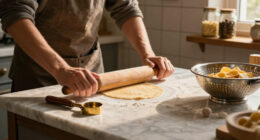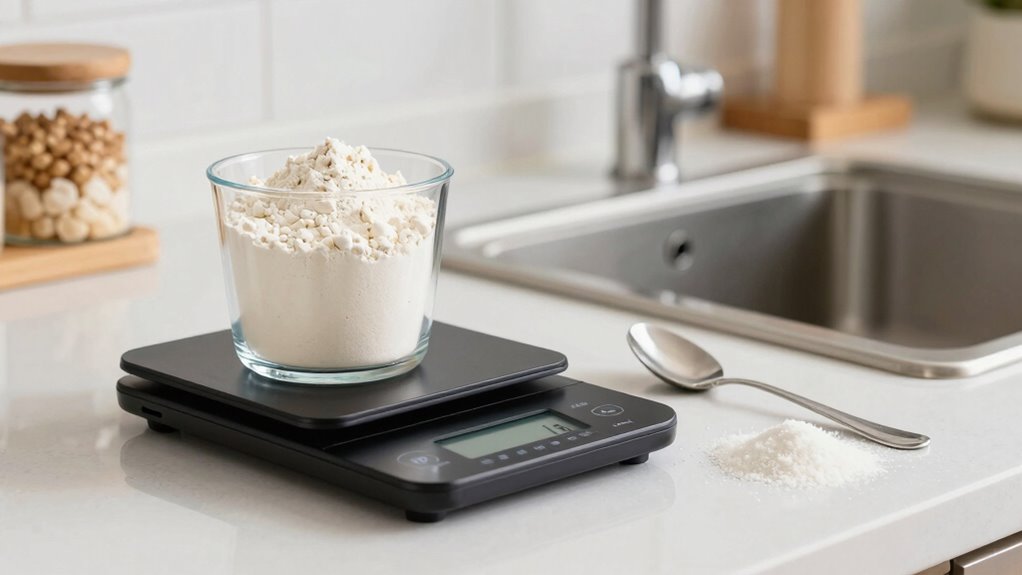

To measure like a pro without the headache, use grams for precision, especially with dry ingredients like flour and sugar, and rely on a kitchen scale for accuracy. Save cups for liquids and small spices when quick measurement suffices. Keep tools level and calibrated for consistency. Mastering these techniques helps you avoid costly mistakes and ensures your recipes turn out perfect every time. Stay tuned to learn more tips for accurate and effortless measurements.
Listen free for 30 days with Audible
Thousands of audiobooks and originals — cancel anytime.
As an affiliate, we earn on qualifying purchases.
Key Takeaways
- Use a kitchen scale to measure dry ingredients in grams for maximum accuracy and consistency.
- Rely on measuring cups for liquids, which are easier and quicker to assess visually.
- Convert between cups and grams using standard conversion factors specific to each ingredient.
- Level dry ingredients in measuring cups and zero the scale before weighing for precise results.
- Choose the right tool: spoons for small amounts, scales for larger or delicate measurements, to avoid headaches.
digital kitchen scale for baking
As an affiliate, we earn on qualifying purchases.
As an affiliate, we earn on qualifying purchases.
Why Accurate Measurement Matters in Cooking and Baking

Accurate measurement is vital in cooking and baking because even small differences can considerably affect the final result. When you measure precisely, you guarantee ingredient substitutions don’t throw off your recipe. For example, using too much flour or sugar can change texture and taste. Measurement accuracy helps you replicate successful dishes consistently, avoiding surprises. If you’re replacing ingredients, knowing the exact amount is indispensable to maintain balance. Relying on cups instead of grams can lead to variability, especially with dry ingredients. By mastering precise measurement, you gain control over your cooking process, making adjustments easier and more reliable. This focus on accuracy ultimately boosts your confidence and improves your skills, leading to better, more predictable results every time. European standards in measurement help ensure consistency across recipes and regions. Understanding measurement variability can help you adapt recipes more effectively when necessary. Additionally, adopting standardized units can reduce errors and improve your overall cooking precision. Using digital scales can further enhance your ability to measure ingredients accurately and effortlessly.
measuring cups for liquids and spices
As an affiliate, we earn on qualifying purchases.
As an affiliate, we earn on qualifying purchases.
Pros and Cons of Cups and Grams: Which Method Is Best?

Choosing between cups and grams depends on your priorities and the type of cooking or baking you’re doing. Cups offer ease of use and quick measurement, making them popular for casual cooking. However, they can lack volume accuracy, especially with different ingredient densities. Grams provide precise measurement, ensuring consistent results, but require a scale and more time. Consider this comparison:
| Aspect | Cups | Grams |
|---|---|---|
| Volume accuracy | Less precise, varies | Highly precise |
| Ease of use | Very easy, no scale needed | Requires a scale |
| Ideal for | Quick, informal cooking | Baking, detailed recipes |
| Ingredient types | Dry, liquids, solids | All ingredients |
| Cons | Inconsistent results | Slightly more effort |
Additionally, understanding measurement accuracy can help you decide which method best suits your needs. For example, ingredient density significantly affects measurement precision, especially when using cups. When working with easily measurable ingredients, cups can be sufficient, but for more delicate recipes, grams are preferable for accuracy. Choose based on your need for accuracy versus convenience.
ingredient conversion chart for baking
As an affiliate, we earn on qualifying purchases.
As an affiliate, we earn on qualifying purchases.
When Should You Use Cups or Grams? Best Practices for Different Ingredients
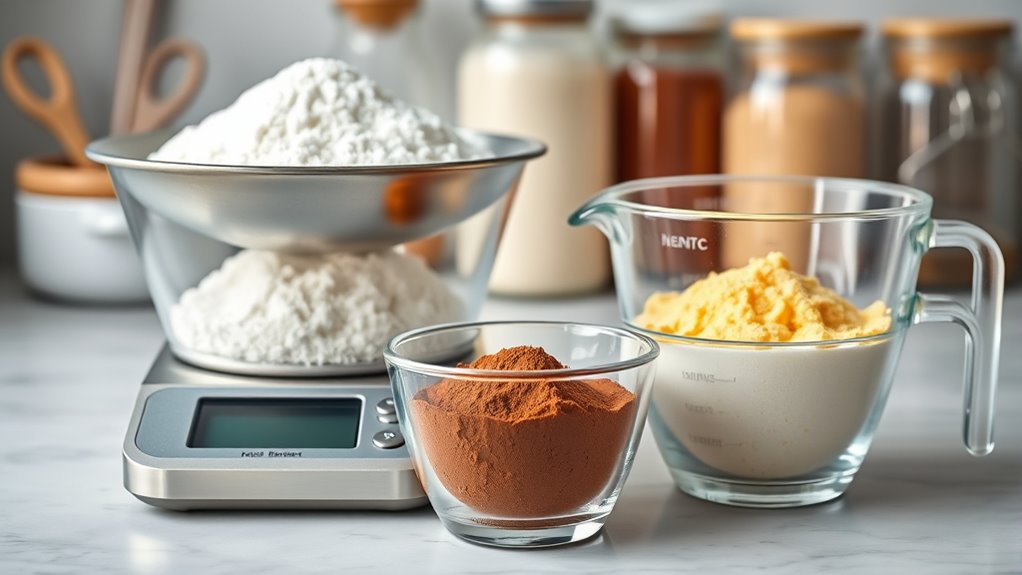
Knowing when to use cups or grams can make a big difference in your cooking and baking results. For ingredient versatility, cups are great for liquids like milk or oil, where visual measurement functions well. However, for dry ingredients such as flour or sugar, grams offer measurement precision that ensures consistency every time. Baking recipes, which require exact proportions, benefit from grams to avoid errors caused by varying cup sizes. When measuring spices or small quantities, grams provide greater accuracy. If you’re working with delicate baked goods or trying new recipes, using grams helps you replicate results reliably. Additionally, measuring techniques play a crucial role in achieving accurate results, and mastering proper methods can significantly improve your cooking precision. Using a scale can also help you better understand ingredient volume-to-weight ratios, leading to more consistent outcomes. Properly understanding ingredient density can further refine your measurements and improve recipe success. For example, knowing the density of flour can help you convert measurements more accurately between cups and grams. On the other hand, cups can be quicker and more convenient for casual cooking. Understanding these best practices helps you choose the right method for each ingredient.
precision food scale for dry ingredients
As an affiliate, we earn on qualifying purchases.
As an affiliate, we earn on qualifying purchases.
How to Convert Measurements Between Cups and Grams Effortlessly
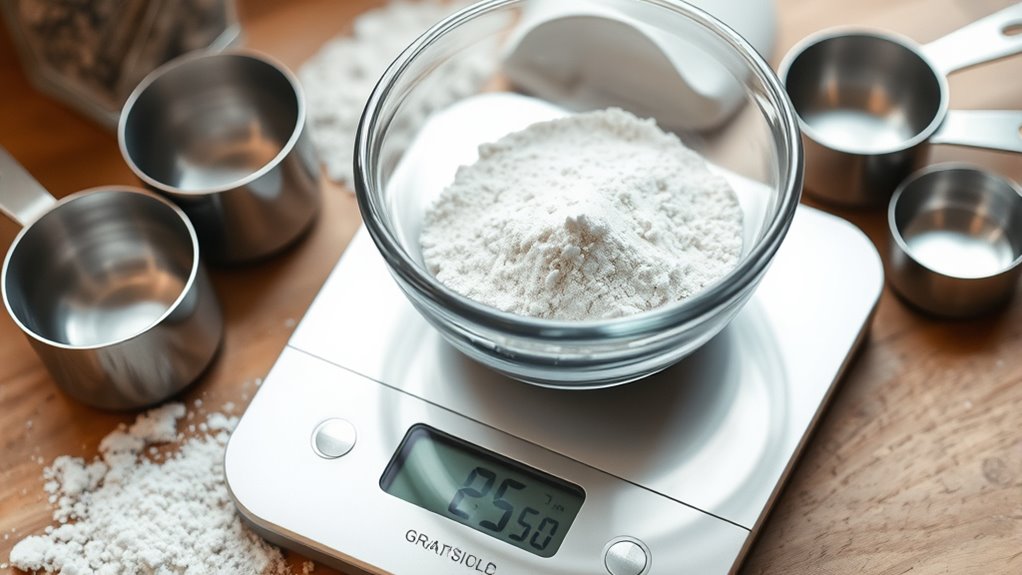
Converting measurements between cups and grams is simpler than it seems once you understand the basic conversion factors. To guarantee measurement accuracy, use standard unit conversion rates for common ingredients. For example, 1 cup of flour equals about 120 grams, while 1 cup of sugar is roughly 200 grams. Keep this table handy:
| Ingredient | Cups to Grams | Grams to Cups |
|---|---|---|
| Flour | 1 cup = 120g | 120g ≈ 1 cup |
| Sugar | 1 cup = 200g | 200g ≈ 1 cup |
| Butter | 1 cup = 227g | 227g ≈ 1 cup |
| Cocoa Powder | 1 cup = 100g | 100g ≈ 1 cup |
Using these measurements makes unit conversion straightforward, ensuring your recipes turn out just right.
Essential Tools and Techniques for Precise Kitchen Measurements
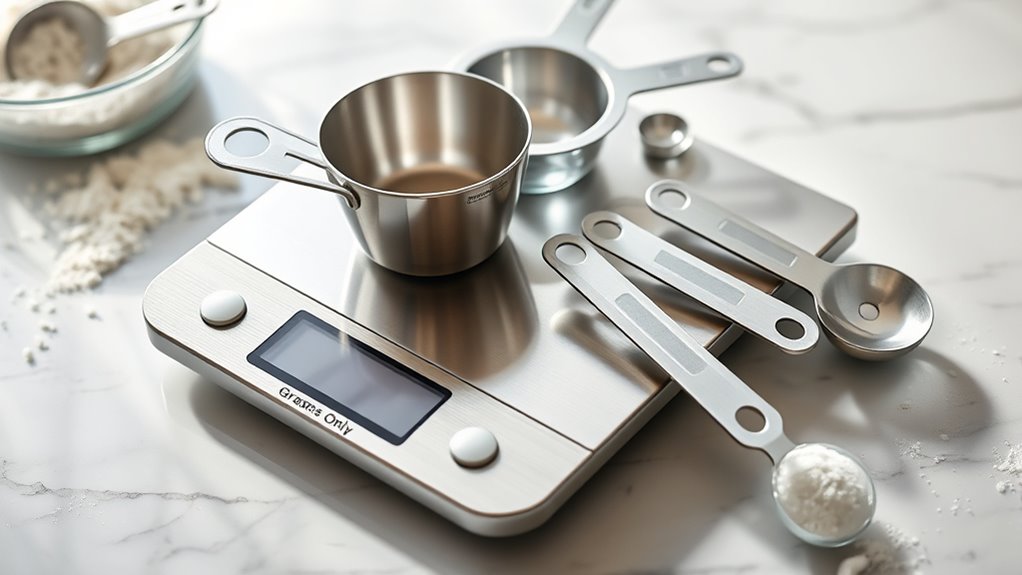
Accurate measurements are the backbone of successful cooking and baking, ensuring your recipes turn out perfect every time. To achieve this, invest in essential tools like measuring spoons and kitchen scales. Measuring spoons are ideal for small quantities of ingredients such as spices and baking powder, providing quick and reliable measurements. Kitchen scales, on the other hand, offer precision for larger or more delicate ingredients, allowing you to weigh in grams or ounces. To get the most accurate results, always use your tools correctly—leveled spoons for dry ingredients and zeroed scales for liquids or solids. Keep your measuring tools clean and calibrated regularly. This attention to detail helps you maintain consistency, whether you’re measuring cups or grams, making your cooking and baking foolproof. Understanding proper measuring techniques ensures you get the best possible results every time, especially when working with different ingredient types that require specific handling. Additionally, being aware of measurement unit conversions can help you adapt recipes more easily across different regions and tools.
Frequently Asked Questions
Can I Use a Digital Scale for All Types of Ingredients?
Yes, you can use a digital scale for all ingredients, but make certain to calibrate it regularly for accuracy. When measuring liquids versus solids, remember that liquids are weighed in grams or ounces, while solids may require different techniques like tare functions. Using your digital scale correctly ensures precise measurements, whether you’re weighing flour or oil. Just double-check calibration and switch modes as needed to handle different ingredient types effectively.
How Do Humidity and Temperature Affect Measurements?
Imagine your scale as a delicate boat, floating on shifting waters. Humidity impact and temperature effects can cause ingredients to absorb moisture or lose it, altering their weight. High humidity makes flour heavier, while warmth can make butter softer, skewing your measurements. To stay precise, measure in a consistent environment, keep ingredients sealed, and be mindful of weather changes. This way, your measurements stay steady, no matter the conditions.
Are There Regional Differences in Cup Sizes Worldwide?
Yes, there are regional measurement standards and cultural measurement differences in cup sizes worldwide. You’ll find that a standard US cup holds about 240 ml, while a UK cup is roughly 284 ml, and other regions have their own standards. These variations can affect your recipes, so you should always verify the specific measurement standards for your location or the recipe’s origin to ensure accuracy and consistent results.
What Are Common Mistakes When Measuring Ingredients?
You know what they say—“measure twice, cut once.” When measuring ingredients, common mistakes include not using the right measuring tools, which affects measuring techniques, and ignoring ingredient consistency, leading to inaccurate results. Always spoon and level dry ingredients, and weigh items for precision. Avoid packing ingredients tightly or scooping directly from containers. These small errors can throw off your recipe, so be precise for the best outcome.
How Do I Measure Sticky or Dense Ingredients Accurately?
To measure sticky or dense ingredients accurately, use a few tricks to overcome sticky measurement challenges. Lightly oil or spray your measuring tools to prevent sticking, and pack ingredients firmly but evenly. For more precise dense ingredient accuracy, weigh them in grams instead of cups, as this reduces errors caused by packing or settling. This way, your measurements stay consistent, and your recipes turn out just right every time.
Conclusion
Mastering the art of measurement is like tuning a fine instrument—you’ll create sweeter, more harmonious dishes every time. Whether you prefer cups or grams, choosing the right tool and technique transforms your kitchen from chaos to concert. With a little practice, you’ll navigate recipes with confidence, turning everyday ingredients into culinary symphonies. So, embrace precision, and watch your cooking and baking reach new, beautiful heights.
NFL season / tailgating Picks
team gear
As an affiliate, we earn on qualifying purchases.