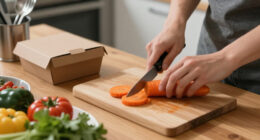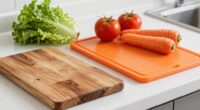
Self-healing in cutting boards refers to how wood fibers close up and recover after knife cuts. End-grain boards, with fibers oriented vertically, naturally swell and realign to hide small marks, making them more durable and easier to maintain. Edge-grain boards show cuts more visibly and recover less effectively. If you keep exploring, you’ll discover how to choose and care for the best self-healing board for your needs.

Get kitchen staples and gadgets delivered free — and shop member deals
- Fast, free delivery on millions of items
- Access to Prime Big Deal Days deals on October 6–7
- Prime Video, Amazon Music and more included
Key Takeaways
- Self-healing in wood refers to the surface’s ability to close small cuts and scratches over time.
- End-grain boards self-heal better because their vertical fibers absorb impact and close tiny damages naturally.
- Edge-grain boards show less effective self-healing, making scratches and cuts more visible and long-lasting.
- Moisture absorption causes fibers to swell and close small cracks, aiding self-healing, especially in end-grain surfaces.
- Proper maintenance and oiling enhance self-healing properties, with end-grain boards generally being more durable and resilient.
As an affiliate, we earn on qualifying purchases.
What Is Self-Healing in Cutting Boards?
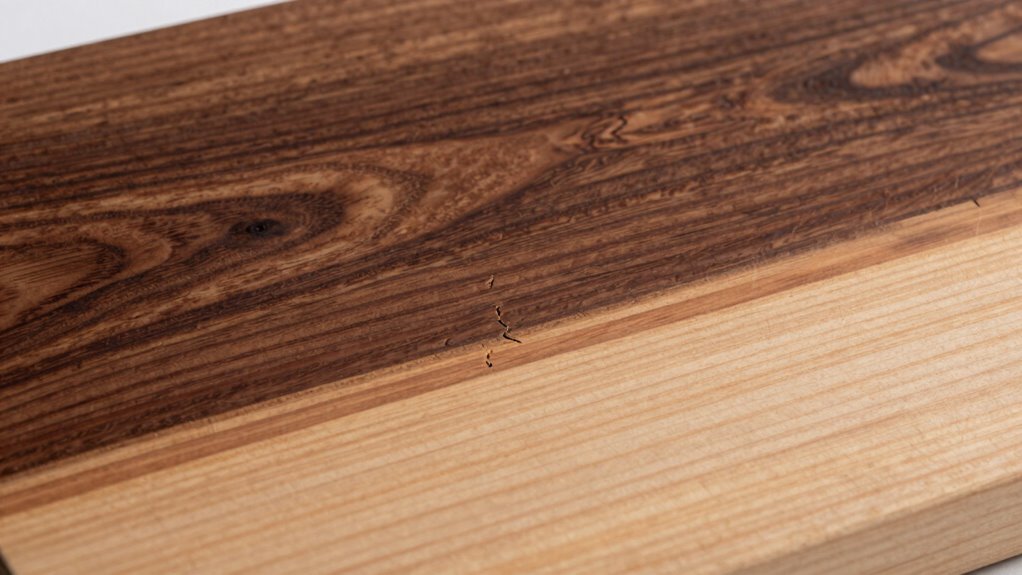
Self-healing in cutting boards refers to the material’s ability to automatically close up small cuts and scratches as they occur. This process depends heavily on grain orientation, especially in wood boards, where the natural grain allows fibers to shift and close gaps over time. When you cut or chop, tiny cuts form, but the natural oils present in the wood help maintain flexibility, supporting the self-healing process. These oils seep into small cracks, making the surface more resilient and less prone to permanent damage. The grain’s orientation influences how well the board can recover; end-grain boards, with their vertical fibers, tend to self-heal more effectively than edge-grain boards. This natural ability keeps your cutting surface smoother and extends its lifespan. grain orientation plays a crucial role in how well a board can recover from damage, and understanding the material properties involved can help in selecting the best type of cutting board for durability.
As an affiliate, we earn on qualifying purchases.
How Do End-Grain and Edge-Grain Boards Handle Knife Cuts?
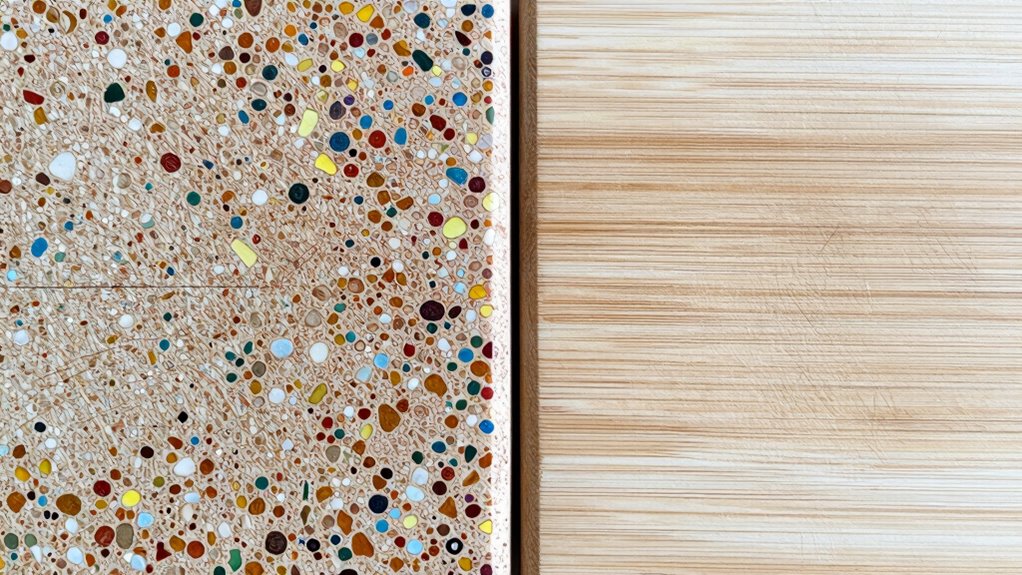
You’ll notice that end-grain boards tend to absorb knife cuts better because their cell structure is more resilient. In contrast, edge-grain boards often show visible marks more quickly and don’t repair as well. Understanding these differences helps you choose a cutting surface that lasts longer and maintains its durability. Additionally, cell structure resilience can influence how the boards age and their overall longevity, especially in terms of material composition and how it reacts to repeated use. Proper maintenance and cleaning practices can also extend the lifespan of both types of boards, but the inherent material durability plays a key role in their ability to recover from cuts. Recognizing the self-healing capacity of each material can guide you in selecting the most suitable board for your needs and ensuring it remains functional over time.
Cell Structure Resilience
End-grain boards tend to handle knife cuts better because their cellular structure allows the wood to absorb and distribute the impact more effectively. Their densely packed wood grain acts like tiny compartments, minimizing deep gouges. The resilient cell structure enables end-grain to recover more readily, maintaining a smoother surface over time. Additionally, luggage & bags considerations highlight that choosing the right material can influence durability and performance in demanding conditions. Consider these key points: 1. Cell Structure Resilience: End-grain’s layered cells resist deep cuts better. 2. Moisture Absorption: Better moisture handling prevents warping and cracking. 3. Impact Distribution: Cellular makeup spreads force across the surface. 4. Surface Longevity: The wood’s natural resilience reduces visible damage. This structure makes end-grain boards more durable, especially against knife cuts, maintaining their integrity longer. Furthermore, understanding cell structure resilience can help in selecting the most suitable cutting surface for various culinary needs.
Repair Mechanisms Variance
While both end-grain and edge-grain boards can sustain knife cuts, they differ considerably in how they repair or conceal those damages over time. End-grain boards, with their tightly packed wood grain, tend to conceal cuts better because the fibers can swell slightly with moisture absorption, helping to close small gaps. This natural self-healing process is limited but noticeable. In contrast, edge-grain boards show cuts more clearly, as the exposed wood grain is flatter and less capable of swelling to hide damage. Moisture absorption in end-grain boards can improve their ability to conceal cuts temporarily, but repeated damage will eventually make the cuts more visible. Overall, end-grain boards offer a more forgiving surface for minor knife marks, thanks to their unique wood grain structure. Additionally, understanding wood grain orientation is essential for selecting a cutting board that minimizes visible damage and prolongs its lifespan.
Cutting Surface Durability
When it comes to handling knife cuts, the durability of the cutting surface varies markedly between end-grain and edge-grain boards. End-grain boards, with their intricate wood grain patterns, tend to absorb moisture better and can hide small cuts more effectively. In contrast, edge-grain boards show knife marks more prominently, making cuts more visible. Consider these points:
- End-grain surfaces “self-heal” by closing small cuts due to the natural wood grain structure.
- Edge-grain boards are more prone to deep cuts that remain visible over time.
- Moisture absorption in end-grain helps reduce surface damage and prolongs durability.
- Knife marks on edge-grain boards tend to be sharper and more noticeable, impacting longevity.
Your choice affects how well your board withstands knife work and wear over time.
durable wooden cutting board for knives
As an affiliate, we earn on qualifying purchases.
As an affiliate, we earn on qualifying purchases.
How Self-Healing Works in Wooden Cutting Boards
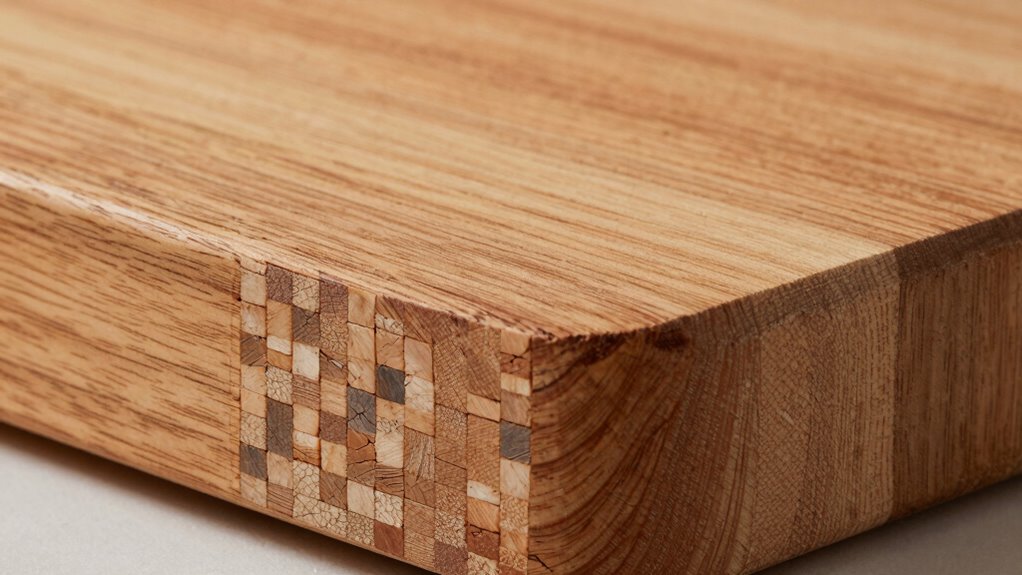
When you cut into a wooden board, the cellulose fibers can repair small knife marks through a process called self-healing. This happens because the fibers swell and shrink as they absorb moisture and dry out, helping to close up tiny cuts. Understanding this mechanism shows why some boards recover better and stay smoother over time. Additionally, the intricate craftsmanship involved in creating high-quality boards can influence their ability to self-heal effectively. The natural material properties of the wood also play a crucial role in how well a board can recover from cuts.
Cellulose Fiber Repair
Wooden cutting boards have a remarkable ability to repair themselves through a natural process called cellulose fiber healing. When you cut or carve into the wood grain, tiny fibers break but then realign and bond during the repair process. This self-healing ability depends on the structure of cellulose fibers within the wood, which act like tiny scaffolds. The weight of wind turbine blades can influence the strength and durability of the wood, as the materials and design impact its resilience. Additionally, research supports the idea that the predictive validity of certain traits can help forecast how well a material like wood will perform under stress. Understanding how cellulose fibers respond to environmental factors is crucial for optimizing the durability of your cutting board. Proper seasoning creates an environment that enhances the moisture retention necessary for effective fiber repair. The presence of proper humidity levels further supports the natural healing process. Here are four key points about cellulose fiber repair:
- The wood’s natural moisture helps fibers swell and reattach.
- Proper seasoning enhances the repair process.
- The wood grain guides fiber realignment for seamless healing.
- Regular use encourages the fibers to settle into their natural positions.
Understanding this process helps you maintain your board’s durability and keep it looking excellent over time.
Swelling and Shrinking
Cellulose fibers in wooden cutting boards respond to changes in moisture by swelling and shrinking, which plays a pivotal role in their self-healing ability. When you expose the wood to moisture, it absorbs water, leading to wood expansion. As it dries, it shrinks back, closing small cuts and cracks naturally. This process allows the wood to self-repair minor damage over time. The table below illustrates how different moisture levels influence the board’s behavior:
| Moisture Level | Effect on Wood | Result |
|---|---|---|
| Low | Drying, shrinking | Cracks may form |
| Moderate | Stable, minimal change | Self-healing begins |
| High | Swelling, expansion | Repairs minor damage |
| Excessive | Warping, damage | Loss of integrity |
Understanding moisture absorption helps you maintain your board’s self-healing properties. Additionally, moisture regulation is essential to prevent deterioration and ensure the longevity of your wooden cutting board.
professional end grain butcher block
As an affiliate, we earn on qualifying purchases.
As an affiliate, we earn on qualifying purchases.
Which Cutting Board Is More Durable and Easier to Maintain?
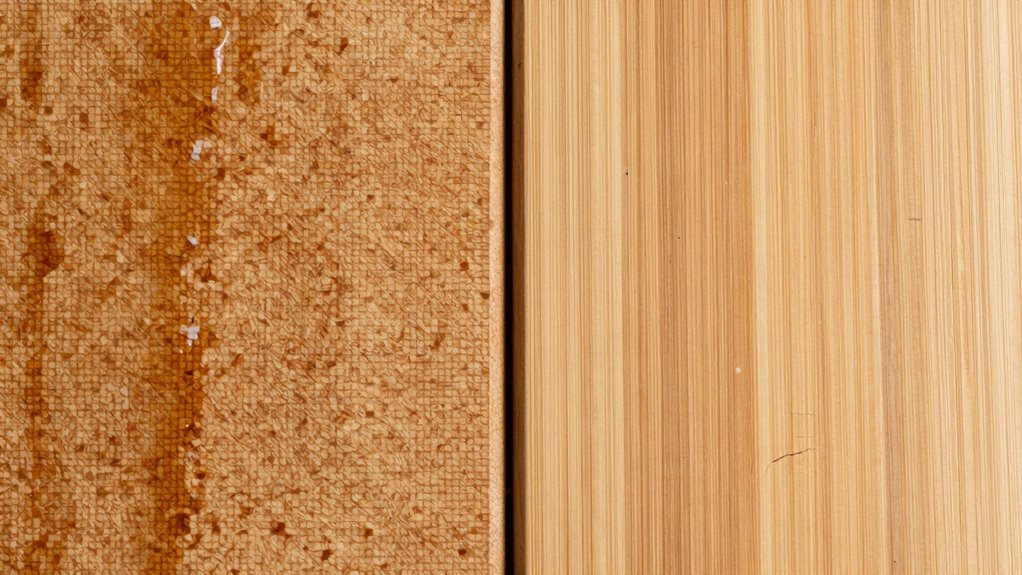
Choosing the right cutting board depends on both durability and ease of maintenance, as these factors directly impact your kitchen’s efficiency. When comparing end-grain and edge-grain boards, consider these key points:
Selecting the right cutting board enhances durability and simplifies maintenance for a more efficient kitchen.
- Grain orientation affects durability—end-grain boards are more resilient since they can “self-heal” from cuts.
- End-grain boards typically require less frequent board maintenance because their structure helps hide knife marks. The self-healing properties of end-grain boards are due to the orientation of the wood fibers, which help them recover from cuts more effectively.
- Edge-grain boards are easier to clean and maintain, but may show wear faster.
- Properly selecting based on grain orientation guarantees your board lasts longer and stays hygienic with less effort.
- The wood fiber structure helps explain why end-grain surfaces are more durable and better at absorbing knife impacts. Additionally, the grain orientation plays a significant role in how well a board can withstand daily use and resist damage.
- Understanding these material properties can guide you in choosing a cutting board that balances durability with ease of care. Recognizing the wood’s natural resilience further emphasizes how these properties contribute to the longevity of the board.
Ultimately, end-grain boards offer superior durability and self-healing qualities, making them ideal for heavy use, while edge-grain boards are simpler to maintain.
Are Self-Healing Boards Safe and Hygienic?
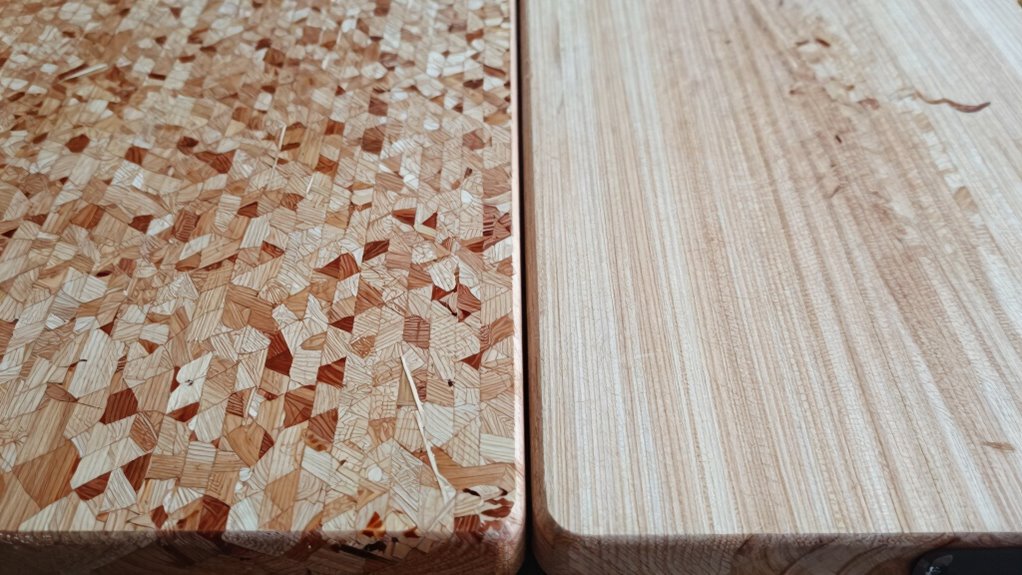
Self-healing properties in end-grain boards help maintain their surface over time, but many wonder if these boards are safe and hygienic. Food safety is essential, and you might worry that the tiny pores created by self-healing could harbor bacteria. However, research shows that end-grain boards are actually more resistant to bacterial growth because their surface fibers close up after cuts, reducing spaces where bacteria can hide. Proper cleaning and maintenance are still vital, as bacteria can survive if you don’t sanitize regularly. Regular maintenance routines including thorough cleaning help keep the surface hygienic and prevent bacterial buildup. Overall, self-healing end-grain boards are safe and hygienic when cleaned properly. Their ability to resist deep cuts helps keep them cleaner longer, making them a reliable choice for food safety in your kitchen.
Choosing the Best Cutting Board for Your Cooking Style
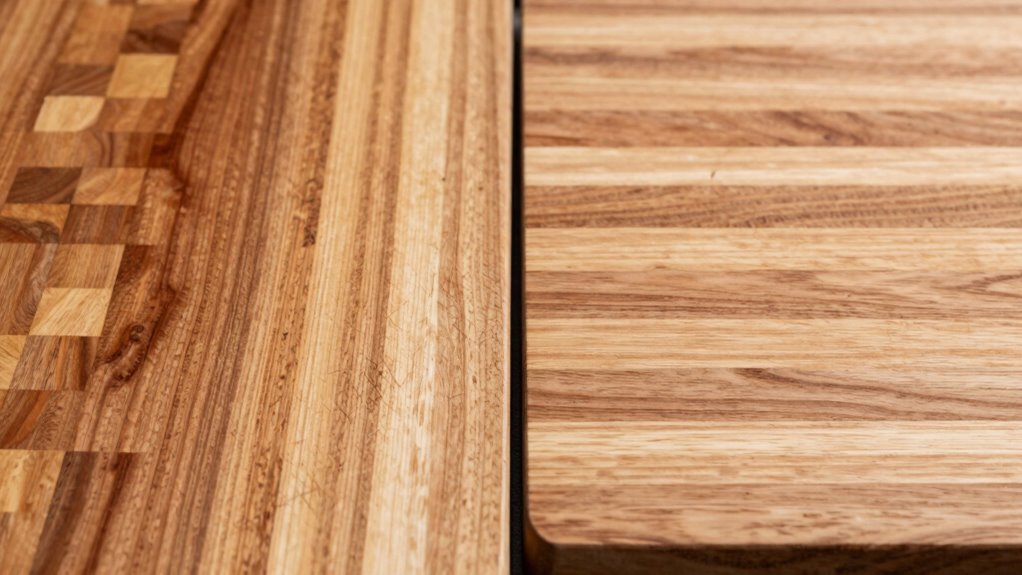
Selecting the right cutting board depends on your cooking habits and preferences. Consider these factors to find your ideal match:
Choose a cutting board that matches your cooking style for durability, hygiene, and easy maintenance.
- Cutting Style: If you chop a lot of vegetables, a softer wood with good wood treatment helps prevent dulling knives.
- Durability: Heavy-duty boards with epoxy finishes resist staining and moisture, perfect for frequent use.
- Maintenance: End-grain boards often require minimal wood treatment, promoting self-healing, while edge-grain boards may need regular oiling.
- Hygiene: Choose a board with a sealed surface, like epoxy finishes, to reduce bacteria buildup and ease cleaning.
Matching your cooking style with the right wood treatment and surface finish ensures your cutting board stays functional and safe.
Tips to Boost Your Cutting Board’s Self-Healing Ability
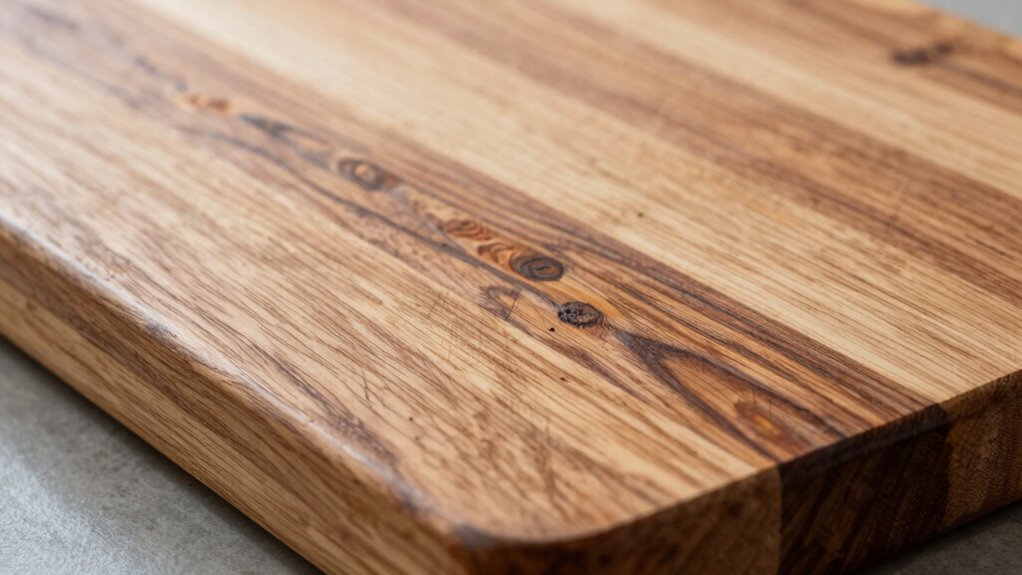
To enhance your cutting board’s ability to heal itself, focus on proper maintenance and care practices that support the wood’s natural resilience. Pay attention to the wood grain patterns, as they influence how well the board can recover from cuts. Smooth, tight grain patterns tend to self-heal better than open-grain surfaces. Implement regular maintenance routines like oiling the board with food-safe mineral oil to keep the wood hydrated and prevent cracks. Avoid soaking or exposing the board to excessive moisture, which can damage the grain structure. Also, use gentle cleaning methods to preserve the wood’s surface and prevent unnecessary wear. Consistent care guarantees the wood’s fibers stay healthy, promoting better self-healing and extending the life of your cutting board.
Frequently Asked Questions
Can Self-Healing Boards Repair Deep Knife Gouges Effectively?
Self-healing boards can repair deep knife gouges effectively, but it depends on the severity of the scratches. For minor deep scratches, the wood’s natural oils and fibers may fill in and close up over time, reducing visible damage. However, for very deep gouges, you might need to sand and refinish the surface to restore it fully. Regular maintenance helps keep the board looking good and minimizes lasting damage.
How Do Environmental Factors Affect a Cutting Board’s Self-Healing Ability?
Environmental factors like humidity and sunlight exposure markedly impact your cutting board’s self-healing ability. Maintaining proper humidity levels helps the wood stay stable and prevents cracking, while excessive sunlight can dry out the surface, reducing its capacity to repair itself. To keep your board in top shape, store it in a cool, shaded area and use humidity control to balance moisture, ensuring it can effectively heal minor cuts over time.
Are There Specific Wood Types Better for Self-Healing Properties?
You’ll find that softer woods with lower density, like maple or cherry, tend to have better self-healing properties because they absorb oils more effectively and flex slightly under pressure. Their porous structure allows them to hide minor cuts and scratches, making them appear fresher longer. Conversely, denser woods resist oil absorption and may show damage more prominently, reducing their self-healing ability.
How Often Should I Reseal or Treat My Self-Healing Cutting Board?
You should reseal or treat your self-healing cutting board every 4 to 6 weeks to maintain its board maintenance and self-healing properties. Don’t wait until it looks dry or rough—regular sealing helps preserve the wood and prevents bacteria buildup. Even if you’re busy, a quick application of food-grade mineral oil or beeswax keeps your board in top condition, ensuring its longevity and safety for food prep.
Does Frequent Washing Impair the Self-Healing Features of Wooden Boards?
Frequent washing doesn’t impair your wooden board’s self-healing features if you use gentle soap and warm water, but harsh sanitation methods can damage the surface. Proper board sanitation involves cleaning thoroughly after use, which keeps it hygienic without harming the wood’s natural repair process. To maintain knife maintenance and self-healing, avoid soaking the board and dry it promptly, ensuring the wood stays in ideal condition.
Conclusion
Choosing between end-grain and edge-grain boards depends on your cooking habits and priorities. While end-grain boards are often touted as more self-healing and durable, recent studies suggest that the difference in healing ability may be less significant than traditionally believed. Ultimately, regular maintenance and proper care play a bigger role in extending your board’s lifespan. So, focus on quality and upkeep, and your cutting board will serve you well, regardless of its grain type.
Fall Picks
fall essentials
As an affiliate, we earn on qualifying purchases.