

If you’re swapping kokum and tamarind, understand that kokum offers a lighter, citrusy flavor with subtle bitterness, perfect for coastal dishes and drinks, while tamarind provides a deep, earthy sourness used in sambar, chutneys, and desserts. Kokum’s cooling properties and mild acidity suit seafood and vegetable dishes, whereas tamarind’s rich tang adds depth to spicy and savory recipes. Continue exploring to discover how these ingredients can elevate your culinary creations.
Listen free for 30 days with Audible
Thousands of audiobooks and originals — cancel anytime.
As an affiliate, we earn on qualifying purchases.
Key Takeaways
- Kokum offers a mild, citrusy flavor with subtle bitterness, while tamarind provides a deep, earthy sourness.
- Kokum is used in coastal drinks and lighter curries; tamarind is common in sambar, chutneys, and rich dishes.
- Kokum has cooling properties and antioxidants; tamarind aids digestion and provides minerals like magnesium and potassium.
- Kokum enhances seafood and vegetable dishes without overpowering; tamarind adds complex acidity and depth to various recipes.
- Choose kokum for subtle tang and health benefits; opt for tamarind for richer sourness and traditional culinary applications.
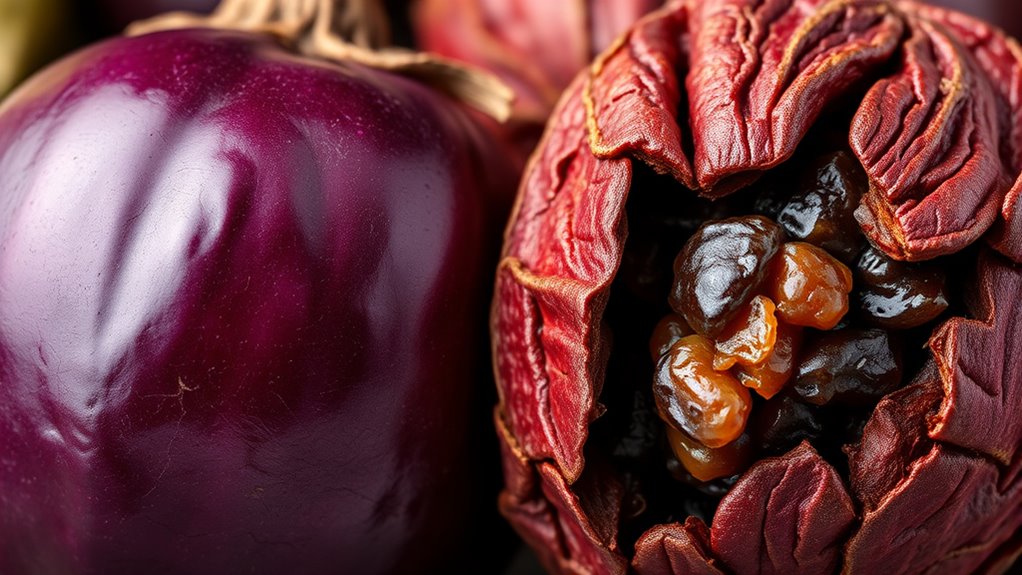
When comparing kokum and tamarind, two popular souring agents used in Indian cuisine, it’s important to understand their distinct flavors, uses, and nutritional benefits. Both ingredients add a tangy punch to dishes, but they differ profoundly in taste, health benefits, and culinary applications. Kokum, derived from the dried rind of the Garcinia indica fruit, offers a mildly sweet, citrusy flavor with a subtle bitterness. Tamarind, on the other hand, comes from the pulp of the tamarind pod, bringing a deeper, more complex sourness with a hint of sweetness and earthy undertones. Recognizing these differences helps you select the right ingredient for your recipes and health goals.
Kokum offers a mild, citrusy flavor with subtle bitterness; tamarind provides deep, complex sourness with earthy undertones.
In terms of health benefits, kokum is known for its cooling properties and rich antioxidant content. It’s often used to improve digestion, reduce inflammation, and promote weight loss. Its high vitamin C content supports your immune system, making it a popular choice in summer beverages and detox drinks. Tamarind also packs a nutritional punch, providing dietary fiber, vitamins, and minerals like magnesium and potassium. It’s traditionally used to aid digestion, stimulate appetite, and combat constipation. Both ingredients contribute to your overall health, but kokum’s antioxidant properties and cooling effects make it particularly beneficial in hot climates, while tamarind’s fiber content promotes gut health.
Additionally, modern research highlights innovative uses of natural ingredients like kokum and tamarind in health and wellness applications beyond traditional cuisine. Culinary uses for kokum and tamarind vary widely across Indian dishes. Kokum is frequently added to kombu-based drinks, fruit punches, and curries, especially in coastal regions like Goa and Maharashtra. Its tangy flavor enhances seafood and vegetable dishes without overpowering the main ingredients. Tamarind, however, is more versatile and is used in a variety of dishes such as sambar, chutneys, rasams, and even desserts. Its deep, sour flavor helps balance spicy, sweet, and savory flavors, making it a staple in many traditional recipes. If you’re preparing a dish that requires a subtle, revitalizing tang, kokum can provide a lighter, milder acidity. For recipes demanding a richer, more pronounced sourness, tamarind is the go-to ingredient.
Both kokum and tamarind serve as essential souring agents in Indian cooking, each bringing their unique flavor profiles and health benefits. Choosing between them depends on your taste preferences and the specific culinary context. Whether you’re looking to boost your immune system, improve digestion, or simply add a tangy twist to your dishes, understanding their distinct qualities helps you make the best choice. With kokum’s cooling, antioxidant-rich profile and tamarind’s complex, flavorful acidity, you can enhance your cooking while reaping notable health benefits.
As an affiliate, we earn on qualifying purchases.
Frequently Asked Questions
Can Kokum Be Used as a Substitute for Tamarind in All Recipes?
You can sometimes use kokum as a substitute for tamarind, but keep in mind the flavor compatibility and texture differences. Kokum offers a more subtle, fruity sourness, while tamarind has a tangier, more complex flavor. Its texture is also different, often firmer and less sticky. So, while kokum works in some recipes, you might need to adjust quantities or add other ingredients to achieve the desired taste and consistency.
How Does the Shelf Life of Kokum Compare to Tamarind?
Did you know kokum lasts longer than tamarind? When stored properly, kokum can stay fresh for up to a year, especially if sealed and kept in a cool, dry place. Tamarind, however, typically lasts around six months to a year. Preservation methods like refrigeration or freezing can extend shelf life for both. So, if longevity matters, kokum’s your best bet for long-term storage.
Are There Any Health Benefits Unique to Kokum?
You’ll find that kokum offers unique health benefits, especially with its antioxidant properties that help fight free radicals and reduce inflammation. It also promotes digestive health by soothing your stomach and aiding digestion. Incorporating kokum into your diet can support overall wellness, boost immunity, and improve gut health. Its natural compounds make it a valuable addition, especially if you’re seeking a traditional, health-boosting sour ingredient.
What Are the Geographic Regions Where Kokum Is Traditionally Used?
You’ll find kokum mainly in Western India, especially in Maharashtra, Goa, and Gujarat’s regional cuisine. It’s traditionally used in dishes like curries, dals, and drinks, adding a tangy flavor. Its popularity extends to coastal areas where it’s valued for its cooling properties and unique sour taste. In these regions, kokum’s traditional usage is deeply rooted in local culinary practices, making it an essential ingredient in authentic recipes.
How Does the Cost of Kokum Compare to Tamarind?
You’ll find that kokum generally costs more than tamarind due to its limited market availability and higher demand in specific regions. The price comparison shows kokum’s premium price, reflecting its specialty status, whereas tamarind remains more affordable and widely accessible. If you’re shopping, expect to pay a bit extra for kokum, especially in markets where it’s less common, while tamarind offers a budget-friendly souring option for everyday cooking.
As an affiliate, we earn on qualifying purchases.
Conclusion
Whether you prefer kokum or tamarind, both add a unique tang to your dishes. Did you know that India consumes over 1.5 million tons of tamarind annually? That’s a tribute to its popularity and rich flavor. Next time you cook, try exploring both to see which sour note elevates your meal best. Embrace the versatility of these ingredients and let your taste buds decide—your culinary adventures await!
As an affiliate, we earn on qualifying purchases.
As an affiliate, we earn on qualifying purchases.
Flea & tick season Picks
flea and tick prevention
As an affiliate, we earn on qualifying purchases.