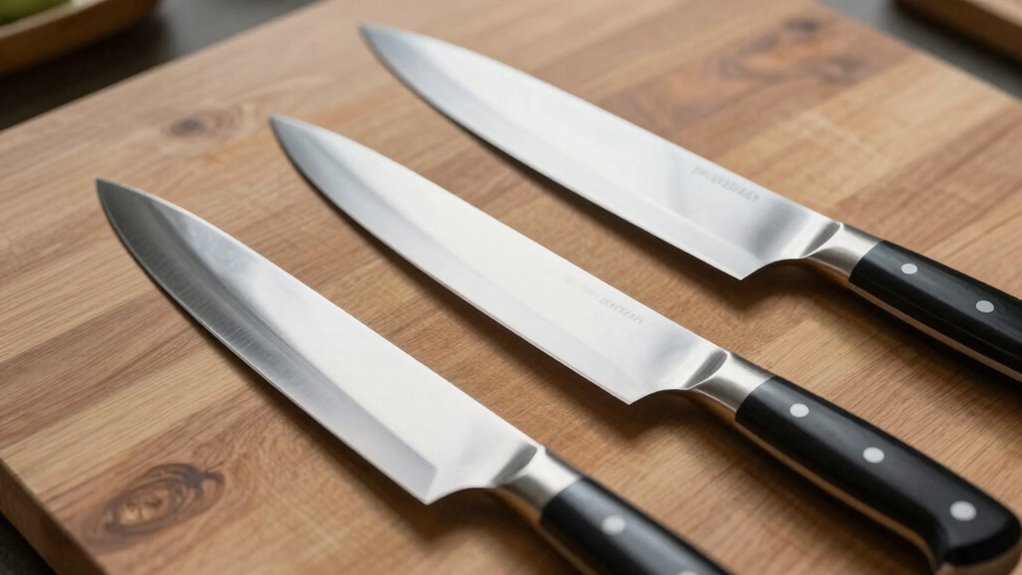

Choosing between a chef knife, Santoku, or Nakiri depends on your cooking style and tasks. If you need a versatile blade for both meat and vegetables, a chef’s knife suits most kitchens. For precise vegetable slicing and dicing, a Nakiri is ideal. If you prefer lightweight, multi-purpose cuts, the Santoku works well. Understanding their differences helps you pick the right tool—keep exploring to find the perfect fit for your culinary needs.
Key Takeaways
- Choose a chef knife for versatile, heavy-duty tasks like chopping meat and large vegetables.
- Opt for a Santoku if you prefer lightweight, precise slicing and dicing of vegetables.
- Select a Nakiri for focused vegetable prep with straight edges for uniform slices and leafy greens.
- Consider your cutting style: rocking cuts benefit from curved handles, straight handles suit chopping.
- Match your knife choice to your comfort, task frequency, and kitchen tasks for optimal performance.

HOSHANHO Kitchen Knife in Japanese High Carbon Steel, Professional High-Class Chef's Knife 8 inch, Non-slip Ultra Sharp Cooking Knives with Ergonomic Handle
【High-End Japanese Steel Chef's Knife】 HOSHANHO chef's knife is made of Japanese high carbon steel 10Cr15CoMoV, 2x of…
As an affiliate, we earn on qualifying purchases.
As an affiliate, we earn on qualifying purchases.
How Do Chef, Santoku, and Nakiri Knives Differ in Design and Use?
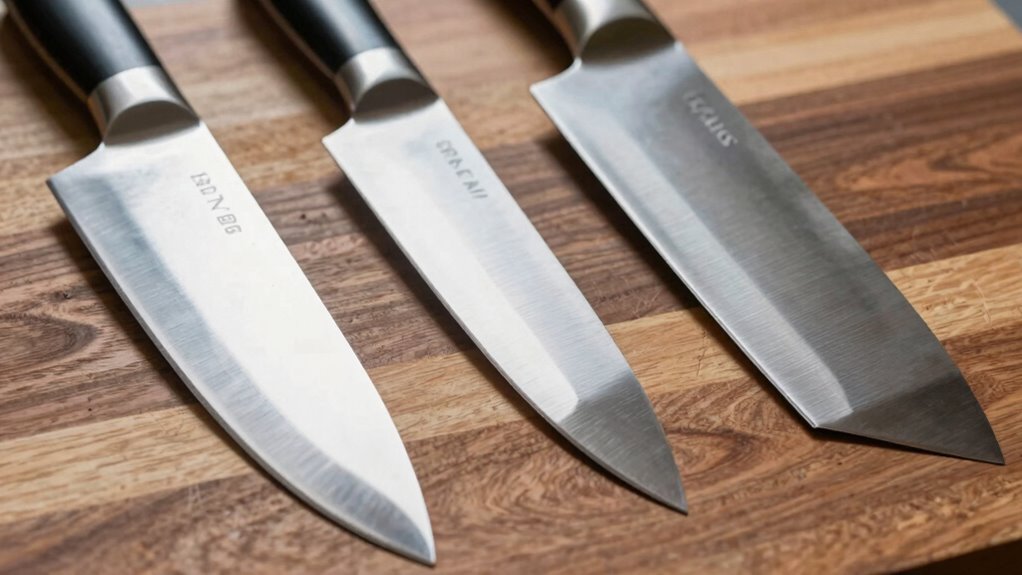
Chef, Santoku, and Nakiri knives each have distinct designs that influence how you use them. The ergonomic handle design varies, offering different levels of comfort and control depending on the shape and grip style. For example, a chef’s knife often features a curved handle for a secure grip during rocking cuts, while a Nakiri may have a straight handle for precise chopping. Blade length variations are also notable; a chef’s knife typically ranges from 8 to 10 inches, providing versatility for many tasks. Santoku blades are usually slightly shorter, around 5 to 7 inches, making them more maneuverable. Nakiri knives often have a consistent length optimized for vegetables. These design differences impact your technique, comfort, and the types of cuts you can perform efficiently. Additionally, blade geometry plays a crucial role in determining the cutting style and efficiency for different tasks. Blade shape also influences how well each knife performs specific cuts, affecting your overall technique and results.

Santoku Knife, 7 Inch Chef's Knife Kitchen Knife with Razor Sharp High-Carbon German Steel, Ergonomic Non-Slip Handle for Slicing, Dicing, Chopping Meat & Vegetables, Ideal for Kitchens & Home Cooking
Masterful Control: Experience the ultimate precision of our 7-inch Japanese Santoku knife. The classic sheep's foot tip allows…
As an affiliate, we earn on qualifying purchases.
As an affiliate, we earn on qualifying purchases.
Which Knife Is Best for Vegetables? And What About Meat?
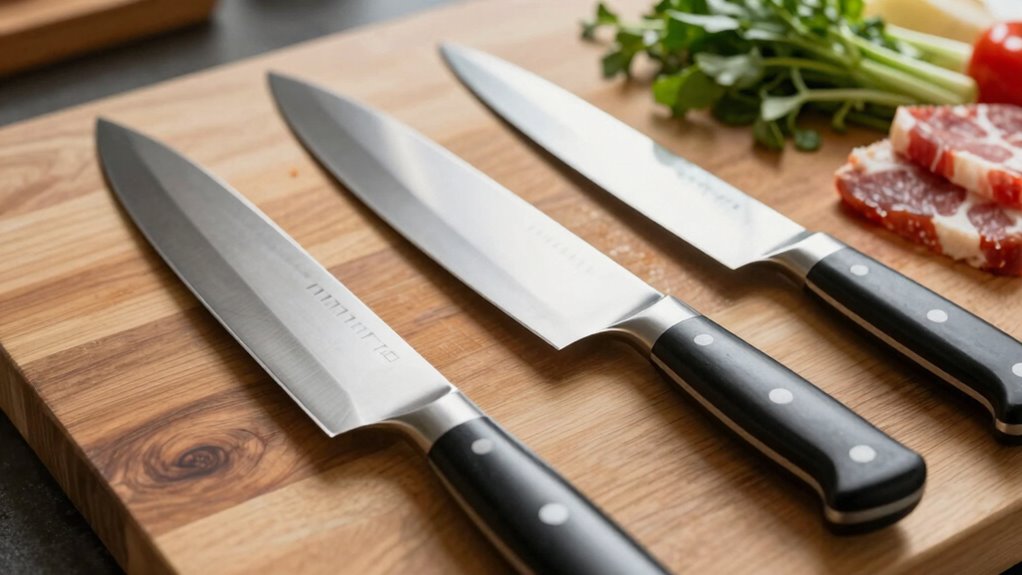
When it comes to handling vegetables, your technique can make a big difference in efficiency and safety. For meat, precision and control are key to achieving clean cuts and maintaining texture. Consider how each knife’s versatility and design support these tasks to choose the best option for your needs. Additionally, understanding the cutting styles and how they align with your tasks can help you select the most suitable knife for a variety of kitchen needs.
Vegetable Handling Techniques
Choosing the right knife can make vegetable preparation safer and more efficient. With the right tool, you’ll improve finger dexterity, allowing you to grip and control the knife better. This control helps you make cleaner, more precise cuts, increasing cutting speed without sacrificing safety. For example, a Nakiri’s straight edge is ideal for slicing vegetables into uniform pieces, while a Santoku’s grant you more versatility with dicing and slicing. Keep your fingers curled inward, using your knuckles as a guide to prevent cuts. Maintain a steady, confident motion, focusing on fluid, controlled cuts. Proper handling reduces fatigue and enhances speed, making vegetable prep less tedious. Remember, a sharp knife combined with good technique will always outperform dull tools, making the entire process smoother and safer.
Meat Cutting Precision
Selecting the right knife for meat requires attention to the specific cuts and techniques involved. A sharp, well-maintained blade ensures cleaner cuts and reduces the risk of accidents. Regular knife sharpening is essential to keep your edge precise, especially when slicing through tougher meats. The chef knife, with its broad blade, offers excellent control for roasts or steaks, while the santoku’s lighter weight provides precision for delicate cuts. Nakiri knives excel with vegetables, but their straight edge can be less effective for meat. Proper knife storage, such as a magnetic strip or a knife block, helps maintain the blade’s sharpness and prevents damage. Additionally, understanding the different types of knives available can help you select the best tool for each task. Recognizing the importance of maintenance ensures your knives stay in optimal condition for precise cutting. Maintaining proper cutting techniques not only improves safety but also enhances the quality of your meat preparation. Ultimately, choosing the right knife depends on your meat-cutting needs and maintaining it properly for consistent, precise results.
Knife Versatility Comparison
Different knives excel at different tasks, making versatility an important factor when choosing your kitchen tools. A chef knife offers great all-around performance, handling vegetables and meat with ease thanks to its curved blade and ergonomic design that reduces fatigue. Santokus excel at precise vegetable cuts, thanks to their thinner, flatter blades, but they can struggle with tougher tasks like breaking down meat. Nakiris are specialized for vegetables, especially leafy greens and root vegetables, but aren’t ideal for meat prep. Proper knife maintenance, such as sharpening regularly, enhances versatility and guarantees clean cuts across all types of ingredients. Overall, a chef knife provides the most flexibility, but your choice should align with your primary tasks and comfort, ensuring safe, efficient performance in your kitchen.

PAUDIN Nakiri Knife – 7" Razor Sharp Meat Cleaver and Vegetable Kitchen Knife, High Carbon Stainless Steel, Multipurpose Asian Chef Knife for Home and Kitchen with Ergonomic Handle
ALL-PURPOSE NAKIRI KNIFE: The classic 7 inch kitchen knife is flexible for all kinds of heavy duty preps,…
As an affiliate, we earn on qualifying purchases.
As an affiliate, we earn on qualifying purchases.
Pros and Cons of Each Knife Type for Your Cooking Style
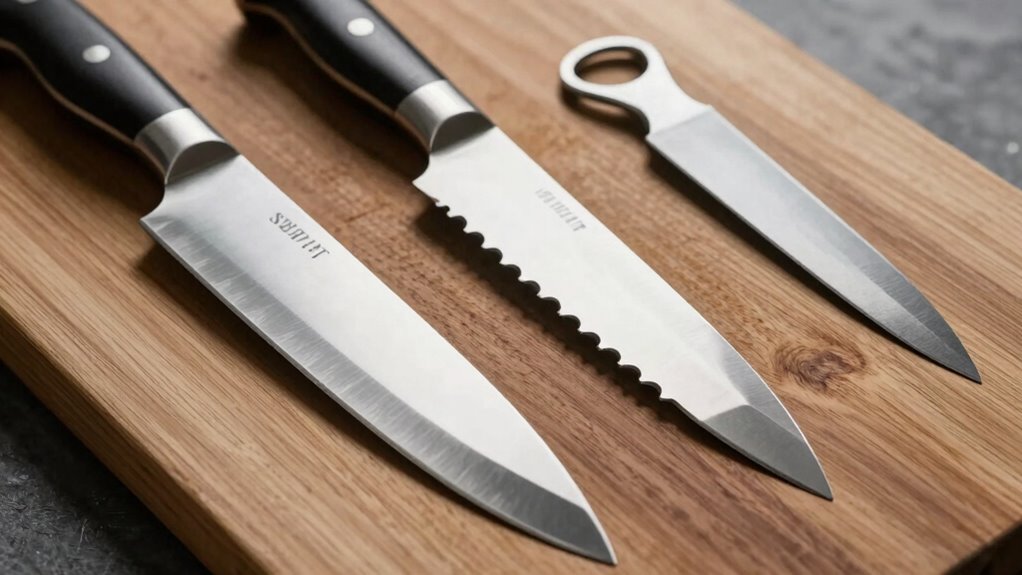
Each knife type offers unique advantages and disadvantages that can influence your cooking efficiency and comfort. Your choice depends on your needs and preferences. For example: 1. Chef knives often feature high-quality blade material, providing durability and sharpness, but their heavier weight may impact handle comfort over time. 2. Santokus have lighter, thinner blades, making precise chopping easier, though they might lack the robustness for heavy-duty tasks. 3. Nakiris excel at slicing vegetables with their straight, thin blades, but their handle design may not suit everyone’s grip, affecting comfort during extended use. Additionally, blade material quality plays a crucial role in ensuring the knife’s longevity and performance, especially since market trends influence the availability of high-quality options. Understanding these pros and cons helps you select the right knife for your style. Consider how blade material impacts sharpness and longevity, and how handle design influences your overall control. Moreover, blade geometry can affect how comfortably and efficiently you perform different cutting techniques, which is essential for a satisfying cooking experience. Staying informed about material advancements can also help you choose knives that maintain their edge longer and resist corrosion.

Plys Kitchen Meat Cleaver Knife, Unique Effort Saving Knife Professional Stainless Steel Chef Cooking Knives for Cutting Meat Vegetable Father Mother
PREMIUM MATERIAL & CRAFT – We inherit and improve traditional hand forging techniques, from high-temperature treatment, hand forging,…
As an affiliate, we earn on qualifying purchases.
As an affiliate, we earn on qualifying purchases.
How to Pick the Right Kitchen Knife for Your Needs
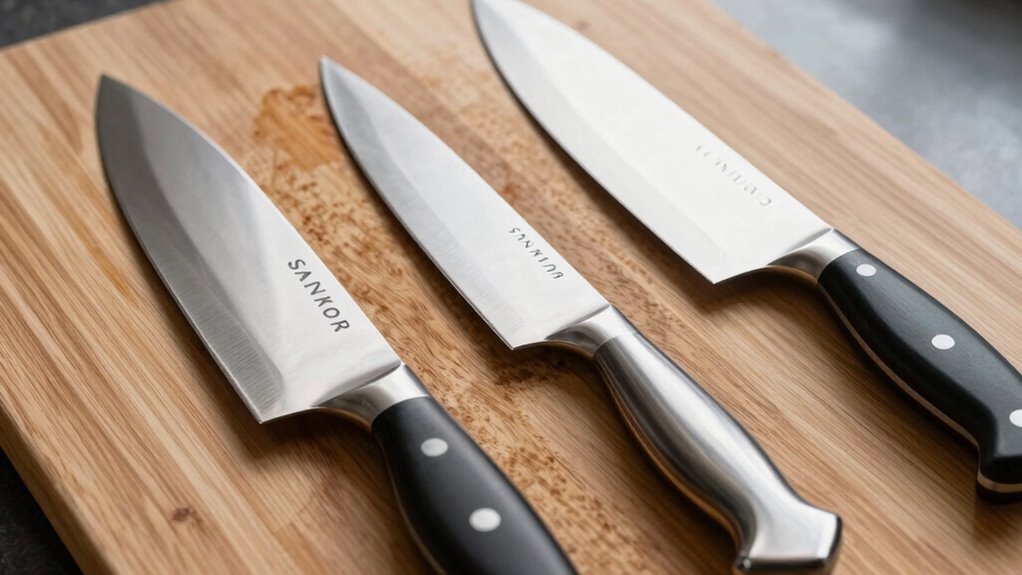
Choosing the right blade depends on your cooking style and the tasks you perform most often. Consider how different knife shapes and sizes match your needs, whether you’re slicing vegetables or preparing meats. By matching your knives to your routines, you’ll improve both efficiency and enjoyment in the kitchen. Additionally, understanding the knife blade design can help you select tools that reduce fatigue and improve precision during food prep.
Choosing the Right Blade Style
Selecting the right kitchen knife depends on understanding the specific tasks you’ll be tackling and how each blade’s design suits those needs. To choose effectively, consider these factors:
- Knife edge types matter—straight, serrated, or granton edges each excel in different tasks.
- Handle materials impact comfort and durability; options like wood, plastic, or composites offer varying grip and maintenance needs.
- The blade style should complement your cutting technique—whether you prefer precise slicing, rocking motions, or chopping.
Matching Knives to Cooking Style
Matching your knives to your cooking style guarantees you work efficiently and comfortably in the kitchen. Consider how you prep food: if you chop vegetables daily, a Nakiri with its flat blade is ideal. If you prefer precise slicing, a chef knife with excellent handle ergonomics helps reduce fatigue. For versatile tasks, a Santoku offers a balance. Regular knife sharpening maintains edge sharpness, essential for safe, effective cuts. When selecting, think about your typical tasks and comfort preferences. Here’s a quick guide:
| Cooking Style | Recommended Knife | Key Feature |
|---|---|---|
| Vegetable Prep | Nakiri | Flat blade, easy chopping |
| Slicing & Dicing | Chef Knife | Handle ergonomics, versatility |
| Precise Tasks | Santoku | Lightweight, multi-purpose |
| Heavy-duty Cuts | Heavy-duty Chef Knife | Robust handle, sharp edge |
| Regular Use | All-around Knife | Easy to sharpen, comfortable handle |
Additionally, understanding the cutting techniques that suit each knife enhances both safety and efficiency in your kitchen. Keeping your knives sharp and well-maintained ensures optimal performance and prolongs their lifespan. Proper storage methods also help prevent dulling and damage over time.
Proper Use, Maintenance, and Care Tips for Your Knives
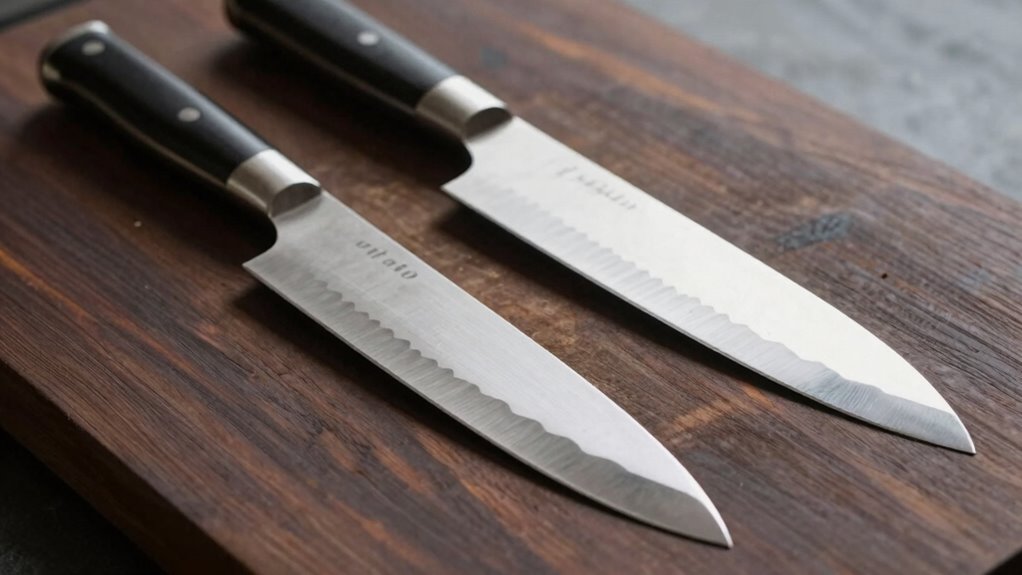
To keep your knives performing their best, it’s essential to use, maintain, and care for them properly. Proper handling includes paying attention to handle ergonomics to prevent fatigue and ensure safety. Regularly maintaining your knives involves:
- Knife sharpening: Keep blades sharp with regular honing and occasional sharpening to maintain precision and reduce effort.
- Cleaning: Hand wash with mild soap and dry immediately to prevent rust and corrosion.
- Storage: Use a magnetic strip or knife block to protect blades and avoid dulling or damage.
Which Knife Should You Buy First? Comparing Cost, Versatility, and Performance
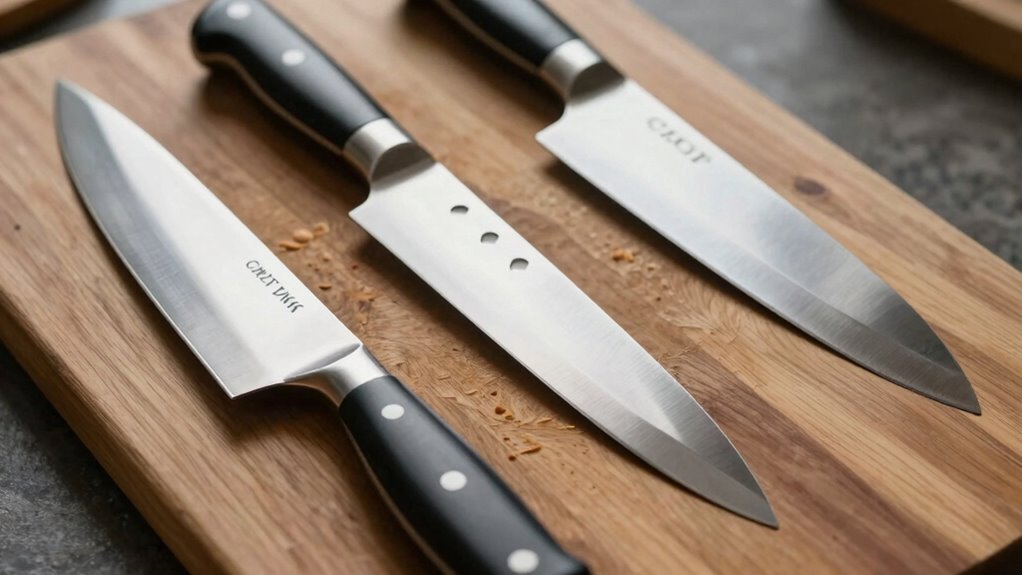
Choosing your first good knife depends on balancing cost, versatility, and performance. Consider knife ergonomics to guarantee comfortable handling during extended use. Handles made from quality materials like wood, composite, or stainless steel influence grip stability and durability. A well-designed handle provides better control, which is essential for safety and precision. For versatility, a chef knife is a great all-rounder, suitable for slicing, dicing, and chopping. While it may cost slightly more upfront, its performance justifies the investment. Santoku knives are also versatile, often offering lighter weight and improved ergonomics for repetitive tasks. Nakiri knives excel at vegetable prep but might be less adaptable for other tasks. Evaluate your budget, comfort, and cooking style to choose the knife that best fits your needs. Additionally, understanding piercing care and hygiene can help maintain your tools and prevent infections that could interfere with your culinary activities.
Frequently Asked Questions
Can I Use a Chef Knife for Detailed Vegetable Carving?
Yes, you can use a chef knife for detailed vegetable carving, but it might not be ideal. A chef knife’s broad blade is great for general slicing, but for intricate vegetable carving, a smaller, more precise tool like a paring or carving knife often works better. If you’re aiming for detailed slicing or delicate designs, consider switching to knives specifically designed for those tasks to achieve cleaner, more precise results.
Are Japanese Knives Generally Sharper Than Western Knives?
Like a samurai’s blade, Japanese knives tend to be sharper initially, but their edge may require more frequent honing due to a finer edge. They often feature a thinner, more delicate edge that sharpens easily but may not last as long regarding edge edge longevity. Western knives generally prioritize durability, offering thicker blades that maintain their edge longer, making them ideal for heavy-duty tasks.
How Long Do Different Knife Blades Typically Last Before Needing Replacement?
Blade durability varies depending on the knife and how you use it, but most high-quality blades last between 5 to 10 years with proper care. You’ll need to contemplate the replacement timeline if you notice chips, dullness, or loss of sharpness affecting performance. Regular honing extends sharpness, yet eventually, you’ll need to replace your knife to maintain safe, efficient cutting. Keep an eye on wear to determine the right time for a new blade.
Is It Safe to Dishwasher My High-Quality Kitchen Knives?
Imagine your high-quality knives are delicate dancers, requiring gentle care. Dishwasher safety isn’t recommended because the harsh water and detergents can dull blades and damage handles, like rough steps that trip your dancers. For ideal knife maintenance, hand wash and dry immediately. This keeps your knives sharp and safe, ensuring they perform flawlessly. Protect your investment with careful cleaning—dishwasher safety isn’t worth risking your blades’ longevity.
What Are the Signs That a Knife Needs Professional Sharpening?
You know your knife needs professional sharpening when it struggles to cut smoothly, slips easily, or tears through ingredients instead of slicing cleanly. Dull blades hinder knife maintenance and increase safety risks. If you notice dullness despite regular honing, it’s time for professional sharpening. This restores the edge, ensuring precision and safety. Regular professional sharpening keeps your knives in top condition, making your kitchen tasks easier and more efficient.
Conclusion
Choosing the right knife is like finding your perfect dance partner—each has its own rhythm and style. Whether you prefer the precision of a chef’s knife, the versatility of a santoku, or the sharp focus of a nakiri, your ideal match will make your kitchen sing. Trust your instincts, test their feel, and soon you’ll be slicing through your culinary adventures with confidence and grace. Your perfect cut awaits—are you ready to make it yours?