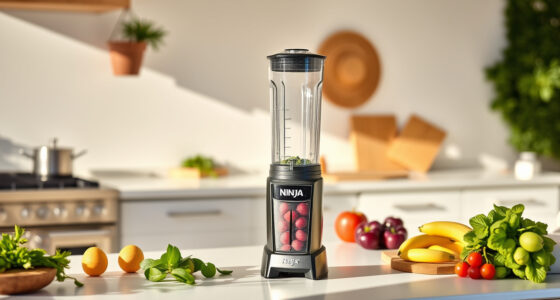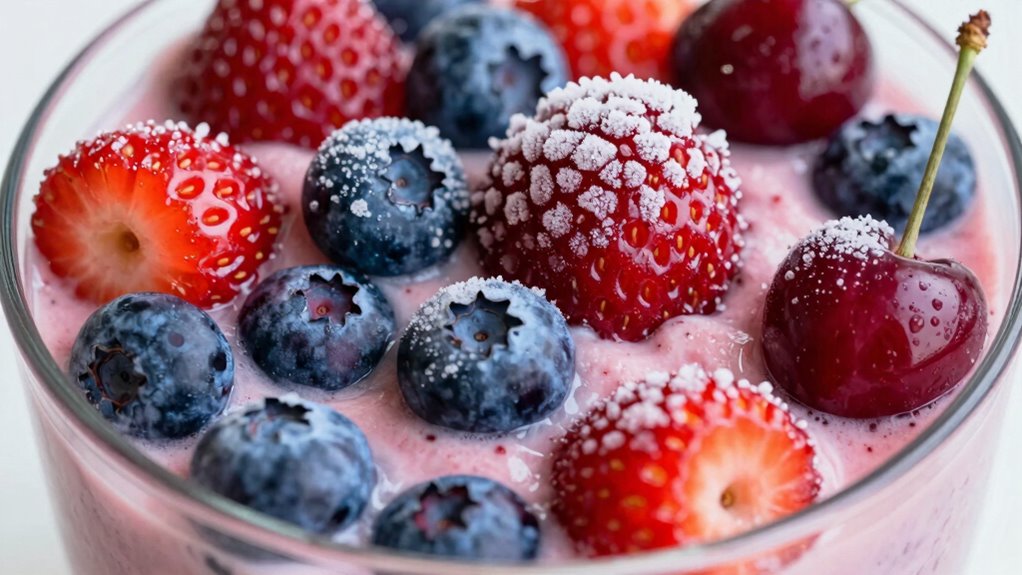

Frozen fruit beats ice in smoothies because it enhances flavor, adding natural sweetness and depth that ice can’t provide. It also offers a thicker, creamier texture, making your drink more indulgent and velvety. Plus, it preserves nutrients like vitamins and antioxidants better than ice, keeping your smoothie healthier. Unlike ice, frozen fruit maintains its structure longer, preventing dilution and making each sip richer. Keep going to discover more about why frozen fruit makes your smoothies even better.

Get kitchen staples and gadgets delivered free with Prime
- Fast, free delivery on millions of items
- Prime Video, Amazon Music and more included
- Member-only deals all year
Key Takeaways
- Frozen fruit enhances natural sweetness and flavor, providing a richer taste compared to the neutral cooling effect of ice.
- It maintains a thicker, creamier texture, resulting in a more indulgent and velvety smoothie.
- Freezing preserves nutrients like vitamins and antioxidants, ensuring health benefits are retained.
- Frozen fruit acts as natural ice, blending smoothly without diluting or watering down the smoothie over time.
- It offers a cost-effective, convenient way to enjoy high-quality, flavor-rich ingredients year-round.
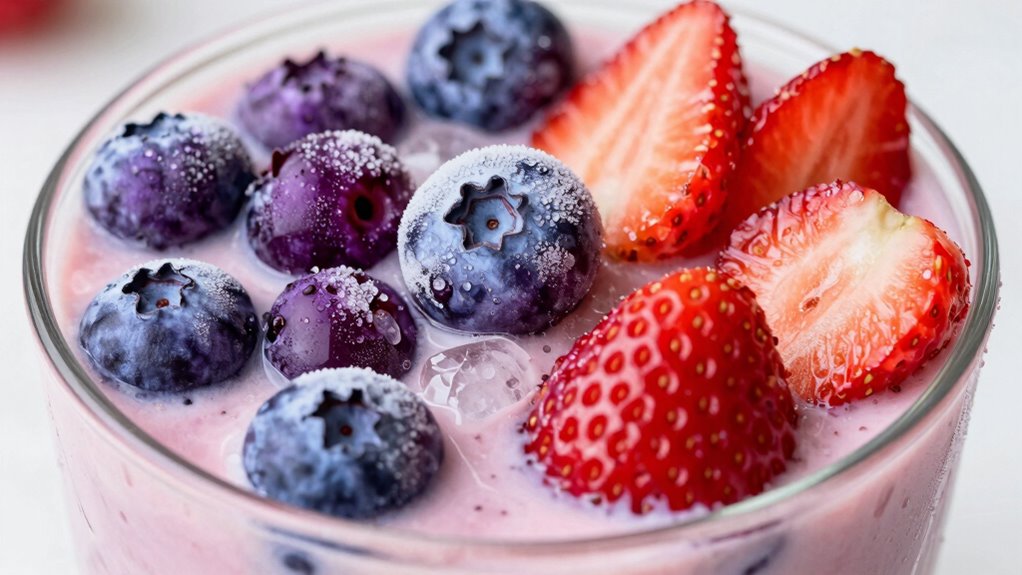
Have you ever wondered why frozen fruit is a popular choice for smoothies? The answer lies in how it transforms your drink, making it more flavorful and pleasing to the senses. Unlike ice, which cools your smoothie without adding much else, frozen fruit infuses your blend with natural sweetness and depth, elevating the overall flavor. When you use frozen fruit, you’re not just diluting your smoothie; you’re enriching it with the fruit’s full spectrum of flavors that develop during freezing. This results in a more vibrant, well-rounded taste that’s closer to eating fresh fruit than just drinking a cold beverage. The natural sugars in frozen fruit are less likely to be masked or dulled, giving your smoothie a richer, more satisfying flavor with every sip. Additionally, frozen fruit preserves the nutritional content of the fruit, ensuring you get maximum health benefits. Beyond flavor, texture improvement is another key reason frozen fruit outperforms ice in smoothies. Ice tends to melt quickly, often leaving your drink watery and less appealing after a few minutes. Frozen fruit, however, maintains its structure longer, creating a thicker, creamier consistency that feels more indulgent. When blended, frozen fruit breaks down into a smooth, velvety texture, giving your smoothie a luxurious mouthfeel that ice simply can’t match. It acts like natural ice cubes, but with the added benefit of blending seamlessly into the mixture, ensuring every sip is consistently smooth and frosty. The result is a thicker, more satisfying drink that keeps its integrity from the first gulp to the last. In addition, using frozen fruit is more convenient and nutritious. Fresh fruit can be seasonal or perishable, but frozen options are available year-round, so you always have access to high-quality ingredients. Plus, freezing locks in nutrients, so your smoothie retains more vitamins and antioxidants compared to using fresh fruit that might have been sitting out or in transit. Freezing also helps reduce food waste by allowing you to store excess produce for later use, making it a practical choice for busy lifestyles. Proper freezing techniques can further maximize nutrient retention and flavor quality, ensuring optimal health benefits. Incorporating frozen fruit into your smoothies is also a cost-effective way to enjoy premium ingredients without overspending, especially when buying in bulk. This means you not only enjoy better flavor and texture but also get more health benefits from each glass. Choosing frozen fruit over ice also reduces the need for added sweeteners or artificial flavorings, as the natural fruit flavors shine through more prominently.
As an affiliate, we earn on qualifying purchases.
Frequently Asked Questions
How Does Frozen Fruit Impact Smoothie Shelf Life?
Frozen fruit extends your smoothie’s shelf life by preserving texture and flavor longer than fresh ingredients. When you use frozen fruit, it maintains its integrity, preventing the smoothie from becoming watery or losing taste quickly. You’ll notice better texture preservation and flavor retention, which means your smoothies stay fresher, tastier, and more satisfying for a longer period. This makes frozen fruit a convenient choice for meal prep or saving leftovers.
Can Frozen Fruit Replace Fresh Fruit Entirely?
You can use frozen fruit to replace fresh fruit in your smoothies, but it’s not always ideal. Frozen fruit retains flavor better and preserves texture, making your smoothies thick and rich. However, it may lack the freshness and vibrant taste fresh fruit offers. If convenience and consistency matter most, frozen fruit works well, but for the best flavor and texture, mixing in fresh fruit when possible is a smart choice.
Does Freezing Affect the Nutritional Value of Fruit?
Freezing preserves most of the fruit’s nutrients, so your smoothies stay nutritious. The freezing process locks in vitamins, minerals, and antioxidants, ensuring nutrient retention. While some slight nutrient loss can occur during freezing, it’s minimal compared to fresh fruit that may spoil quickly. So, by freezing your fruit, you’re maintaining its health benefits, enjoying convenience, and reducing waste—all while savoring delicious, nutrient-rich smoothies.
Are There Specific Fruits That Freeze Better for Smoothies?
You’ll find that berries, mango, and peaches freeze best for smoothies because they maintain their fruit texture with proper freezing techniques. To optimize, spread the fruit on a baking sheet to freeze individually before transferring to a bag, avoiding clumps. This method prevents ice crystals from forming and guarantees your smoothies stay smooth and creamy. You’ll enjoy better blending and flavor, making your smoothie experience more enjoyable.
How Should I Store Frozen Fruit for Optimal Freshness?
You should store frozen fruit in airtight, moisture-proof containers or heavy-duty freezer bags to maintain freshness. Make sure you remove excess air to prevent freezer burn. For ideal fruit texture, freeze fruits individually on a baking sheet before transferring them to containers, preventing clumping. Using proper freezing methods preserves flavor and texture, making your smoothies creamier and more enjoyable. Regularly check for frost buildup and use older bags first to keep your fruit fresh.
best frozen berries for smoothies
As an affiliate, we earn on qualifying purchases.
As an affiliate, we earn on qualifying purchases.
Conclusion
So, next time you blend up a smoothie, choose frozen fruit for consistency, flavor, and convenience. Skip the ice to avoid watering down your drink, and embrace the natural chill and texture of frozen produce. With frozen fruit, you get freshness that lasts, richness that stays, and a blend that satisfies every time. Make the smart choice, enjoy the benefits, and elevate your smoothie game—because frozen fruit isn’t just better; it’s the best.
As an affiliate, we earn on qualifying purchases.
As an affiliate, we earn on qualifying purchases.
Halloween Picks
halloween
As an affiliate, we earn on qualifying purchases.