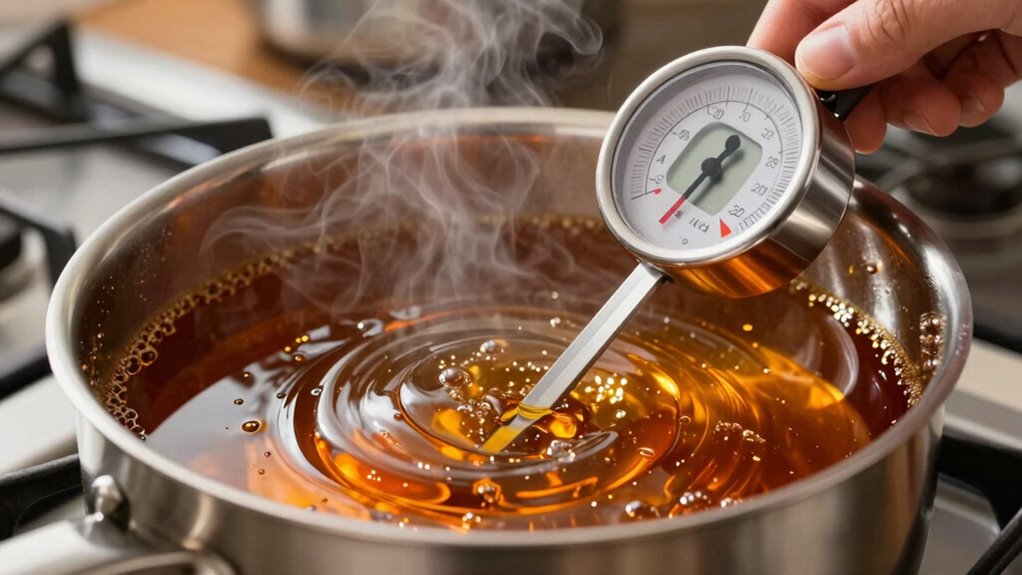

To use a kitchen thermometer for candy and syrup stages, first make sure it’s properly calibrated. Insert the probe into the thickest part of your mixture, avoiding pan sides, and keep it steady. Watch for the specific temperature ranges (like soft ball at 235–240°F or hard crack at 300°F) to determine the stage. With accurate placement and calibration, you can control your candy’s texture perfectly—continue to learn more for flawless results.
Key Takeaways
- Calibrate your thermometer using boiling water (212°F) or ice water (32°F) before starting.
- Insert the thermometer into the thickest part of the boiling mixture, avoiding pan sides and bottom.
- Keep the thermometer steady and ensure good contact with the mixture for accurate readings.
- Monitor the temperature closely as the mixture approaches the target stage to prevent overshooting.
- Use visual cues alongside temperature readings to confirm the candy or syrup has reached the desired stage.
As an affiliate, we earn on qualifying purchases.
Candy and Syrup Temperature Stages Explained
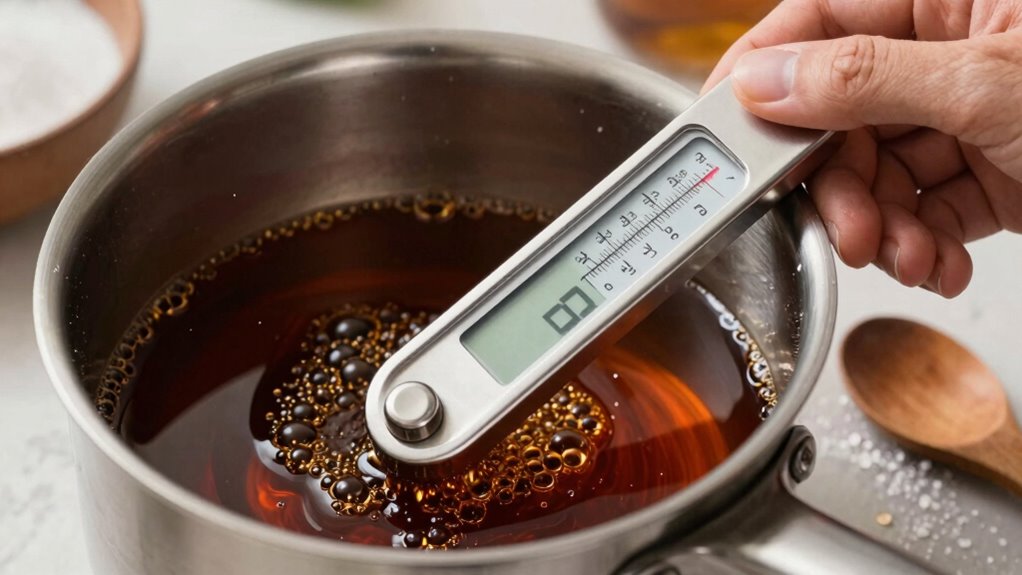
Understanding the different temperature stages in candy and syrup making is essential for achieving the perfect texture. As you heat your mixture, you’ll notice specific temperatures corresponding to various stages, which directly influence sugar crystallization. Maintaining boiling point accuracy is vital because even a slight deviation can result in unwanted graininess or improper consistency. For example, reaching the soft ball stage ensures a chewy texture, while the hard crack stage yields brittle candies. Using a reliable kitchen thermometer helps you monitor these stages precisely, preventing overcooking or undercooking. Accurate temperature control is crucial for consistent results, as it allows you to fine-tune your process and achieve the desired candy texture every time. Proper calibration of your thermometer ensures precise readings, which is essential for consistent results and avoiding errors. Additionally, understanding temperature stages helps you troubleshoot and adjust your process as needed. By mastering the temperature stages, you control sugar crystallization and achieve consistent, professional-quality confections. Precise temperature readings, supported by proper calibration of your thermometer, are your best tool for perfect candy every time, ensuring the right texture and structure.
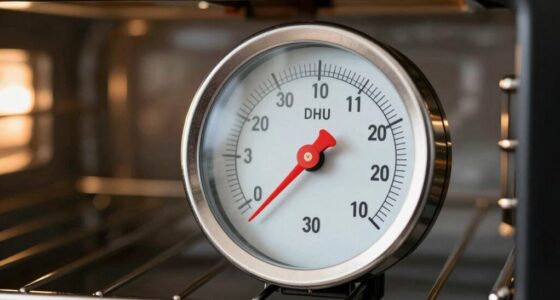
kitchen candy and syrup thermometer
As an affiliate, we earn on qualifying purchases.
As an affiliate, we earn on qualifying purchases.
Choosing the Best Kitchen Thermometer for Candy and Syrups
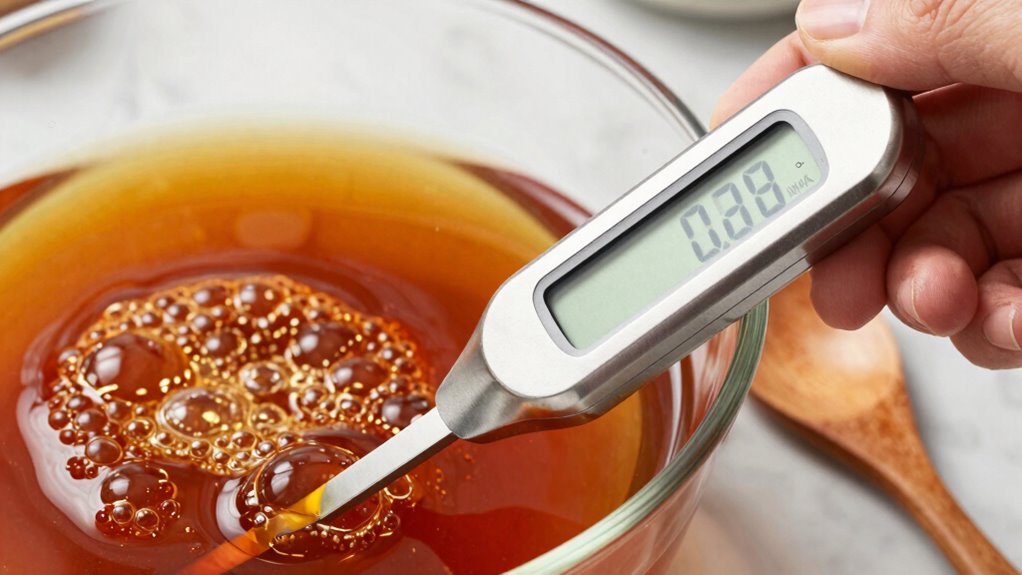
Choosing the right kitchen thermometer is vital for accurately monitoring candy and syrup temperatures, guaranteeing your confections turn out just right. When selecting a thermometer, consider digital accuracy, which provides quick, precise readings, indispensable for delicate stages. There are different thermometer types suited for candy making:
| Thermometer Type | Pros | Cons |
|---|---|---|
| Digital | Fast, accurate, easy to read | Battery-dependent, fragile |
| Dial (Analog) | Durable, no batteries | Slower, less precise |
| Infrared | No contact needed | Expensive, limited temperature range |
Focus on a digital thermometer for the best accuracy and ease. Pick a model with a wide temperature range and fast response time to guarantee precision during your candy-making process. A crucial factor to consider is the thermometer’s ability to detect and display temperature changes quickly, ensuring you don’t overcook or undercook your confections. Additionally, selecting a thermometer with proper calibration can help maintain consistent results over time.
instant-read cooking thermometer
As an affiliate, we earn on qualifying purchases.
As an affiliate, we earn on qualifying purchases.
How to Use Your Thermometer Properly When Making Candy
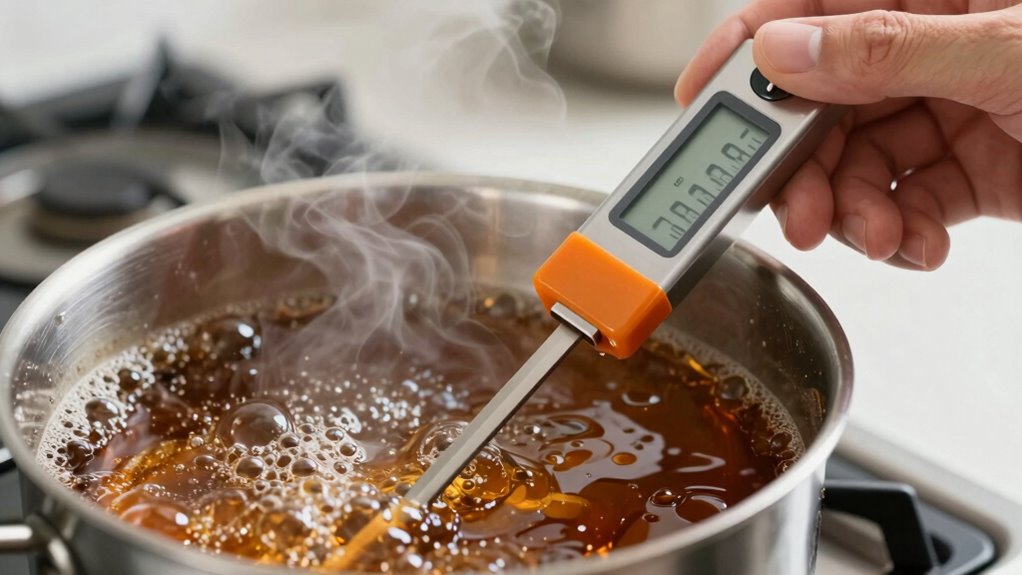
To guarantee accurate temperature readings when making candy, you need to properly use your thermometer throughout the process. First, verify your thermometer is properly calibrated before starting; this means checking it against boiling or ice water to confirm accuracy. Proper calibration prevents errors that can ruin your candy. Next, focus on thermometer placement: insert it into the thickest part of the mixture without touching the bottom of the pan or the sides, as this can give false readings. Keep the thermometer steady and avoid constant adjustments, which can cause inaccuracies. Regularly check the reading during cooking, especially as the mixture approaches critical stages. Consistent thermometer placement helps ensure reliable readings and prevents errors. By calibrating your thermometer correctly and placing it properly, you’ll achieve precise temperatures essential for perfect candy results. Additionally, understanding temperature stages helps you anticipate the right consistency and texture for your candies.

Digital Candy Thermometer with Pot Clip, 10" Long Stainless Steel Probe, Instant Read Kitchen Thermometer for Cooking, Baking, and Candy Making
- Pot Clip for Safer Handling: Securely attaches to pots for safety
- Clear Digital LCD Display: Easy-to-read precise temperature readings
- Waterproof and Easy to Clean: IP65 rated, safe under running water
As an affiliate, we earn on qualifying purchases.
As an affiliate, we earn on qualifying purchases.
How to Recognize When Your Candy Reaches the Perfect Stage
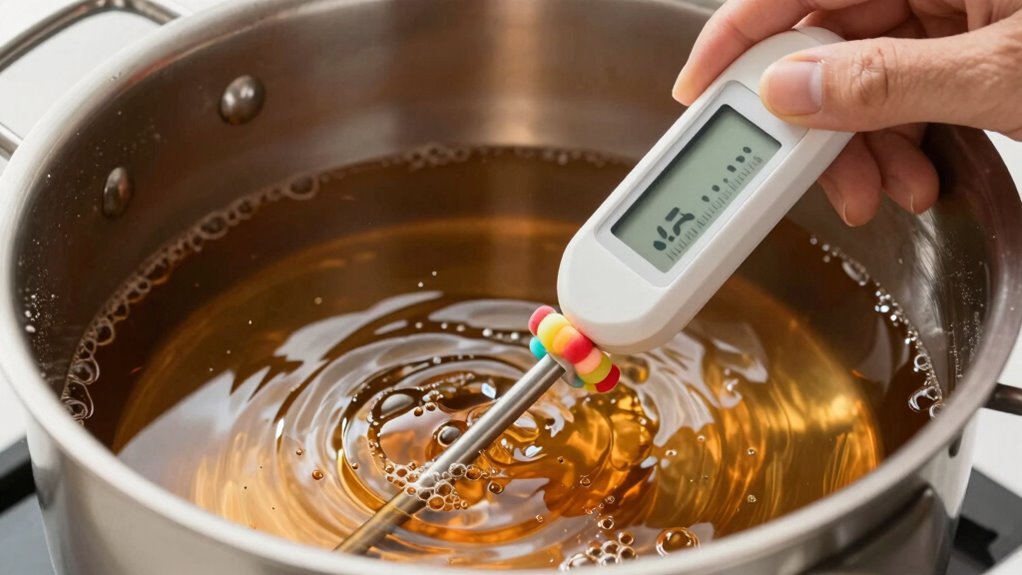
Knowing exactly when your candy reaches the perfect stage is essential for achieving the right texture and consistency. To recognize this, rely on visual cues like color, clarity, and firmness, in addition to your thermometer reading. For example, soft ball stage (about 235°F to 240°F) produces chewy candies, while hard crack (around 300°F) yields brittle treats. Once you reach the right stage, consider flavor pairing—adding ingredients at the correct moment enhances taste. Proper storage tips, like keeping candies in airtight containers away from moisture, preserve their ideal texture. Remember, overcooking can lead to a different stage, so always monitor your thermometer closely. An understanding of projector contrast ratios helps in adjusting your viewing environment for the best visual clarity. Additionally, recognizing the visual cues specific to each stage can help you make precise adjustments during cooking. Developing a candy stage chart can serve as a helpful reference to improve your timing and accuracy. Familiarity with thermometer calibration ensures your readings are accurate, leading to more consistent results. Being familiar with piercing aftercare and proper hygiene practices can prevent complications and keep your piercings healthy, much like maintaining the right temperature ensures perfect candy. By mastering these signs, you’ll consistently produce candy with perfect consistency and flavor, elevating your homemade treats.
Troubleshooting Candy Failures With Your Thermometer
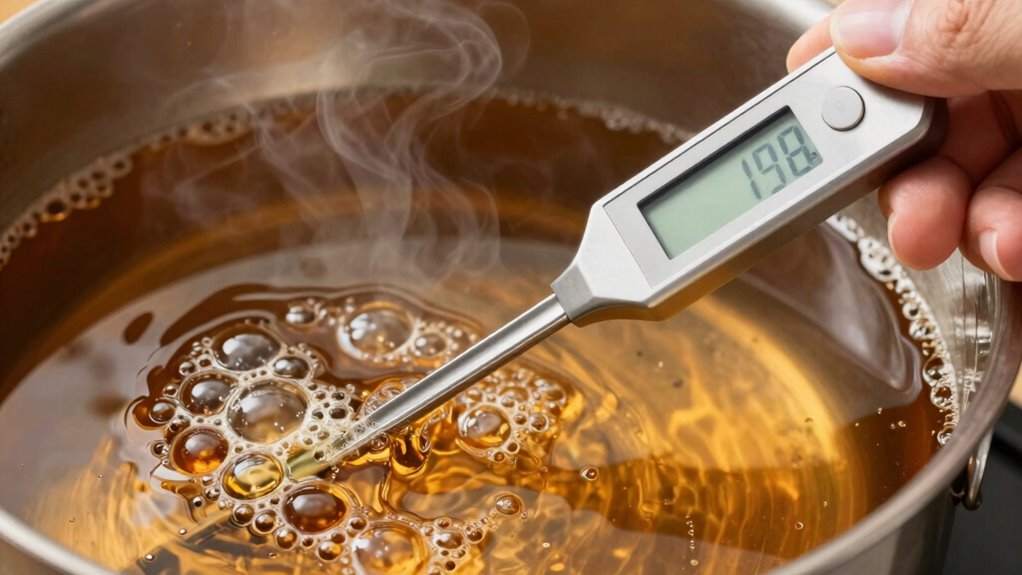
When your candy doesn’t turn out as expected, your thermometer can be a valuable troubleshooting tool. Common thermometer errors, like incorrect calibration or poor placement, can lead to inaccurate readings. To troubleshoot, first check for consistent contact with the candy and avoid touching the sides of the pan. If readings seem off, adjust the temperature reading by recalibrating your thermometer or replacing the battery. Use this table to visualize common issues:
| Problem | Solution |
|---|---|
| Inconsistent readings | Calibrate or replace thermometer |
| Too high or low readings | Adjust placement or clean probe |
| Thermometer not registering | Ensure proper contact with candy |
| Erratic fluctuations | Check for damage or faulty unit |
| Incorrect calibration | Recalibrate before use |
Addressing these errors ensures your thermometer provides accurate readings for perfect candy every time. Additionally, precision in measurement is critical for achieving consistent results in candy making. Proper thermometer placement can significantly impact the accuracy of your readings, especially during critical stages like boiling sugar. A know-how of candy stages can also help you better interpret temperature readings and avoid failures. Moreover, understanding how auditory cues can assist in monitoring stages can be beneficial, especially for those with auditory processing challenges. Developing skills in visual observation of boiling syrup can further enhance your success rate when temperature readings are ambiguous.
Frequently Asked Questions
Can I Use a Digital Thermometer for All Candy Stages?
Yes, you can use a digital thermometer for all candy stages, but verify its accuracy for precise results. Digital thermometers are quick and easy, but you need to regularly calibrate and maintain them to keep accuracy high. Always clean the probe thoroughly after each use, and double-check readings with a trusted candy thermometer if needed. Proper maintenance ensures your digital thermometer works well for perfect candy and syrup stages.
How Do I Calibrate My Kitchen Thermometer Accurately?
Calibrate your kitchen thermometer confidently by using simple solutions: ice water for freezing point and boiling water for boiling point. Submerge the thermometer fully in each, ensuring it doesn’t touch sides or bottom, then note the readings. Adjust or note deviations for thermometer accuracy. Regular calibration techniques keep your tool trustworthy, ensuring precise candy and syrup stages. Consistent checks help you conquer cooking chaos with confidence.
Is It Necessary to Clean the Thermometer After Each Use?
Yes, you should clean your thermometer after each use to guarantee proper sanitization and maintain its accuracy. Regular cleaning prevents residue buildup that could affect readings and promotes safe kitchen practices. Use warm water and mild soap or rubbing alcohol, depending on the thermometer type. Proper thermometer maintenance not only prolongs its lifespan but also guarantees precise temperature measurements for your candy and syrup stages.
What Types of Thermometers Are Safest for High-Temperature Candy Making?
For high-temperature candy making, choose a thermometer with safety features like a sturdy, heat-resistant probe and a protective casing. Look for models that handle wide temperature ranges, typically up to 500°F or more, to guarantee accurate readings at syrup and hard-crack stages. Digital instant-read thermometers are a safe, reliable option because they quickly display precise temperatures, helping you prevent overcooking or burning your candy.
How Does Altitude Affect Candy and Syrup Temperature Readings?
Altitude affects your candy and syrup temperature readings because of boiling point variations. At higher altitudes, water boils at lower temperatures, so you need to make altitude adjustments to your thermometer readings. This means your target temperature for stages like soft ball or hard crack will be lower than at sea level. To get accurate results, consult altitude adjustment charts and modify your recipes accordingly, ensuring perfect candy consistency every time.
Conclusion
A kitchen thermometer is your compass through the sweet, fiery seas of candy making. It guides you past boiling points and hidden dangers, ensuring each stage reaches its destined perfection. Trust in its steady hand, and let it symbolize your patience and precision. With it, you’re not just making candy—you’re crafting moments of joy and mastery. Embrace these stages, and watch your sweet creations become lasting symbols of your skill and dedication.