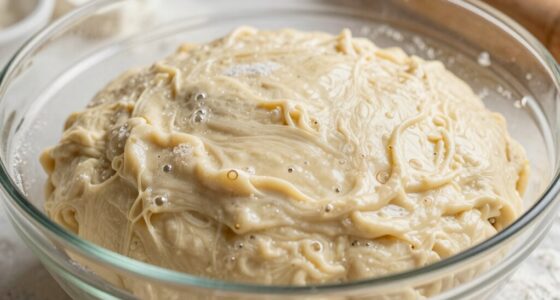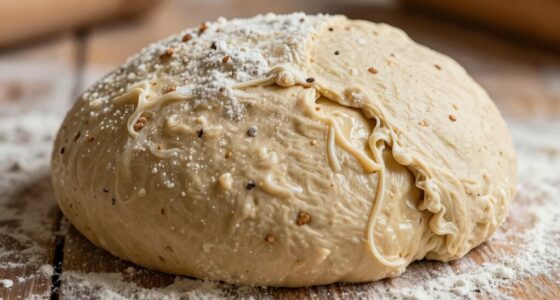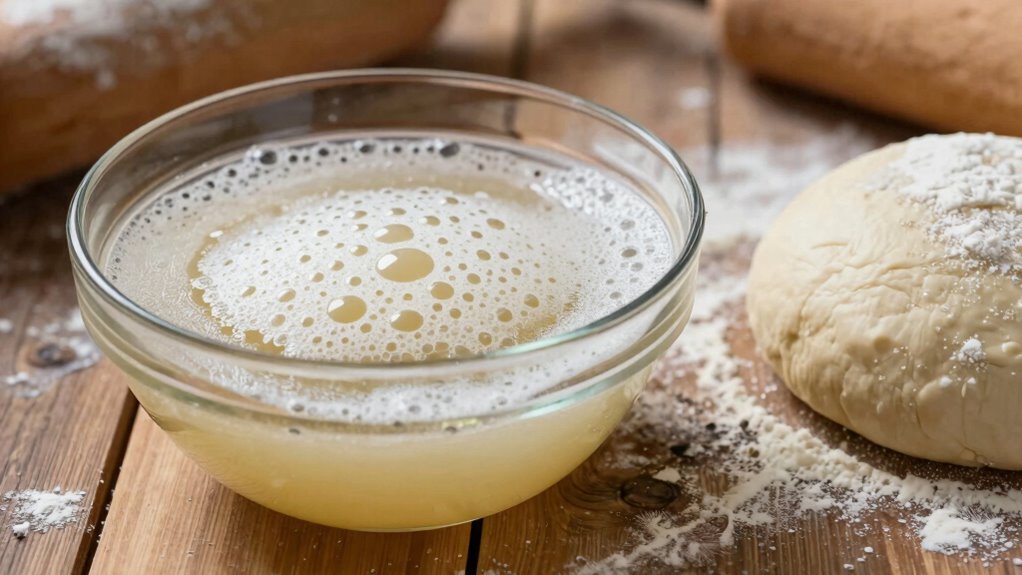

Yeast makes dough rise by consuming sugars and releasing carbon dioxide, which creates bubbles that expand the dough. If your dough doesn’t rise, it might be due to old or inactive yeast, inadequate sugar, or too cold temperatures that slow fermentation. Proper conditions like warmth, the right sugar level, and fresh yeast are key to good rise. Keep these factors in mind, and you’ll discover how to troubleshoot common issues and get better results.
Key Takeaways
- Yeast ferments sugars in the dough, producing carbon dioxide that causes it to rise.
- Active, fresh yeast and proper sugar levels are essential for effective dough leavening.
- Warm, controlled temperatures accelerate fermentation, while cold or excess salt inhibit it.
- Insufficient fermentation time or inactive yeast prevent dough from rising properly.
- Factors like pH, oxygen, and dough consistency influence yeast activity and dough rise.
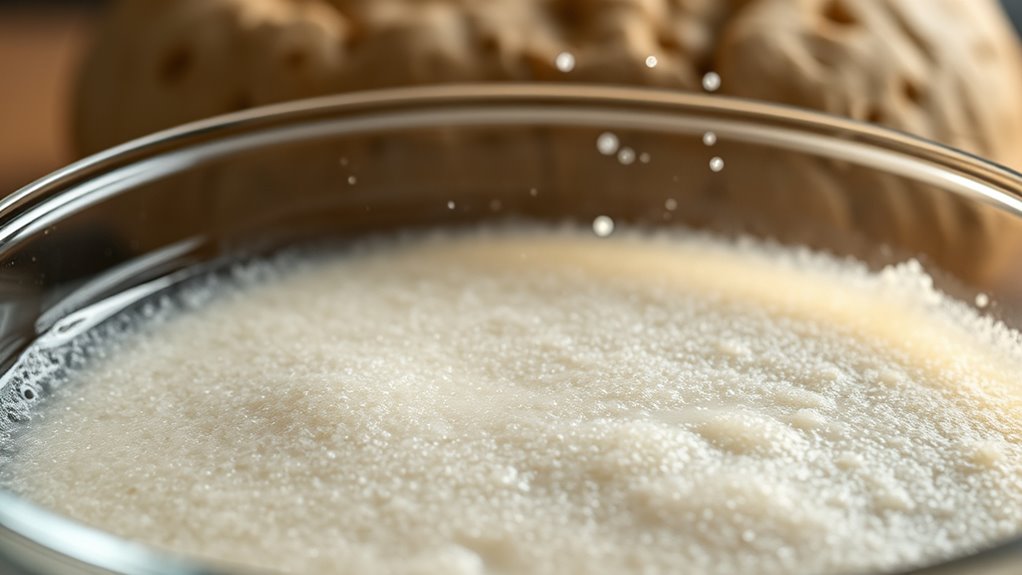
Ever wondered what makes bread rise or why your homebrews turn out so flavorful? The secret lies in the fermentation process driven by yeast. Yeast is a tiny microorganism that consumes sugars and converts them into carbon dioxide and alcohol. This natural process is what creates the bubbles that make your dough expand and develop that soft, airy texture. Understanding the fermentation process is key to mastering baking and brewing, as it directly impacts the flavor, texture, and rise of your creations. Proper yeast storage is also essential to maintain its activity and ensure successful fermentation. There are many yeast types, but the most common used in baking and brewing are Saccharomyces cerevisiae and Saccharomyces pastorianus. Saccharomyces cerevisiae is often called baker’s yeast or ale yeast. It’s versatile, fermenting quickly at warmer temperatures, and produces the familiar rise in bread. Saccharomyces pastorianus, on the other hand, is used mainly in lager brewing, thriving at cooler temperatures and producing cleaner, crisper flavors. Each yeast type has unique characteristics that influence the fermentation process, so choosing the right one depends on your recipe and desired outcome.
Yeast-driven fermentation creates bubbles that make bread rise and develop airy textures.
The fermentation process begins when yeast cells consume sugars present in flour or malted grains. As they metabolize these sugars, they release carbon dioxide gas, which forms bubbles that get trapped in the dough’s gluten network. This trapped gas causes the dough to expand and rise. Meanwhile, yeast also produces alcohol and other flavor compounds that contribute to the aroma and taste of bread or beer. The temperature, yeast health, and sugar content all affect how efficiently fermentation occurs. Warmer temperatures speed up fermentation but can also produce off-flavors if too hot, while cooler temperatures slow it down but often yield more refined flavors. Additionally, fermentation conditions such as pH level and oxygen exposure can influence the activity of yeast during fermentation. Proper fermentation management is crucial because fermentation is a delicate balance that affects the final product’s quality.
Sometimes, dough doesn’t rise as expected, and that’s often due to issues with the fermentation process. If you’re using old or inactive yeast, the fermentation might be weak or nonexistent. Similarly, if the dough is too cold or if there’s not enough sugar, the yeast won’t produce enough carbon dioxide. Even excessive salt can inhibit yeast activity. To troubleshoot, ensure your yeast is fresh and properly stored, keep your dough at the right temperature, and use the correct amount of sugar. Knowing the nuances of the fermentation process and the different yeast types helps you control the rise and flavor, leading to better baking and brewing results. In the end, understanding yeast and fermentation allows you to turn simple ingredients into delicious, airy bread or flavorful beer.

Red Star Active Dry Yeast, 2 Pound Pouch
Comes in a hefty, 2 Pound Vacuum Packed Pouch
As an affiliate, we earn on qualifying purchases.
As an affiliate, we earn on qualifying purchases.
Frequently Asked Questions
Can I Use Expired Yeast for Baking?
You shouldn’t use expired yeast for baking because yeast expiration affects its ability to produce the carbon dioxide needed for rising. Check the expiration date on your packet, and if it’s past, test the yeast by mixing it with warm water and sugar—if it bubbles, it’s still active. Store yeast in an airtight container in a cool, dry place to prolong its shelf life and guarantee reliable results.
How Do I Store Yeast to Keep It Fresh?
Think of yeast storage as guarding a precious secret—keep it cool and dry. You should store yeast in an airtight container in the refrigerator to preserve its freshness. For longer-term storage, consider freezing it; just make certain it’s sealed tightly to prevent moisture and freezer burn. Proper yeast storage maintains its potency, ensuring your dough rises perfectly every time. Keep it fresh, and your baked goods will thank you!
Is Instant Yeast Better Than Active Dry Yeast?
Instant yeast is generally better than active dry yeast because it activates faster and doesn’t require proofing. If you’re looking for a yeast substitution, instant yeast simplifies the process, saving you time. You can directly add it to dry ingredients without dissolving in water first. This makes baking more convenient, especially for quick recipes. Just measure accurately, and your dough should rise perfectly every time.
Why Does My Dough Still Not Rise?
If your dough isn’t rising, it’s like a car stuck in gear—you need the right proofing techniques and proper fermentation timing. Double-check your yeast’s activity by proofing it in warm water first. If it doesn’t foam, your yeast may be dead. Also, make certain your dough stays warm enough during proofing; cold environments slow fermentation, preventing your dough from rising properly.
Can Yeast Be Reused After Baking?
Yes, you can reuse yeast after baking, but first, you should verify its freshness by performing a simple yeast freshness test—dissolve a small amount in warm water with sugar; if it bubbles within 10 minutes, it’s still active. Store your yeast properly in an airtight container in a cool, dark place to maintain its potency. Yeast storage tips like these ensure you get the best rise from your dough each time.

Saf Instant Yeast, 1 Pound Pouch
Safe Instant Yeast is one of the top selling yeasts in the world
As an affiliate, we earn on qualifying purchases.
As an affiliate, we earn on qualifying purchases.
Conclusion
So, next time your dough doesn’t rise, think of it as a sleepy garden waiting for the sun’s warmth. With patience, gentle kneading, and the right environment, those tiny yeast cells wake up, feasting and bubbling to life. Before you know it, your dough transforms into a fluffy, golden cloud, ready to be baked into something delicious. Remember, like any good garden, it just needs the right care to bloom beautifully.

Aquarium Thermometer Strips, Adhesive Kombucha Beer Brewing Temperature Strip, Stick On Strip Thermometer Sticker for Fish Tank/Fermentation Jar (39 to 97℉/4 to 36℃) Terrarium Water Temperature Test
【 Displays Degree Centigrade Fahrenheit 】The thermometer strips has a range of 39℉ to 97℉(4℃ to 36℃)with accuracy…
As an affiliate, we earn on qualifying purchases.
As an affiliate, we earn on qualifying purchases.

Dimpola Banneton Bread Proofing Basket – 9 inch Banneton Basket Set of 2 Sourdough Proofing Basket Round Proofing Bowls Handmade Rattan Baskets and Liners
PERFECT FOR THE BAKER IN YOUR HOME: You will be impressed with our bread proofing baskets' quality and…
As an affiliate, we earn on qualifying purchases.
As an affiliate, we earn on qualifying purchases.