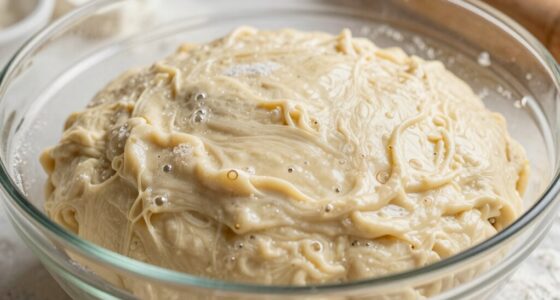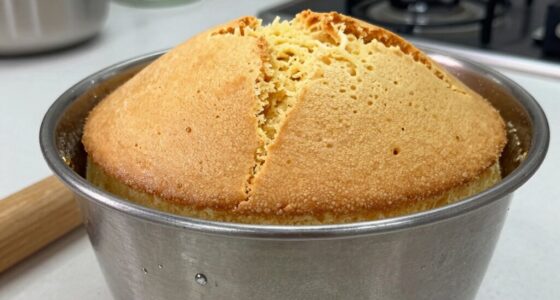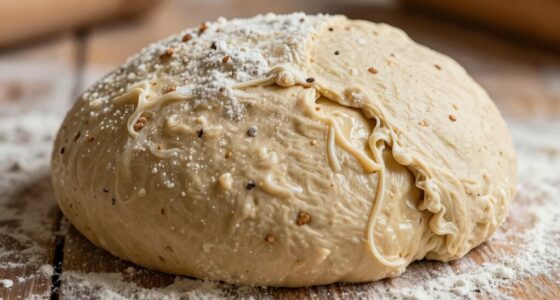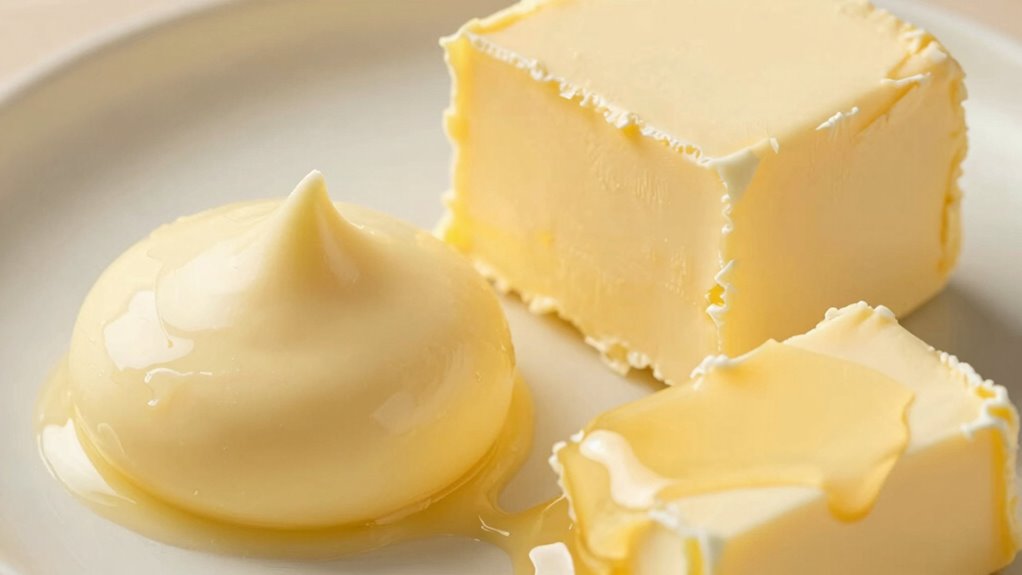

For baking, the best butter temperature depends on your recipe. Soft butter, taken from the fridge for 30-60 minutes, helps create smooth, tender baked goods like cookies and cakes. Cool butter is ideal for pastries and pie crusts, preventing excessive spread. Melted butter works well in recipes like quick breads and some cookies. Getting the temperature right impacts texture and rise, so keep experimenting—further tips can help you perfect your baked goods.

Get kitchen staples and gadgets delivered free — and shop member deals
- Fast, free delivery on millions of items
- Access to Prime Big Deal Days deals on October 6–7
- Prime Video, Amazon Music and more included
Key Takeaways
- Softened butter, at room temperature, is ideal for cookies and cakes to ensure even mixing and tender textures.
- Cool or chilled butter is best for pastry crusts and pie doughs to create flaky, tender layers.
- Melted butter is suitable for certain recipes like brownies or quick breads but can lead to denser textures if used improperly.
- Proper butter temperature prevents spreading in cookies and ensures good rise and structure in baked goods.
- Use a thermometer or touch test to monitor butter consistency, avoiding overly cold or warm butter for optimal results.
As an affiliate, we earn on qualifying purchases.
How Does Butter Temperature Affect Baking Results?

Butter temperature plays a crucial role in determining the texture and structure of your baked goods. When your butter’s consistency is too cold, it won’t cream properly, resulting in denser textures and less rise. Conversely, if it’s too warm, the butter may reach its melting point too quickly, causing your dough to spread and lose structure. Achieving the right butter consistency ensures it incorporates smoothly with other ingredients, creating a uniform batter or dough. This balance influences how well your baked goods rise and develop their tender crumb. Understanding how butter’s melting point affects its behavior allows you to control the butter’s consistency needed for different recipes, whether you want fluffy cookies or flaky pastries. Properly managing butter temperature is key to consistent, high-quality baking results. Monitoring butter’s temperature with a thermometer can help you achieve precise results and avoid common issues caused by improper softening. Familiarity with butter’s melting point also helps you troubleshoot problems like uneven baking or spreading. Additionally, knowing the melting behavior of butter can assist in selecting the best butter type for specific baked goods, ensuring optimal texture and appearance.
butter melting point thermometer
As an affiliate, we earn on qualifying purchases.
As an affiliate, we earn on qualifying purchases.
How to Properly Soften, Chill, or Melt Butter for Different Recipes
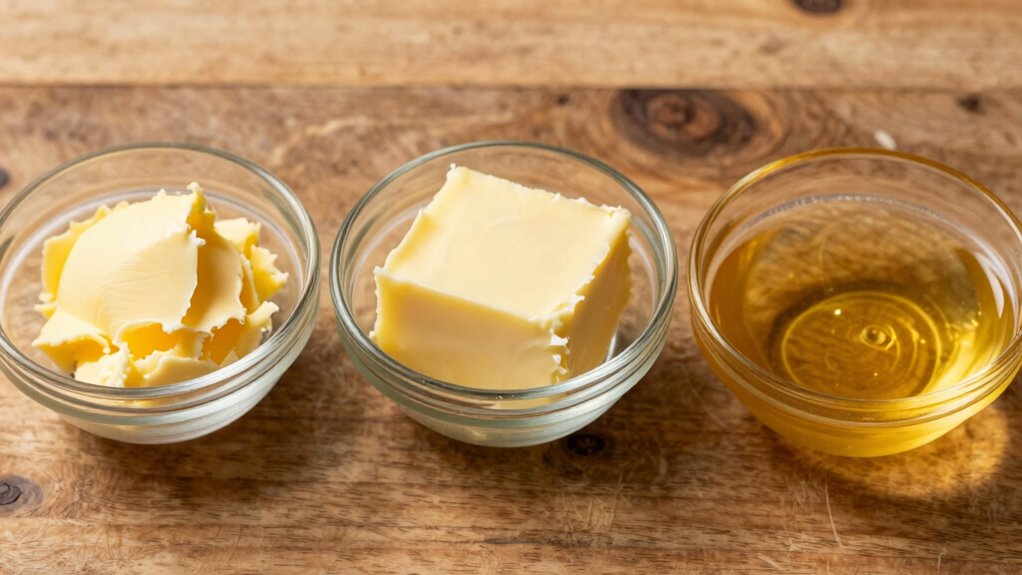
Getting the right texture of butter is key to successful baking, whether you need it softened, chilled, or melted. Proper butter preparation depends on your recipe’s needs and how you handle butter storage. To soften butter quickly, leave it at room temperature for 30-60 minutes or gently microwave in short bursts. Chilling butter requires wrapping and refrigerating. Melting butter is best done slowly over low heat or in the microwave, stirring frequently. Use butter substitution thoughtfully; for example, melted butter can replace softened butter in some recipes, but affects texture. Here’s a quick guide:
| Butter State | Best Method | Ideal For | Notes |
|---|---|---|---|
| Softened | Room temp, 30-60 minutes | Cookies, cakes | Stir occasionally for even softness. Additionally, understanding butter’s melting point helps in controlling its consistency during baking. |
| Chilled | Refrigerate wrapped | Pastry dough, pie crusts | Keep cold to maintain structure |
| Melted | Low heat or microwave | Sauces, brownies | Avoid overheating to prevent separation |
| Frozen | Thaw in fridge or at room temp | Butter for spreading or baking | Plan ahead for best results |
Additionally, maintaining proper butter texture can be facilitated by temperature control techniques, which are essential for achieving the desired consistency in baking. Proper handling of butter’s temperature impacts not only texture but also the emulsification process during mixing.
As an affiliate, we earn on qualifying purchases.
What’s the Best Butter Temperature for Cookies and Cakes?
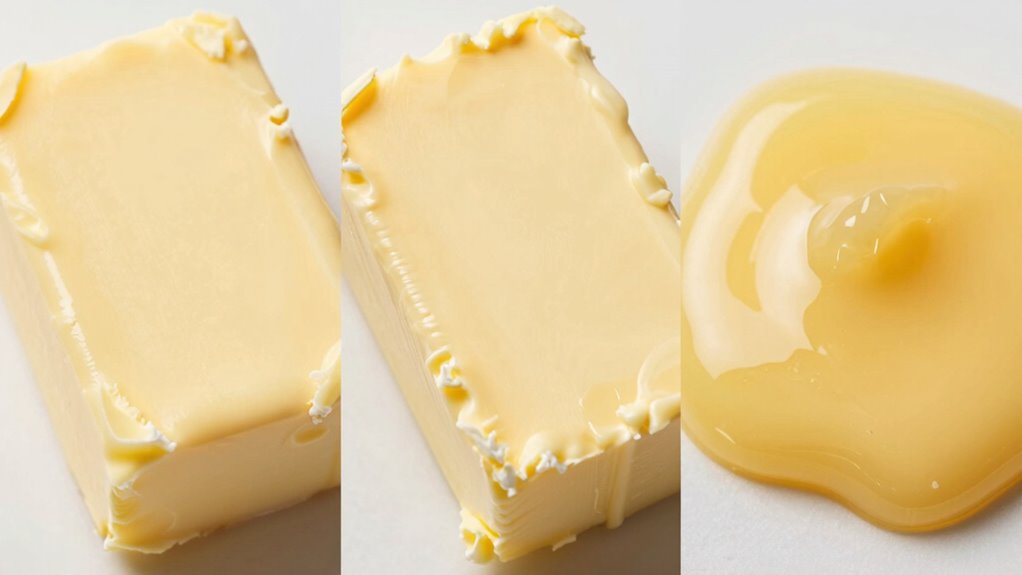
For cookies and cakes, the best butter temperature is when it’s softened but not too warm. When you use butter at this stage, it helps develop a richer butter flavor and guarantees a smooth, even texture. Softened butter blends seamlessly with sugar and other ingredients, leading to a consistent batter or dough. If the butter is too cold, it won’t incorporate well, resulting in uneven mixing and a dense crumb. Conversely, if it’s too warm, it can cause your baked goods to spread too much or develop a greasy texture. Maintaining the right butter temperature promotes ideal texture consistency, giving your cookies and cakes the perfect balance of moistness and structure. This way, your baked treats turn out tender, flavorful, and beautifully uniform. Using the correct butter temperature also ensures proper incorporation of necessary cookies, which are essential for the basic functioning of your baking process.
As an affiliate, we earn on qualifying purchases.
Common Butter Temperature Problems and How to Fix Them
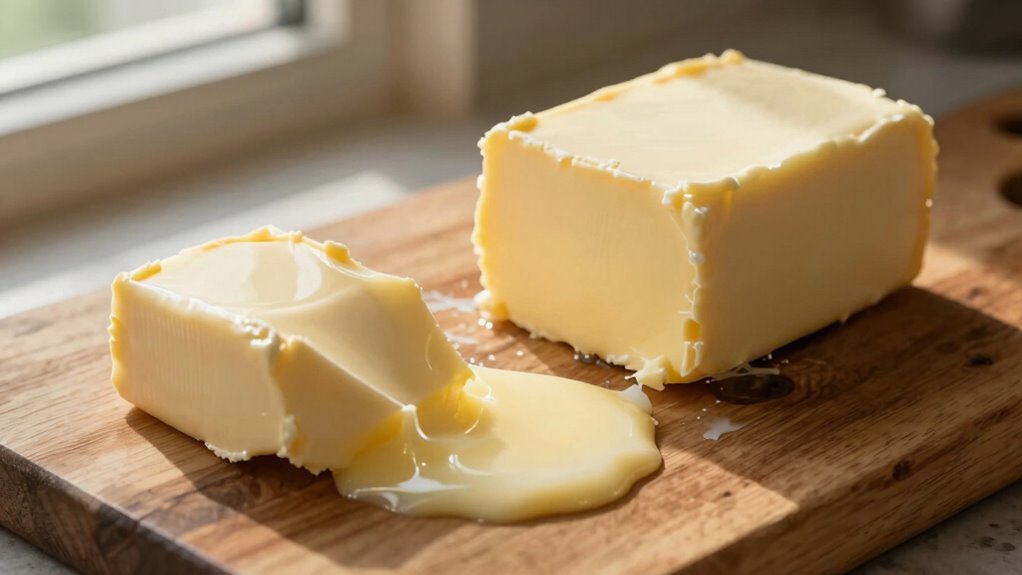
Even when you aim for the perfect softened butter, issues can still arise if the temperature isn’t just right. When butter is too cold, it’s hard to achieve the ideal butter consistency, making mixing difficult and causing uneven textures. Conversely, if the butter is too warm, it becomes greasy and can melt into your batter, affecting structure and rise. To fix these problems, adjust your refrigeration techniques: chill butter briefly if it’s too soft, or let it sit at room temperature for a few minutes if it’s too firm. Using a kitchen thermometer can help you monitor butter temperature accurately. Properly managing refrigeration techniques ensures consistent butter consistency, helping you avoid common temperature issues and produce better baked goods. Understanding your precious metal investment options can also help diversify your assets and secure your financial future. Incorporating temperature control tools can make maintaining the ideal butter temperature easier and more precise. Additionally, familiarizing yourself with butter types can influence how your baked goods turn out depending on their fat content and texture. For example, different butter varieties can affect flavor and performance in baking, making it important to select the right type for your recipes. Being aware of auditory processing challenges can also help you better understand how sensory issues might influence your baking environment, especially if sensitive to certain sounds while baking.
Tips for Keeping Butter at the Right Temperature During Baking
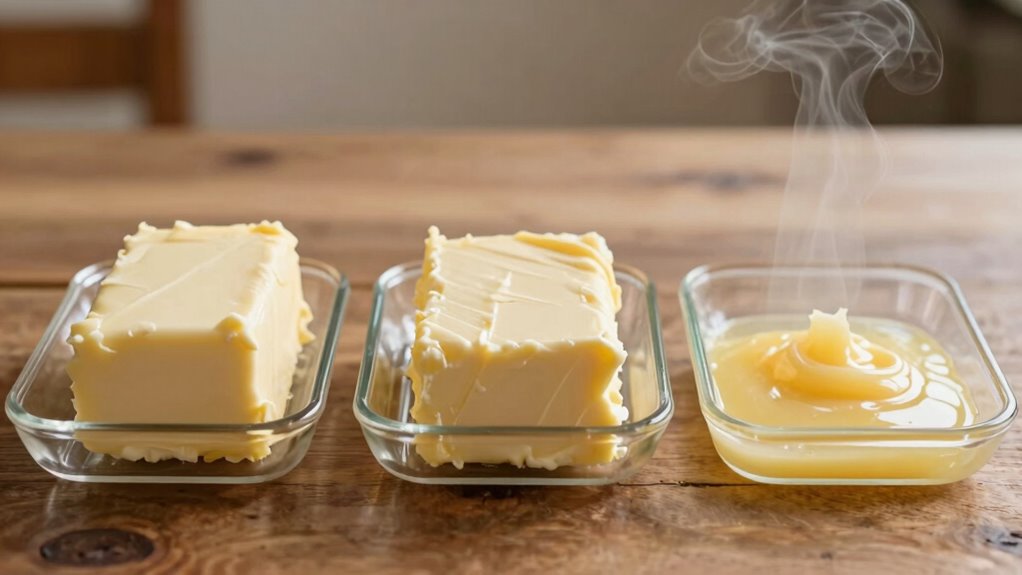
Maintaining the right butter temperature during baking requires some proactive strategies to guarantee it stays consistent throughout the process. Start by carefully managing your butter storage—keep it refrigerated until needed, then bring it to room temperature if your recipe calls for softened butter. If you need melted butter quickly, gently warm it in short bursts in the microwave, checking frequently to avoid overheating. For ingredient substitutions, consider how different fats affect temperature and texture; for example, using margarine instead of butter may require adjustments to achieve the right consistency. Keep your butter covered during storage to prevent moisture absorption and temperature fluctuations. Additionally, understanding the physical state of fat helps in choosing the right butter temperature for your baking needs, ensuring optimal texture and performance. Being aware of body piercing materials and properties can also influence how you handle ingredients, as certain materials are more resistant to temperature changes and contamination. This knowledge of fat properties can guide you in adjusting your techniques for better results. Properly measuring butter with precision ensures consistent temperature control and results in your baked goods. These steps help assure your butter remains at the ideal temperature, leading to better baking results.
Frequently Asked Questions
How Does Butter Temperature Influence Flavor Development in Baked Goods?
You’ll notice that butter temperature greatly influences flavor development in your baked goods. When butter is at the right temperature, it releases a richer butter flavor and enhances the baking aroma. Soft butter blends more evenly, intensifying these flavors, while melted butter can create a different texture and aroma profile. Using butter at the ideal temperature helps you achieve a more flavorful, aromatic result that elevates your baked treats.
Can Using the Wrong Butter Temperature Affect Baking Times?
Using the wrong butter temperature can unexpectedly throw off your baking times. When butter’s near its melting point or solidifies unexpectedly, it alters how ingredients combine and react, leading to longer or shorter baking durations. If you start with cold butter, it melts slowly, delaying processes; if it’s too soft or melted, it can accelerate baking. Pay close attention to butter solidification and melting point to keep your timing precise.
What Tools Help Maintain Consistent Butter Temperature?
You can use a digital kitchen thermometer to maintain consistent butter temperature, as it helps you monitor its butter melting points precisely. Additionally, employing temperature control techniques like softening butter at room temperature or chilling it briefly guarantees you stay within the ideal range. These tools and methods prevent over-softening or melting, making your baking process more predictable and your final results more consistent.
How Does Butter Temperature Impact the Texture of Finished Baked Items?
Think of butter as the backbone of your baked goods—its temperature shapes their texture like a sculptor’s chisel. When butter melts too easily, your cookies might spread too much and become flat; churning it just right creates a tender crumb. Soft butter blends smoothly, giving a light, airy finish, while cool butter keeps everything firm, preventing excessive spreading. Adjust the butter temperature to craft perfect, bakery-quality treats.
Is There a Difference in Butter Temperature Requirements for Different Types of Flour?
Yes, different flours may require varied butter temperatures. For high-absorption flours like whole wheat, using softer or slightly melted butter helps hydrate the flour and promote gluten development. Conversely, for delicate pastries with lower absorption, cooler or softened butter prevents overworking the dough, ensuring a tender texture. Adjusting butter temperature based on flour type optimizes absorption and gluten formation, resulting in better dough consistency and baked goods.
Conclusion
Getting your butter temperature just right is like tuning a musical instrument—it sets the perfect tone for your baked goods. Whether soft, cool, or melted, each state plays a vital role in your recipe’s success. Pay attention to your butter’s temperature, and you’ll bake with confidence and consistency. Remember, a little care now guarantees your treats turn out as delicious and harmonious as a well-played symphony.
Fall Picks
fall essentials
As an affiliate, we earn on qualifying purchases.