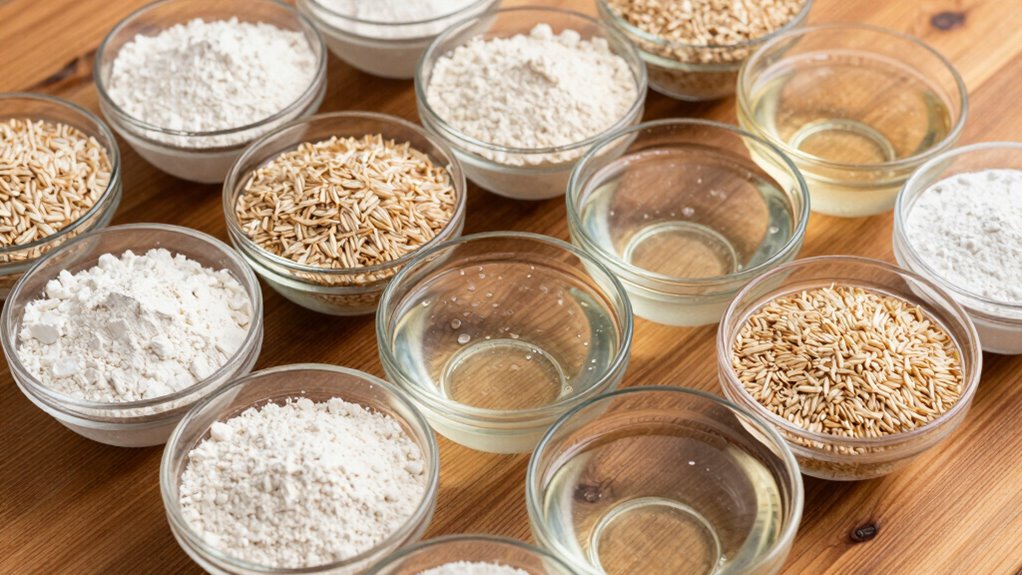

Different flours absorb water at varying rates, depending on their protein and fiber content. Whole wheat needs more water than white flour, and bread flour forms stronger gluten with extra hydration. To get the right dough consistency, start with the recommended percentage and adjust based on how the dough feels. Understanding these hydration needs helps you avoid sticky or dry dough. Continue exploring to learn how to perfect your water adjustments for any flour type.

Get kitchen staples and gadgets delivered free with Prime
- Fast, free delivery on millions of items
- Prime Video, Amazon Music and more included
- Member-only deals all year
Key Takeaways
- Whole wheat flour absorbs more water due to higher bran and germ content, requiring increased hydration.
- Bread flour, high in protein, needs more water to develop strong gluten networks.
- Lower-protein flours like cake or pastry flour need less water to maintain tenderness and avoid stickiness.
- Typical hydration rates range from 60% to 80%, but always adjust based on flour type and dough feel.
- Use a kitchen scale for precise measurement and monitor dough consistency to fine-tune hydration levels.
digital kitchen scale for baking
As an affiliate, we earn on qualifying purchases.
As an affiliate, we earn on qualifying purchases.
How Do Different Flours Absorb Water?
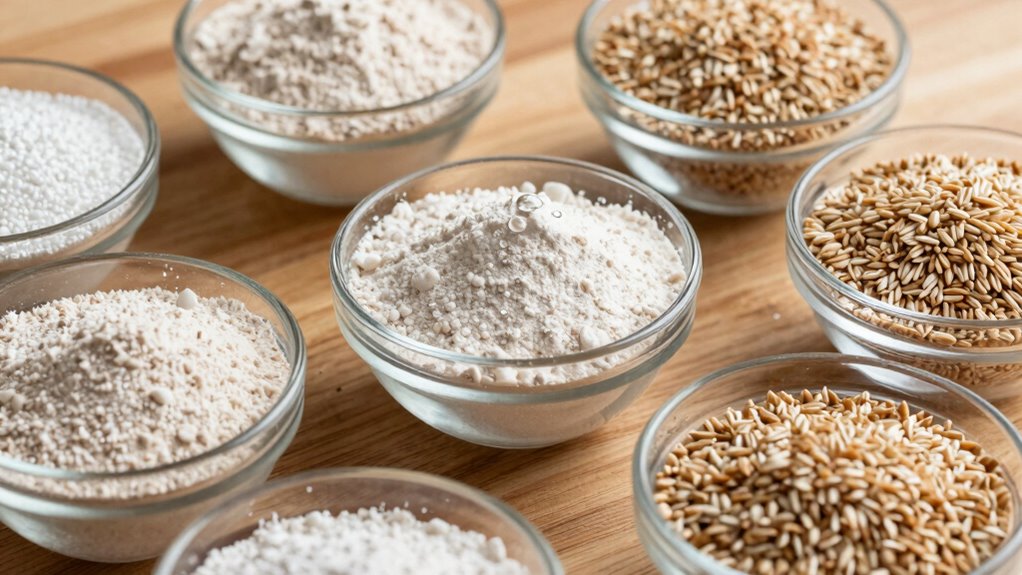
Have you ever wondered why some flours need more water than others? It all comes down to how they absorb water, which impacts gluten development and the fermentation process. Whole wheat flour, for example, contains more bran and germ, so it absorbs more water to hydrate all components fully. Conversely, bread flour with higher protein content forms stronger gluten networks when hydrated, requiring adequate water for *ideal* gluten development. The hydration level influences how well the flour can develop gluten, affecting dough elasticity and structure. Additionally, the amount of water absorbed impacts fermentation, as properly hydrated dough fosters active yeast growth. Different flours have unique absorption rates, so understanding these properties helps you achieve the best texture and rise in your baked goods.
As an affiliate, we earn on qualifying purchases.
How to Calculate the Right Hydration Level for Any Flour

Determining the right hydration level for any flour starts with understanding its inherent water absorption capacity. To do this, start by checking the flour’s typical absorption rate, usually expressed as a percentage. This helps you estimate how much water is needed to achieve suitable gluten development without making the dough too sticky or dry. Keep in mind, higher hydration levels often lead to better gluten development, resulting in a lighter, more open crumb. Additionally, proper hydration influences fermentation times; wetter dough ferments faster and develops more flavor. To find the ideal hydration, begin with the flour’s recommended percentage, then adjust based on your desired dough consistency and fermentation speed. Monitoring these factors ensures your bread has the right structure, flavor, and texture. Understanding the water absorption capacity of different flours can help you tailor hydration levels more precisely for optimal baking results.
pastry flour for tender baked goods
As an affiliate, we earn on qualifying purchases.
As an affiliate, we earn on qualifying purchases.
How to Adjust Water in Your Recipes Based on Flour Type

Since different flour types absorb water differently, adjusting the amount of water in your recipes is essential for achieving the right dough consistency. For high-protein flours like bread flour, you’ll need more water to promote proper gluten development, giving your dough strength and elasticity. Conversely, lower-protein flours, such as cake or pastry flour, require less water to prevent a sticky or overly dense crumb. Proper hydration also influences fermentation timing; wetter doughs ferment faster, so you may need to adjust proofing times accordingly. Pay attention to how the dough feels—if it’s too dry or stiff, add water gradually. Understanding flour absorption rates helps you fine-tune your water adjustments for perfect results every time. Recognizing hydration levels can also guide you in achieving the ideal dough texture, especially when experimenting with different flour blends or recipes.
As an affiliate, we earn on qualifying purchases.
Common Water Measurement Mistakes and How to Avoid Them
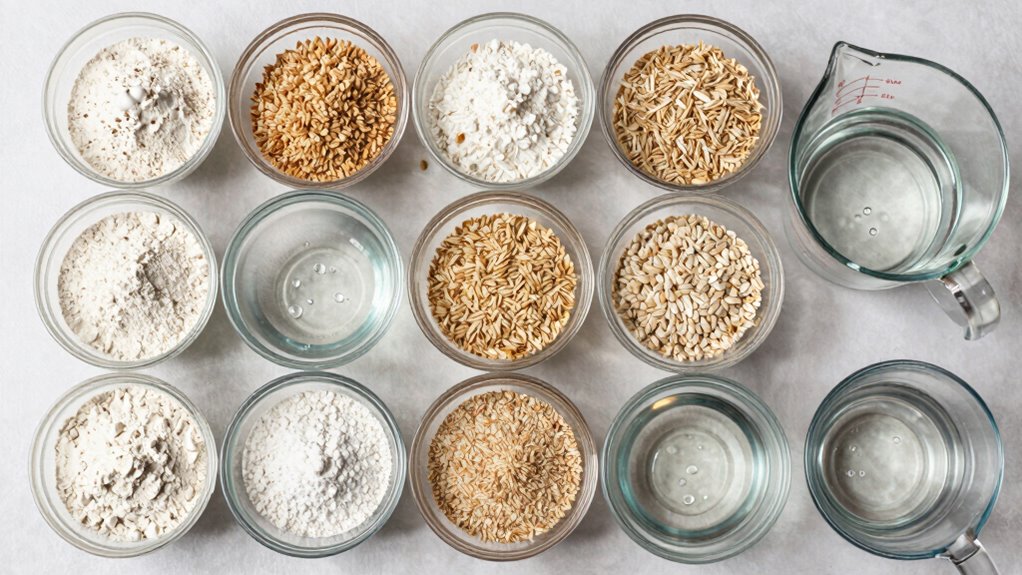
One common mistake bakers make is measuring water inaccurately, which can throw off your dough’s consistency and affect the final result. Using the wrong measuring tools, like cups instead of a scale, can lead to inconsistent hydration levels. Always use a kitchen scale for precision, especially when adjusting hydration for different flours. Additionally, paying attention to water temperature is vital; cold water can slow fermentation, while hot water can kill yeast. Make sure to measure water at the appropriate temperature for your recipe’s needs. Avoid guessing or using eyeballed amounts—accurate measurement guarantees your dough develops properly. Proper hydration depends on the type of flour, so understanding how each flour absorbs water can improve your baking results. Recognizing the benefits of curiosity about different ingredients can help you troubleshoot and refine your baking techniques. Exploring flour absorption rates can provide deeper insights into hydration levels and optimize your recipes. By using proper measuring tools and monitoring water temperature, you’ll achieve more consistent, reliable baking results every time.
How to Recognize and Fix Dough That’s Too Wet or Too Dry
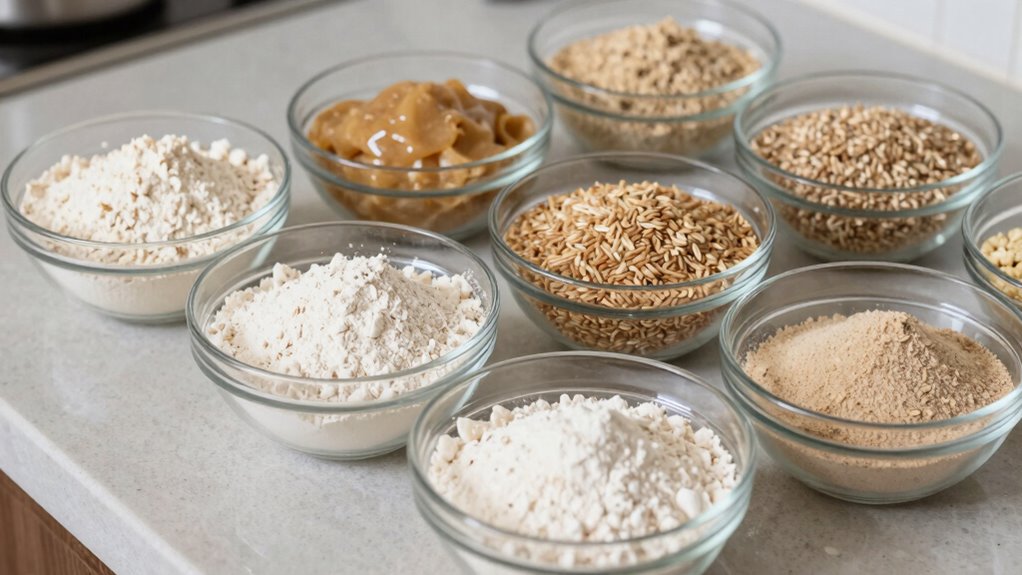
When your dough isn’t behaving as expected, it’s important to recognize whether it’s too wet or too dry. A dough that’s too wet may spread out and stick excessively, while a dry one feels crumbly and hard to knead. To fix these issues:
- For a wet dough, add small amounts of flour gradually, mixing thoroughly until it firms up. Remember, fermentation effects can make dough wetter over time, so adjust accordingly.
- For a dry dough, sprinkle water slowly while kneading, until it becomes smooth and elastic. Proper flour storage tips help prevent dry flour, which can lead to dryness.
- Always observe how the dough responds to adjustments, and avoid overcorrecting. Paying attention to the dough’s hydration levels can help you achieve better results and a more satisfying baking experience.
- Monitoring projector specifications such as hydration can also be useful if you’re using flour in a culinary presentation or demonstration, ensuring clarity and visual appeal.
- Understanding flour absorption capacity can further refine your hydration adjustments, ensuring consistent dough consistency across different flour types. Recognizing how different factors influence flour’s water intake can help optimize your baking process and outcomes. Additionally, being aware of the environmental conditions like humidity and temperature can influence how your dough absorbs water and behaves during mixing.
Frequently Asked Questions
How Does Altitude Affect Flour Hydration Requirements?
Altitude impact means you need to adjust your flour hydration when baking higher up. As elevation increases, the air is drier, so your dough may need more water to stay workable. You might also need to reduce other liquids slightly or increase baking time. Making these baking adjustments helps you achieve the right dough consistency and better rise, ensuring your baked goods turn out perfect despite the altitude challenges.
Can Flour Hydration Levels Vary by Brand or Batch?
Oh, definitely, flour hydration varies by brand and batch—because who doesn’t love a little unpredictability in their baking? You’ll find that brand consistency and batch variability can turn a straightforward recipe into a guessing game. One bag’s water absorption might differ slightly from another, so you’ll want to adjust hydration levels accordingly. Embrace the chaos; it keeps your baking adventures lively and your bread uniquely yours.
How Do Environmental Factors Influence Water Absorption?
Environmental factors like storage humidity and moisture content directly impact water absorption in flour. If you store flour in a humid environment, it absorbs more moisture, increasing its hydration level. Conversely, dry conditions cause it to absorb less water, which might lead to dry dough. To get consistent results, keep your flour in a cool, dry place and use it before it becomes overly moist from high humidity.
What Role Does Flour Age Play in Hydration Needs?
Think of flour aging as a tree maturing. As flour ages, its hydration impact changes—you’ll notice it absorbs water more slowly, like the tree developing deeper roots. Flour aging causes a decrease in enzymes and moisture, which affects how much water you need. So, if your flour has been sitting for a while, modify your hydration levels to ensure your dough remains flexible and well-formed.
Are There Specific Hydration Tips for Gluten-Free Flours?
Yes, there are specific hydration tips for gluten-free alternatives. You should use slightly more water because these flours tend to absorb less and need extra moisture for proper dough consistency. Try hydration techniques like adding water gradually and testing the dough’s feel, since gluten-free flours vary widely. This helps make sure your baked goods stay moist and hold together well, giving you better results every time.
Conclusion
By understanding how different flours absorb water, you’ll be better equipped to adjust your recipes with confidence. Remember, a little knowledge goes a long way—don’t let small missteps turn into big problems. Keep an eye on your dough’s consistency, and you’ll see that things often fall into place naturally. When you get the hang of it, you’ll realize that baking is truly a dance where practice makes perfect.
NFL season / tailgating Picks
team gear
As an affiliate, we earn on qualifying purchases.