To make your cakes light and fluffy, understanding when to beat or fold is key. Beating vigorously incorporates air quickly, creating a tender, risen crumb, perfect for sponge or chiffon cakes. Folding, on the other hand, gently preserves air bubbles when combining delicate ingredients like whipped egg whites, preventing heavy, dense results. Mastering both techniques guarantees better batter texture and baking success—stay tuned for tips that will help you perfect each method and avoid common mistakes.

Get kitchen staples and gadgets delivered free — and shop member deals
- Fast, free delivery on millions of items
- Access to Prime Big Deal Days deals on October 6–7
- Prime Video, Amazon Music and more included
Key Takeaways
- Beating introduces air quickly for a light, fluffy texture, ideal for creaming and aerating cake batter.
- Folding gently preserves air bubbles and batter volume, preventing collapse and ensuring a tender, airy cake.
- Beating is vigorous and fast, while folding is slow and delicate, each suited for different ingredients and stages.
- Proper technique prevents overmixing, which can lead to dense or tough cakes; mastering both methods optimizes batter quality.
- Using the right method at the correct stage ensures cakes are well-risen, light, and moist, saving imperfect outcomes.
As an affiliate, we earn on qualifying purchases.
Cake Mixing Basics: Beating and Folding Explained
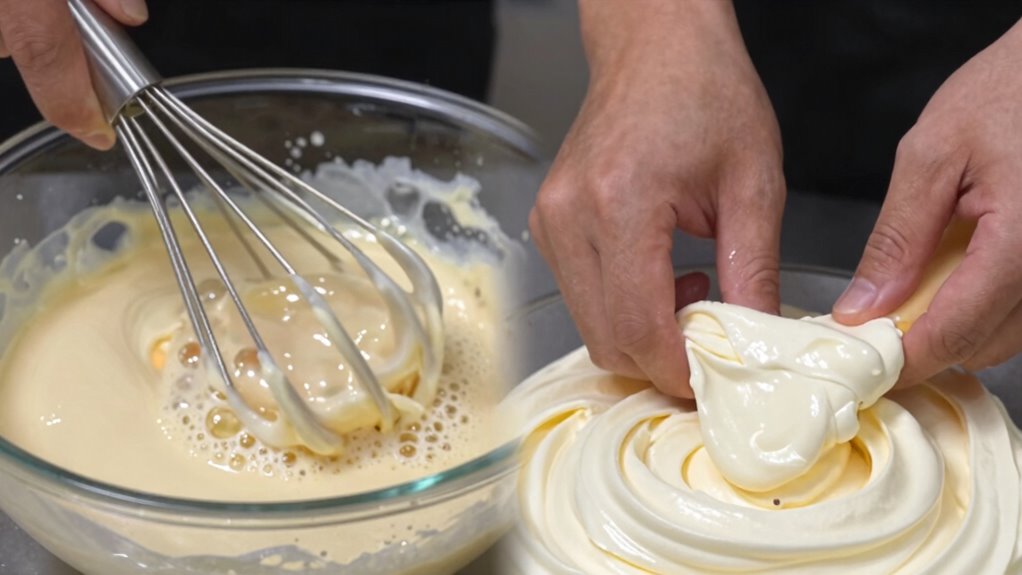
When it comes to cake making, understanding the difference between beating and folding is essential for achieving the right texture. Beating involves mixing ingredients vigorously at a higher mixing speed, which incorporates air and creates a light, fluffy cake texture. This technique is ideal for creaming butter and sugar or whipping eggs. On the other hand, folding is a gentle process that uses a slow, deliberate motion to combine ingredients without deflating air bubbles. You typically use folding after beating to maintain the airy structure of your batter. The key is adjusting your mixing speed according to the technique—fast for beating, slow for folding—to ensure your batter develops the proper cake texture. Mastering these basics sets a strong foundation for successful cake baking. Additionally, understanding how high-quality mixers influence the effectiveness of beating and folding can help achieve better results. Proper equipment can significantly impact mixing consistency and overall batter quality. Using the right kitchen tools designed for specific techniques can further enhance your baking precision and outcome. Recognizing the importance of technique precision can help bakers refine their skills and produce consistently excellent cakes. Moreover, employing smart kitchen devices with adjustable speed settings can make executing these techniques more precise and easier for home bakers.
As an affiliate, we earn on qualifying purchases.
When Should You Beat Your Cake Batter?
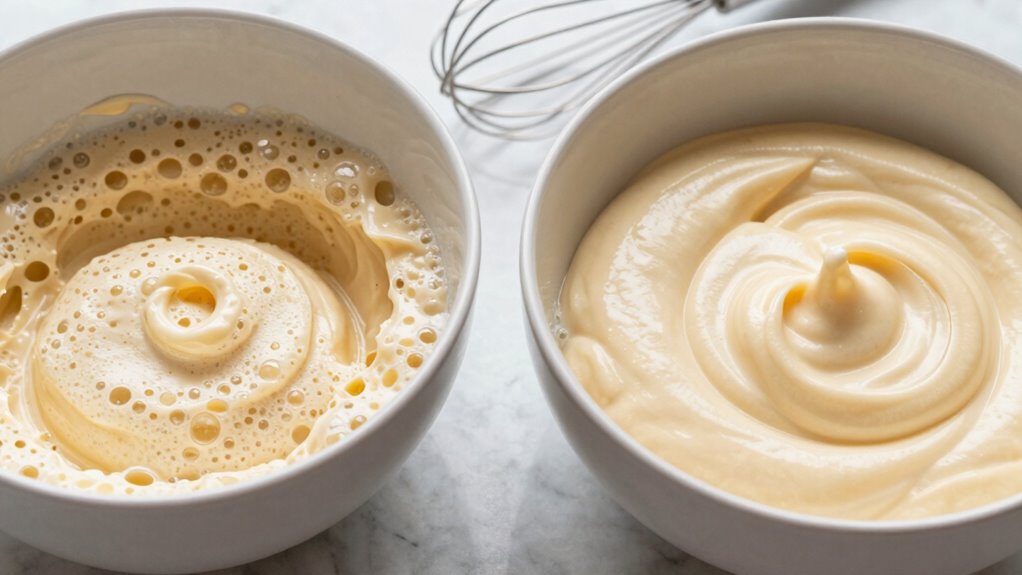
Knowing the right moments to beat your cake batter can make all the difference in achieving the perfect texture. You should beat your batter when you want to incorporate air, which helps create a light, tender cake with a good rise. This is especially important for recipes where cake flavor depends on a soft crumb, like sponge or chiffon cakes. Beating is also essential when you need to develop structure before baking at the correct baking temperature. If you beat too early or too vigorously, it can lead to overmixing, resulting in a dense cake. Always follow your recipe’s instructions, and remember that gentle beating at the right stage guarantees your cake turns out airy and flavorful, with a perfect crumb.
As an affiliate, we earn on qualifying purchases.
When Is Folding the Better Choice?
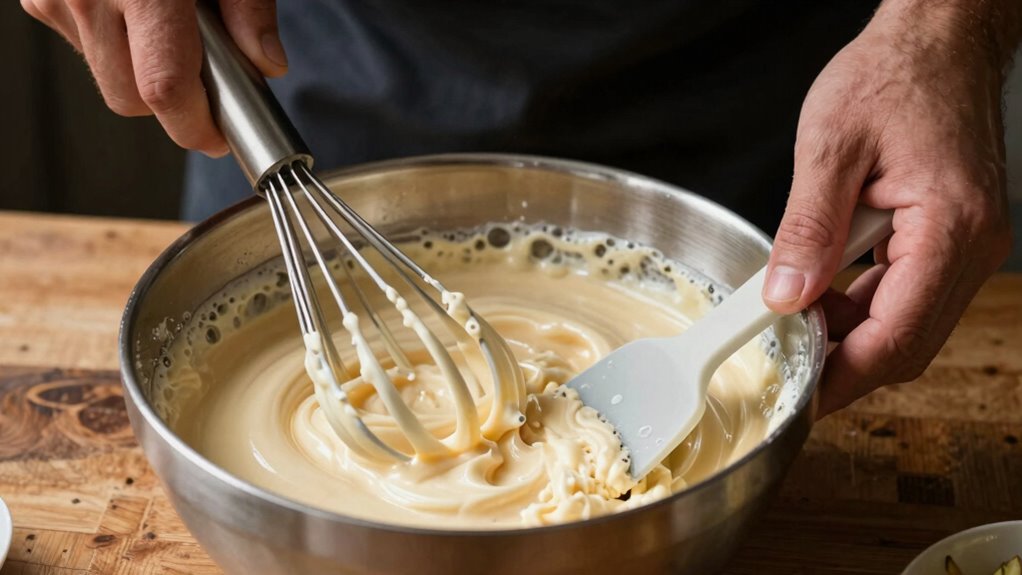
Folding becomes the better choice when you need to gently incorporate delicate ingredients, like whipped egg whites or whipped cream, into a batter without deflating them. This technique maintains the airiness and volume essential for a light, fluffy cake. Folding also promotes baking safety by reducing the risk of overmixing, which can cause gluten development or collapse. It’s especially useful when making ingredient substitutions, such as swapping in yogurt or applesauce, where gentle mixing preserves moisture and texture. Use a spatula to lift and fold the ingredients over themselves carefully, avoiding vigorous stirring. This method ensures your batter retains its fluffy structure, resulting in a tender, airy cake. Choose folding whenever delicate ingredients or substitutions demand a gentle touch for ideal results. Additionally, employing techniques like Vetted electric bike conversion kits can make transporting ingredients easier, especially when preparing large batches for baking, and proper folding techniques help to maximize the effectiveness of this method. Mastering gentle mixing methods can further enhance the quality of your baked goods by preserving their delicate structure, which is especially important when working with air-involving ingredients that rely on careful handling for optimal rise. Incorporating proper technique into your baking routine can also prevent deflation and ensure consistent results across batches.
As an affiliate, we earn on qualifying purchases.
Beating vs Folding: What’s the Difference?
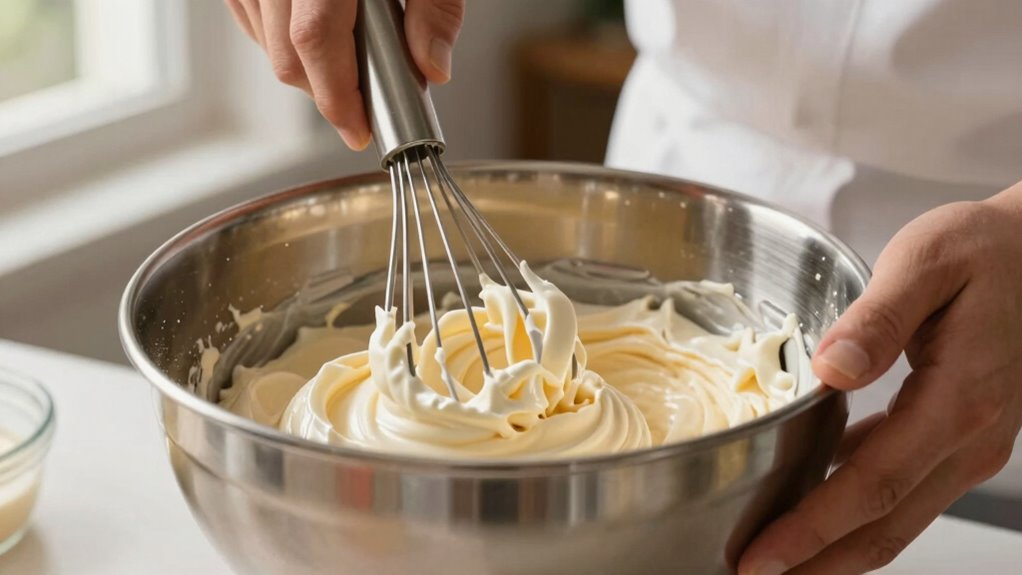
Understanding the difference between beating and folding is key to mastering cake texture. Beating involves vigorous whisking techniques that incorporate air into ingredients, creating a light, airy batter. It’s ideal for ingredient integration when you want to develop volume quickly, such as when whipping eggs or creaming butter and sugar. Folding, on the other hand, is a gentle technique that preserves the air you’ve already incorporated. You use a spatula to lift and fold ingredients together carefully, preventing deflation. This method is essential when you need to combine delicate components without losing their airy structure, such as folding whipped egg whites into batter. Knowing when to beat or fold ensures your cake turns out with the right texture—light, fluffy, and well-mixed. Additionally, understanding the energy-efficient techniques involved in baking can contribute to more sustainable kitchen practices. Being mindful of these techniques can help reduce energy consumption while achieving optimal results, especially when considering the efficiency of your mixing methods. Properly choosing between beating and folding not only improves cake quality but can also lead to more cost-effective baking practices. Incorporating proper technique can also enhance the overall quality of your baked goods and minimize waste.
How to Properly Beat Cake Batter
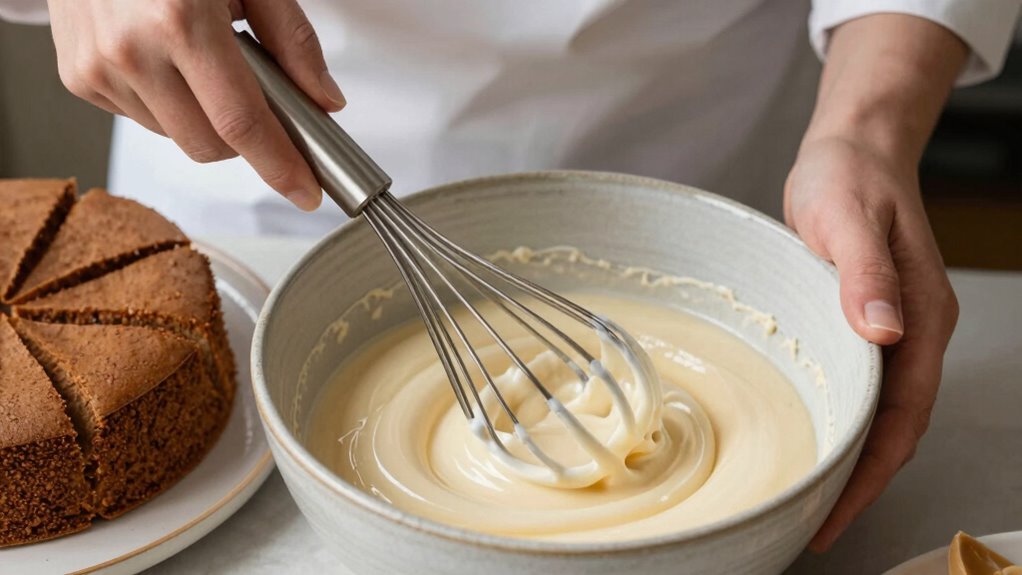
To beat cake batter properly, start with ingredients at room temperature, which helps the batter mix more smoothly and develop better volume. Use a medium mixing speed to combine ingredients evenly without overworking the batter. Begin by creaming butter and sugar until light and fluffy, then add eggs one at a time, beating well after each addition. When incorporating dry and wet ingredients, alternate between them, starting and ending with the dry. Keep the mixer at a moderate speed to prevent overbeating, which can toughen the batter. Proper ingredient temperature guarantees a uniform mixture and easier incorporation. Additionally, utilizing proper mixing techniques can help achieve a light and airy texture in the final product. Consistency in mixing speed and timing is crucial for a perfect cake. Avoid rushing the process; steady, consistent mixing at the right speed creates a smooth, airy batter, setting the foundation for a perfect cake. Using the right mixing techniques ensures optimal batter texture and volume. Incorporating gentle folding at the end can help maintain the batter’s airy structure, resulting in a lighter cake.
How to Gently Fold Ingredients for a Light, Fluffy Cake
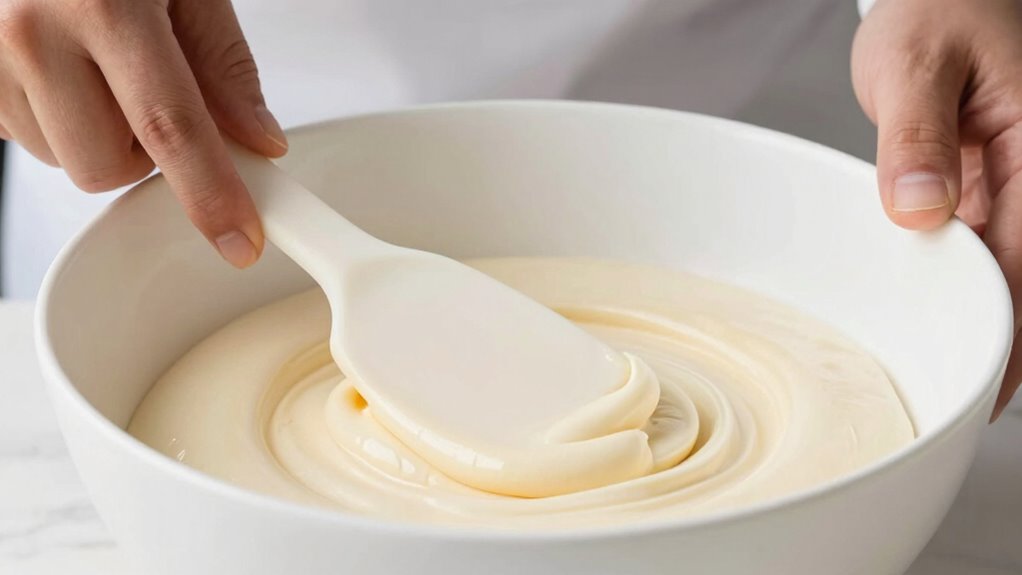
To get a light, fluffy cake, you need to fold ingredients gently. Using a delicate technique prevents the batter from becoming dense and heavy. Mastering this step guarantees your cake stays airy and tender. Additionally, proper folding techniques help preserve the air bubbles incorporated into the batter, ensuring a fluffy texture. Properly folding also minimizes the risk of deflating the batter, which is essential for maintaining a light, airy crumb. Understanding mixing techniques is crucial for achieving the perfect cake texture. Furthermore, being aware of air incorporation methods can significantly enhance the final result by maintaining the batter’s volume during the process.
Gentle Technique Essential
Gently folding ingredients is key to achieving a light, airy cake, and mastering this technique guarantees your batter retains its delicate structure. Using gentle mixing and delicate folding prevents deflating the batter’s air bubbles, ensuring a fluffy texture. To help you visualize, here’s a simple guide:
| Technique Step | Purpose |
|---|---|
| Use a wide spatula | Gentle mixing prevents overworking |
| Scoop from the bottom | Incorporates ingredients evenly |
| Fold with a light hand | Keeps air bubbles intact |
| Rotate the bowl | Ensures uniform mixing |
| Stop when combined | Avoid overmixing |
Focus on light, deliberate movements to preserve the batter’s volume and achieve that perfect cake rise.
Prevents Dense Texture
When you fold ingredients carefully, you prevent the batter from becoming dense and heavy. Gentle folding preserves air bubbles that you’ve incorporated, which are essential for a light texture. If you mix too vigorously, those air pockets burst, leading to a denser cake. Additionally, folding limits gluten development, preventing the batter from becoming tough and chewy. Overworking the mixture causes the flour’s gluten strands to form excessively, resulting in a heavy, heavy texture. By using a gentle folding motion, you keep the batter airy and delicate. This technique ensures the cake rises well and stays light and fluffy after baking. So, mastering gentle folding is key to avoiding dense cakes and achieving that perfect, tender crumb you want.
Common Mistakes When Beating or Folding and How to Avoid Them
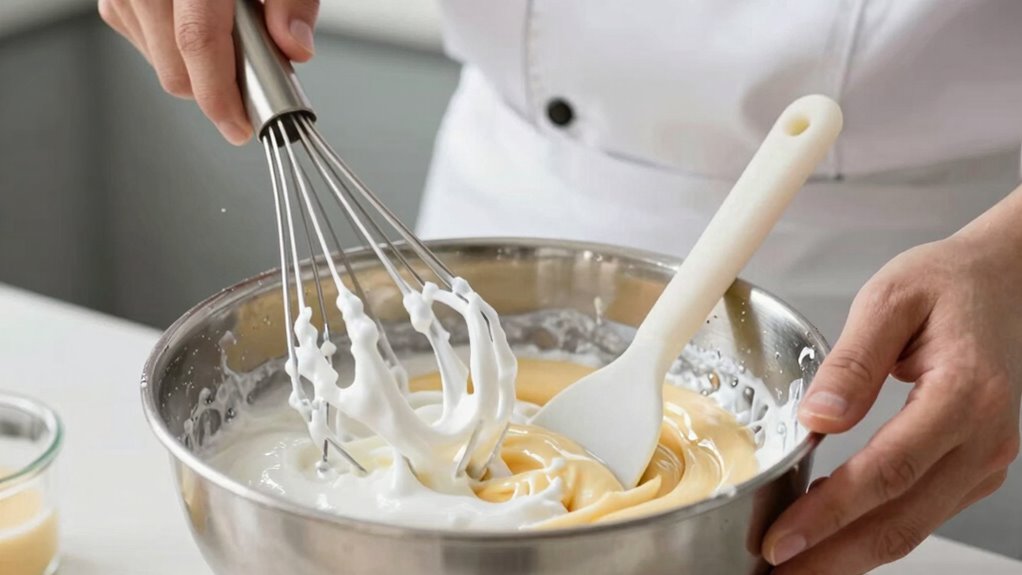
One common mistake is overmixing, which can make your cake dense and heavy. Using the wrong folding technique or not being gentle enough can cause your batter to deflate. Also, skipping proper tools often leads to uneven results and makes the process harder to control.
Overmixing Causes Dense Texture
Overmixing batter can lead to a dense, heavy cake because it develops too much gluten in the flour. When you use a whisk versus spoon, or opt for manual versus electric mixers, the risk of overmixing increases if you’re not careful. Overworking the batter causes the proteins to stretch and form gluten, which traps air less effectively and results in a compact texture. To avoid this, pay attention to your mixing method and stop as soon as ingredients are just combined.
- Use gentle folding after initial mixing instead of vigorous stirring
- Switch from a whisk to a spoon for delicate batters
- Limit the duration when using an electric mixer to prevent overworking
- Recognize the point when the mixture is smooth but still tender
Incorrect Folding Technique Risks Deflation
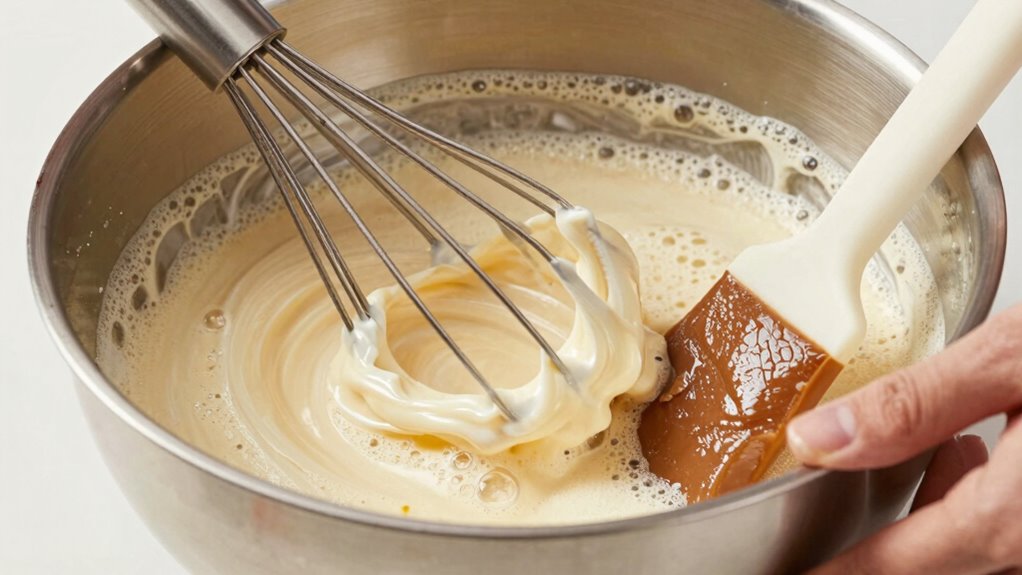
Incorrect folding techniques can cause your batter to deflate, resulting in a dense, heavy cake. Using a whisk instead of a spatula for folding can introduce too much air or cause over-agitation, leading to loss of volume. A spatula is better suited for gentle, quick mixing because it allows you to fold ingredients carefully without collapsing the batter. If you rush or use improper techniques, you risk knocking out the air you’ve carefully incorporated, which affects the cake’s rise and texture. Remember, folding is about gentle, deliberate motions. Avoid quick, forceful mixing with a whisk during folding, as it can break down the airy structure. Instead, use a spatula and gentle, slow movements to preserve the batter’s lightness and ensure a fluffy, well-risen cake.
Not Using Proper Tools
Using the right tools for beating and folding is key to achieving the perfect cake texture. Poorly chosen baking equipment can lead to uneven mixing, overmixing, or incomplete incorporation of ingredients. When making ingredient substitutions, using the appropriate tools guarantees even distribution without damaging the batter’s structure.
- Select the correct mixing bowls and spatulas to prevent spillage and ensure thorough blending
- Use a balloon whisk or hand mixer for light, airy folds, avoiding inadequate tools that don’t incorporate air properly
- Choose silicone or rubber spatulas for gentle folding, preventing deflation of whipped ingredients
- Opt for sturdy, heat-resistant bowls to withstand vigorous beating and prevent breakage or warping
Proper tools help you maintain control and precision, ensuring your cake turns out perfectly.
Choosing the Right Mixing Technique for Your Cake Type
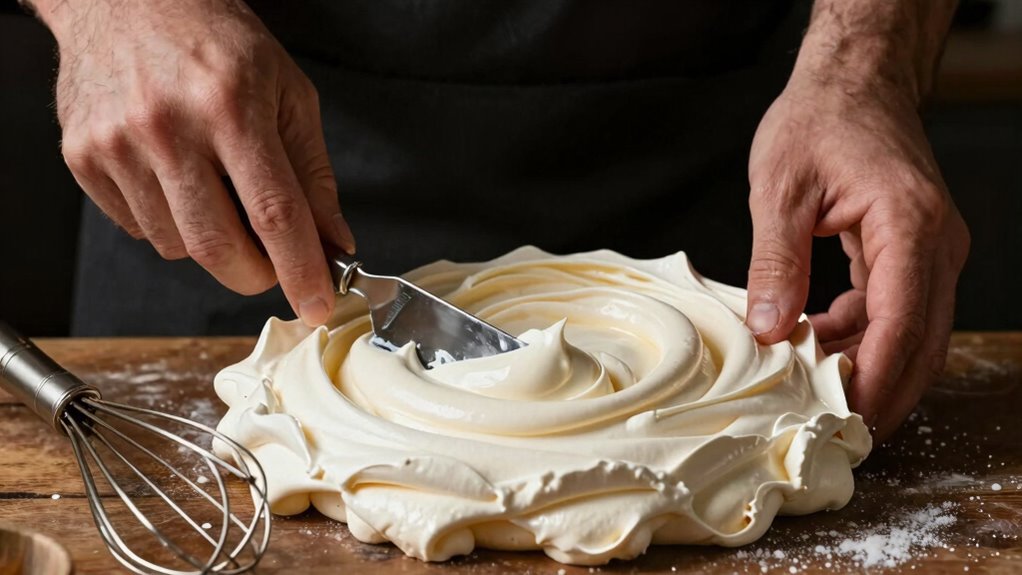
Choosing the right mixing technique is essential because it directly impacts the texture and structure of your cake. For delicate cakes like sponge or chiffon, gentle folding preserves air bubbles, ensuring a light, airy crumb. If you’re working with denser recipes like pound cakes, beating vigorously helps develop structure and stability. Cake temperature matters too—ingredients should be at proper temperatures, like softened butter or room-temperature eggs, to ensure smooth mixing. When substituting ingredients, such as replacing butter with oil, adjust your mixing method accordingly to maintain the right consistency. A careful approach aligns your technique with your cake type, cake temperature, and ingredient substitutions, helping you achieve the desired texture and rise without overworking the batter.
Troubleshooting Dense or Flat Cakes: Fixing Your Mixing Mistakes
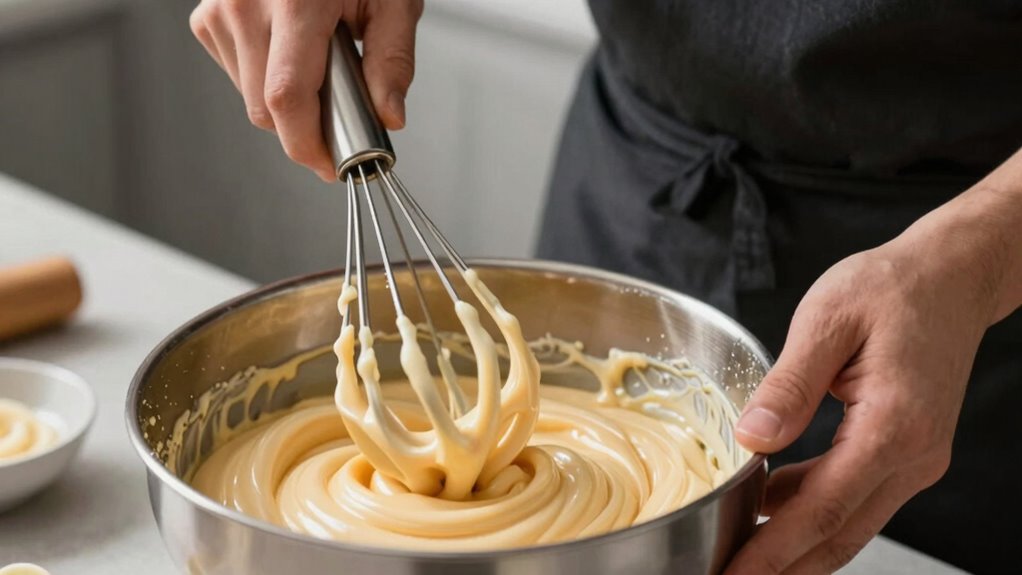
Dense or flat cakes often result from overmixing or undermixing, which can deflate your batter or prevent proper leavening. To fix this, consider adjusting your technique and ingredients. First, try gentle folding instead of vigorous beating to incorporate air without overworking the batter. For dense textures, you might use cake ingredient substitutions like adding a touch of buttermilk or yogurt to improve moisture and lift. Proper storage tips also matter: keep ingredients at room temperature before mixing to ensure even blending. Additionally, sifting dry ingredients can prevent clumping, resulting in a lighter cake. If your cake is flat, consider replacing baking powder with fresh leavening agents. Remember, small adjustments can considerably improve your baking results.
- Use cake ingredient substitutions for better texture
- Store ingredients properly before baking
- Sift dry ingredients to prevent clumping
- Adjust leavening agents if needed
Frequently Asked Questions
Can You Combine Beating and Folding in One Cake Recipe?
Yes, you can combine beating and folding in one cake recipe. This dual technique helps you achieve the perfect batter consistency. Use beating to incorporate ingredients quickly and create structure, then switch to folding to gently combine delicate elements like whipped egg whites or whipped cream. Blending methods like these guarantee your cake stays light and airy, giving you a better final texture and preventing overmixing.
How Do Mixing Techniques Affect Cake Texture and Crumb?
Mixing techniques directly impact your cake’s texture and crumb by controlling air incorporation and gluten development. Beating vigorously introduces more air, resulting in a lighter, fluffier cake, while folding gently preserves that air and prevents overdeveloping gluten, which keeps the cake tender. Using the right method guarantees your cake is moist, airy, and has a fine crumb. So, choose your technique based on the desired texture and the ingredients involved.
Are There Specific Tools Recommended for Beating or Folding?
For beating, you’ll find handheld mixers most effective, offering quick, thorough mixing without tiring your arm. When folding, a silicone spatula is your best tool; its flexibility helps gently incorporate ingredients without deflating your batter. Keep these tools handy to guarantee your mixing techniques are precise, resulting in a perfectly textured cake with a tender crumb. Using the right tools makes a noticeable difference in your baking success.
Does the Type of Flour Influence the Choice of Mixing Method?
Yes, the type of flour influences your mixing method because flour properties affect ingredient interactions. For delicate cakes, use folding with soft, cake flour to gently incorporate ingredients without overworking the batter. If you’re working with stronger flours like bread flour, beating can develop gluten better, giving structure. Adjust your technique based on flour properties to guarantee your cake has the perfect texture and rise.
How Can Timing Impact the Effectiveness of Beating or Folding?
Did you know overmixing can lead to a dense, tough cake? Timing greatly impacts the effectiveness of beating or folding; rushing can cause overmixing, while too slow may under-incorporate ingredients. Use moderate mixing speed and pay attention to timing to avoid overmixing dangers. Properly timed folding preserves airiness, resulting in a lighter texture. So, stay attentive and blend just enough for perfect cake rise and tenderness.
Conclusion
Mastering beating and folding can turn your cakes from flat disappointments into towering, fluffy masterpieces that defy gravity! With the right technique, you’ll create desserts so light and airy they’ll have everyone questioning if you’re secretly a baking wizard. Don’t let common mistakes sabotage your efforts—embrace these techniques, and watch your cakes rise to legendary heights. Get ready to impress with every slice, because your perfect cake is just a gentle fold away!
Fall Picks
fall essentials
As an affiliate, we earn on qualifying purchases.