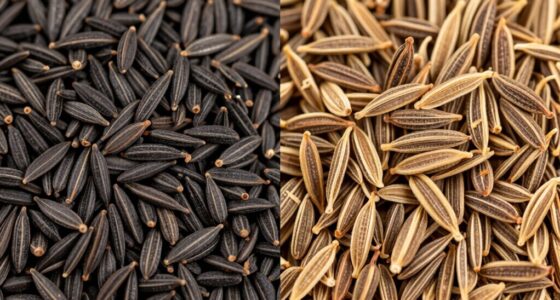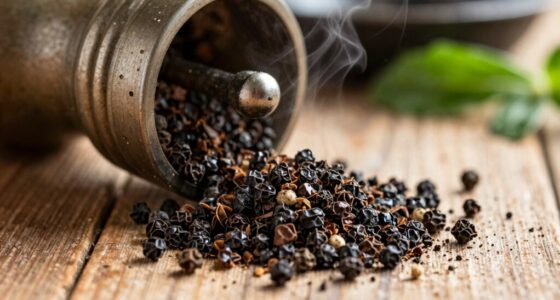
The heat of red chili powders depends mainly on the types of chili peppers used and how they’re processed. Some powders come from milder peppers like California or New Mexico, offering gentle heat, while others are made from hotter peppers like cayenne or Thai chilies, making them spicier. Processing methods, such as roasting or drying, can also impact the heat level and flavor. To understand these differences more, keep exploring the variety of chili powders and their unique characteristics.

Get kitchen staples and gadgets delivered free — and shop member deals
- Fast, free delivery on millions of items
- Access to Prime Big Deal Days deals on October 6–7
- Prime Video, Amazon Music and more included
Key Takeaways
- The type of chili peppers used (e.g., cayenne vs. California chilies) directly affects heat level.
- Hotter chili powders are made from more pungent peppers like Thai or cayenne chilies.
- Processing methods such as roasting or drying can enhance or reduce spiciness.
- Regional varieties, like Indian or Mexican chilies, have distinct heat intensities based on local cultivation.
- Additional ingredients or blending techniques can modify the perceived heat of the chili powder.
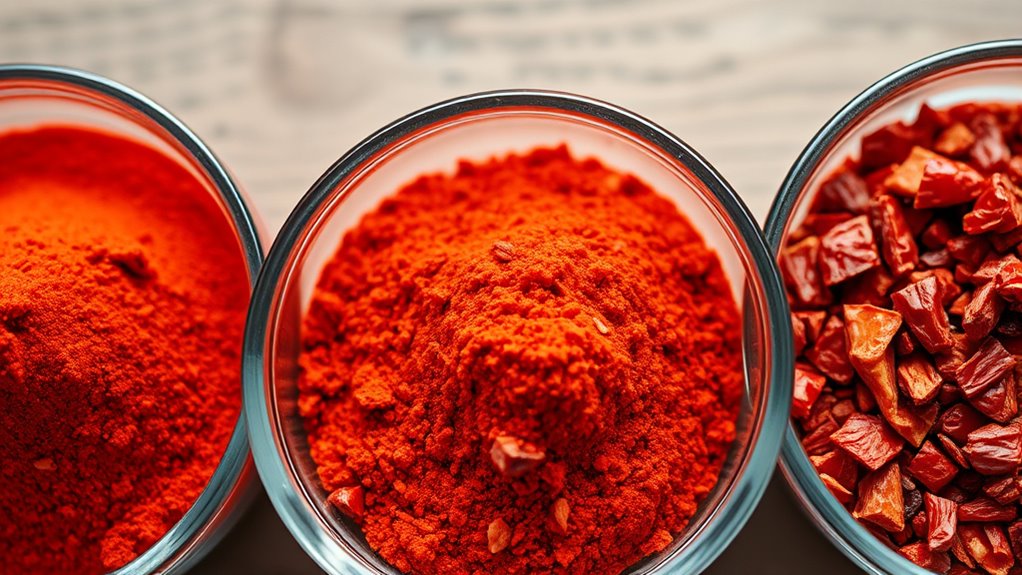
Red chili powder is a staple spice used in countless cuisines worldwide, but not all varieties are the same. You’ll notice that some chili powders pack a fiery punch, while others provide a milder heat. This difference primarily comes down to spice level variations, which are influenced by the types of chili peppers used and how they’re processed. For example, some chili powders are made from milder peppers like California or New Mexico chilies, giving you a gentle warmth. Others use hotter varieties such as cayenne or Thai chilies, delivering an intense spiciness. Understanding these variations can help you choose the right chili powder for your dish, whether you’re aiming for a subtle heat or a fiery explosion of flavor.
Regional ingredient differences also play a significant role in the variety of red chili powders available. In India, for example, you’ll find a vibrant, deep-red chili powder made from dried, sun-dried chilies like Kashmiri or Guntur chilies. These chilies are often milder but offer rich color and flavor, making the powder a favorite for curries and spice blends. Meanwhile, in Mexico, chili powders tend to incorporate dried chilies like ancho or guajillo, which have a smoky, earthy flavor and moderate heat. These regional ingredients shape not only the spiciness but also the aroma, color, and taste profile of the chili powder.
In contrast, Western markets often focus on chili powders made from ground cayenne or chili flakes, which are generally hotter and more straightforward in flavor. The processing methods also differ: some chili powders are made by roasting and grinding dried chilies, which enhances their flavor and reduces their heat slightly, while others are made from raw chilies to preserve maximum spice. The regional differences extend beyond just the chili peppers themselves; the seasoning techniques, drying methods, and even the addition of other spices like cumin or garlic can influence the overall intensity and flavor profile. So, when you’re selecting a chili powder, keep in mind that these regional ingredient differences and spice level variations will impact how your dish turns out, making it essential to pick the right one for your culinary needs.
As an affiliate, we earn on qualifying purchases.
Frequently Asked Questions
How Does Climate Affect Chili Heat Levels?
Climate influence plays a significant role in chili cultivation, directly impacting heat levels. Warmer, drier climates often produce hotter chilies because stress from the environment causes plants to develop more capsaicin, the compound responsible for heat. Conversely, cooler, wetter conditions tend to yield milder chilies. So, if you’re growing or choosing chilies, consider the climate’s influence on their heat, as it can make a big difference in flavor and spice.
Can Aging Chili Powders Change Their Spiciness?
Think of chili powder like a vintage wine; aging can change its character. Over time, its spiciness may mellow, similar to how a robust wine softens with age. Proper storage stability helps preserve both the flavor and heat, but exposure to air, light, or moisture can diminish spiciness. So, if you’ve had chili powder for years, expect a milder kick, but its flavor might still shine through.
Are There Health Benefits Linked to Specific Chili Types?
Yes, certain chili types offer health benefits thanks to their high capsaicin concentration and antioxidant properties. Capsaicin may boost metabolism, reduce pain, and improve heart health, while antioxidants help fight free radicals, supporting your immune system. When choosing chili powders, consider varieties with higher capsaicin levels for these benefits. Incorporating them into your diet can enhance your overall health, but moderation is key to avoid irritation or discomfort.
What Are Some Common Substitutes for Hot Chili Powder?
If you’re looking for substitutes for hot chili powder, try cayenne pepper, paprika, or red pepper flakes. Each offers unique chili flavor profiles, from smoky to mildly spicy. These alternative spice options can add heat and depth to your dishes without the intense heat of chili powder. Adjust quantities to match your preferred spice level, and experiment to find the perfect balance for your recipes.
How Does Processing Impact Chili Powder Heat?
Processing impacts chili powder heat by breaking down capsaicin, which can reduce spiciness over time. Proper chili powder storage in a cool, dark place helps preserve its heat and flavor, preventing it from losing potency. If you process chili powders differently—such as roasting or grinding—you’re likely to influence their flavor and heat levels. So, pay attention to how your chili powder is processed and stored to maintain the desired spice intensity.
As an affiliate, we earn on qualifying purchases.
Conclusion
So, next time you reach for red chili powder, remember there’s more than one type, each with its own level of heat. Did you know that some varieties, like the Thai chili, can be up to 100 times hotter than milder options? Choosing the right chili powder can transform your dishes—whether you want a gentle kick or a fiery blast. Experiment and find what suits your taste perfectly!
As an affiliate, we earn on qualifying purchases.
As an affiliate, we earn on qualifying purchases.
NFL season / tailgating Picks
team gear
As an affiliate, we earn on qualifying purchases.