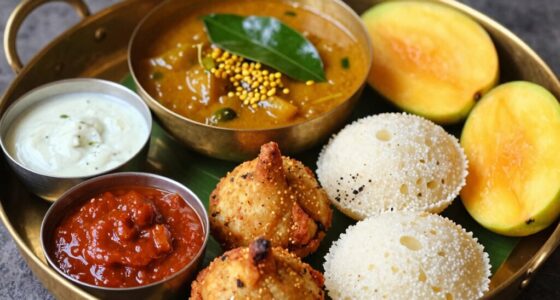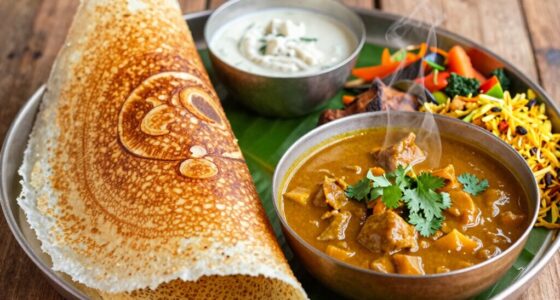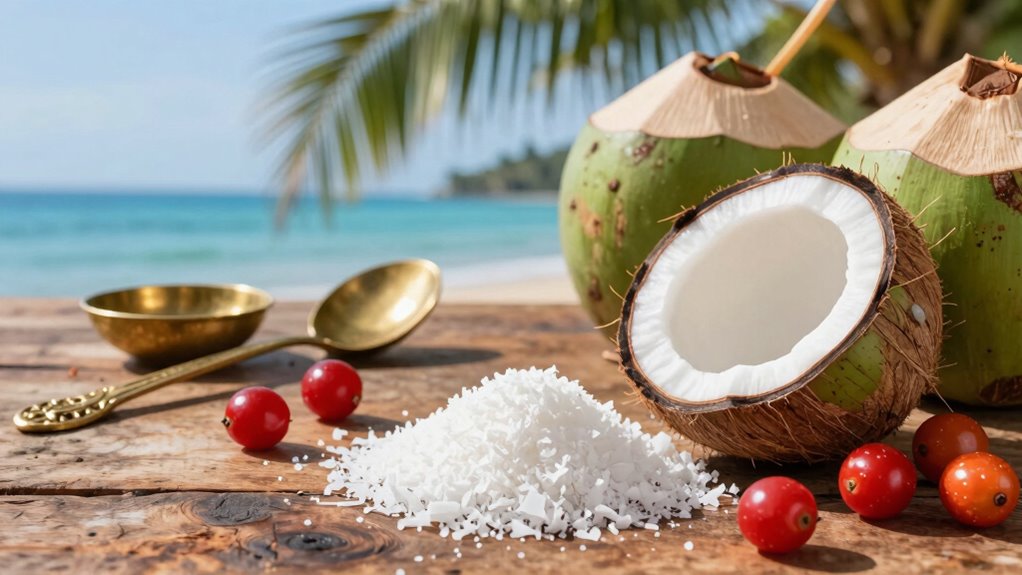

Konkani cuisine beautifully blends coconut, kokum, and coastal ingredients to create vibrant, layered flavors. You’ll notice coconut adds richness, while kokum offers a tangy kick that balances spice and sweetness. Traditional techniques and carefully crafted spice blends bring out bold, complex profiles influenced by trade and cultural exchanges. If you continue exploring, you’ll discover how these ingredients and methods make this cuisine uniquely flavorful and authentic.

Get kitchen staples and gadgets delivered free — and shop member deals
- Fast, free delivery on millions of items
- Access to Prime Big Deal Days deals on October 6–7
- Prime Video, Amazon Music and more included
Key Takeaways
- Coconut enhances richness and depth, forming the base for many Konkani dishes.
- Kokum adds a distinctive sourness, balancing flavors in curries and chutneys.
- Coastal influences are reflected through the use of fresh ingredients and traditional cooking techniques.
- Spice blends crafted with local spices create bold, multi-layered flavor profiles.
- Authentic preparation methods emphasize homemade spice blends and traditional tools for intense flavors.
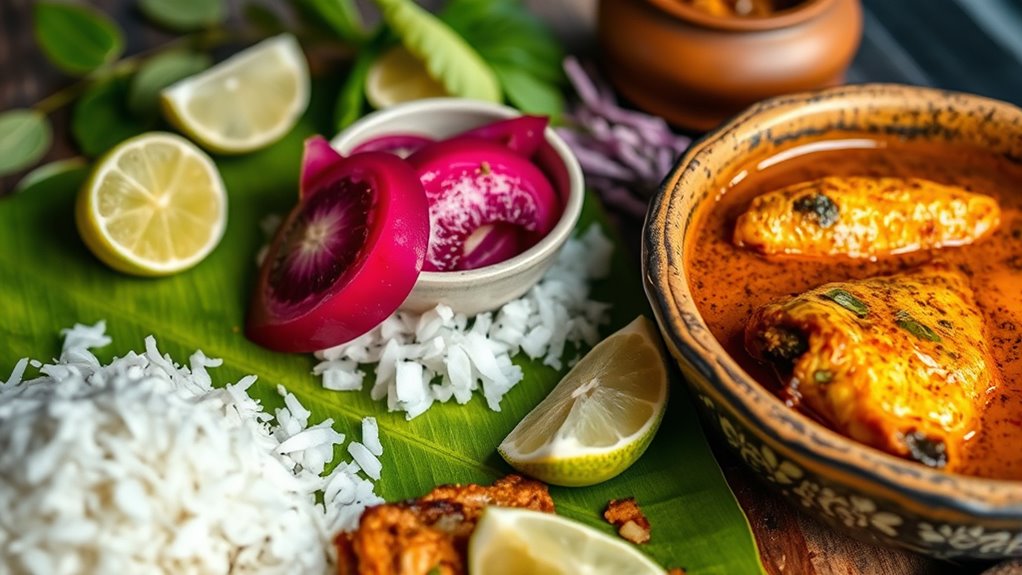
Konkani cuisine offers a vibrant blend of flavors inspired by the coastal region of Goa and parts of Karnataka and Maharashtra. As you explore this culinary tradition, you’ll find that traditional cooking techniques play a crucial role in creating the rich taste profiles that define it. These methods often involve slow cooking, fermentation, and the careful layering of flavors, which help preserve the freshness of ingredients and enhance their natural tastes. When preparing dishes, you might notice how the use of fresh coconut, kokum, and local spices bring a unique depth to every bite.
Spice blends are at the heart of Konkani cooking. Unlike some cuisines that rely heavily on individual spices, Konkani dishes often feature complex combinations, meticulously prepared to balance heat, sweetness, sourness, and earthiness. You’ll see that these spice mixes aren’t just thrown together; they’re crafted with intention, blending ingredients like coriander, cumin, black pepper, and fenugreek to create aromatic layers. These spice blends serve as the foundation for many traditional recipes, imparting signature flavors that are both bold and nuanced. Whether it’s a curry, a seafood dish, or a simple chutney, the harmony of spices elevates the ingredients and makes each dish memorable.
The use of spice blends also ties into the region’s history of trade and cultural exchange. You’ll notice that flavors from the Middle East, Africa, and Southeast Asia influence the local spice combinations, making Konkani cuisine a true melting pot of tastes. As you cook or taste these dishes, you’ll appreciate how the spice blends are carefully balanced to complement the natural sweetness of coconut and the tanginess of kokum, a local fruit that adds a sour note to many recipes. This combination of ingredients and spices creates a vibrant, complex flavor profile that’s both comforting and exciting.
In traditional cooking, these spice blends are often prepared at home, using mortar and pestle or traditional grinding stones, which enhances their aroma and potency. This process ensures that the spices retain their essential oils, giving the dishes an authentic and intense flavor. When you try making Konkani dishes yourself, taking the time to grind and blend your spices can considerably improve the final taste. It’s this attention to detail in traditional cooking and spice blending that makes Konkani cuisine so distinctive and rewarding.
As an affiliate, we earn on qualifying purchases.
Frequently Asked Questions
How Does Konkani Cuisine Vary Across Different Coastal Regions?
You’ll find that Konkani cuisine varies across coastal regions through regional spice blends and coastal seafood preparations. In Goa, you might enjoy tangy fish curries with coconut, while in Mangalore, the emphasis is on fiery, spice-rich seafood dishes. Coastal communities adapt ingredients and flavors based on local herbs and seafood availability, creating distinct tastes. So, your experience of Konkani food changes with the region, reflecting its unique coastal culture and culinary traditions.
What Are the Traditional Cooking Methods Unique to Konkani Dishes?
Like a skilled sailor steering coastal waters, you harness traditional cooking techniques that define Konkani dishes. You often use methods such as tempering spices in coconut oil, slow-cooking with kokum for tang, and grilling seafood over open flames. These techniques preserve the authentic coastal flavor profiles, blending fresh ingredients with age-old methods like steaming, fermenting, and sautéing. Your approach captures the essence of the sea, making each dish a flavorful voyage.
Which Festivals Prominently Feature Konkani Food Specialties?
You’ll find Konkani food specialties prominently featured during festivals like Ganesh Chaturthi, where traditional food pairing highlights regional spice variations. During the feast days, you savor dishes flavored with coconut and kokum, showcasing coastal logic in cooking. Festivals like Diwali and local temple celebrations also celebrate Konkani cuisine, emphasizing regional flavors. These occasions let you experience the vibrant, spice-rich dishes that reflect the rich culinary culture of the Konkani region.
How Has Konkani Cuisine Influenced Other Indian Culinary Styles?
You might think Konkani cuisine is isolated, but it’s actually influential across Indian culinary styles. Its fusion flavors and unique spice blends inspire chefs nationwide, blending coastal flavors with regional ingredients. This influence is evident in dishes like Goan curries and coastal-inspired street foods, which often incorporate coconut and kokum. By sharing these elements, Konkani cuisine enriches Indian food diversity, making it a essential part of the country’s culinary evolution.
Are There Vegetarian-Specific Konkani Recipes That Use Coconut and Kokum?
Yes, you can enjoy vegetarian delicacies that use coconut and kokum in Konkani cuisine. Try coconut-based curries like sol kadhi or coconut chutneys paired with rice and vegetables. Kokum adds a tangy flavor to these dishes, enhancing their taste. These recipes are perfect for vegetarians seeking authentic Konkani flavors, combining the richness of coconut with the tartness of kokum for a truly coastal culinary experience.
Traditional mortar and pestle for spices
As an affiliate, we earn on qualifying purchases.
As an affiliate, we earn on qualifying purchases.
Conclusion
As you savor the flavors of Konkani cuisine, remember it’s more than just food—it’s a coastal symphony of tradition and taste. Each coconut, kokum, and spice tells a story of the land and sea, inviting you to immerse yourself in its rich heritage. Like the tide that shapes the shoreline, let these flavors reshape your culinary journey, reminding you that sometimes, the simplest ingredients hold the deepest secrets. So, are you ready to taste the coast?
As an affiliate, we earn on qualifying purchases.
As an affiliate, we earn on qualifying purchases.
NFL season / tailgating Picks
team gear
As an affiliate, we earn on qualifying purchases.