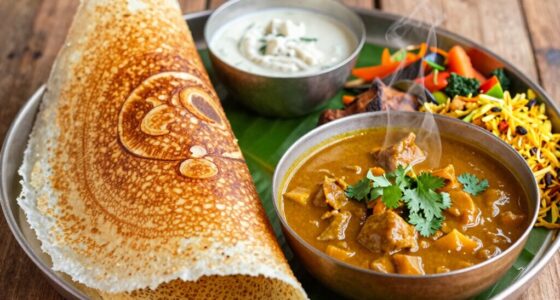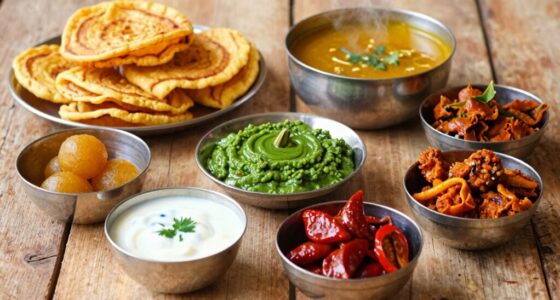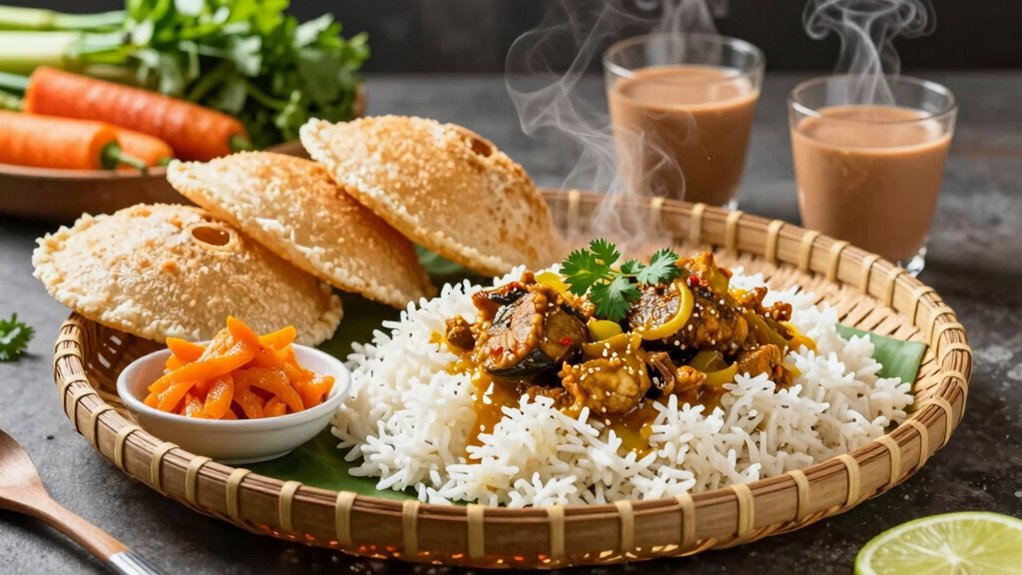

Assamese cuisine tastes so fresh and simple because it centers on natural ingredients and traditional fermentation techniques passed down through generations. These methods enhance flavor and preserve seasonal harvests without artificial additives, letting the land’s bounty shine through. Fresh rice varieties and fermented foods like bamboo shoots and fish contribute to authentic, lively flavors rooted in land and history. Stick around, and you’ll discover the rich cultural roots behind this harmony of taste and purity.

Get kitchen staples and gadgets delivered free with Prime
- Fast, free delivery on millions of items
- Prime Video, Amazon Music and more included
- Member-only deals all year
Key Takeaways
- Assamese cuisine emphasizes minimal spices, highlighting natural flavors of fresh, locally sourced ingredients.
- Fermentation techniques enhance taste and nutritional value while preserving seasonal harvests.
- Use of traditional rice varieties and simple preparations creates light, wholesome dishes.
- Cooking methods focus on authenticity, preserving regional flavors and culinary heritage.
- The cuisine’s lively, unpretentious style reflects respect for land, nature, and cultural traditions.
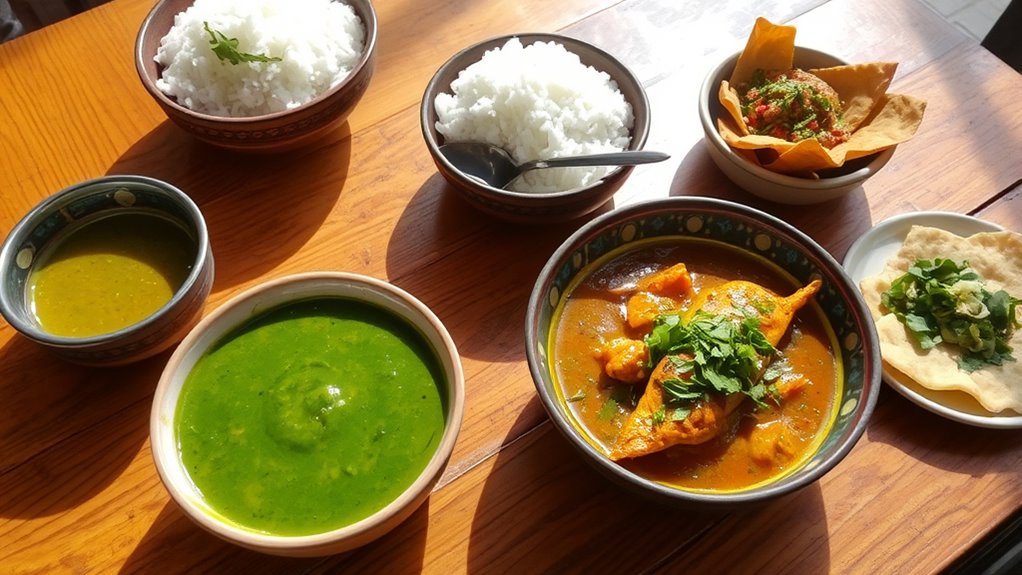
Have you ever wondered what makes Assamese cuisine unique? It’s the way the ingredients are lively, simple, and deeply connected to the region’s natural bounty. The cuisine’s essence lies in its emphasis on fermented foods and rice varieties, which are staples in every household. Fermentation, a traditional preservation method, brings out the tangy flavors and enhances the nutritional value of many dishes. For instance, fermented bamboo shoot and fish are common ingredients, adding a distinctive sour note that’s both lively and flavorful. These foods not only preserve seasonal harvests but also boost gut health, making them a crucial part of Assamese cooking. The traditional fermentation techniques are often passed down through generations, ensuring the preservation of authentic flavors and methods. Rice, an indispensable element, is more than just a staple; it’s a cultural symbol. The region boasts an array of rice varieties — from fragrant Basmati-like types to sticky, glutinous grains. These different rice types serve various purposes, from everyday meals to special occasions. You’ll notice that rice is often the main course, served plain or as part of a larger dish like khichdi or pulao. The way rice is prepared and served reflects the simplicity and practicality of Assamese culinary traditions. It’s never overly complicated but always flavorful, highlighting the rice’s natural aroma and texture. The use of rice varieties also influences the flavors of other dishes. For instance, rice-based fermented foods like ‘apong’ and ‘pithas’ are common, adding a subtle sourness that complements the region’s spices and herbs. The fermentation process is often traditional and passed down through generations, allowing flavors to develop naturally without artificial additives. This method results in dishes that taste lively and genuine, embodying the region’s respect for nature’s bounty. Moreover, Assamese cuisine’s simplicity isn’t just about ingredients; it’s about how they’re prepared. The focus is on minimal spice and maximum freshness. You’ll find that dishes are often lightly seasoned, letting the natural flavors shine through. The culinary approach emphasizes balance—using fermentation and rice varieties not just for preservation, but also to create a harmony of taste and texture. This simplicity is what makes Assamese food so appealing — it’s honest, wholesome, and rooted in tradition. The use of traditional cooking techniques ensures that the flavors remain authentic and true to the region’s culinary heritage. When you taste it, you experience a culinary style that’s both lively and unpretentious, inviting you to savor each bite with appreciation for the land and its history.
Assamese fermented bamboo shoots
As an affiliate, we earn on qualifying purchases.
As an affiliate, we earn on qualifying purchases.
Frequently Asked Questions
What Are the Key Spices Used in Assamese Cooking?
You’ll find that key spices in Assamese cooking include ginger, garlic, and green chilies, which form the base of many dishes. You also use turmeric for its earthy flavor and mustard seeds for a pungent kick. Spice blending is essential, helping with flavor balancing to keep dishes light and fresh. These spices come together naturally, creating a vibrant taste that’s both simple and deeply satisfying.
How Does the Climate Influence Assamese Ingredients?
The climate impact in Assam keeps ingredients fresh and abundant, directly shaping the cuisine’s simplicity and vibrant flavors. Warm, humid conditions foster the growth of local herbs, vegetables, and fish, ensuring you get fresh, high-quality ingredients in every dish. This consistent availability allows you to enjoy natural, unprocessed flavors, making Assamese cuisine uniquely fresh and straightforward. Your meals are infused with the true essence of the region’s climate and environment.
Are There Any Traditional Assamese Cooking Techniques?
You’ll be amazed by Assamese cooking techniques, especially fermentation methods and leaf wrapping that transform every dish into a burst of flavor. These methods aren’t just traditional; they’re like magic, preserving freshness and enhancing taste. You wrap ingredients in banana or bamboo leaves, sealing in aroma and nutrients. Fermentation adds a tangy kick, making every bite exciting. These techniques make Assamese cuisine truly unique and unforgettable, as if each dish has a story to tell.
What Are Popular Assamese Festivals With Special Foods?
You should definitely experience Assamese festivals like Bihu, where you can savor special foods. During Bihu, you’ll enjoy traditional delicacies like pitha, larus, and muri ladoo, which are made with fresh ingredients. Don’t miss the Tea Festival, a celebration of Assam’s famous tea, where you can taste local brews alongside Bihu delicacies. These festivals offer a vibrant taste of Assam’s rich culinary culture.
How Is Assamese Cuisine Different From Neighboring Regions?
Imagine tasting a river’s gentle flow—Assamese cuisine is similarly invigorating and vibrant. You’ll notice its distinct regional flavor profiles, marked by subtle spices and fermented ingredients that reflect local food customs. Unlike neighboring regions, Assam’s dishes focus on simplicity and natural freshness, making each bite feel like a rejuvenating breeze. You sense the land’s heartbeat in every meal, creating a unique culinary experience rooted in tradition and purity.
As an affiliate, we earn on qualifying purchases.
Conclusion
So, next time you taste Assamese cuisine, remember that simplicity is the ultimate sophistication. Its fresh ingredients and subtle flavors showcase the beauty of keeping things natural. Like the saying goes, “Less is more,” and Assamese dishes prove that sometimes, less truly is more. Embrace the freshness and simplicity, and let your taste buds experience the genuine essence of Assam’s culinary treasures. Trust me, it’s a flavor journey you won’t forget.
traditional fermentation starter kit
As an affiliate, we earn on qualifying purchases.
As an affiliate, we earn on qualifying purchases.
As an affiliate, we earn on qualifying purchases.
NFL season / tailgating Picks
team gear
As an affiliate, we earn on qualifying purchases.