If you want to preserve lemons, you’ll notice that salt curing involves packing wedges with salt and allowing fermentation, which develops deep, complex flavors and a soft texture. Oil curing, on the other hand, submerges lemons in oil, creating an airtight environment that keeps them fresh, bright, and aromatic without fermentation. Each method offers unique flavors and uses—continue exploring to find out which suits your culinary style best.

Get kitchen staples and gadgets delivered free — and shop member deals
- Fast, free delivery on millions of items
- Access to Prime Big Deal Days deals on October 6–7
- Prime Video, Amazon Music and more included
Key Takeaways
- Salt curing involves packed lemons with salt, promoting fermentation and deep, tangy flavors.
- Oil curing submerges lemons in oil, creating an airtight environment that preserves brightness and texture.
- Salt-cured lemons develop complex, mellowed flavors through fermentation; oil-cured lemons retain fresh, zesty notes.
- Salt curing produces soft, flavorful lemons suitable for cooking; oil curing yields firmer lemons ideal for quick use.
- Choose salt curing for deep, fermented flavors; opt for oil curing for fresher, aromatic citrus in dishes.
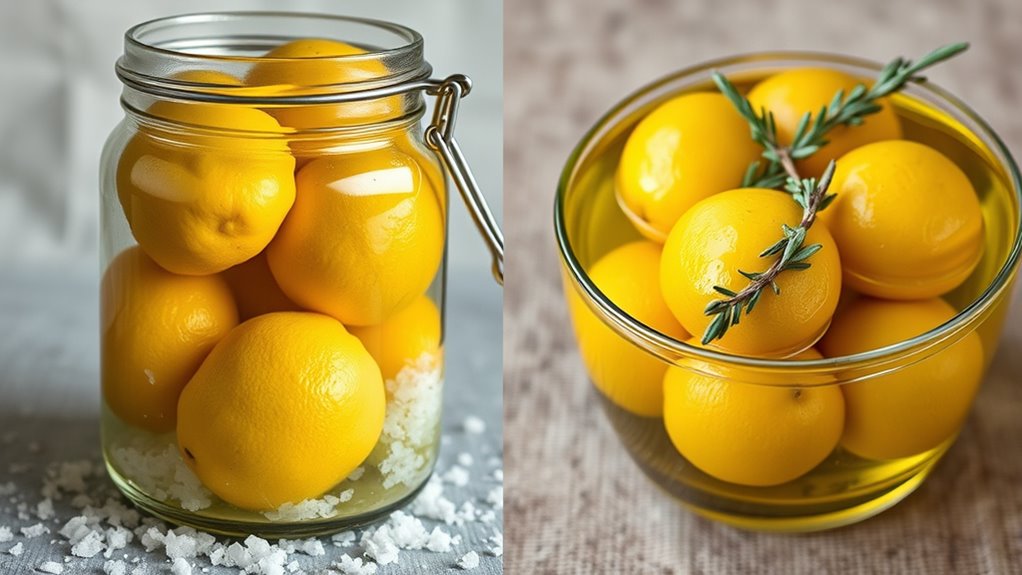
Have you ever wondered how to extend the bright, tangy flavor of fresh lemons? Preserving lemons is a fantastic way to do just that, and understanding the different methods can help you choose the best one for your culinary needs. Two popular techniques are salt curing and oil curing, each producing distinct flavor profiles and textures. While they may seem similar at first glance, the key differences lie in fermentation techniques and the resulting taste.
Salt curing involves packing lemon halves or wedges with coarse salt and letting them sit for several weeks. During this process, natural fermentation techniques kick in, encouraging beneficial bacteria to develop. This fermentation transforms the lemons, mellowing their acidity and enriching their flavor profiles. The salt draws out moisture, creating a brine that promotes beneficial fermentation, which not only preserves the lemons but also enhances their complexity. The resulting preserved lemons are soft, intensely flavorful, with a slightly tangy, salty punch that’s perfect for adding depth to dishes like tagines, salads, and sauces.
Salt curing transforms lemons through natural fermentation, resulting in soft, flavorful preserves with a tangy, salty punch.
In contrast, oil curing involves immersing lemons in a generous layer of oil—often olive oil—without necessarily relying on fermentation. This method creates an airtight environment that inhibits microbial activity, so the lemons don’t undergo traditional fermentation. Instead, the oil acts as a barrier, locking in the lemon’s natural oils and preserving their bright, fresh flavor. Oil-cured lemons tend to have a more straightforward, aromatic profile, emphasizing the citrus’s natural brightness and subtle bitterness. They also develop a velvety texture that’s ideal for adding a fresh, zesty burst to salads, grilled vegetables, or pasta dishes. Unlike fermented lemons, these are best used within a shorter period, as they don’t undergo the same complex flavor development.
Deciding between salt cure and oil cure comes down to the flavor profile and texture you seek. If you want lemons with a deep, complex, slightly fermented taste, salt curing is your best bet. It’s a traditional method that harnesses natural fermentation techniques to intensify flavors over time. On the other hand, if you prefer a fresher, more aromatic lemon with a lighter texture, oil curing provides that clean citrus punch. Both methods have their merits, and experimenting with each can open new culinary possibilities. Ultimately, understanding the fermentation techniques behind salt curing helps you appreciate how it develops its signature flavor profile, making preserved lemons an incredibly versatile ingredient in your kitchen.
As an affiliate, we earn on qualifying purchases.
Frequently Asked Questions
How Long Do Preserved Lemons Typically Last?
Preserved lemons typically last up to a year if stored properly. During the fermentation timeline, they develop complex flavors and maintain shelf stability when kept in a cool, dark place or refrigerated. You should check them regularly for any signs of spoilage. Properly cured lemons, whether salt or oil, guarantee they stay safe and flavorful for months, making them a versatile addition to your culinary repertoire.
Can You Use Regular Salt or Do You Need Specialized Salt?
You can use regular salt for preserving lemons, but make sure it has high salt purity to prevent spoilage and guarantee ideal flavor enhancement. Avoid iodized salt, as additives can affect taste and preservation quality. Using pure, coarse salt helps draw out moisture and creates a natural environment for fermentation. This way, your preserved lemons stay fresh longer, taste better, and develop a richer, more authentic flavor.
Are There Any Health Risks Associated With Preserved Lemons?
You might have some health concerns or allergy risks when eating preserved lemons, especially if you’re sensitive to salt or citrus. Excessive salt intake can raise blood pressure, and mold or bacteria could develop if not stored properly. Always wash lemons thoroughly, and check for any signs of spoilage before consuming. If you’re allergic to citrus or have other health issues, consult your doctor to make certain preserved lemons are safe for you.
What’s the Best Way to Store Preserved Lemons Long-Term?
You’ll want to choose a sturdy, airtight storage container for your preserved lemons to keep them fresh and flavorful for months. Store them in a cool, dark spot and guarantee the lemons stay submerged to prevent spoilage. During the fermentation process, check periodically for any signs of mold or overgrowth. Properly stored, your preserved lemons will continue to develop their delightful tang and aroma over time.
Can Preserved Lemons Be Used in All Types of Recipes?
Yes, preserved lemons are incredibly versatile in cooking. You can use them in salads, marinades, stews, and sauces to enhance flavor. Their unique tang and saltiness boost the overall taste, making them suitable for many recipes. Their cooking versatility allows you to experiment and add depth to various dishes, whether you prefer a subtle hint or a bold lemony punch. Enjoy incorporating preserved lemons into your culinary creations!
As an affiliate, we earn on qualifying purchases.
Conclusion
Think of preserving lemons like choosing your adventure—salt cure is a bold, tangy journey, while oil cure offers a smooth, mellow ride. I once watched a friend transform bright yellow lemons into a jar of salty zest, like capturing sunshine in a jar. Whether you prefer the punch of salt or the gentle embrace of oil, both methods keep lemons vibrant and flavorful. So, pick your flavor adventure and savor the bright, preserved magic in every bite.
fermented lemon preservation kit
As an affiliate, we earn on qualifying purchases.
As an affiliate, we earn on qualifying purchases.
As an affiliate, we earn on qualifying purchases.
Fall Picks
fall essentials
As an affiliate, we earn on qualifying purchases.