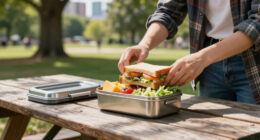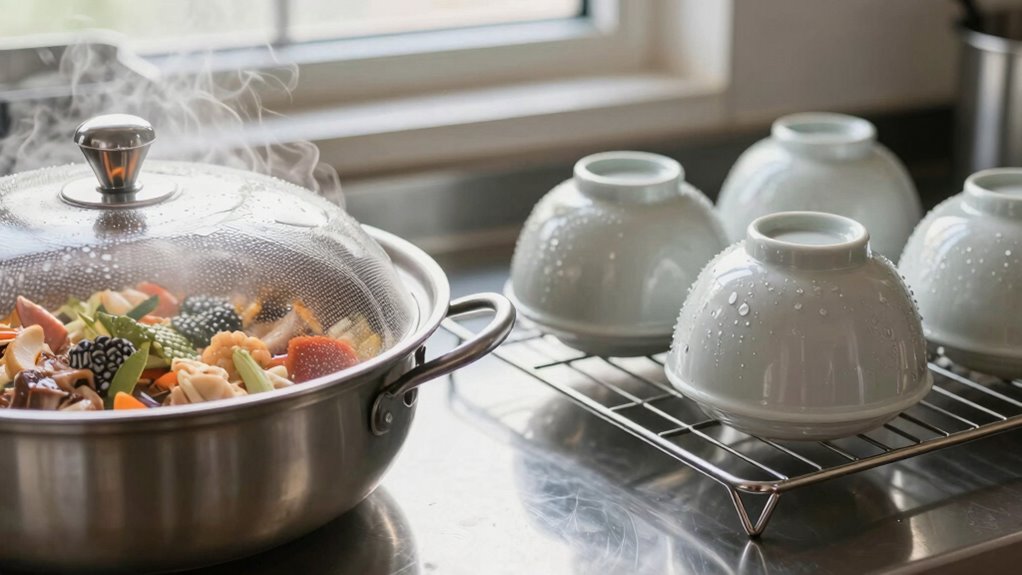

Many people skip the vital step of quickly cooling cooked food, which can lead to dangerous bacteria growth. To do it safely, you should divide large portions into shallow containers, use an ice bath or ice packs, and avoid stacking containers tightly. Allow your food to cool to around 70°F before refrigerating, and never store hot food directly in the fridge. Want to learn more about proper cooling techniques? Keep exploring these essential safety steps.

Get kitchen staples and gadgets delivered free with Prime
- Fast, free delivery on millions of items
- Prime Video, Amazon Music and more included
- Member-only deals all year
Key Takeaways
- Divide large portions into shallow, smaller containers to increase surface area and speed up cooling.
- Use an ice bath for dense or large cooked items to rapidly lower temperature safely.
- Avoid storing hot food directly in the fridge; cool it to about 70°F first.
- Ensure proper air circulation around containers by not stacking them tightly.
- Verify your refrigerator is set to at least 40°F to maintain safe storage temperatures.
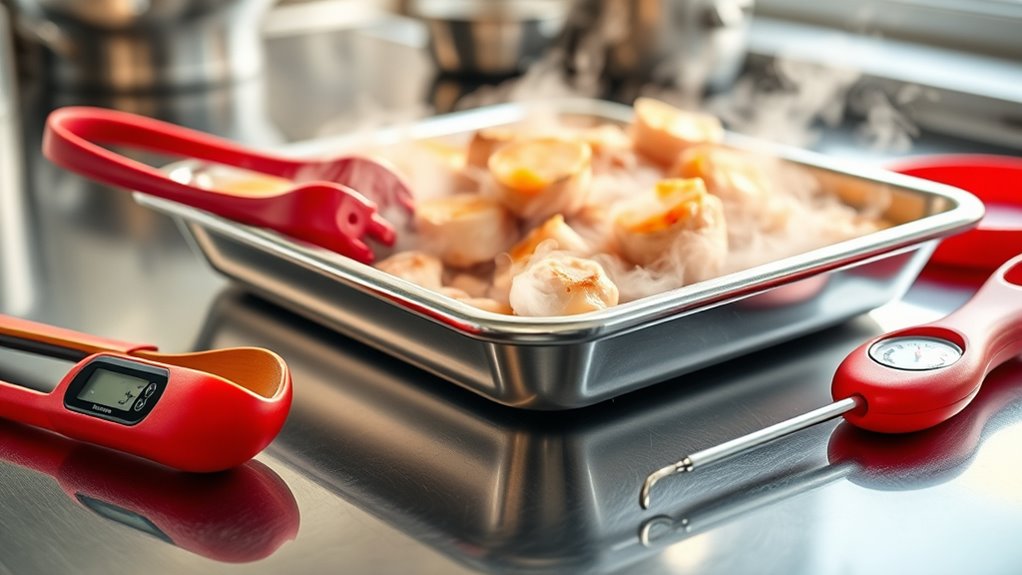
Ever wondered how to cool cooked food quickly and safely? When you prepare large batches of meals, it’s tempting to leave the leftovers sitting out, but that’s a mistake. Proper food storage plays an essential role in preventing bacteria growth, and that starts with effective refrigeration techniques. The goal is to bring cooked food down to a safe temperature within two hours of cooking. If you delay, bacteria like Salmonella and Listeria can multiply rapidly, increasing the risk of foodborne illnesses.
Cooling cooked food quickly prevents bacteria growth and ensures food safety within two hours.
One of the most common mistakes people make is leaving hot food out at room temperature for too long. Instead, you should divide large portions into smaller, shallow containers. This method increases surface area, allowing heat to escape faster and helping the food cool more evenly. Using shallow containers is a simple yet efficient refrigeration technique that guarantees your food cools quickly and reaches a safe temperature. Avoid stacking containers too tightly, as proper air circulation is essential to speed up cooling.
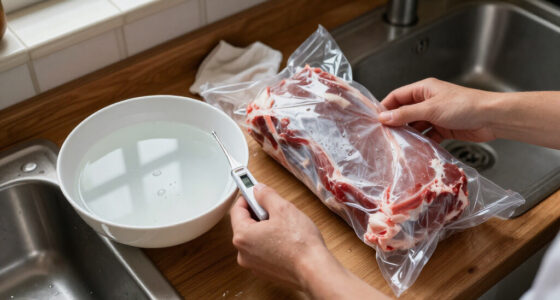
Another effective technique involves the ice bath method. Fill a large sink or basin with ice and cold water, then place your sealed food containers into the bath. This accelerates heat transfer, especially for large or dense items, and can cut cooling time considerably. Remember, never put hot food directly into the fridge; it raises the internal temperature, risking spoilage for other stored items. Instead, use the ice bath to lower the temperature to approximately 70°F before transferring to the refrigerator.
Refrigeration techniques aren’t just about speed; they’re about safety. Once cooled, guarantee your refrigerator is set to at least 40°F (4°C). Maintain proper food storage by organizing your fridge so that cooked foods are stored on the middle or upper shelves, away from raw ingredients. This prevents cross-contamination and keeps your food safe for longer. Use a food thermometer to verify that your refrigerator is functioning properly. Additionally, understanding temperature control in refrigeration helps ensure your food stays within safe limits and reduces spoilage risks. Proper food cooling techniques not only prevent waste but also protect your health. Furthermore, choosing a refrigerator with precise temperature settings can make a significant difference in maintaining optimal food safety.
As an affiliate, we earn on qualifying purchases.
Frequently Asked Questions
Can Using a Fan Cool Food Faster Without Risking Contamination?
Using a fan for cooling food can speed up the process, but you should do it carefully. Fan cooling increases air circulation around the food, helping it cool faster. However, you must avoid direct contact with the fan or airborne contaminants. Keep the food uncovered in a clean, shallow container, and make sure the fan is clean. This way, you safely use air circulation to cool your food quickly without risking contamination.
Is It Safe to Leave Cooked Food at Room Temperature Temporarily?
It’s not safe to leave cooked food at room temperature, even temporarily. For food safety and effective temperature control, you should refrigerate or cool food within two hours. Bacteria grow rapidly at room temperature, risking foodborne illnesses. To guarantee safety, use shallow containers for quick cooling, avoid leaving food out longer, and always follow proper storage procedures. Prioritizing temperature control keeps your food safe and reduces health risks.
How Does the Size of the Container Affect Cooling Speed?
A smaller container boosts your cooling efficiency because it allows heat to dissipate more quickly. When you use a large container, the food takes longer to cool, increasing the risk of bacteria growth. To cool cooked food faster and safely, transfer it into shallow, smaller containers, ensuring even and rapid cooling. This simple step helps prevent foodborne illnesses and maintains the quality of your leftovers.
What Are the Best Materials for Rapid Cooling?
You should use metal containers or shallow pans for rapid cooling, as they conduct heat quickly and increase surface area. Metal conducts heat better than plastic or glass, speeding up the process. Shallow pans spread the food in a thin layer, allowing heat to dissipate faster. By choosing these materials, you guarantee your cooked food cools efficiently, reducing bacteria growth and keeping it safe to eat.
Can Adding Ice Directly to Food Help It Cool Faster?
Adding ice directly to food acts like a quick river rushing to cool it, but beware—ice addition can introduce contamination risk if not handled properly. The melting ice water mingles with your food, speeding cooling but potentially spreading bacteria. To stay safe, use ice baths or chill foods in shallow containers, ensuring the ice remains uncontaminated, and avoid direct contact to keep your food safe and fresh.
As an affiliate, we earn on qualifying purchases.
Conclusion
To keep your food safe, don’t forget to cool it quickly—just like the quick thinking of a 21st-century modern. Skip this step, and you risk inviting bacteria to the party, turning your delicious meal into a food safety faux pas. Remember, an ice bath or shallow containers can save the day faster than you’d think. So, be wise and cool your cooked food swiftly; your stomach—and your dinner guests—will thank you!
As an affiliate, we earn on qualifying purchases.
As an affiliate, we earn on qualifying purchases.
Fall Picks
fall essentials
As an affiliate, we earn on qualifying purchases.