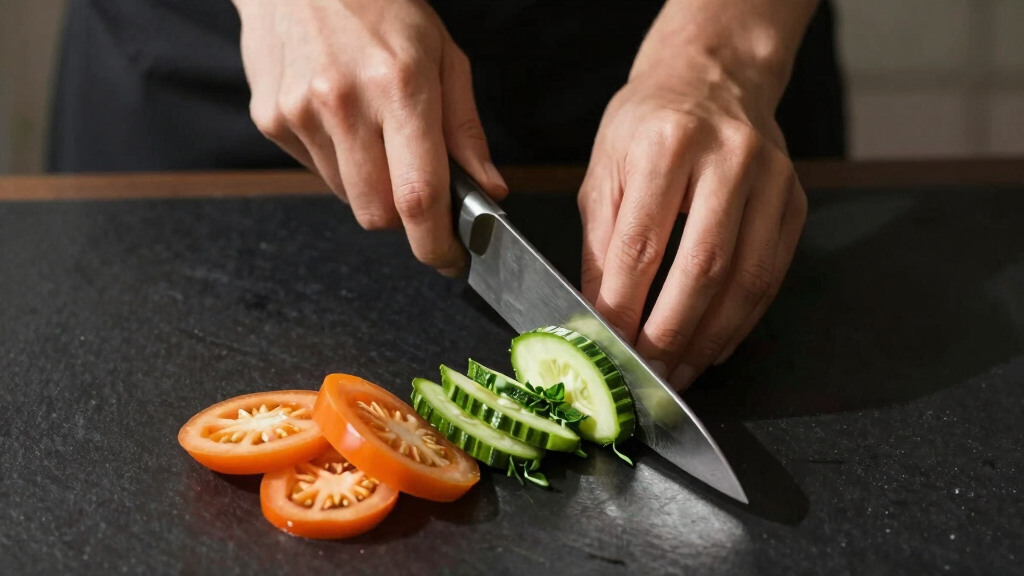

Choosing the best santoku knife for vegetables and herbs depends on factors like blade precision, handle comfort, and overall build quality. The FAMCÜTE 7 Inch Santoku stands out for its hand-forged 5-layer steel and elegant rosewood handle, ideal for precise vegetable slicing. The imarku 7-Inch Santoku offers exceptional sharpness and ergonomic comfort, perfect for everyday use. However, tradeoffs include balancing price against durability and ease of maintenance. Continue reading for a detailed breakdown of the top options and what makes each unique.
Listen free for 30 days with Audible
Thousands of audiobooks and originals — cancel anytime.
Start your free trialAs an affiliate, we earn on qualifying purchases.
Key Takeaways
- The top-ranked knives balance cutting performance with ergonomic comfort, making prep tasks easier.
- High-carbon steels like VG10 and 9CR18MOV stand out for edge retention, but require more maintenance.
- Handles vary from traditional wood to modern composites, impacting grip comfort and longevity.
- Full-tang construction adds durability, especially important for heavy chopping or frequent use.
- Price ranges reflect differences in materials, craftsmanship, and brand reputation, guiding buyers to value vs. premium options.


More Details on Our Top Picks
FAMCÜTE 7 Inch Santoku Knife – Hand Forged 5 Layers 9CR18MOV High Carbon Steel with Rosewood Handle, Japanese Chef’s Knife
This FAMCÜTE santoku stands out for its exceptional craftsmanship, with a hand-forged construction from 5 layers of high-quality Japanese steel that delivers superior sharpness and durability. Compared to the imarku, it offers a more traditional, artisanal feel thanks to its layered steel and rosewood handle, making it ideal for precise vegetable and herb cuts. However, its higher maintenance needs and more delicate handle design mean it’s better suited for experienced cooks willing to care for it properly. The blade’s hardness (HRC 62) ensures long-lasting sharpness, but the softer handle may slip when wet. This knife makes the most sense for culinary enthusiasts who prioritize craftsmanship and want a knife that can handle detailed vegetable and herb work with finesse.Pros:- Exceptional sharpness and layered steel for long-lasting edge
- Ergonomic rosewood handle offers comfort and balance
- Hand forged with traditional Japanese techniques for durability
- Elegant appearance makes it a great gift
Cons:- Requires careful maintenance to prevent rust
- Handle may be slippery if wet
- Higher price compared to mass-produced options
Best for: Serious home cooks and professional chefs seeking a beautifully crafted, high-performance santoku
Not ideal for: Casual cooks or those preferring low-maintenance knives, as it requires careful upkeep and handling
- Blade Length:7 inches
- Material:9CR18MOV high carbon steel
- Layers:5 layers
- Hardness:HRC 62
- Handle Material:Rosewood
- Construction:Hand Forged
Bottom line: This knife is perfect for those who value craftsmanship and are prepared to care for a premium, traditional santoku.
imarku 7-Inch Chef Knife – Ultra Sharp Japanese Santoku Knife with High Carbon Stainless Steel and Ergonomic Handle
The imarku santoku is designed for versatility, combining sharpness and a hollow edge to reduce sticking during vegetable and herb slicing. It compares favorably to the KAWAHIRO for daily use, but its handle may be slippery when wet, which could affect control. The 7-inch length makes it suitable for a range of tasks, though some users might find it less maneuverable for very fine herb work. Its high carbon stainless steel ensures good edge retention, but the absence of specific weight data means some may find it less balanced. This pick makes the most sense for home cooks who want a stylish, reliable knife with good performance for vegetables and herbs without the need for extensive maintenance.Pros:- Exceptional sharpness and edge retention
- Ergonomic handle for comfort during extended use
- Hollow edge design reduces food sticking
- Stylish presentation in gift box
Cons:- Handle may become slippery when wet
- Limited weight info hampers assessment of control
- Fixed size may not suit all users
Best for: Home cooks seeking a balanced, sharp santoku with an attractive appearance and multi-tasking ability
Not ideal for: Cooks who prefer a heavier or more secure grip, especially when working with delicate herbs
- Blade Length:7 inches
- Material:High carbon stainless steel
- Blade Thickness:2.5 mm
- Edge Angle:15-18 degrees per side
- Handle Material:Pakkawood
Bottom line: This knife offers a reliable, stylish option ideal for everyday vegetable and herb slicing, especially for casual cooks.
KAWAHIRO 7″ Hand Forged VG10 Santoku Chef Knife with Octagonal Handle and Wooden Gift Box
The KAWAHIRO VG10 santoku offers a refined combination of high-performance steel and elegant craftsmanship. Its VG10 core ensures exceptional sharpness and edge retention, outperforming many high-carbon stainless options like imarku in sustained cutting power. The octagonal handle provides excellent control, especially useful when fine chopping herbs or vegetables. While it’s lightweight at 180 grams, this may feel less substantial for some users, and its premium price tag might be a barrier for casual cooks. Compared to the FAMCÜTE, it emphasizes aesthetic appeal and control, though it sacrifices some weight for finesse. This knife is best suited for collectors or serious cooks who want a high-end tool for detailed vegetable and herb work.Pros:- Exceptional sharpness and long-lasting edge
- Lightweight, well-balanced design with excellent control
- Premium materials and elegant craftsmanship
- Comfortable octagonal handle enhances grip stability
Cons:- Premium price may limit accessibility
- Requires careful hand washing to maintain quality
- Limited to 7-inch size, less versatile for larger ingredients
Best for: Cooks who appreciate premium materials and detailed craftsmanship for everyday vegetable and herb prep
Not ideal for: Budget-conscious buyers or those preferring a heavier, more substantial knife for general use
- Blade Length:7 inches
- Material:VG10 core with 3-layer steel
- Handle Material:Ebony, Turquoise, Ruby Wood
- Weight:180g
- Construction:Hand Forged
Bottom line: This premium santoku is perfect for those wanting an elegant, high-performance knife for precise vegetable and herb tasks.
SYOKAMI 7-Inch Cleaver Chef Knife with Herb Stripper – 3-in-1 Asian Kitchen Knife (Chef’s, Santoku, Nakiri) – High-Carbon German Steel, Wenge Handle, Gift Box
The SYOKAMI 7-inch cleaver-style knife offers remarkable multi-functionality, combining chef, santoku, and nakiri roles into one tool. Its high-carbon German steel blade ensures excellent sharpness and durability, making it suitable for vegetables, herbs, and even tougher ingredients. The herb stripper feature adds convenience, especially for herb-heavy recipes. Its weight and full-tang construction give it a sturdy feel, but some users might find it heavier than traditional santokus, potentially impacting finesse in delicate herb chopping. When compared to the KAWAHIRO, it’s more versatile but slightly less refined in control. This knife makes the most sense for cooks who value multi-tasking and herb prep in a single, robust tool.Pros:- Versatile 3-in-1 design for multiple kitchen tasks
- Sharp, durable German steel blade
- Includes herb stripper for faster herb prep
- Non-slip handle with gear teeth for secure grip
Cons:- May require frequent sharpening to maintain edge
- Heavier weight could fatigue some users
- Handle may be bulkier than typical santokus
Best for: Home cooks and culinary enthusiasts who want a versatile, multi-purpose knife with herb-stripping capability
Not ideal for: Users preferring ultra-light or traditional-style santoku knives focused solely on vegetable prep
- Blade Length:7 inches
- Material:High-carbon German steel
- Handle Material:Wenge wood
- Rockwell Hardness:56+
- Blade Edge:Hand-polished, 14-16 degrees per side
Bottom line: This all-in-one knife excels for cooks who need a versatile tool that combines vegetable, herb, and meat prep in a single package.
Cutluxe Santoku Knife – 5″ High Carbon German Steel Kitchen Knife
The Cutluxe 5-inch Santoku excels in tasks requiring nimble, controlled cuts, making it ideal for detailed work on herbs and small vegetables. Compared with the 7-inch model, it offers greater agility in tight spaces, but its shorter blade might feel limiting for larger vegetable chunks. Its high carbon German steel ensures a razor-sharp edge that maintains performance through repeated use, yet the smaller size means it’s less suited for bulk chopping. The triple-riveted pakkawood handle provides comfort and security, though it demands careful cleaning to prevent staining. This pick is perfect for those who prioritize precision in herb slicing or small vegetable prep but dislike handling larger, unwieldy knives.Pros:- Excellent for detailed slicing and dicing of herbs and small vegetables
- High-quality German steel offers sharpness and edge retention
- Ergonomic, triple-riveted pakkawood handle provides comfort
Cons:- Limited blade length restricts use for larger vegetables
- Handle material may require careful maintenance to prevent staining
- Premium price might be a barrier for casual users
Best for: Home cooks or professional chefs focusing on fine herb chopping and small vegetable prep with limited storage space.
Not ideal for: Users who need to process large quantities of vegetables quickly or prefer a more substantial blade for heavy-duty chopping.
- Blade Length:5 inches
- Material:High carbon German steel
- Edge Angle:14-16 degrees
- Hardness:56+ on the Rockwell scale
- Handle Material:Pakkawood
- Full Tang:Yes
Bottom line: This knife is a smart choice for those who need precision and control for herbs and small vegetables, but less so for larger ingredient work.
Cutluxe 7″ Santoku Knife – High Carbon German Steel, Full Tang, Ergonomic Handle, Sheath Included
The Cutluxe 7-inch Santoku offers a broader blade that lends itself well to a variety of kitchen tasks, from slicing herbs to chopping vegetables in larger quantities. Compared to the 5-inch version, it provides more leverage and efficiency for bulk work, but this can come at the expense of maneuverability in tight spaces. Its high-carbon German steel ensures a sharp, resilient edge, yet the longer blade demands more careful handling and maintenance, especially to prevent rust. The ergonomic pakkawood handle is designed for comfort during extended use, and the included sheath adds convenience for storage. This knife suits those who want an all-purpose, larger santoku for daily prep involving vegetables, herbs, and even poultry, but may be overkill for very delicate herb work or small-scale tasks.Pros:- Versatile for chopping, dicing, and mincing a variety of ingredients
- Razor-sharp edge with excellent edge retention from high-carbon steel
- Ergonomic handle for prolonged comfort and control
- Includes a sheath for safe, easy storage
Cons:- Longer blade may be less maneuverable for fine herb work
- Handle may require maintenance to prevent drying or cracking
- Sheath not dishwasher safe, requiring careful cleaning
Best for: Home cooks or professional chefs seeking a versatile, larger santoku for diverse chopping tasks including vegetables, herbs, and meats.
Not ideal for: Cooks with limited space or those who primarily prepare small herbs or delicate ingredients that require more finesse than blade length.
- Blade Length:7 inches
- Material:High-carbon German steel
- Hardness:56+ Rockwell
- Handle:Pakkawood, triple-riveted
- Includes:Sheath
- Warranty:Lifetime
Bottom line: This larger santoku is well-suited for those who want a multi-use knife that balances versatility and control for vegetable and herb prep, but it may be too bulky for delicate tasks.
How We Picked
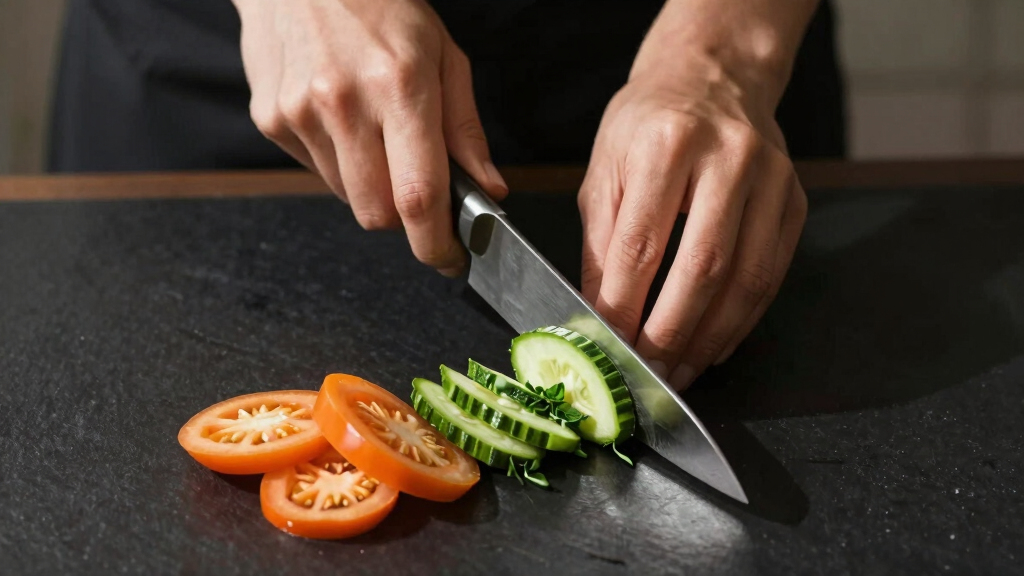
I evaluated each santoku knife based on cutting performance, edge retention, handle ergonomics, build quality, and ease of maintenance. I also considered value for money, versatility in vegetable and herb prep, and overall user comfort. The ranking emphasizes knives that excel in precision slicing while remaining manageable for regular use. Knives with balanced weight, durable blades, and comfortable grips earned higher spots, while tradeoffs like higher price or delicate steels affected lower rankings. This approach ensures a curated selection tailored to different user priorities, from casual cooks to professional chefs.Factors to Consider When Choosing Best Santoku Knife For Vegetables And Herbs
When selecting the best santoku knife for vegetables and herbs, understanding key factors can help you make an informed choice. Beyond basic features, consider how each aspect impacts your daily prep work and long-term satisfaction. This guide highlights essential considerations to help you navigate options more confidently.Blade Material and Sharpness
The blade material directly influences cutting performance, edge retention, and maintenance. High-carbon steels like VG10 or 9CR18MOV tend to stay sharp longer but require more careful cleaning to prevent rust. For slicing vegetables and herbs, a sharp, well-maintained edge makes a noticeable difference in speed and precision. Cheaper steels may dull quickly, leading to frequent sharpening, which can be frustrating for daily use.
Handle Comfort and Ergonomics
A comfortable handle reduces fatigue during extended prep sessions. Look for ergonomic shapes that fit your hand naturally, especially if you often work with large quantities of vegetables or herbs. Materials vary from traditional wood to synthetic composites; while wood offers classic appeal, synthetic handles often provide better moisture resistance and durability. Avoid handles that are too thin or awkwardly shaped, as they can compromise control and safety.
Blade Length and Weight
Most santoku knives for vegetables and herbs range from 5 to 7 inches. Longer blades offer more cutting surface but can be less nimble in tight spaces. Conversely, shorter blades provide greater control for delicate slicing. Weight is also critical—heavier knives may feel more stable but can cause fatigue, while lighter models are easier to maneuver. Balancing blade length and weight with your comfort level is key to a satisfying experience.
Construction and Durability
Full-tang knives, where the blade extends into the handle, tend to be more durable and better balanced. Hand-forged knives often feature superior craftsmanship and sharper edges, but can be pricier. Consider how often you’ll use the knife and whether you prefer a simple, easy-to-maintain blade or a high-end, handcrafted piece. Proper maintenance extends the life of high-quality steels, so factor in your willingness to sharpen and care for your knife.
Price and Value
While premium knives offer exceptional performance and craftsmanship, they come at a higher cost. For most home cooks, a mid-range knife provides a good balance of quality and affordability. Beware of extremely cheap options that might compromise safety or durability. Assess what features matter most to your cooking style—sharpness, handle comfort, or longevity—and choose a model that offers the best value within your budget.
Frequently Asked Questions
Is a higher price always better for a santoku knife?
Not necessarily. While higher-priced knives often feature premium steels and craftsmanship, a well-made mid-range knife can perform just as well for most vegetable and herb prep. The key is to match the knife’s features with your specific needs and maintenance willingness. For frequent use or professional cooking, investing in a premium model might pay off in durability and performance, but for casual cooking, a mid-range option can be perfectly sufficient.
What blade length should I choose for vegetables and herbs?
Most cooks find that a 5 to 7-inch blade strikes a good balance between control and cutting surface. Shorter blades, around 5 inches, excel at precise work and small herbs, while 7 inches can handle bulkier vegetables more efficiently. Consider your hand size and typical prep style—if you prefer quick, delicate cuts, a shorter blade might be better, but for larger ingredients, a slightly longer blade offers more leverage.
Are hand-forged santoku knives worth the extra cost?
Hand-forged knives often feature superior craftsmanship, sharper edges, and better balance, making them more satisfying to use. They tend to be more durable and easier to sharpen over time. However, they usually come with a higher price tag. If you value craftsmanship and plan to use your knife frequently, investing in a hand-forged model can be a worthwhile decision. For occasional use, a well-made stamped knife may suffice.
How often should I sharpen my santoku for vegetables and herbs?
The frequency depends on how often you use the knife and the steel quality. High-carbon steels retain an edge longer but require regular honing to keep the blade aligned. Typically, honing after each use and sharpening every few months for regular cooks helps maintain optimal performance. Proper sharpening tools and techniques are essential to avoid damaging the edge and prolonging the knife’s lifespan.
Can I use a santoku knife for tasks other than vegetables and herbs?
Yes, a santoku is quite versatile in the kitchen. Its design makes it suitable for slicing, dicing, and mincing a variety of ingredients, including poultry, fish, and even fruits. However, it’s optimized for chopping vegetables and herbs due to its flat cutting edge and wide blade. For tasks like butchering or heavy-duty chopping, a heavier cleaver or chef’s knife might be more appropriate.
Conclusion
The best overall choice for most cooks is the FAMCÜTE 7 Inch Santoku Knife thanks to its combination of craftsmanship, blade quality, and elegant handle. For those on a budget, the Cutluxe 7-Inch Santoku offers reliable performance at a more accessible price point. Beginners will appreciate the imarku 7-Inch Santoku for its sharpness and ergonomic design, making kitchen prep easier and safer. If you seek a premium, handcrafted piece, the KAWAHIRO VG10 Santoku delivers exceptional quality. Lastly, for heavy-duty use or gift-giving, the SYOKAMI 7-Inch Cleaver Chef Knife provides versatility with its multi-function design. Choose based on your cooking style, frequency of use, and budget to find the perfect match. As an affiliate, we earn on qualifying purchases.Flea & tick season Picks
flea and tick prevention