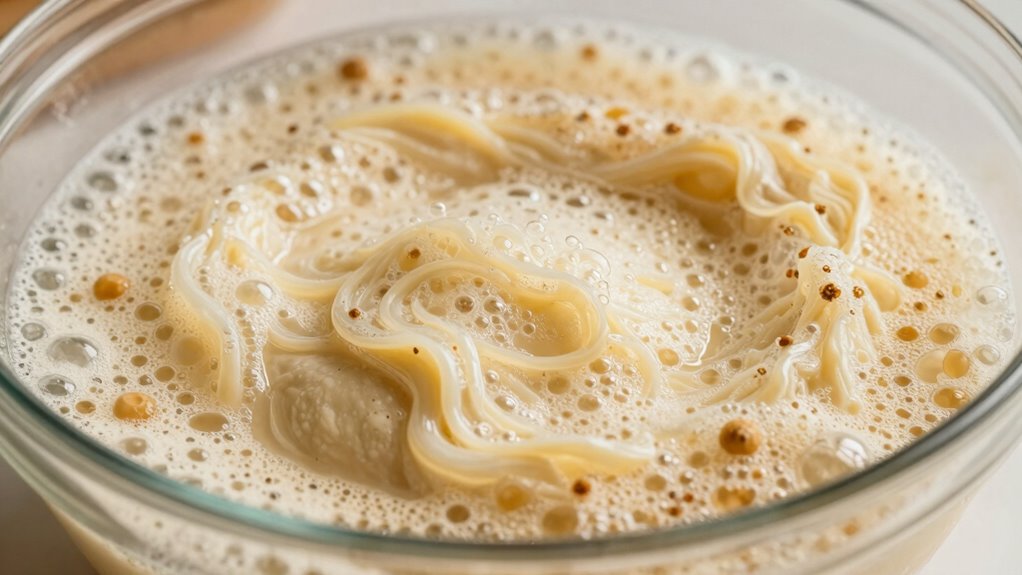
Yeast in dough acts as both a leavening agent and a flavor enhancer. When you mix yeast, it consumes sugars and produces carbon dioxide, which creates bubbles that make your dough rise and become light. It also produces alcohols, acids, and esters that add to the bread’s flavor and aroma. The temperature and proofing time influence how much gas and flavor develop. Keep exploring to discover how you can control these factors for perfect baking results.

Get kitchen staples and gadgets delivered free — and shop member deals
- Fast, free delivery on millions of items
- Access to Prime Big Deal Days deals on October 6–7
- Prime Video, Amazon Music and more included
Key Takeaways
- Yeast consumes sugars and produces carbon dioxide, which causes dough to rise.
- It generates alcohol and organic compounds that develop the bread’s flavor and aroma.
- Temperature controls yeast activity, influencing fermentation speed and dough expansion.
- Proper proofing time ensures optimal gas production for a light, airy texture.
- Yeast’s metabolic byproducts enhance the bread’s overall taste and complexity.
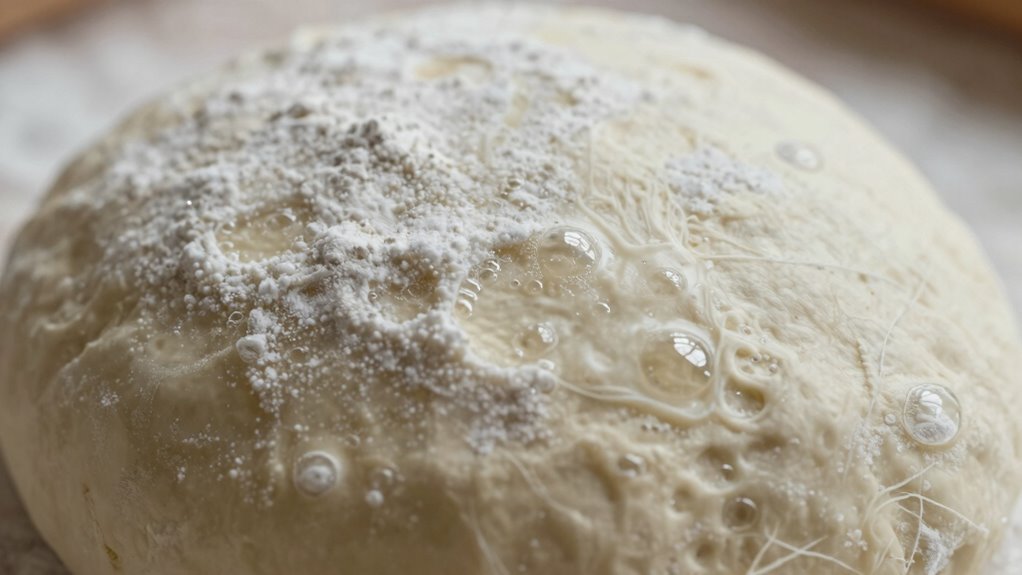
Yeast plays an essential role in transforming simple ingredients into delicious, airy baked goods. When you mix yeast into your dough, you’re kicking off a biological process known as fermentation. This process is key because it’s what causes your dough to rise, creating the light, fluffy texture you’re aiming for. During fermentation, yeast consumes sugars present in the dough through a process called yeast metabolism. As it metabolizes these sugars, it produces carbon dioxide and alcohol. The carbon dioxide gets trapped in the dough’s gluten network, forming tiny bubbles that expand as the dough proofs and bakes. This expansion is what gives your bread its volume and airy crumb. Understanding the fermentation process helps you see why patience is essential in baking with yeast. When yeast metabolizes sugars, it not only produces gas but also generates heat, which further accelerates fermentation. The temperature of your dough influences yeast activity—warmer conditions speed up fermentation, while cooler temperatures slow it down. As you wait for your dough to rise, you’re allowing yeast to carry out its metabolism efficiently, creating enough gas to leaven the bread properly. This is why proper proofing times are indispensable; too little time, and the dough won’t develop enough lift, resulting in dense bread. Too much, and the dough may over-expand and collapse or develop a sour flavor from excessive fermentation. Additionally, the byproducts of fermentation—such as alcohols, esters, and organic acids—also contribute to the overall flavor profile of the bread. These byproducts play a significant role in developing the flavor and aroma** of baked goods, making each loaf uniquely appealing. Yeast’s role extends beyond just leavening. Its metabolism also influences the dough’s flavor and aroma. During fermentation, yeast produces not only carbon dioxide but also a range of flavor compounds that give baked goods their characteristic taste. These byproducts include alcohols, esters, and organic acids, which develop as the yeast interacts with the dough’s ingredients. This is why bread made with properly fermented yeast often has a richer, more complex flavor profile. In essence, yeast acts as both a leavening agent** and a flavor enhancer in dough. Its metabolism transforms simple sugars into gas and aromatic compounds, making your baked goods light, flavorful, and appealing. By understanding the fermentation process, you gain insight into how essential yeast is in creating that perfect rise and taste. When you control the conditions—temperature, time, and ingredients—you’re guiding yeast to do its best work, resulting in bread that’s both beautifully risen and deliciously complex.
As an affiliate, we earn on qualifying purchases.
Frequently Asked Questions
Can Yeast Be Used in Gluten-Free Baking?
Yes, you can use yeast in gluten-free baking, but it works differently due to gluten-free fermentation. Traditional yeast may not produce the same rise, so you might need yeast substitutes like baking soda or baking powder. These alternatives help create the desired airy texture, but they don’t replicate yeast’s fermentation process fully. Experimenting with different gluten-free fermentation methods and substitutes guarantees better results in your gluten-free baked goods.
How Long Does Yeast Take to Activate?
You’ll find that yeast usually takes about 10 to 15 minutes to fully awaken during the fermentation process. This yeast activation time depends on factors like temperature and sugar presence. As it stirs to life, it produces carbon dioxide, making your dough rise beautifully. Keep an eye out for bubbly, frothy signs—these are your clues that fermentation is underway and your yeast is doing its magic.
Does Yeast Affect the Flavor of Bread?
Yes, yeast affects the flavor of bread through the fermentation process. As yeast ferments, it produces carbon dioxide and alcohol, which contribute to the bread’s texture and aroma. The fermentation process also allows complex flavors to develop, giving your bread a richer, more nuanced taste. Different strains of yeast and fermentation times can influence the flavor development, so experimenting helps you achieve the desired taste profile.
Can Yeast Survive in Cold or Hot Temperatures?
Imagine yeast as a tiny adventurer, thriving in just the right environment. Yeast survival depends on yeast temperature; it loves warmth but can struggle in extreme heat or cold. In hot temperatures, yeast may become a fiery torch, dying off quickly. In cold, it snoozes, barely working. For best results, keep yeast temperature moderate—around 75-85°F—so your yeast can thrive and your dough rises perfectly.
Is Active Dry Yeast Different From Instant Yeast?
Active dry yeast and instant yeast differ mainly in their fermentation process and yeast nutrition. Active dry yeast requires proofing in warm water before use, as it has larger granules and slower fermentation. Instant yeast, on the other hand, has finer particles and quicker fermentation, allowing it to be mixed directly into dry ingredients. Both types consume yeast nutrition to produce carbon dioxide, which makes your dough rise.
As an affiliate, we earn on qualifying purchases.
Conclusion
So, think of yeast as the tiny maestro in your dough orchestra, guiding each ingredient to create a symphony of flavor and texture. As it ferments and bubbles away, it’s like a hidden artist painting air pockets and giving your bread its tender, chewy soul. Without this humble microorganism, your dough would remain a plain canvas, missing the magic that transforms it into warm, inviting bread. Embrace yeast, and let your baking rise to new heights.
As an affiliate, we earn on qualifying purchases.
As an affiliate, we earn on qualifying purchases.
NFL season / tailgating Picks
team gear
As an affiliate, we earn on qualifying purchases.