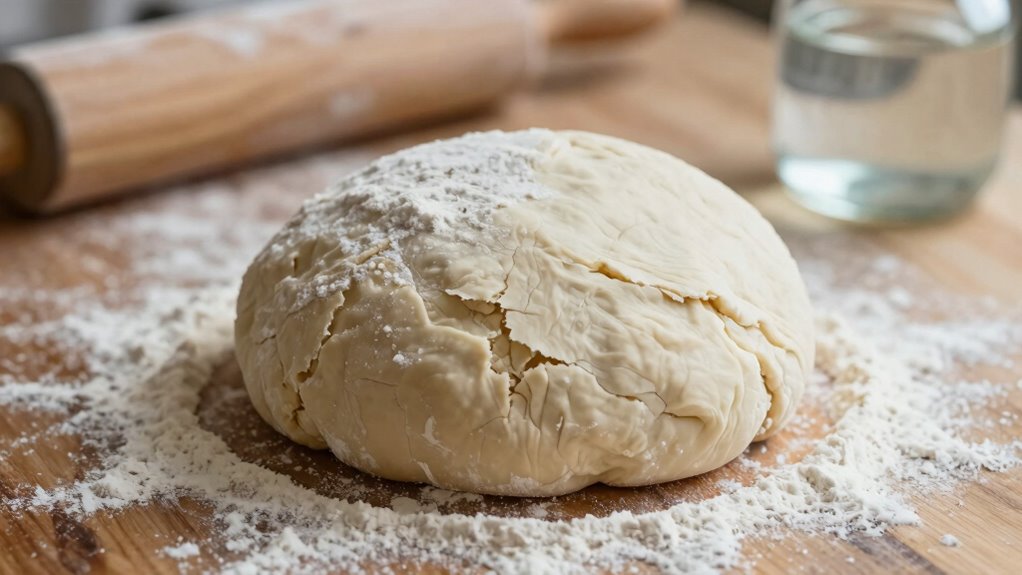

You need to let your bread dough rest because it allows the gluten to develop and relax, creating better structure and elasticity. Rushing or forcing it makes the dough tough or dense, and you won’t achieve the light, airy texture you want. Resting also enhances flavor through fermentation and makes the dough easier to shape. If you understand why rest matters, you’ll see how patience improves your bread’s rise, texture, and taste—there’s more to discover behind the why.

Get kitchen staples and gadgets delivered free — and shop member deals
- Fast, free delivery on millions of items
- Access to Prime Big Deal Days deals on October 6–7
- Prime Video, Amazon Music and more included
Key Takeaways
- Resting allows gluten strands to relax and strengthen, improving dough elasticity and handling.
- Extended rest enhances fermentation, developing complex flavors better than simply kneading more.
- Resting ensures even crumb structure and rises, which force alone cannot achieve quickly.
- Proper rest time allows yeast activity to produce gases and byproducts necessary for optimal bread texture.
- Rushing the process impairs gluten development and flavor, resulting in denser, less flavorful bread.
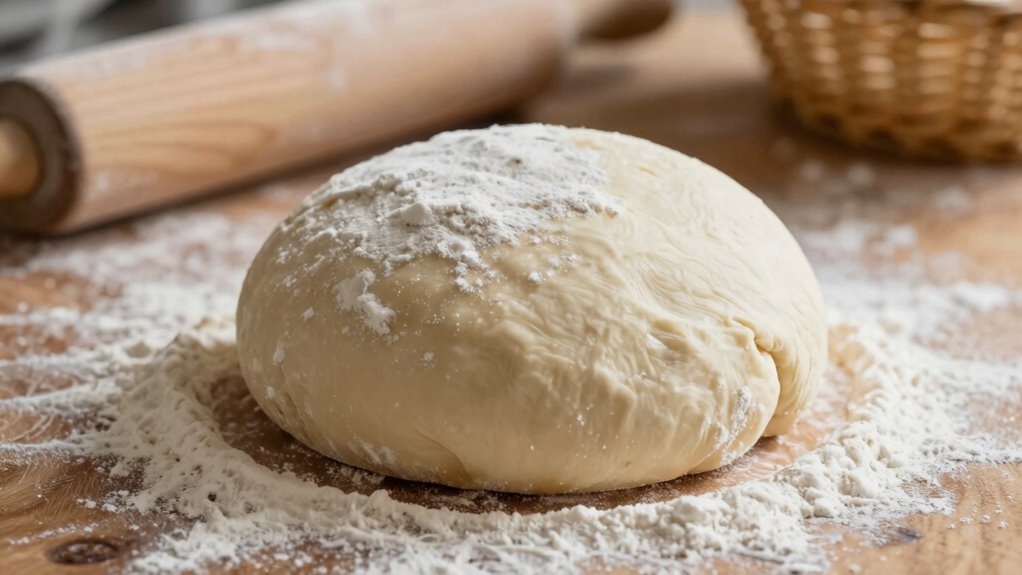
Resting bread dough is an indispensable step that often gets overlooked, but it plays an important role in the baking process. When you let your dough rest, you’re giving it time to undergo fermentation, which is essential for developing flavor and guaranteeing a better rise. Fermentation benefits are substantial—it allows yeast to produce carbon dioxide, which creates those desirable air pockets in your bread. Without sufficient resting, your dough might be dense or flat, lacking the light, airy texture you’re aiming for. Resting also helps control the dough’s temperature, providing the ideal environment for yeast activity and flavor development.
One of the main reasons to let your dough rest is to develop gluten properly. Gluten development is key to the structure and elasticity of your bread. When you knead your dough, gluten strands begin to form and align, but they need time to strengthen and relax. Resting allows these gluten strands to develop fully, giving your dough a better stretch and shape. If you skip or rush this step, your bread can turn out tough or crumbly because the gluten network isn’t well-formed. Proper gluten development ensures that when you shape and bake the bread, it holds its form and has a chewy, satisfying texture. Additionally, Gluten development is closely linked to yeast activity and fermentation, which further enhances the dough’s overall quality.
During the resting period, your dough also undergoes a form of natural conditioning. As fermentation proceeds, your dough becomes more extensible, making it easier to shape without tearing. This relaxation period is essential for achieving a smooth, even crumb. Additionally, resting allows flavors to deepen, as fermentation produces byproducts that enhance taste. The longer the dough rests—within reason—the more complex and nuanced your bread’s flavor will be. This is why many bakers advocate for longer fermentation times, sometimes even overnight, to maximize fermentation benefits and gluten development. Incorporating proper fermentation techniques can also help control the fermentation process and improve overall results. Developing a better understanding of fermentation control can make a significant difference in consistently achieving quality bread.
Furthermore, understanding the benefits of fermentation can help bakers optimize their resting times for better flavor and texture. In essence, resting your dough isn’t just about patience; it’s about giving your ingredients the time they need to work together harmoniously. It’s a step that guarantees your bread will rise well, have good texture, and boast rich flavor. Skipping it or rushing through can compromise these qualities, resulting in a less satisfying loaf. Incorporating proper fermentation techniques can significantly improve your baking outcomes. So, when you’re baking, remember that the time your dough spends resting is an investment—one that pays off with a better, more flavorful, and well-structured bread. Trust in this step more than force, and your baking results will reflect the care and patience you put into your dough.
Frequently Asked Questions
How Long Should Bread Dough Rest for Optimal Fermentation?
You should let bread dough rest for about 1 to 2 hours, or until it doubles in size. During this time, gluten development improves, giving your bread structure, while yeast activity produces gases that make the dough rise. Resting allows the flavors to develop and the dough to become more elastic. Keep it covered in a warm spot for best results, ensuring ideal fermentation and a better loaf.
Can Rest Time Vary With Different Types of Flour?
Absolutely, rest time varies with different flours, and it’s no conspiracy—just gluten development and flour absorption at play. Whole wheat and rye flours need longer rests, thanks to their tough bran and germ. Meanwhile, all-purpose flour absorbs water faster, demanding less downtime. So, don’t blindly follow the clock; listen to your dough. It’s telling you when it’s ready for the oven, based on gluten’s dance and flour’s soak-up skills.
What Happens if You Skip the Resting Period?
If you skip the resting period, your dough won’t develop proper gluten structure. The kneading intensity you used might make it tough or overly elastic, but without resting, dough remains sticky and hard to shape. Resting allows the gluten to relax, improving dough elasticity and making it easier to work with. Skipping this step can result in bread that’s dense, chewy, or unevenly risen.
Does Resting Improve Bread Flavor or Texture?
Resting improves both bread flavor and texture by allowing fermentation benefits to develop fully. During this period, yeast produces more flavorful compounds, enhancing taste, while gluten development continues, resulting in a better crumb and structure. Skipping resting can lead to dense bread with less flavor and weaker texture. So, give your dough the time it needs to ferment and develop its full potential for a superior loaf.
Can You Over-Rest Bread Dough?
Yes, you can over-rest bread dough. When you rest it too long, gluten development can become overextended, leading to a weakened structure and a dough that’s too slack to shape properly. Additionally, yeast activity might decline if the dough sits too long, affecting rise and texture. To avoid this, keep an eye on timing and dough consistency, ensuring it rests just enough to develop flavor and structure without overdoing it.
Conclusion
So, next time you’re tempted to skip the resting step, ask yourself: do you want your bread to be chewy and flavorful or dense and flat? Resting isn’t just a waiting game; it’s the secret to perfect texture and taste. By giving your dough time, you’re letting gluten develop and flavors deepen. Remember, patience pays off—sometimes, letting it rest is what makes all the difference in your bread’s final perfection.
NFL season / tailgating Picks
team gear
As an affiliate, we earn on qualifying purchases.