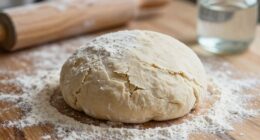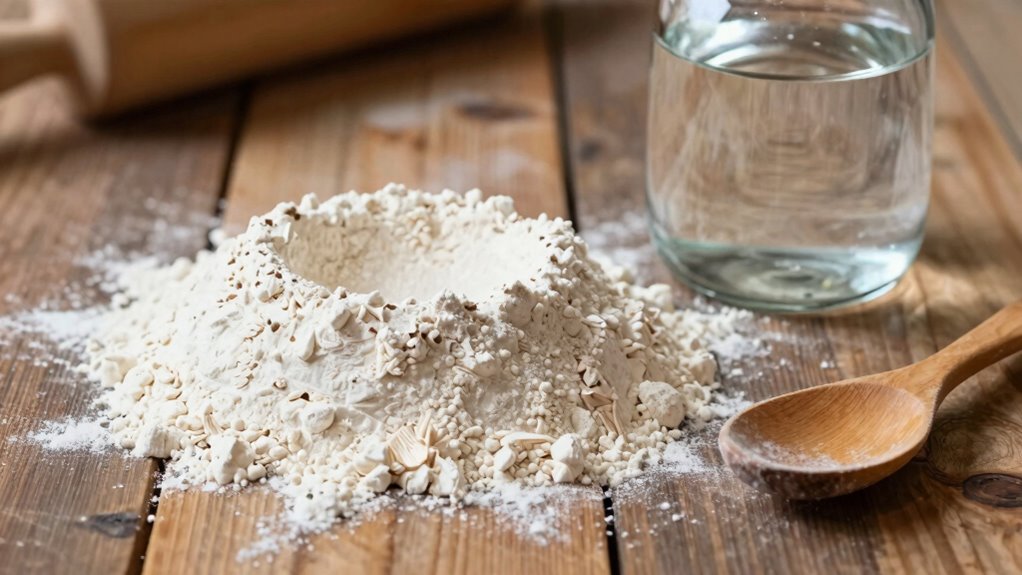
To make better flatbreads, you need to master the flour-to-water ratio. Too little water makes dough stiff and hard to work with, while too much results in sticky, difficult-to-handle dough. The right balance ensures proper gluten development, giving your flatbreads the perfect elasticity and chew. Adjusting this ratio based on flour type and hydration helps you achieve consistent, tender results. Continue exploring these concepts to gain even more baking secrets.

Get kitchen staples and gadgets delivered free — and shop member deals
- Fast, free delivery on millions of items
- Access to Prime Big Deal Days deals on October 6–7
- Prime Video, Amazon Music and more included
Key Takeaways
- Proper flour-to-water ratio ensures optimal gluten development for elasticity and a tender, chewy flatbread texture.
- Adequate hydration improves dough extensibility, making it easier to shape thin, even flatbreads.
- Adjusting water based on flour type enhances dough handling and final product quality.
- Small ratio tweaks can significantly improve dough smoothness, resilience, and overall flatbread texture.
- Balancing water and flour prevents dough from being too stiff or sticky, ensuring consistent results.
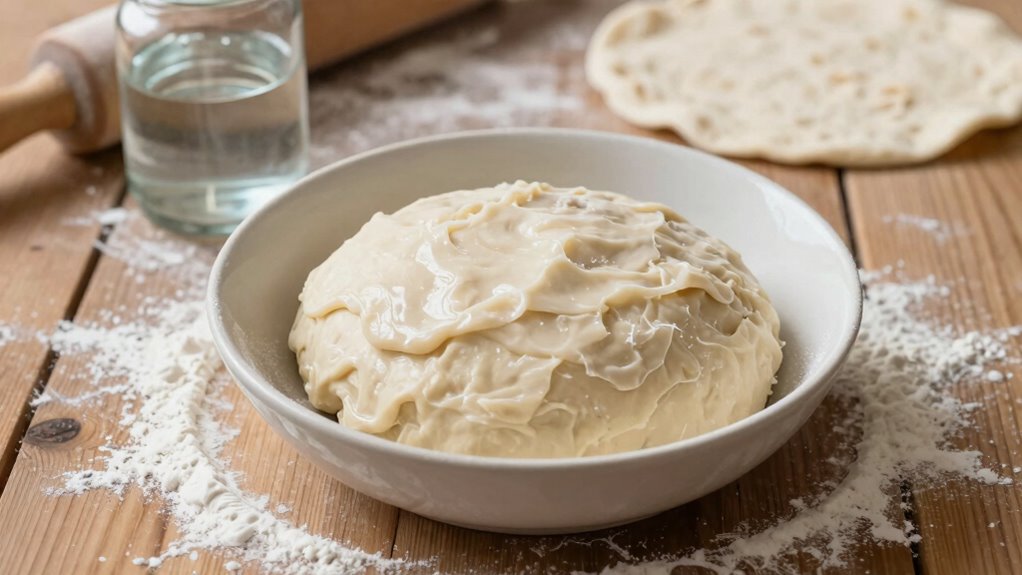
Have you ever wondered how the ratio of flour to water influences the texture and elasticity of flatbreads? The key lies in understanding how this ratio affects gluten development, which directly impacts dough elasticity. When you adjust the amount of water relative to flour, you change how the proteins in the flour interact, shaping the final outcome of your flatbread. Too little water results in a stiff, crumbly dough that’s hard to stretch, while too much water can make the dough sticky and difficult to handle. Striking the right balance allows you to create a dough with optimal gluten development, giving your flatbread a tender, chewy texture.
Adjusting flour-to-water ratio controls gluten development for perfect flatbread texture and elasticity.
Gluten forms when water activates proteins called glutenin and gliadin in the flour. As you mix and knead, these proteins bond and create a flexible network, which is essential for dough elasticity. When the ratio favors enough water, this gluten network develops thoroughly, making your dough elastic and easy to roll out or shape without tearing. If there’s insufficient water, gluten development is limited, leading to a dense, crumbly texture. Conversely, excess water can weaken the gluten structure, making the dough overly soft and prone to sticking or collapsing during baking. Understanding gluten formation can help you better control the texture of your flatbreads.
The amount of water you add also influences dough hydration, a critical factor in flatbread preparation. Proper hydration improves the dough’s extensibility, allowing it to stretch without tearing, which is vital for thin, even flatbreads. As you work with different flours, keep in mind that some absorb more water than others. Whole wheat or high-protein flours, for example, generally require more water to reach the same dough consistency as white flour. Adjusting the flour-to-water ratio accordingly helps you achieve the desired gluten development and dough elasticity. Additionally, understanding dough hydration helps you fine-tune your recipes for different textures and qualities. Being aware of the water absorption capacity of your flour can further enhance your control over the final product.
Experimenting with small adjustments in your flour-to-water ratio can dramatically improve your flatbreads’ texture. When you find the right balance, you’ll notice the dough becomes smooth, supple, and resilient—perfect for shaping and baking. This careful control over gluten development ensures your flatbreads are not only flavorful but also have that satisfying chew and structure. Remember, mastering the flour-to-water relationship is a fundamental step toward baking better flatbreads, giving you the confidence to create light, tender, and elastic results every time. Understanding gluten development is essential to optimizing your dough’s texture and elasticity.
Frequently Asked Questions
How Does Altitude Affect Flour-To-Water Ratios in Flatbread Recipes?
At higher altitudes, you need to increase the flour-to-water ratio in your flatbread recipes. Altitude adjustments are essential because the thinner air causes moisture to evaporate faster, and dough can dry out. Trust your baker’s intuition to add a little more water gradually until the dough feels right. This guarantees your flatbreads stay tender and well-textured, even as you adapt to the unique baking conditions altitude presents.
Can Alternative Flours Change the Ideal Water Content?
Yes, alternative flours can change the ideal water content. Different flours have unique gluten structures, which affect how much water they absorb. For example, whole wheat or gluten-free flours often need more or less water than traditional wheat flour. Adjusting water helps optimize texture, ensuring the flatbread remains tender and chewy. Experimenting with water levels based on flour type allows you to achieve better texture enhancement and a balanced dough consistency.
What Role Does Resting Time Play in Hydration and Dough Consistency?
Resting time is like letting a good story unfold—you give the dough a chance to relax. During this period, hydration improves as flour absorbs water, leading to better dough elasticity. Longer resting enhances fermentation effects, developing flavors and strengthening gluten structure. This results in a more cohesive, pliable dough that stretches easily and holds shape. So, patience during resting is key to achieving ideal flatbread texture and flavor.
How Do Different Water Temperatures Influence Gluten Development?
Using warm water accelerates gluten development by increasing enzyme activity, making the dough more elastic and easier to work with. Cold water, on the other hand, slows gluten formation, resulting in a firmer, less elastic dough. For ideal gluten structure and dough elasticity, you should choose water temperature based on your desired dough texture. Warmer water promotes quicker gluten network formation, while colder water gives you more control and a softer dough.
Are There Health Benefits to Adjusting Flour-To-Water Ratios?
Adjusting flour-to-water ratios can offer health benefits, particularly with regard to nutritional impact and digestive benefits. Using a higher water content can make flatbreads easier to digest by breaking down gluten and starches more effectively. It may also enhance nutrient absorption, helping your body get more from the ingredients. By experimenting with ratios, you can create healthier flatbreads that support better digestion and overall nutrition.
Conclusion
Mastering the flour-to-water ratio is like wielding a secret weapon for perfect flatbreads. When you get it just right, each bite transports you straight to a bustling street vendor in a bygone era—think ancient Rome or medieval markets—where simple ingredients dance into delicious harmony. So, next time you knead, remember: a little balance and patience turn humble dough into a culinary masterpiece. Now, go forth and conquer your kitchen with vintage flair!
NFL season / tailgating Picks
team gear
As an affiliate, we earn on qualifying purchases.