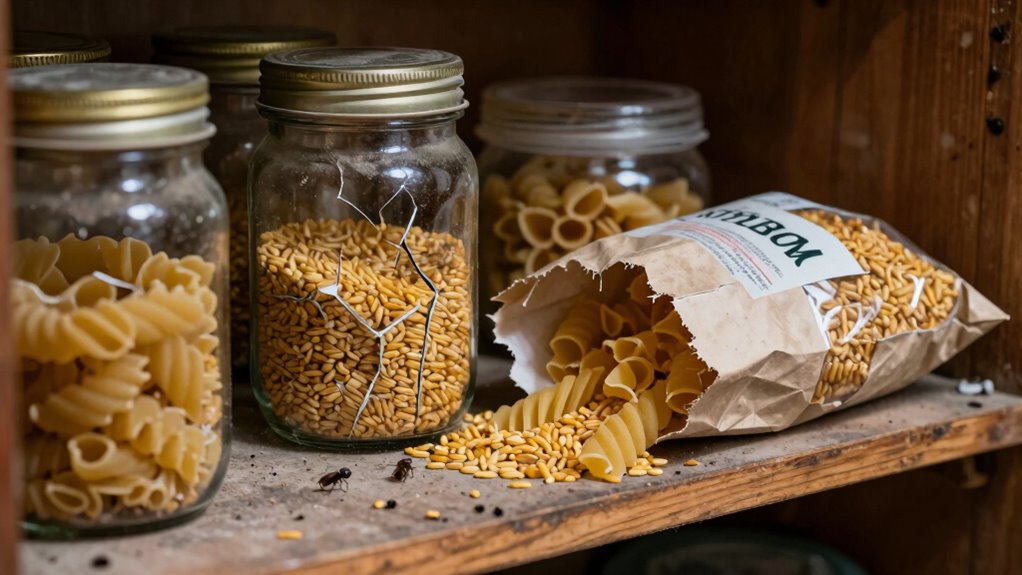

Your pantry pests thrive when you have bad storage habits because cluttered, disorganized shelves create hiding spots for them. Using open or bulky containers makes it easier for pests to access your food, especially if items are stored near walls or on the floor. Poor airflow, moisture, and food debris also attract pests. If you keep ignoring your storage practices, pests will keep invading. Stay with us to discover how to break this cycle and protect your food.
Key Takeaways
- Poorly organized shelves create hiding spots for pests, making infestations easier to hide and spread.
- Unsealed or improperly stored food provides easy access and entry points for pantry pests.
- Cluttered storage areas offer pests abundant habitats, increasing their likelihood of thriving.
- Lack of regular inspection allows pests to go unnoticed and infest food supplies.
- Excess moisture and poor ventilation attract pests seeking damp environments.
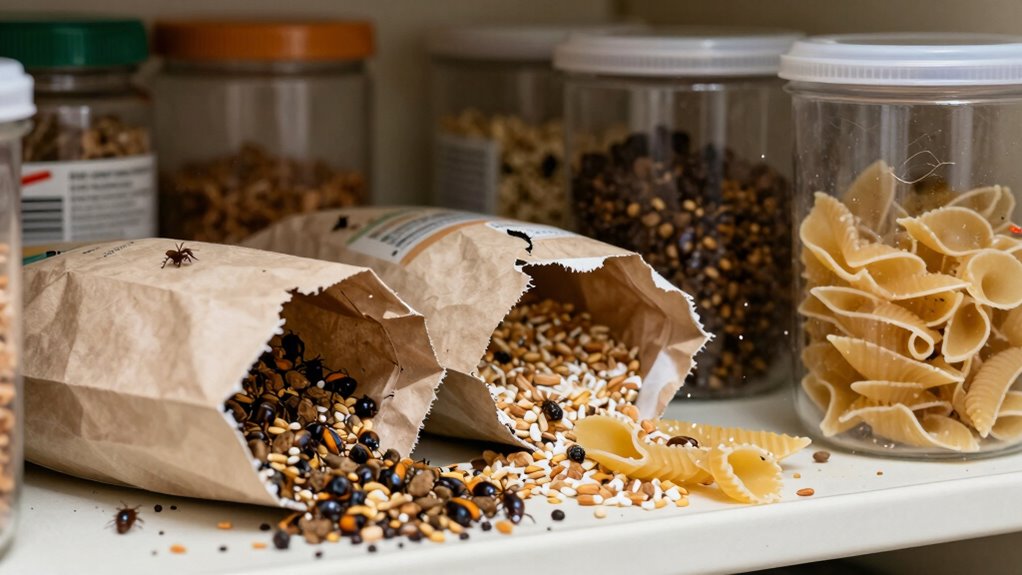
Your pantry can quickly become a battleground against pests if you’re not careful with how you store your food. Pest problems often stem from poor storage habits, and one of the biggest culprits is disorganized shelf organization. When your shelves are cluttered or haphazardly arranged, it creates hiding spots for pests and makes it easier for them to access your food. Pests like flour beetles, weevils, and pantry moths thrive in environments where food is left exposed or stored in flimsy packaging. To prevent this, you need to prioritize good shelf organization. Group similar items together, keep food in airtight containers, and regularly check for expired or infested goods. Proper shelf organization not only keeps your pantry tidy but also acts as a first line of defense against pests. Regularly cleaning and decluttering your pantry can further reduce pest habitats and help you spot potential issues early.
Pest prevention techniques are essential to maintaining a pest-free pantry, and many of these methods start with how you store your food. Using sealed containers made of glass, metal, or heavy-duty plastic is one of the most effective pest prevention techniques. These containers eliminate access points for pests and help maintain a clean, controlled environment. Additionally, storing items off the floor and away from walls minimizes the chances of pests crawling into your food supplies. Regularly inspecting your pantry for signs of infestation—such as webbing, holes in packaging, or tiny bugs—is also key. When you spot problems early, you can take swift action to contain the issue before it spreads. Proper storage habits are crucial for creating an environment that pests find uninhabitable. Implementing storage best practices can significantly reduce the risk of pest intrusion and contamination.
Another way to improve your pest prevention techniques is to keep your pantry dry and well-ventilated. Moisture attracts pests, so fixing leaks and using dehumidifiers can make your pantry less inviting. Also, consider placing bay leaves, whole cloves, or other natural repellents in your pantry as a supplementary measure. But the core of pest prevention still lies in consistent shelf organization. When items are stored properly, and your pantry is regularly maintained, pests find it much harder to thrive. These habits create a hostile environment for pests and *substantially* reduce their chances of infiltrating your food supplies. Maintaining good ventilation can also prevent mold growth, which pests are attracted to as well.
In the end, a well-organized pantry combined with effective pest prevention techniques forms a strong barrier against pests. Keeping your shelves tidy, using airtight containers, and monitoring your food regularly are simple steps that make a big difference. When you take these precautions seriously, you protect your food, your health, and your peace of mind.

Airtight Food Storage Containers with Lids, Vtopmart 24 pcs Plastic Kitchen and Pantry Organization Canisters for Cereal, Dry Food, Flour and Sugar, BPA Free, Includes 24 Labels,Black
- Kitchen and Pantry Organization: Neatly organize and maximize space
- Four Size Options: Includes 4 sizes for various needs
- Airtight and Freshness Seal: Side-locking lids keep food dry
As an affiliate, we earn on qualifying purchases.
As an affiliate, we earn on qualifying purchases.
Frequently Asked Questions
How Quickly Can Pantry Pests Infest Stored Food?
Pantry pests can infest stored food within just a few days to a week if conditions are favorable. They often target items with a long shelf life, especially when storage is poor. To prevent infestation, follow pest prevention tips like storing food in airtight containers, regularly checking your pantry, and cleaning spills promptly. Proper storage not only extends your food’s shelf life but also keeps pests at bay.
Are Certain Food Types More Attractive to Pantry Pests?
Think of your pantry as a treasure chest—some foods, like grains, dried fruit, and nuts, are shiny valuables that attract pests. These items are more susceptible to food contamination, drawing unwanted guests. To keep pests at bay, follow pest prevention tips like airtight containers and regular cleaning. Certain food types are more attractive because their scent and moisture levels create the perfect environment for pests to thrive and multiply.
Can Pantry Pests Spread to Other Areas of the House?
Yes, pantry pests can spread to other areas of your house. They often hitch a ride through household entry points like cracks, gaps, or open doors. As they move, they pose cross contamination risks, contaminating other food supplies and surfaces. To prevent this, regularly inspect your home, seal entry points, and store food in airtight containers. Doing so helps limit pest spread and keeps your household safer.
What Are Natural Repellents for Pantry Pests?
You can use natural repellents like essential oils and homemade sprays to keep pantry pests away. Peppermint, tea tree, and lavender oils are particularly effective; just mix a few drops with water in a spray bottle and apply around pantry shelves. These natural solutions create a scent that pests dislike, helping protect your food. Regularly reapply the sprays to maintain their effectiveness and keep your pantry pest-free.
How Often Should I Inspect My Pantry for Pests?
Think of your pantry as a fortress that needs regular patrols. You should inspect it at least once a month to catch pests early. Check storage containers for signs of intrusion or damage, and look for tiny holes or webs. This routine pest prevention keeps unwanted invaders at bay and preserves your food. Staying vigilant now prevents bigger infestations later, keeping your pantry safe and pest-free.
As an affiliate, we earn on qualifying purchases.
Conclusion
By avoiding poor storage habits, you protect your pantry, prevent pests, and preserve your food. You stay organized, stay pest-free, and stay worry-free. Good storage habits keep your food fresh, keep your pantry tidy, and keep pests at bay. When you store properly, you save time, save money, and save your peace of mind. Remember, a well-kept pantry is your first line of defense—keep it clean, keep it pest-free, and keep it yours.
As an affiliate, we earn on qualifying purchases.
As an affiliate, we earn on qualifying purchases.