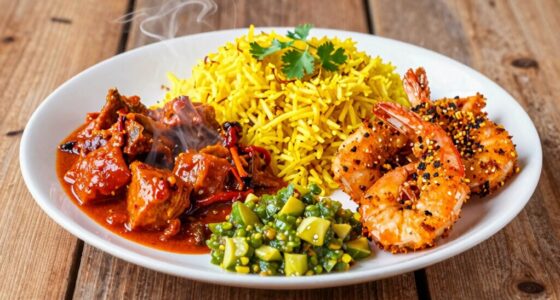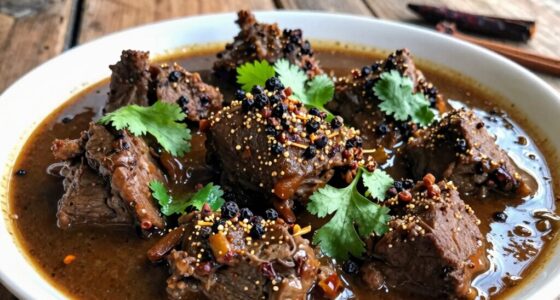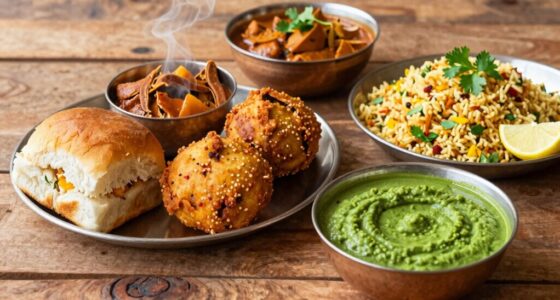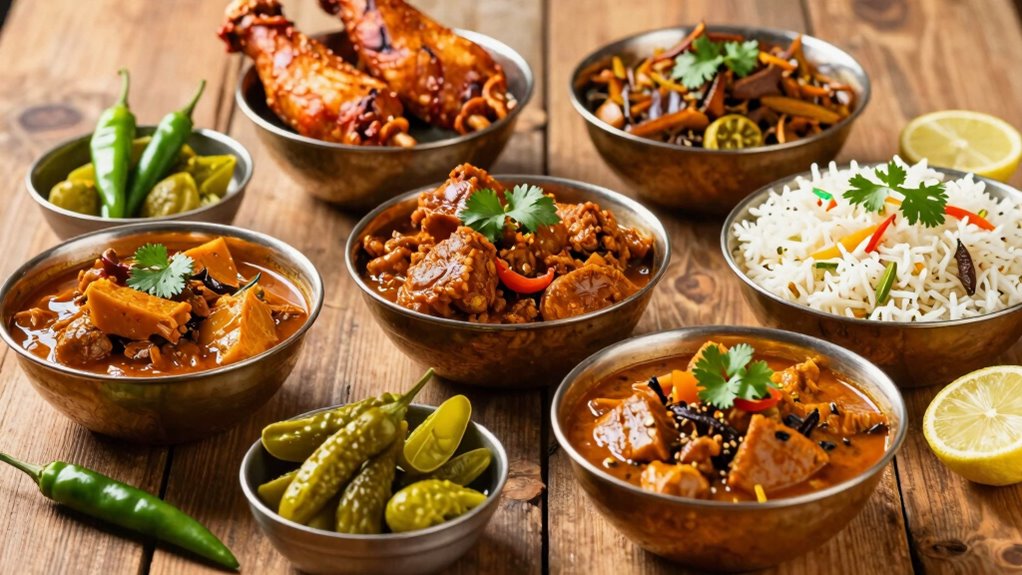

Sindhi food deserves a bigger spotlight because of its rich history, bold flavors, and unique recipes that reflect centuries of cultural exchange. You’ll find simple ingredients like rice, lentils, and spices crafted into iconic dishes such as Sindhi Biryani and Sindhi Curry, showcasing culinary artistry. Despite being underrepresented globally, sharing Sindhi cuisine can celebrate regional authenticity and innovation. Keep exploring to discover the vibrant flavors and stories behind these treasured recipes.

Get kitchen staples and gadgets delivered free with Prime
- Fast, free delivery on millions of items
- Prime Video, Amazon Music and more included
- Member-only deals all year
Key Takeaways
- Sindhi cuisine uniquely blends traditional recipes with diverse cultural influences, showcasing rich culinary artistry.
- Its use of regional ingredients and spices creates distinctive, flavorful dishes deserving global recognition.
- Promoting Sindhi food preserves cultural heritage and encourages culinary innovation through fusion and experimentation.
- Increased visibility can combat underrepresentation and introduce the world to its diverse, vibrant flavors.
- Highlighting Sindhi cuisine fosters cultural appreciation, respect, and the preservation of traditional recipes for future generations.
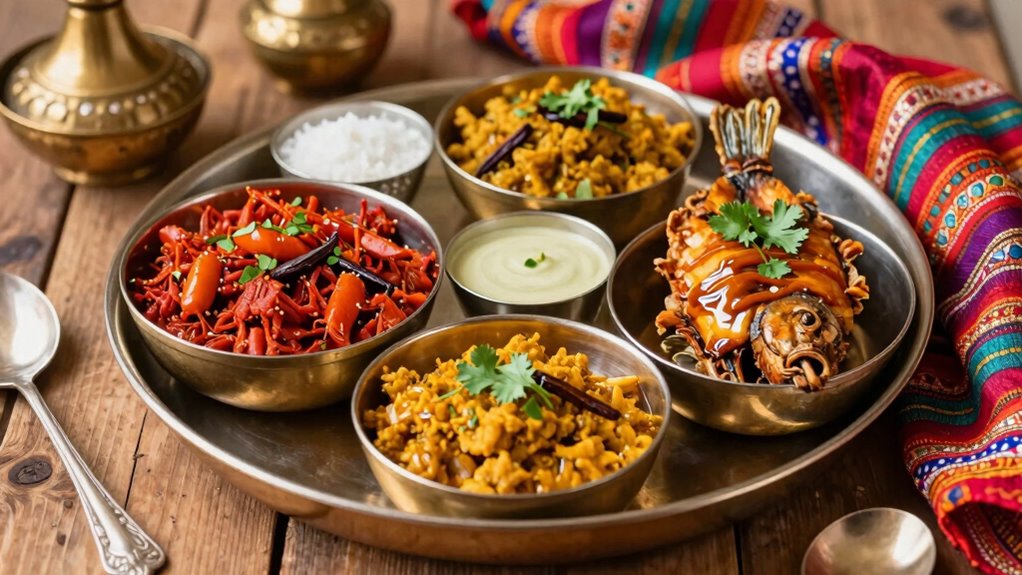
Have you ever wondered what makes Sindhi cuisine so uniquely flavorful? It’s a rich tapestry woven from traditional recipes passed down through generations, yet infused with a spirit of culinary fusion that keeps it vibrant and dynamic. Sindhi food isn’t just about nourishment; it’s a celebration of history, culture, and regional ingredients that come together in a symphony of tastes. Many people outside the region haven’t yet experienced the depth and diversity it offers, which is why Sindhi cuisine deserves a bigger spotlight on the global culinary stage.
At its core, Sindhi food relies on traditional recipes that have stood the test of time. These recipes often involve simple, locally sourced ingredients like rice, lentils, vegetables, and spices, but what makes them extraordinary is the way these elements are combined. Take, for example, the iconic Sindhi Biryani—a fragrant, flavorful dish that’s more than just a rice and meat combo. It’s a reflection of the region’s culinary heritage, showcasing a delicate balance of spices and herbs that elevate everyday ingredients into something memorable. These traditional recipes serve as a bridge connecting generations and preserving the cultural identity of Sindh, yet they also invite experimentation and adaptation, fostering a sense of culinary fusion.
What sets Sindhi cuisine apart is its openness to blending influences from neighboring regions and beyond. Over centuries, traders, travelers, and invaders have left their mark, resulting in a cuisine that’s both rooted in tradition and shaped by external flavors. This culinary fusion is evident in dishes like Sindhi Curry, which combines tangy, spicy, and savory elements in a way that’s both comforting and exciting. The use of spices like cumin, coriander, and turmeric, along with unique ingredients like dried plums and jaggery, creates a flavor profile that’s complex yet harmonious. It’s this blend of old and new that makes Sindhi food so compelling and worthy of more recognition. Additionally, cultural exchange has played a significant role in diversifying and enriching Sindhi cuisine over centuries. Embracing regional ingredients and techniques has helped keep the cuisine vibrant and adaptable to modern tastes. Furthermore, understanding the culinary history behind Sindhi dishes can deepen appreciation for its unique flavors and methods.
Despite its rich history and innovative spirit, Sindhi cuisine remains underrepresented outside the region. Its dishes are often overshadowed by other South Asian cuisines, even though they offer a distinctive culinary experience that shouldn’t be overlooked. Sharing Sindhi food more widely would showcase the region’s culinary artistry, highlighting both its traditional recipes and its ability to adapt and fuse flavors. It’s a cuisine that invites curiosity, exploration, and appreciation, and by giving it the spotlight it deserves, more people can discover the depth and diversity of Sindhi food. Promoting awareness of Sindhi cuisine can also support cultural preservation, ensuring that these traditional recipes and techniques are passed down to future generations. Recognizing the cuisine’s unique qualities can foster greater appreciation and respect for Sindhi culture worldwide.
As an affiliate, we earn on qualifying purchases.
Frequently Asked Questions
What Are the Key Ingredients in Sindhi Cuisine?
You’ll find that key ingredients in Sindhi cuisine include rice, lentils, vegetables, and a variety of spices. Spice combinations like cumin, coriander, turmeric, and red chili powder add bold flavors, while cooking techniques such as tempering and slow cooking enhance taste and aroma. These ingredients and methods create the rich, flavorful dishes that make Sindhi food unique and deserving of more recognition.
How Does Sindhi Food Differ From Neighboring Regional Cuisines?
Imagine a vibrant tapestry woven with distinct threads—that’s how Sindhi food differs from neighboring cuisines. You’ll notice unique cooking techniques like slow simmering, which intensifies flavors, and regional flavor profiles that blend spicy, tangy, and savory elements seamlessly. Unlike other regional cuisines, Sindhi dishes emphasize bold, hearty flavors with a balance of spices, making every bite a rich story of tradition and cultural identity.
Are There Traditional Sindhi Dishes Suitable for Vegetarians?
Yes, Sindhi cuisine offers many traditional vegetarian delicacies rooted in plant-based traditions. You’ll find dishes like Sai Bhaji, a nutritious spinach and vegetable stew, and Bhugal Teew, a flavorful spicy vegetable curry. These dishes showcase the vibrant flavors and rich textures of Sindhi vegetarian food. Embracing these options allows you to experience the diversity and depth of Sindhi culinary heritage, making vegetarian choices just as satisfying as non-vegetarian ones.
What Are the Origins of Popular Sindhi Desserts?
Your taste buds will thank you for exploring Sindhi desserts, whose origins date back centuries, blending ancient Indian and Persian influences. These sweets, like the divine mithai, are central to Sindhi festival foods, symbolizing joy and prosperity. You’ll find their roots in traditional recipes passed through generations. Pair these with Sindhi street snacks for an authentic experience, revealing a rich culinary history that’s as old as time itself.
How Has Sindhi Cuisine Evolved Over the Centuries?
You observe that Sindhi cuisine has evolved considerably over centuries, blending Sindhi cultural influences and traditional culinary techniques. You notice how local ingredients and spice blends adapt to changing tastes, incorporating influences from neighboring regions and colonial history. This evolution reflects in diverse dishes and flavors, showcasing resilience and innovation. By understanding these shifts, you can appreciate Sindhi food’s rich history and its ongoing cultural significance.
Sindhi curry cooking ingredients
As an affiliate, we earn on qualifying purchases.
As an affiliate, we earn on qualifying purchases.
Conclusion
So, next time you think of exploring diverse cuisines, give Sindhi food a proper spotlight. Its rich flavors, heartfelt tradition, and unique dishes deserve recognition beyond the bazaars of Sindh. Don’t be a wallflower at the feast—embrace the culinary tapestry that has stood the test of time, even in a world racing towards the future. Trust me, once you taste it, you’ll be hooked faster than you can say “Shorba.”
As an affiliate, we earn on qualifying purchases.
As an affiliate, we earn on qualifying purchases.
Halloween Picks
halloween
As an affiliate, we earn on qualifying purchases.