
To prevent weak or muddy cold brew, aim for a coffee-to-water ratio of about 1:4 or 1:5. Using too little coffee makes your brew weak, while too much can cause muddiness and over-extraction. Consistently sticking to this ratio helps you achieve balanced, rich flavors without dullness. Keep in mind that adjusting based on your beans and taste preferences can improve results. If you want to master the perfect cold brew, there’s more to discover here.
Key Takeaways
- Use a coffee-to-water ratio of approximately 1:4 to 1:5 for a balanced, rich cold brew.
- Avoid overly high ratios; stick within 1:4 to prevent muddy or overly concentrated flavors.
- Maintain consistent ratios to ensure clarity and prevent weak or flat-tasting brews.
- Adjust grind size and brew time alongside ratio for optimal extraction and flavor clarity.
- Ensure water temperature is just above freezing to room temperature for smooth, well-extracted cold brew.
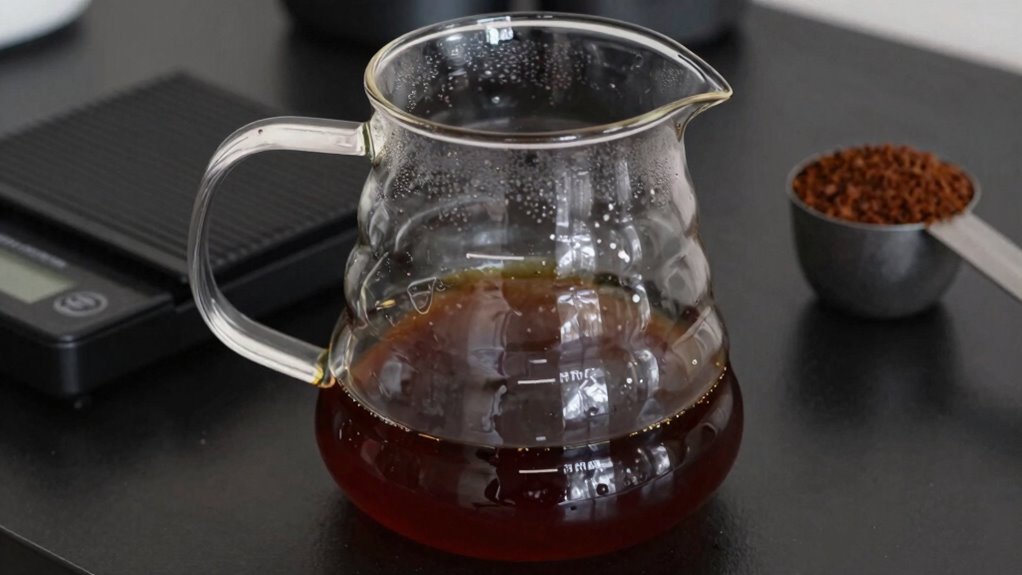
Creating the perfect cold brew starts with getting the right coffee-to-water ratio. If you don’t, you risk ending up with a weak or overly muddy drink that fails to deliver the rich flavor you’re after. The ratio determines how much coffee grounds you use relative to water, and striking that balance is vital for ideal flavor extraction. When you get it right, you’ll notice a smooth, well-rounded taste that highlights the coffee’s natural notes without any bitterness or dullness. Too little coffee, and your brew will be weak, lacking depth and body. Too much, and it might become overly concentrated or muddy, with muddled flavors that don’t shine through.
Beyond just the amount of coffee, the brewing temperature plays an essential role in flavor extraction. Cold brew is typically made with cold or room temperature water, which slows down extraction, but adjusting your brewing temperature can influence how much flavor you pull from your beans. Keeping the right temperature ensures you extract the desirable flavors without drawing out bitter or unwanted compounds. If your water is too warm, you risk over-extracting, leading to a bitter and harsh profile. If it’s too cold, you might under-extract, resulting in a weak or flat taste. The ideal brewing temperature for cold brew is usually just above freezing to room temperature, which allows for a slow, controlled extraction that preserves delicate flavors. Understanding extraction rate and how it relates to temperature can help you fine-tune your process for better results. Additionally, the solubility of coffee compounds at different temperatures affects how quickly and efficiently flavors are extracted, further emphasizing the importance of temperature control. Knowing how brew time influences extraction can also help you avoid over- or under-extracting your brew.
Getting the right coffee-to-water ratio also impacts how the flavor develops over time. A common starting point is about 1:4 or 1:5, meaning one part coffee to four or five parts water. This ratio provides enough concentration to develop a rich flavor while maintaining clarity and smoothness. If you prefer a stronger brew, you can go slightly higher; if you want it lighter, reduce the coffee. Just guarantee that your ratio complements your brewing temperature and method. Additionally, understanding the coffee grind size is crucial, as it affects extraction rate and overall flavor profile. When combined thoughtfully, these factors create a balanced extraction that highlights the coffee’s complexity without muddying the palette.
In the end, mastering your cold brew ratio isn’t just about measuring; it’s about understanding how amount and temperature influence flavor extraction. Adjustments might be necessary based on your beans and taste preferences, but sticking to a consistent ratio and ideal brewing temperature gives you a solid foundation. When you find that sweet spot, you’ll consistently craft cold brew that’s smooth, flavorful, and free of the weak or muddy qualities that can ruin an otherwise excellent cup.
cold brew coffee maker with adjustable ratio
As an affiliate, we earn on qualifying purchases.
As an affiliate, we earn on qualifying purchases.
Frequently Asked Questions
How Does Water Temperature Affect Cold Brew Extraction?
Water temperature considerably impacts cold brew extraction because it affects water solubility and flavor extraction. Cooler water slows down solubility, resulting in a milder, less intense flavor. Slightly warmer water increases solubility, extracting richer, more complex flavors without over-extracting bitterness. Maintaining a suitable temperature ensures you extract balanced flavors, avoiding weak or muddy results. So, controlling water temperature helps you craft a smooth, flavorful cold brew every time.
Can I Use Pre-Ground Coffee for Cold Brew?
Using pre-ground coffee for cold brew is like trying to perfect a painting with only a few colors—you can, but it might not be as vibrant. Pre-ground coffee can work, but it often leads to uneven extraction, affecting flavor profiles. For best results, use fresh, coarse grind and quality brewing equipment. This guarantees you capture the full richness and smoothness that cold brew is known for, without muddy or weak notes.
What’s the Best Grind Size for Cold Brew?
You should use a coarse grind size for cold brew. It helps extract rich flavors without over-extraction, preventing muddiness or bitterness. Store your coffee properly in an airtight container to maintain freshness, especially if you plan to brew over several days. Use good-quality brewing equipment, like a French press or a specialized cold brew maker, to guarantee even extraction. This combination yields smooth, bold cold brew every time.
How Long Should I Steep Cold Brew for Optimal Flavor?
You should steep your cold brew for about 12 to 24 hours to achieve an ideal flavor profile. A longer steeping duration enhances richness and smoothness, while a shorter one yields a brighter, more acidic taste. Keep in mind, if you steep too long, it may become overly bitter. Experiment within this range to find the perfect balance that suits your flavor preferences and maximizes your cold brew’s potential.
Does the Type of Coffee Bean Impact the Cold Brew Ratio?
Yes, the type of coffee bean impacts your cold brew ratio. Coffee bean origin and roasting level influence the strength and flavor extraction. For example, beans from different regions have unique profiles, requiring adjustments in ratio for balanced flavor. Darker roasts tend to be more soluble, so you might use a slightly lower ratio to avoid muddiness. Experimenting based on these factors helps you find the perfect cold brew strength.
cold brew coffee concentrate container
As an affiliate, we earn on qualifying purchases.
As an affiliate, we earn on qualifying purchases.
Conclusion
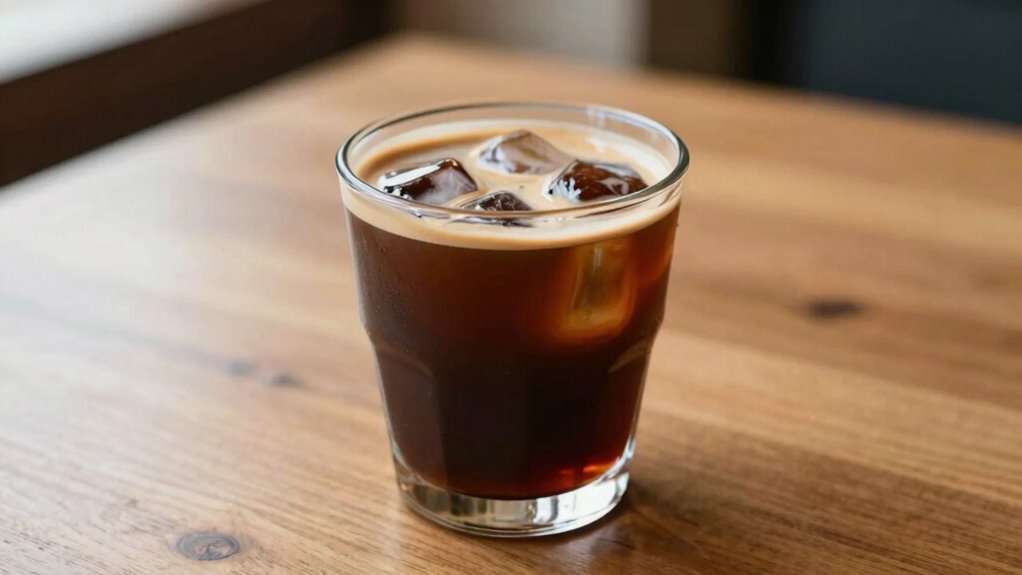
Now that you know the perfect cold brew ratio, you can craft a rich, smooth coffee that dances on your taste buds without any muddiness. Picture a glass filled with deep, velvety coffee, each sip bursting with clarity and flavor. No more weak or muddy brews—just pure, bold refreshment. With this ratio in your hands, every cup becomes a masterful blend, inviting you to savor the cool, invigorating depths of your ideal cold brew.
As an affiliate, we earn on qualifying purchases.
As an affiliate, we earn on qualifying purchases.