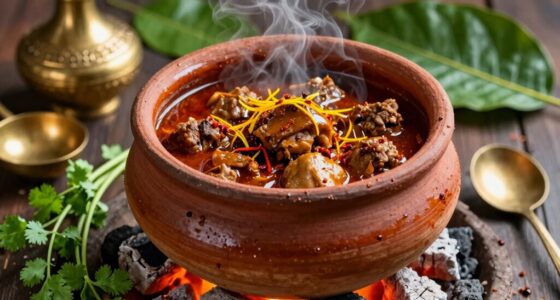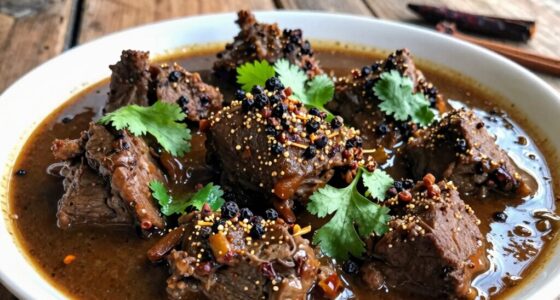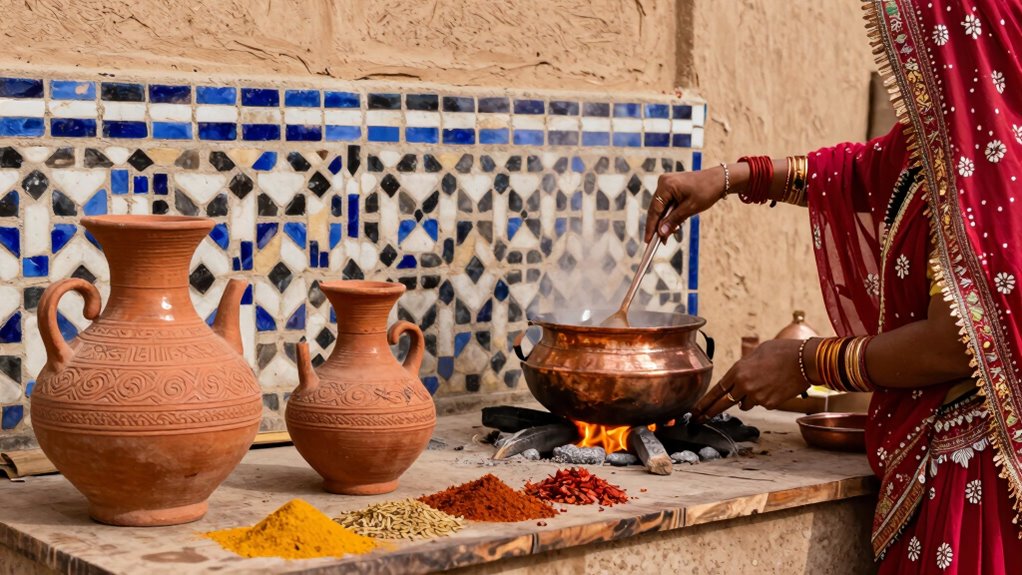

Rajasthani cooking reflects centuries of desert wisdom, emphasizing resourcefulness and resilience. You’ll notice bold flavors created through traditional spice blends like cumin, coriander, and black pepper, often roasted over open flames. Dishes are slow-cooked in clay pots to preserve nutrients and develop deep flavors, using dried ingredients for longevity. This culinary approach highlights how survival, adaptation, and respect for the land shape every meal. Continue exploring to uncover more about this rich, ancient tradition.

Get kitchen staples and gadgets delivered free with Prime
- Fast, free delivery on millions of items
- Prime Video, Amazon Music and more included
- Member-only deals all year
Key Takeaways
- Rajasthani cooking uses preserved ingredients and dried spices to ensure longevity in harsh desert conditions.
- Slow cooking techniques and clay pots maximize flavor while conserving resources and heat.
- Roasting spices over open flames deepens their flavor, reflecting traditional desert culinary methods.
- Signature dishes balance heat, sweetness, and earthiness, showcasing desert wisdom in flavor harmony.
- Techniques like spice blending and ingredient preservation demonstrate resilience and adaptation to the arid environment.
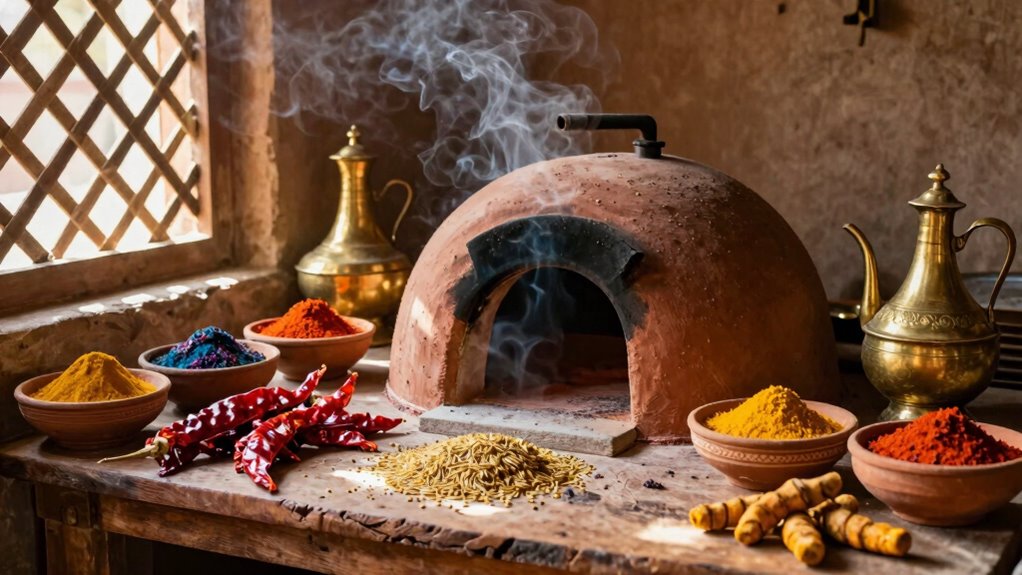
Rajasthani cooking reflects the vibrant culture and arid landscape of the desert state, blending bold flavors and simple ingredients to create unforgettable dishes. You’ll notice that the cuisine relies heavily on traditional spice blends, carefully crafted to enhance each ingredient while standing up to the intense heat and dryness of the region. These spice mixes aren’t just about flavor—they carry centuries of desert wisdom, developed to preserve food and maximize taste with minimal resources. You might find yourself savoring a generous dose of cumin, coriander, and black pepper in many dishes, each spice roasted or ground to release its full aroma, a reflection to the skill of desert culinary techniques.
Rajasthani spice blends reflect centuries of desert wisdom, enhancing flavors while preserving food in harsh, arid conditions.
When you cook Rajasthani food, you’re engaging with techniques shaped by the harsh environment. You’ll learn to make the most of limited water and ingredients, often employing slow cooking methods that tenderize tough meats and vegetables. These desert culinary techniques include roasting spices over an open flame to deepen their flavor, grinding them into fine powders, and then blending them into hearty curries or dry vegetable dishes. You might also notice the use of clay pots or handi, which retain heat evenly and infuse dishes with a subtle earthy aroma, a clever adaptation to the arid climate that ensures flavors meld beautifully over long cooking times. This approach exemplifies resourcefulness that is essential for thriving in a challenging environment. The use of traditional cooking methods passed down through generations emphasizes their importance in desert survival. The reliance on local ingredients further highlights the significance of preservation techniques in this cuisine.
The essence of Rajasthani cuisine lies in its resourcefulness. Since fresh produce can be scarce, dried ingredients and preserved foods feature prominently. You’re likely to encounter dishes flavored with dried plums, chickpeas, and lentils—all prepared using techniques that maximize their shelf life and flavor. This resourcefulness is paired with a mastery of spice blending that transforms simple ingredients into complex, layered dishes. For example, the iconic Dal Baati Churma combines baked wheat balls with spicy lentil curry, all seasoned with a traditional spice blend that balances heat, sweetness, and earthiness. It’s this harmony of flavors, born from desert wisdom, that makes Rajasthani cuisine so unique.
Additionally, these practices exemplify sustainable living by making the most of limited resources and emphasizing preservation techniques that reduce waste. In essence, you’re experiencing more than just a meal—you’re tasting a culture that has thrived in one of India’s most challenging environments. The traditional spice blends and desert culinary techniques aren’t just culinary choices; they are survival strategies passed down through generations. Each dish reflects resilience, adaptation, and a deep understanding of how to make the most of what the desert offers. As you savor these flavors, you’re connecting with a rich, ancient tradition built on ingenuity and respect for the land.
As an affiliate, we earn on qualifying purchases.
Frequently Asked Questions
How Do Rajasthani Spices Adapt to Desert Conditions?
You’ll notice that Rajasthani spices adapt to desert conditions through unique desert spice blends that enhance their flavor profiles. These blends incorporate hardy, locally available ingredients like cumin, coriander, and chili, which withstand harsh climates and bring out bold, resilient flavors. The spices are carefully balanced to stay vibrant despite the arid environment, allowing you to enjoy authentic Rajasthani dishes rich in tradition and desert wisdom.
What Role Does Local Water Scarcity Play in Recipe Choices?
Like a modern eco-warrior, you recognize that water scarcity influences your recipe choices. You prioritize water conservation by selecting drought-resistant ingredients like millet and legumes, which thrive with minimal water. These ingredients help preserve precious water resources while maintaining flavor and nutrition. Your cooking reflects a deep understanding of the desert environment, ensuring that each dish is sustainable, hearty, and respectful of the land’s limited water supply.
Are There Any Special Utensils Unique to Rajasthani Cooking?
You’ll notice Rajasthani cooking features unique utensils like traditional clay pots, which hold great significance. These clay pots, crafted through traditional craftsmanship, help retain flavors and keep dishes authentic. They’re essential for slow-cooked curries and rice dishes, reflecting the region’s resourcefulness. Using such utensils not only connects you to local culinary traditions but also enhances taste, making every meal a reflection of Rajasthani desert wisdom and craftsmanship.
How Is Desert Flora Used in Rajasthani Cuisine?
Imagine the desert’s quiet resilience, now tasting it in your plate. You use desert flora like prickly pear, wild herbs, and desert blossoms for their culinary uses, transforming humble ingredients into flavorful treasures. These plants add a unique, earthy aroma and subtle sweetness, enriching Rajasthani dishes. You harness the desert’s bounty, turning survival into celebration, and infusing every bite with the spirit of the arid landscape.
What Traditional Cooking Methods Preserve Desert Ingredients?
You should focus on traditional cooking techniques like sun-drying and slow roasting to preserve desert ingredients. These methods, known as desert food preservation, help retain flavors and nutrients without refrigeration. By using clay pots and open flames, you prevent spoilage and extend shelf life. Such techniques are essential in arid regions, ensuring desert flora remains edible and valuable for long periods, even during droughts or scarce seasons.
clay cooking pots for slow cooking
As an affiliate, we earn on qualifying purchases.
As an affiliate, we earn on qualifying purchases.
Conclusion
So, savor the soulful secrets of Rajasthani cooking, where tradition and taste triumph. By blending bold spices with a touch of desert daring, you discover dishes that delight and dazzle. Embrace the essence of this enchanting cuisine, and let its wisdom warm your world. Remember, in Rajasthani recipes, resilience and richness reign — a true demonstration of desert-dwelling mastery. Immerse yourself, discover, and delight in the delicious depths of Rajasthan’s resilient recipes.
traditional Indian spice grinder
As an affiliate, we earn on qualifying purchases.
As an affiliate, we earn on qualifying purchases.
As an affiliate, we earn on qualifying purchases.
Halloween Picks
halloween
As an affiliate, we earn on qualifying purchases.