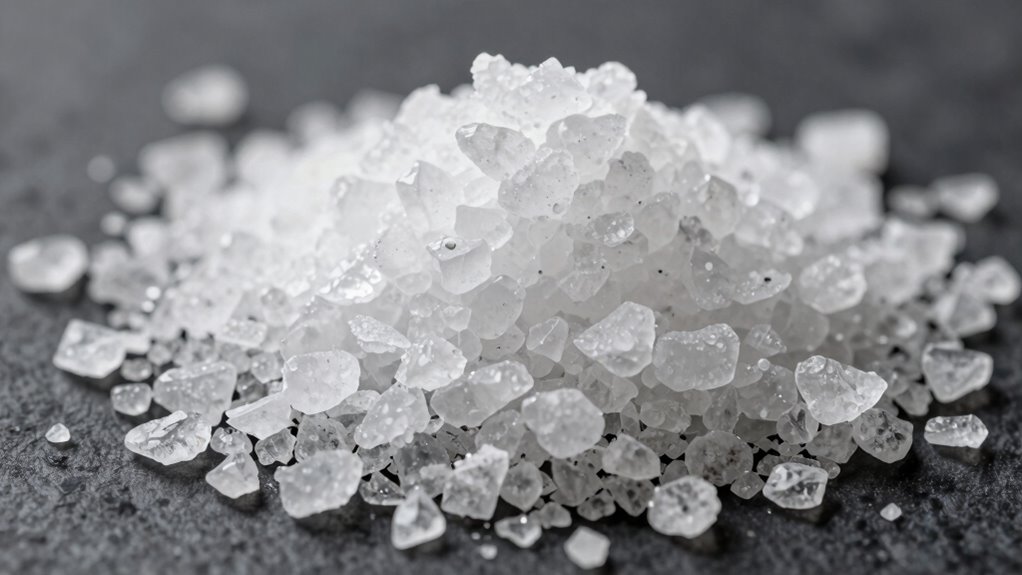
When you add salt, it first triggers physical changes in the food’s structure, like drawing out moisture and forming salt crystals. These actions make the surface firmer or crisper and can even create gritty textures. Salt causes water inside the food to move out, altering its internal firmness before you notice any flavor. Understanding these early physical effects helps you control texture, and there’s more to uncover about how salt influences food beyond just taste.
Key Takeaways
- Salt causes physical changes like recrystallization, creating gritty or crunchy textures on food surfaces.
- It draws moisture out via osmosis, making foods firmer or crisper before flavor impacts are noticeable.
- Salt crystals form and grow within food tissues, influencing firmness and structural integrity.
- Recrystallization on surfaces enhances texture, often resulting in a more resistant, textured bite.
- These physical alterations occur prior to, and independent of, the flavor-enhancing effects of salt.
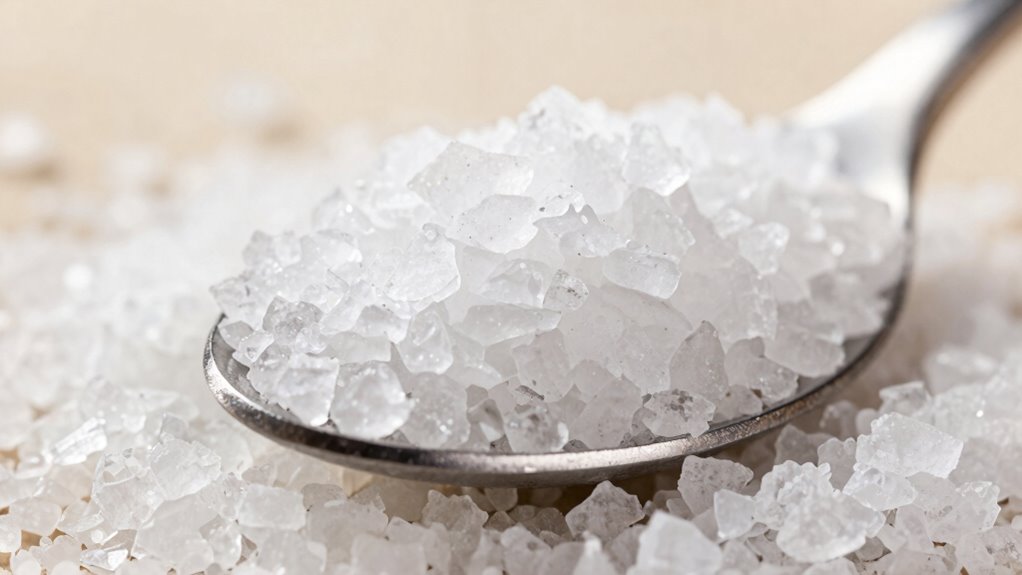
Salt plays a crucial role in altering the texture of various foods, often in ways you might not expect. When you add salt, you’re not just seasoning; you’re triggering physical changes that can transform a dish’s structure. One of these changes involves salt crystal formation, where tiny salt crystals dissolve and then recrystallize, affecting the food’s surface and internal texture. For example, when you sprinkle salt on vegetables or meats, the salt initially draws out moisture through osmosis. This process causes water to leave the cells, making the food firmer and sometimes crisper. Over time, as the salt dissolves and recrystallizes, it can create a gritty or crunchy texture on the surface, especially if you use coarse salt.
Salting meat preservation is another way salt influences texture before flavor even enters the conversation. When you salt meat intentionally, you’re not just seasoning it—you’re engaging in a preservation technique that alters its physical properties. Salt penetrates the meat, disrupting the structure of muscle fibers and reducing water content inside the tissue. This dehydration process firms up the meat, giving it a denser, more resistant feel when you bite into it. The formation of salt crystals within the meat tissue contributes to this firmness, as they act like tiny anchors holding the structure in place. This is why salted, cured meats often have a denser, chewier texture compared to fresh meat. Additionally, the crystalline structure of salt influences how the texture develops during curing and storage. Understanding the physical changes caused by salt helps in predicting and controlling the final texture of preserved foods. Recognizing these chemical interactions is key to mastering food preservation techniques.

Tuscanini, Coarse Mediterranean Sea Salt, 16oz Tube, From Sicily Italy
- Origin: Product of Sicily, Italy
- Mineral Content: Rich in essential minerals
- Texture: Coarse and crunchy
As an affiliate, we earn on qualifying purchases.
As an affiliate, we earn on qualifying purchases.
Frequently Asked Questions
Does Salt Affect the Nutritional Value of Food?
Yes, salt affects the nutritional value of food. When you use salt for preservation, it can increase mineral content, especially sodium, which is essential in small amounts. However, too much salt can lead to health issues like high blood pressure. While it enhances flavor and texture, you should moderate your intake to balance benefits and risks, ensuring your food remains nutritious and safe to eat.
How Does Salt Influence Food Shelf Life?
Salt considerably influences food shelf life through salty preservation, which inhibits bacterial growth and delays spoilage. You’ll notice a texture transformation as salt draws out moisture, creating an environment less hospitable for bacteria. This process helps extend freshness and prevents mold. So, by adding salt, you’re not only enhancing flavor but also actively preserving your food longer, making it a practical method for ensuring your food stays safe and edible over time.
Can Salt Be Used to Modify Food Appearance?
Ever wondered if salt can modify food appearance? Yes, it can through salt crystallization, creating a sparkling, textured surface that enhances visual appeal. Chefs often use this technique to give dishes a fresh, artisanal look, especially on baked goods or garnished plates. Salt’s ability to develop crystals adds a decorative touch, making food more enticing. Isn’t it fascinating how a simple mineral can elevate both taste and visual presentation?
Does Salt Impact the Cooking Time of Ingredients?
Yes, salt impacts the cooking time of ingredients. When you use a salty marination, it can speed up or slow down cooking, depending on the method and ingredients. Salt also causes textural enhancement, making proteins and vegetables firmer or more tender. This happens because salt influences water retention and protein structure, which in turn affects how quickly ingredients cook. So, adjusting salt levels can help you control cooking times effectively.
Are There Health Risks Linked to Salt-Induced Texture Changes?
While salt subtly influences texture, it’s important to be mindful of salt and health risks. Excessive salt intake may lead to higher blood pressure and other health concerns over time. The good news is, if you enjoy salt in moderation, you can savor its benefits without worry. Balancing salt and health risks involves mindful seasoning, so your dishes stay flavorful without compromising your well-being.
![Dry & Dry 5 Gram [50 Packets] Silica Gel Packets Silica Gel Desiccants, Silica Gel Packs - Rechargeable Moisture Absorbers for Food Storage, Electronics, 3D Filament & Safes](https://m.media-amazon.com/images/I/51ioFKpJqOL._SL500_.jpg)
Dry & Dry 5 Gram [50 Packets] Silica Gel Packets Silica Gel Desiccants, Silica Gel Packs – Rechargeable Moisture Absorbers for Food Storage, Electronics, 3D Filament & Safes
- Packet Size: 2 x 2.7 inches
- Coverage Area: 600 cubic inches per packet
- Usage Instructions: Seal items with silica gel packets
As an affiliate, we earn on qualifying purchases.
As an affiliate, we earn on qualifying purchases.
Conclusion
As you sprinkle salt into your dish, imagine it as a tiny artist sculpting the texture beneath your fingertips. Before it whispers its salty secrets, it dances on your palate, transforming from a gritty granule to a silky, velvety touch. Like a magician’s trick, salt’s magic begins with texture—setting the stage for flavor to take center stage. Embrace this subtle alchemy, and let every pinch be a journey through the delicious metamorphosis.

Home EC Premium Stainless Steel Sea Salt and Pepper Grinder Set of 2 – Adjustable Ceramic – Tall Glass Salt and Pepper Shakers – Kitchen Spice Mill W/Funnel & EBook
- High-Quality Materials: Brushed stainless steel and BPA-free glass
- Adjustable Ceramic Grinder: Large rotor for customizable coarseness
- Secure Stainless Steel Lids: Keeps spices fresh and counters clean
As an affiliate, we earn on qualifying purchases.
As an affiliate, we earn on qualifying purchases.

The Spice Lab Pink Curing Salt No. 1, Prague Powder 1, 1 lb Bag
- Product Name: Pink Curing Salt No. 1, 1 lb Bag
- Alternative Names: Insta Cure #1, Tinted Cure
- Main Function: Preserves and colors meats
As an affiliate, we earn on qualifying purchases.
As an affiliate, we earn on qualifying purchases.