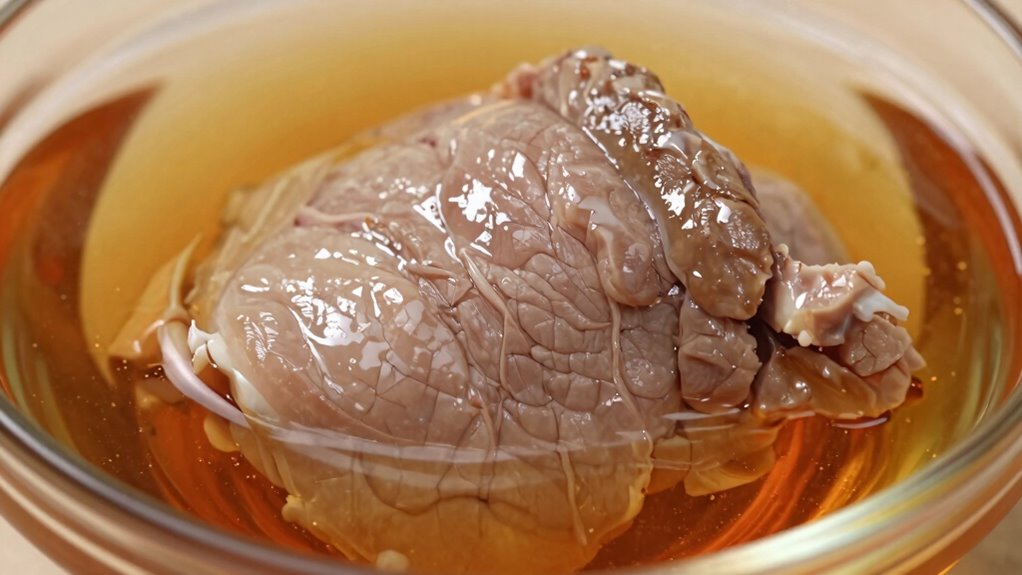

When you marinate meat with acid, the timing makes all the difference. Short exposure tenderizes by breaking down muscle fibers and connective tissues, making your meat softer and more flavorful. But if you leave it too long, the acid over-degrades proteins, causing mushy or slimy textures and toughening the meat instead. Controlling the marination time and acid levels is key to getting the perfect balance—stay tuned to discover how to master this process perfectly.

Get kitchen staples and gadgets delivered free — and shop member deals
- Fast, free delivery on millions of items
- Access to Prime Big Deal Days deals on October 6–7
- Prime Video, Amazon Music and more included
Key Takeaways
- Short marination times allow acids to tenderize by breaking down muscle fibers without overdoing protein denaturation.
- Extended exposure to acid causes excessive protein breakdown, leading to a tough or mushy texture.
- Proper timing ensures acid enhances flavor and tenderness without damaging meat structure.
- Over-marinating can denature proteins excessively, resulting in a firm or rubbery texture.
- Balancing acid concentration and marination duration is essential to achieve desired tenderness or avoid toughness.
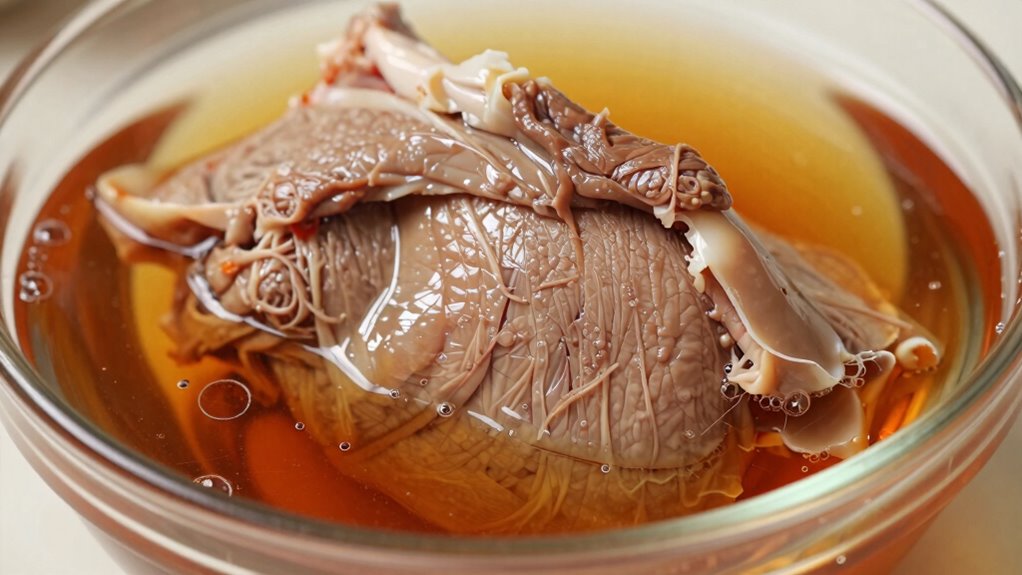
Understanding how acid affects meat and other proteins can seem confusing, but the key lies in timing. When you marinate meat with acidic ingredients like vinegar, citrus juice, or wine, the effects on the protein structure depend heavily on how long the meat sits in the marinade. In the early stages, acid can work wonders by tenderizing the meat, breaking down tough muscle fibers and connective tissues. This is known as the marination effects, where the acid interacts with protein molecules, loosening their bonds and making the meat more tender and flavorful. If you leave the meat in an acid-based marinade for just the right amount of time, typically 30 minutes to a few hours, you’ll notice a significant improvement in texture without losing too much moisture.
However, if you marinate the meat too long, the acid’s effects can backfire. Over time, the acid continues to break down the proteins, but instead of tenderizing, it can cause the meat’s surface to become mushy or grainy. This happens because the acid denatures the proteins excessively, disrupting their natural structure and leading to protein breakdown. The result is meat that feels overly soft, almost slimy, and can lose its appealing texture. For delicate proteins like fish or thin cuts of meat, this process can happen quite quickly, so it’s essential to keep an eye on marination time. Additionally, proper timing can help maintain the overall quality and prevent undesirable texture changes. Being aware of protein structure and how it responds to acids can further inform your marination strategy. Moreover, controlling acid concentration is also important to avoid damaging the meat’s texture through overexposure.
You might think that longer marination always equals better flavor, but with acids, patience can be a double-edged sword. The key is to find the balance: marinate long enough to enhance tenderness and flavor, but not so long that the acid begins to degrade the meat’s integrity. The marination effects are most beneficial within a certain window—usually less than a few hours—after which protein breakdown becomes detrimental. Additionally, understanding the timing of acid application is crucial for achieving the desired culinary outcome without compromising the quality of your dish. Proper control over acid exposure can help prevent the undesirable effects of over-marinating.
As an affiliate, we earn on qualifying purchases.
Frequently Asked Questions
How Does Acid Affect Different Types of Meats?
You’ll notice that acid affects different meats depending on your marinating techniques and acid concentration. When you use a high acid concentration or marinate for too long, it can toughen the meat by breaking down proteins excessively. Conversely, a moderate amount of acid and shorter marinating times tenderize the meat, making it more flavorful and juicy. Modifying these factors guarantees you get the perfect balance for tender, tasty results.
Can Acidity Change the Flavor of the Dish?
Yes, acidity can change the flavor of your dish. It enhances flavor by adding brightness and balance, highlighting certain ingredients. However, too much acidity can overpower the dish or make it too tart. By carefully balancing acidity, you guarantee flavor enhancement without overwhelming other tastes. Adjust the acidity level to suit your preferences, and you’ll achieve a well-rounded, flavorful dish with a perfect acidity balance that complements your ingredients.
What Are Some Common Acids Used in Cooking?
Imagine a splash of citrus zest or a dash of vinegar—these are your common acids in cooking. You use acidic marinades to tenderize meat or brighten salads, while citrus juice adds zing. Other popular acids include vinegar, lemon juice, lime juice, and yogurt. These acids not only enhance flavors but also help in tenderizing, making your dishes more vibrant and delicious. Just remember, timing is everything!
How Do Cooking Methods Influence Acid’s Effect?
Cooking methods considerably influence acid’s effect on food. For example, fermentation processes use acids over time to tenderize or develop flavors, while acidic marinades act quickly, tenderizing meats if left long enough. High heat can neutralize some acids, reducing their tenderizing power, whereas slow simmering allows acids to penetrate deeply. Your choice of method determines whether acids tenderize or toughen, depending on timing and temperature.
Is There a Way to Reverse Over-Tenderized Meat?
Once meat becomes over-tenderized, reversing the texture is tricky, but you can try adding some firmness. Keep the meat cool and cook it gently to avoid further breakdown. Using a marinade with a higher acid content and shorter contact time can help balance the texture. Remember, acid timing is essential; if too much acid is applied early, it can make the meat mushy, so adjust your approach accordingly.
As an affiliate, we earn on qualifying purchases.
Conclusion
Think of acid in cooking as a whisperer that can either tighten or loosen the grip of your meat’s tenderness, depending on when you invite it to the party. If you add it too early, it’s like locking in a stiff pose; wait too long, and it’s as if the meat melts into a savory symphony. Timing’s your secret ingredient—master it, and your dish will sing with perfect harmony.
As an affiliate, we earn on qualifying purchases.
As an affiliate, we earn on qualifying purchases.
NFL season / tailgating Picks
team gear
As an affiliate, we earn on qualifying purchases.