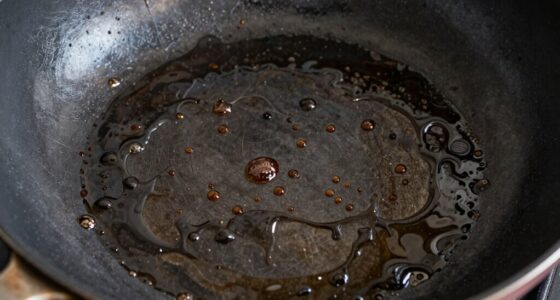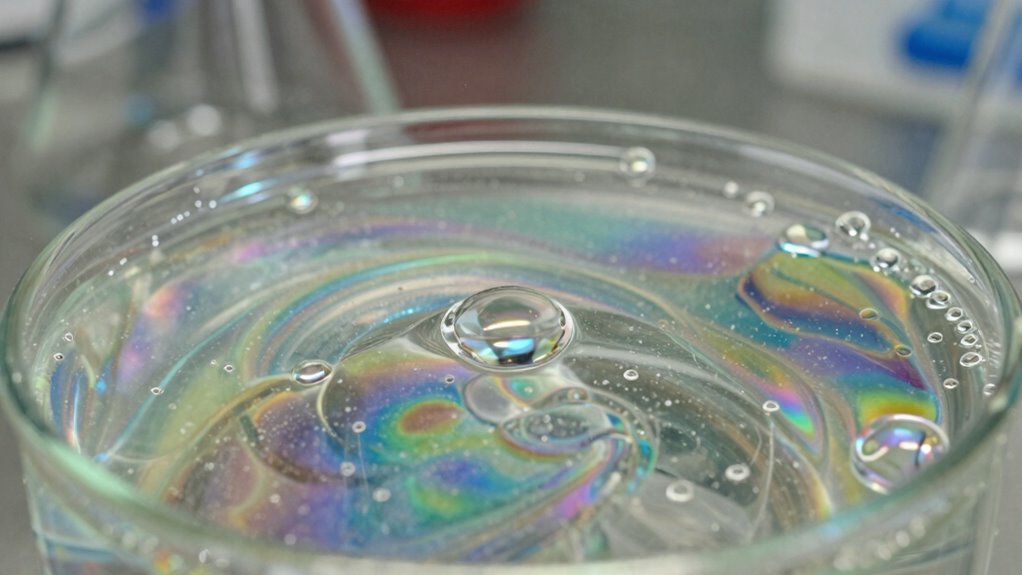

Emulsions might seem complicated at first, but they’re actually everywhere in your daily routine. They’re mixtures of oil and water stabilized by agents called emulsifiers, keeping ingredients from separating. You see them in foods like salad dressings and in cosmetics like creams and moisturizers. The tiny droplets and their size impact texture and stability, making products smooth and appealing. If you want to understand how these everyday products work behind the scenes, there’s more to discover.
Key Takeaways
- Emulsions are common in everyday products like salad dressings, creams, and processed foods, making them familiar despite their complex science.
- They involve mixing oil and water, stabilized by emulsifiers, which is a scientific process hidden in plain sight.
- Small droplet size improves product stability and sensory qualities, ensuring products look and feel appealing.
- Proper formulation extends shelf life by preventing separation, demonstrating the importance of emulsions in product longevity.
- Recognizing emulsions helps appreciate the science behind the textures and appearances of many everyday items.
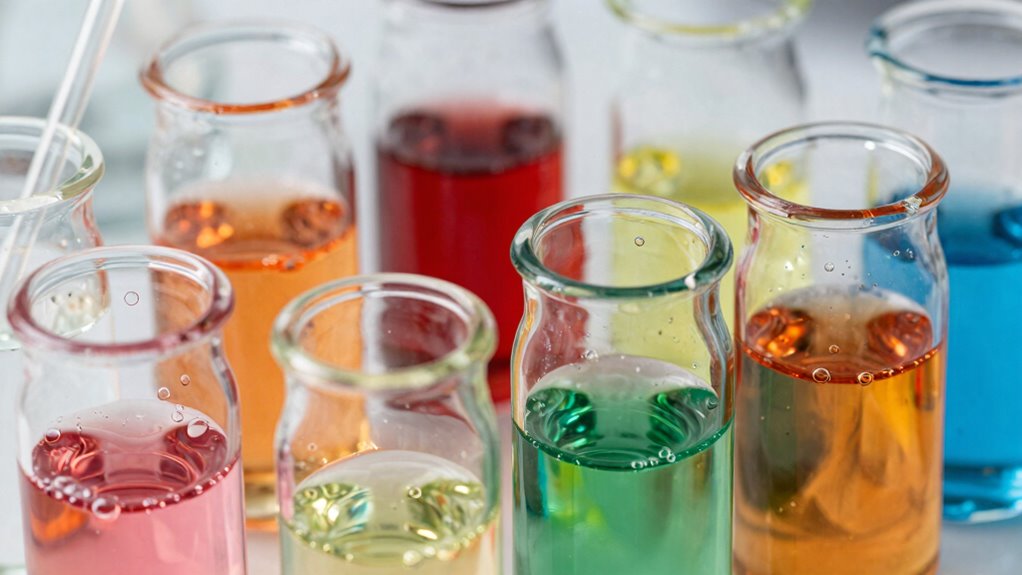
Emulsions might seem complicated at first, but understanding their basic principles can make them much easier to grasp. Essentially, an emulsion is a mixture of two immiscible liquids, like oil and water, that are forced to stay combined through the use of an emulsifier. Your everyday experiences with emulsions are everywhere—think salad dressings, creams, or even certain processed foods. Recognizing how they work helps you appreciate their role in both cooking and cosmetic products.
Emulsions are mixtures of oil and water stabilized by emulsifiers, found everywhere from foods to cosmetics.
One reason emulsions are so widespread is their chemical stability. Without proper stabilization, the two liquids would naturally separate over time due to their inherent immiscibility. Emulsifiers, which are often surfactants, reduce the surface tension between the liquids, forming tiny droplets that stay suspended. This stability isn’t just about keeping the mixture uniform; it also influences the product’s shelf life and effectiveness. For example, a stable cosmetic cream maintains its consistency and performance longer, while an unstable salad dressing might quickly separate, requiring shaking before use. By understanding the chemistry behind emulsions, you gain insight into how manufacturers manipulate these systems to achieve the desired stability.
But emulsions aren’t just about chemical stability—they also significantly impact sensory perception. The texture, appearance, and feel of an emulsion influence how we perceive its quality. A smooth, creamy lotion or a velvety mouthfeel in a sauce can make the experience more pleasurable. When emulsions are well-made, they create a uniform, appealing appearance and a pleasant tactile sensation that draws you in. Conversely, a poorly stabilized emulsion might feel gritty or separate quickly, diminishing your sensory experience. This is why food scientists and cosmetic formulators pay close attention to the droplet size and the concentration of emulsifiers—they directly affect how you perceive the product’s quality and appeal.
Once you start noticing emulsions in your daily life, it becomes clear how integral they are to many products. From the glossy sheen of a moisturizer to the rich texture of a chocolate mousse, emulsions play a subtle but essential role. Their ability to combine ingredients that naturally repel each other is a testament to the ingenuity of science and chemistry. Understanding their principles allows you to see the craftsmanship behind these products and appreciate the delicate balance needed to maintain their stability and sensory appeal. For example, droplet size greatly influences the texture and stability of an emulsion. Recognizing the importance of emulsifier types can help you better understand how different formulations are designed for specific applications. So, next time you enjoy a creamy dressing or smooth skincare, remember that emulsions are quietly working behind the scenes, making your experience both stable and pleasurable.

Chef'n 104-759-258 Emulstir Salad Dressing Mixer, One Size, Plastic, Arugula/Meringue
- Versatile for mixing, serving, and storing: Create and store dressings easily
- Efficient salad dressing emulsifier: Quickly mix ingredients for emulsified dressings
- Drip-free pouring spout: No drips after pouring
As an affiliate, we earn on qualifying purchases.
As an affiliate, we earn on qualifying purchases.
Frequently Asked Questions
How Do Emulsions Differ From Suspensions?
You’ll find that emulsions differ from suspensions mainly in droplet size and stability. Emulsions consist of tiny droplets of one liquid dispersed in another, stabilized by emulsifiers, maintaining their mixture over time. Suspensions, on the other hand, have larger particles that tend to settle out unless shaken. Emulsion stability relies on small droplet size and proper emulsifiers, preventing separation and keeping the mixture uniform longer.
Can Emulsions Be Naturally Occurring?
Yes, emulsions can be naturally occurring through biological processes. You’ll find natural formations of emulsions in things like milk, which contains fat droplets dispersed in water, or in our bodies during digestion, where enzymes help break down fats into smaller droplets. These biological processes create stable emulsions without human intervention, demonstrating that emulsions aren’t just synthetic but play essential roles in nature’s complex systems.
What Are Common Household Examples of Emulsions?
Think of the time when milk separation was a common issue—today, you see emulsions in household items like salad dressings and mayonnaise. These are classic examples, where oil and water combine smoothly. When you shake up a vinaigrette or spread mayo on your sandwich, you’re creating an emulsion. It’s a simple process that keeps ingredients mixed, preventing separation and making your dishes more delicious and appealing.
How Long Do Emulsions Typically Last?
Emulsions usually last anywhere from a few days to several months, depending on their emulsion stability. Commercial products like mayonnaise or lotion often have a longer shelf life thanks to preservatives, while homemade versions may spoil faster. To maximize shelf life, keep emulsions refrigerated and store them in airtight containers. Always check for signs of separation or spoilage, as these indicate the emulsion’s stability has decreased and it’s no longer safe to use.
Are Emulsions Safe for All Skin Types?
Sure, emulsions are safe for all skin types—unless your skin’s a diva about ingredient stability or skin hydration. Ironically, their complex mix can sometimes challenge sensitive or dry skin. While they often boost hydration and keep ingredients stable, some formulations might cause irritation. Always patch-test new products and choose emulsions tailored to your skin’s needs to enjoy their benefits without the drama.

iS CLINICAL Reparative Moisture Emulsion, Hydrating Anti-Aging Face Moisturizer with Hyaluronic Acid, Repairs and Protects Skin
- Hydrates and smooths skin: Hydrates and smooths skin
- Reduces fine lines: Helps reduce fine lines and wrinkles
- Deep hydration: Provides penetrating and surface hydration
As an affiliate, we earn on qualifying purchases.
As an affiliate, we earn on qualifying purchases.
Conclusion
So, next time you see a salad dressing or a creamy lotion, remember—emulsions aren’t as complicated as they seem. They’re just tiny miracles of science happening right in front of your eyes, blending things that wouldn’t normally mix. Think of them as the magic behind everyday wonders, turning chaos into harmony. Once you recognize their presence, you’ll realize emulsions are everywhere, quietly working their magic—proof that even complexity can be beautifully simple.

Turelar Immersion Blender Handheld Corded, 1100W 5 in 1 Hand Blender Set
- Powerful 1100W Copper Motor: Ensures fast, smooth blending and chopping
- Variable Speed Trigger: Control blending speed with one-touch ease
- Splash-Resistant Food-Grade Blade Guard: Prevents scratches and reduces splashes for easy cleaning
As an affiliate, we earn on qualifying purchases.
As an affiliate, we earn on qualifying purchases.
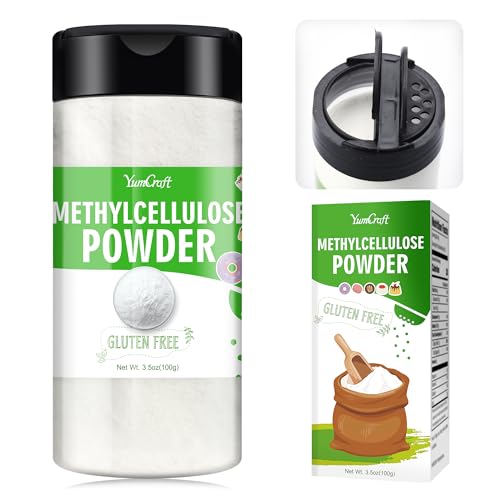
Methylcellulose Powder – 3.5oz Pure Methylcellulose Powder for Fondant, Ice Cream Stabilizer, Food Grade Methylcellulose Thickener and Emulsifier for Cake, Frozen Foods, Candy, Yogurt, Gum Paste
- Versatile Culinary Ingredient: Thickener, stabilizer, emulsifier, water-retainer
- Food Stabilizer: Locks in moisture, prolongs freshness
- Improves Texture and Stability: Enhances viscosity and emulsion stability
As an affiliate, we earn on qualifying purchases.
As an affiliate, we earn on qualifying purchases.