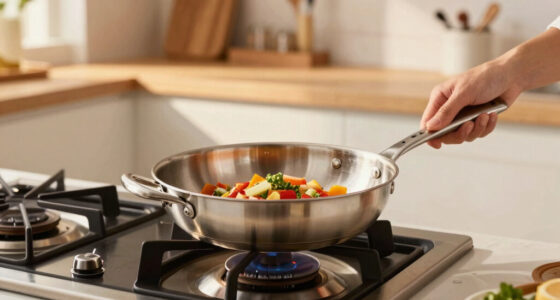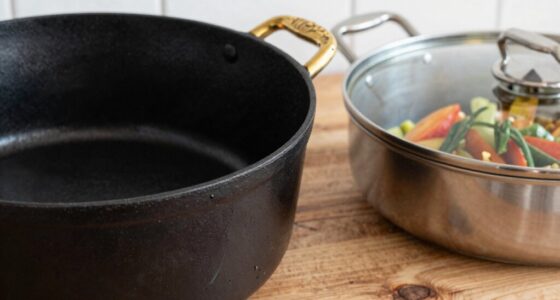

The one cleaning habit that ruins good cookware is using harsh dish soap excessively. Overdoing it strips away protective coatings and seasoning, making your pans more prone to rust, sticking, and damage. Harsh options also accelerate deterioration of non-stick and seasoned surfaces. To keep your cookware in top shape, avoid aggressive scrubbing and stick to gentle cleaning habits. Keep going to discover more simple tips to help your cookware last longer and perform better.
Key Takeaways
- Using excessive dish soap strips protective coatings, weakening cookware over time.
- Relying on abrasive scrubbers like steel wool causes scratches and surface damage.
- Neglecting thorough rinsing leaves residue, dulling the cookware’s appearance and performance.
- Leaving cookware wet promotes rust and corrosion, especially on cast iron and steel.
- Frequent harsh cleaning habits accelerate deterioration and reduce the lifespan of good cookware.
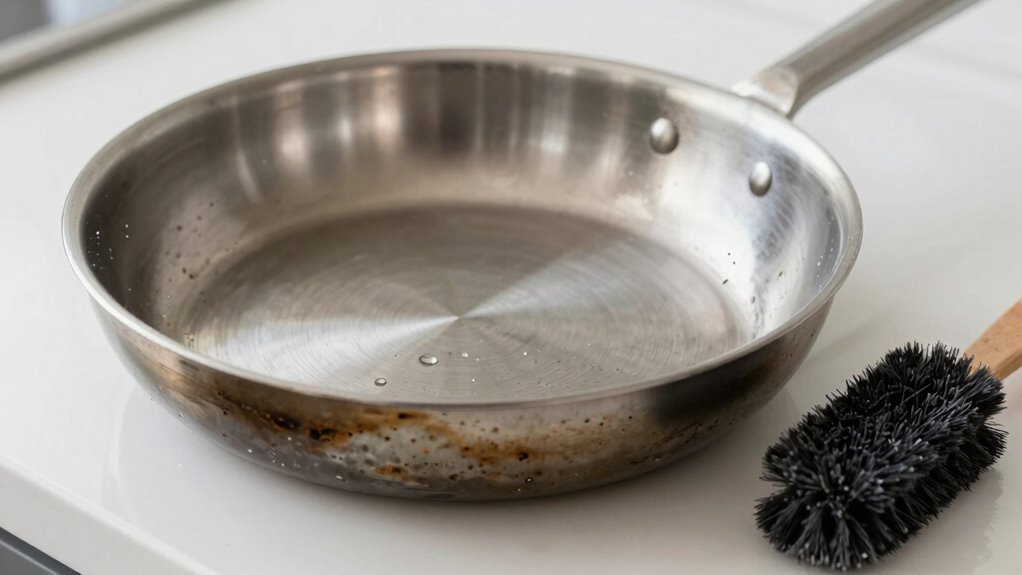
Have you ever wondered why your high-quality cookware loses its shine and performance over time? The answer often lies in one simple but overlooked habit: how you clean your pots and pans. Many people unknowingly contribute to the deterioration of their cookware by making common mistakes that seem harmless at first glance. One of the biggest culprits is using dish soap pitfalls inappropriately. While dish soap is designed to cut through grease and grime, applying too much or using harsh varieties can strip away the protective coatings or seasoning on your cookware, especially if it’s made of cast iron, seasoned steel, or non-stick surfaces. Over time, this can weaken the finish, leading to dullness and reduced performance.
Proper cleaning habits preserve your cookware’s shine, performance, and longevity over time.
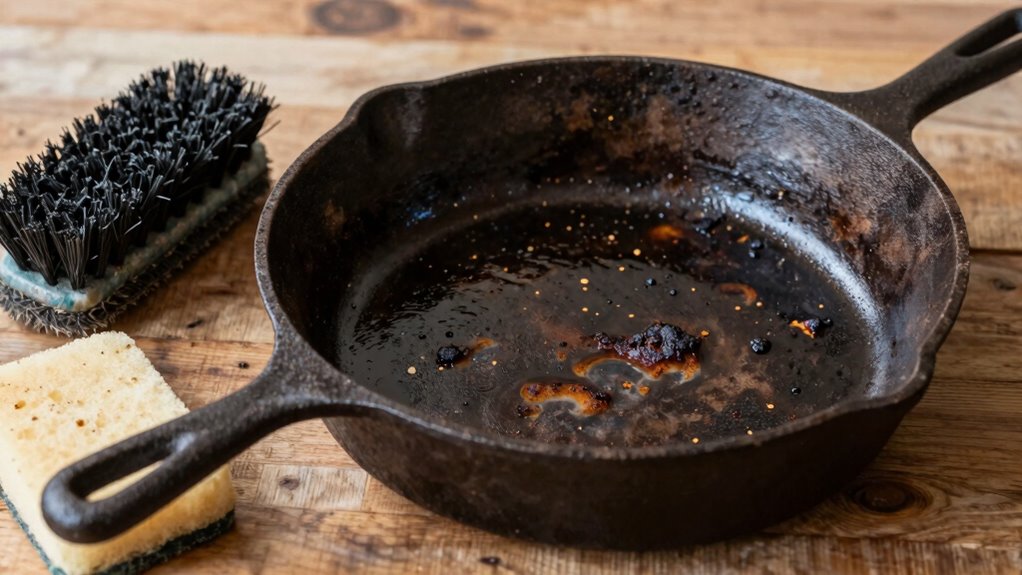
Another frequent mistake is the use of abrasive scrubbers. You might think that scrubbing harder will remove stubborn stains or burnt-on food more effectively, but in reality, abrasive scrubbers damage the surface of your cookware. Steel wool, scouring pads, or rough brushes can scratch the delicate surface of non-stick coatings, scratch the exterior, or chip away at seasoned finishes. Once damaged, these surfaces become more susceptible to rust, sticking, and staining, accelerating the wear process. Instead of scrubbing aggressively, you should opt for softer sponges or brushes designed for cookware, and only use abrasive tools when absolutely necessary—and with care.
Many cooks also fall into the trap of neglecting proper cleaning techniques altogether, thinking a quick rinse or splash of soap will suffice. But residue from food, grease, and soap buildup can accumulate over time, dulling the appearance and hampering performance. It’s important to clean your cookware thoroughly after each use, paying close attention to stubborn spots. Using warm water and gentle cleaning tools helps preserve the integrity of your cookware’s surface. Additionally, avoiding harsh chemicals or overly aggressive cleaning methods will extend its lifespan. Protecting your cookware’s seasoned surface by avoiding excessive cleaning is key to maintaining its longevity.
Finally, it’s essential to dry your cookware properly after washing. Leaving it wet can lead to corrosion or rust, especially in cast iron or carbon steel pieces. A quick towel dry or low-heat oven drying ensures that moisture doesn’t settle and cause damage. By changing your cleaning habits—being cautious with dish soap, steering clear of abrasive tools, and maintaining proper drying routines—you safeguard your cookware from unnecessary wear and tear. Over time, these small adjustments will keep your pots and pans looking new, performing better, and lasting longer, saving you money and frustration in the long run.

HOMEXCEL Sponges Kitchen 24 Pack, Non Scratch Scrub Dish Sponge for Dishes
- Non-Scratch Cleaning: Safe for delicate surfaces
- Compact and Easy to Store: Small, flexible, and space-saving
- Efficient Foaming: Creates rich lather with less soap
As an affiliate, we earn on qualifying purchases.
As an affiliate, we earn on qualifying purchases.
Frequently Asked Questions
Can Dishwasher Cleaning Damage Non-Stick Cookware?
Yes, dishwasher cleaning can damage non-stick cookware. The harsh detergents and high heat in dishwashers can cause dishwasher damage, leading to scratches and deterioration of the non-stick coating. This reduces non-stick longevity, making your cookware less effective and more prone to sticking. To preserve your non-stick pans, hand wash them gently with mild soap and avoid dishwasher cycles that can compromise their surface and lifespan.
What’s the Best Way to Remove Rust From Cookware?
To remove rust from cookware, start by scrubbing the rusty spots with a mixture of baking soda and water or white vinegar. Let it sit for a few minutes to loosen the rust, then scrub gently with a brush or sponge. Rinse thoroughly and dry immediately. Regular rust removal is essential for proper cookware maintenance, helping to extend its lifespan and keep your cookware in good condition.
How Often Should I Replace My Good Cookware?
You should replace your good cookware when it shows significant wear, warping, or persistent damage that affects its performance. Typically, the cookware lifespan ranges from 5 to 10 years, depending on usage and care. Regularly assess your pots and pans, and prioritize replacement when they no longer heat evenly or become difficult to clean. Maintaining proper care extends their longevity, but knowing the right replacement frequency guarantees you’re cooking safely and efficiently.
Are Metal Utensils Safe for Non-Stick Pots?
Imagine your non-stick pot as a delicate dance partner, and metal utensils as rough shoes. Using metal utensils can scratch the surface, compromising non-stick durability. While they’re sturdy, they risk damaging the coating, reducing its effectiveness over time. To protect your cookware, opt for silicone or wooden utensils. This way, you preserve the smooth dance, ensuring your non-stick pots stay in prime condition longer.
Does Seasoning Affect Cookware Cleaning Methods?
Seasoning effects your cookware maintenance by creating a natural non-stick layer, which means you should avoid harsh cleaning methods. If you scrub seasoning off with abrasive tools or detergents, you’ll strip away the protective layer, reducing its effectiveness. To keep your cookware in top shape, clean it gently with warm water and a soft sponge, avoiding metal scouring pads. Proper cleaning preserves seasoning, ensuring your cookware stays well-maintained and long-lasting.

Lodge Cast Iron Seasoning Spray, 100% Canola Oil, 8 oz
- Pure Canola Oil Formula: Made with 100% canola oil, no additives
- Easy Cast Iron Maintenance: Spray to protect and enhance cookware finish
- Simple Cleaning Instructions: Use after hand washing and drying cookware
As an affiliate, we earn on qualifying purchases.
As an affiliate, we earn on qualifying purchases.
Conclusion
To keep your cookware in top shape, avoid the common mistake of using harsh abrasives or soaking non-stick pans overnight. Did you know that nearly 60% of cookware damage occurs due to improper cleaning habits? By sticking to gentle scrubbing and immediate cleaning, you’ll extend the life of your pots and pans. Remember, a small change in your cleaning routine can save you money and preserve your cookware’s quality for years to come.

Dawn Gentle Clean EZ-Squeeze Dishwashing Liquid Dish Soap, Pomegranate and Rose Water Scent 24.3 fl oz
- No Flip, No Mess Cap: Secure cap prevents spills
- Simple Squeeze Bottle: Easy to use with one hand
- Gentle on Hands: Mild formula cares for skin
As an affiliate, we earn on qualifying purchases.
As an affiliate, we earn on qualifying purchases.

Lifeproof Ceramic Coating Spray Kit – Shine, Seal & Protect Kitchen & Bath Surfaces, Repels Stains & Grime
- Effortless Cleaning: Prevents stains and build-up, easy to wipe
- Long-lasting Protection: Protects surfaces for 6-12 months
- Ultra Hydrophobic Surface: Repels liquids and stains effectively
As an affiliate, we earn on qualifying purchases.
As an affiliate, we earn on qualifying purchases.