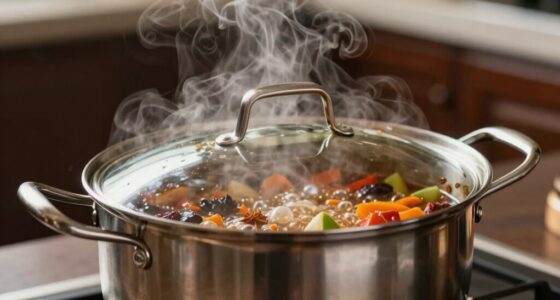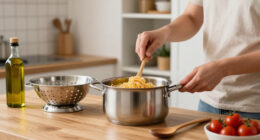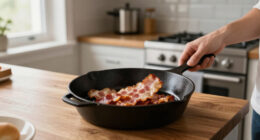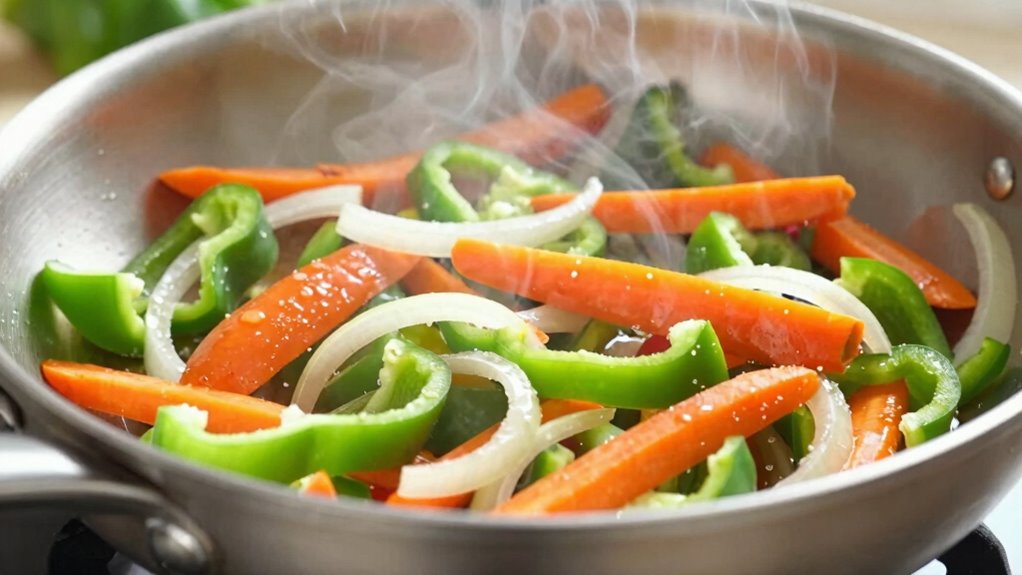
To sauté without steaming by accident, start by thoroughly drying your ingredients to remove excess moisture. Use a wide, heavy skillet and heat it over medium-high before adding anything. Avoid crowding the pan; cook in batches if needed, giving each piece room to brown. Resist the urge to stir immediately—let a crust form first. Keep moisture levels low, and adjust the heat to maintain a sizzling sound. For more tips, keep exploring these effective techniques.
Key Takeaways
- Pat dry ingredients thoroughly to remove excess moisture before adding to the hot pan.
- Use a wide, heavy-bottom skillet and preheat it to medium-high for proper searing.
- Avoid overcrowding the pan; cook in batches if necessary to maintain high heat.
- Do not add liquids unless specified, and allow ingredients to develop a crust without stirring prematurely.
- Keep ingredients undisturbed initially to promote browning and prevent steaming.
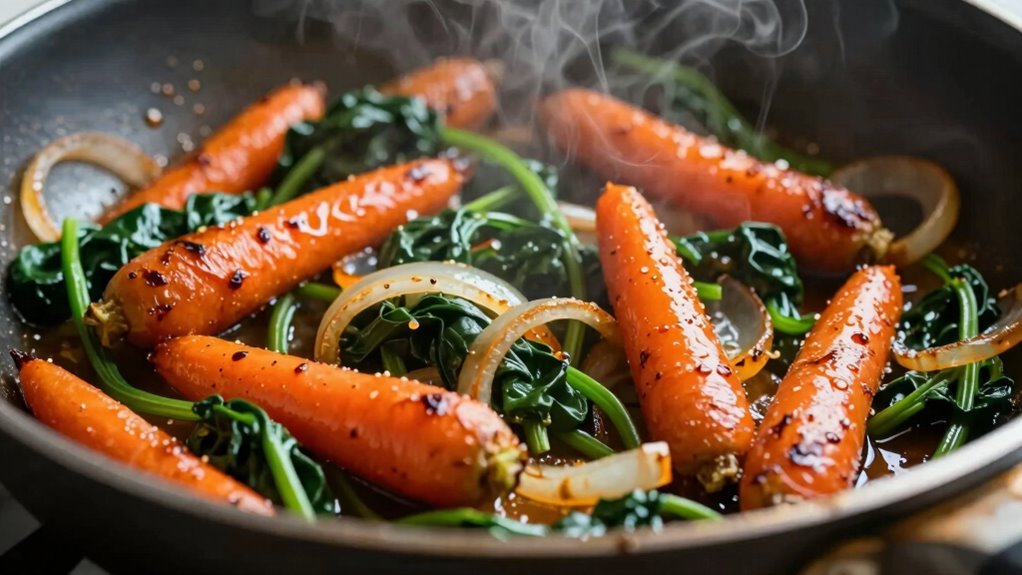
Sautéing without accidentally steaming your ingredients is all about controlling moisture and heat. When you’re working with this quick cooking technique, understanding the balance of these elements is essential to achieve the perfect sear and flavor. If moisture builds up in the pan, it turns your sauté into steaming, which can make your ingredients soggy rather than crisp and browned. To prevent this, you need to master proper cooking techniques and be mindful of kitchen safety, especially when handling hot oil and liquids.
Start by preparing your ingredients thoroughly before you even heat the pan. Pat vegetables or proteins dry with paper towels, as excess water is a common culprit that leads to steaming. When your ingredients are dry, they will sear better, releasing moisture gradually rather than trapping it in the pan. Keep your workspace organized so you can add ingredients quickly and efficiently; this minimizes the chance of overcrowding which can cause the temperature to drop, leading to steaming instead of sautéing.
Dry ingredients thoroughly and organize your workspace to prevent overcrowding and ensure even searing.
Choosing the right pan is also vital. A wide, heavy-bottom skillet or sauté pan distributes heat evenly and allows excess moisture to evaporate efficiently. When you add ingredients, make sure the pan is hot enough—around medium-high heat—to create a sizzling sound. This indicates the surface is hot enough to sear rather than steam. Never overcrowd the pan; adding too much at once drops the temperature and traps moisture, making steaming more likely. Instead, cook in batches if needed, giving each piece enough room to brown.
Proper cooking techniques involve paying attention to how you add ingredients. Once in the pan, let them sit undisturbed for a moment to develop a crust before stirring. Moving them too early can cause moisture to be released prematurely, leading to steaming instead of browning. Use utensils that don’t pierce or scrape the ingredients excessively, which can release juices and cause a humid environment in the pan. Also, avoid adding liquids unless the recipe specifically calls for it—adding liquids at the wrong time or in excess turns your sauté into a stew. Ensuring good ventilation in your kitchen can help dissipate excess moisture and maintain the right cooking environment.
Kitchen safety is paramount as you work with hot oil and high heat. Be cautious when adding ingredients to prevent splatters or burns. Keep a close eye on the temperature to avoid overheating, which can cause smoking or fires. Use oven mitts and proper tools to handle hot pans safely. Regularly check and adjust your heat to maintain a consistent temperature, ensuring your ingredients sauté properly without steaming or burning.

LOLYKITCH 7 QT Large Deep Frying Pan with Lid, 12 Inch Nonstick Triply Stainless Steel Skillet Saute Pan, Ceramic Hybrid Honeycomb Cookware for Family Meal – Oven & Induction Ready, Riveted Handles
- Large Capacity for Family Meals: 7-quart, 12-inch deep skillet with lid
- Durable Tri-Ply Construction: Multi-clad stainless steel for even heat
- Compatible with Induction Cooktops: Flat, stable base for all stoves
As an affiliate, we earn on qualifying purchases.
As an affiliate, we earn on qualifying purchases.
Frequently Asked Questions
Can I Sauté Vegetables Directly From Frozen?
Yes, you can sauté frozen vegetables directly, but you’ll need to modify your technique. Start by heating your pan with some oil and add the frozen vegetables straight in. Use a higher heat to help evaporate excess moisture quickly, which prevents steaming. Stir frequently to guarantee even cooking. Keep in mind, sautéing frozen vegetables may take a little longer, but with the right sautéing technique, you’ll get tasty, crisp results.
What Type of Pan Is Best for Sautéing Without Steaming?
You should use a stainless steel or cast iron pan for sautéing without steaming. These pan materials offer excellent heat distribution, allowing you to cook food evenly without trapping moisture. Non-stick pans can also work but might not provide the same even heat. Make sure your pan is preheated properly, and avoid overcrowding, so your ingredients sear instead of steam. This way, you’ll achieve that perfect sautéed texture.
How Do I Prevent Burning When Sautéing Quickly?
Ever seen food go from perfect to burnt in seconds? To prevent this when sautéing quickly, keep your cooking temperature moderate to high, but not aggressive. Use stirring techniques like constantly moving ingredients to distribute heat evenly. This prevents hot spots and burning. Keep an eye on your pan, and don’t rush—adjust the heat as needed. With these tips, you’ll achieve beautifully sautéed dishes without burning.
Is It Necessary to Add Oil Every Time I Sauté?
You don’t always need oil for sautéing; alternatives like broth, water, or non-stick sprays work well. When using oil, add just enough to coat the pan lightly, preventing sticking and burning. Master sautéing techniques by controlling heat and stirring frequently. If you prefer oil alternatives, make sure your pan is well-heated to prevent sticking, and adjust cooking time accordingly. This way, you can sauté effectively without relying solely on oil every time.
How Long Should I Sauté Different Types of Vegetables?
You should sauté vegetables for different times to achieve ideal flavor enhancement and texture preservation. For tender vegetables like zucchini or bell peppers, cook for 3-5 minutes until they soften slightly. Denser veggies like carrots or broccoli might need 5-7 minutes to develop flavor without losing crunch. Stir frequently, keep the heat moderate, and adjust cooking time based on your preferred texture, ensuring they stay flavorful and well-textured.

FUMMDUS Meat Thermometer Digital, 3S Instant Read Food Thermometer for Cooking with Backlight & Magnet, Foldable Temperature Probe Kitchen Gadgets Essentials for BBQ Oven Grill Smoker Candy
- Backlit Display & Hold Function: Bright blue backlight for easy reading
- Waterproof & Durable: Waterproof design with high-quality materials
- Wide Temperature Range: -58°F to 572°F for versatile use
As an affiliate, we earn on qualifying purchases.
As an affiliate, we earn on qualifying purchases.
Conclusion
Remember, sautéing is like tending a garden—your pan is the soil, and your ingredients are the seeds. With a little attention and care, you can cultivate flavorful dishes without the unwanted steam. Avoid the flood, and let your ingredients breathe and develop their true essence. When you master this dance, you’ll see that the secret to perfect sautéing isn’t just technique, but understanding when to let your culinary garden flourish—without drowning it in water.

Graza Frizzle High Heat Cooking Oil – Cooking Oil with a High Smoke Point & Neutral Flavor in a Squeeze Bottle for Frying, Baking & Grilling – Oil Made from 100% Olives – 25.3 Fl Oz (750ml)
- Made from 100% Olives: Neutral-flavored, high heat cooking oil
- High Smoke Point: Up to 460°F for versatile cooking
- Ideal for Frying and Searing: Perfect for fries, stir-fry, and grilling
As an affiliate, we earn on qualifying purchases.
As an affiliate, we earn on qualifying purchases.
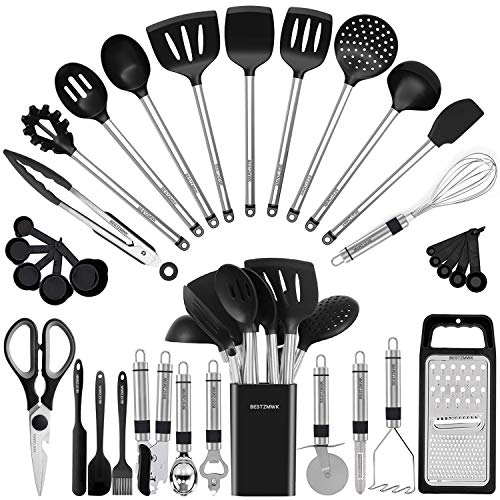
Kitchen Utensil Set-Silicone Cooking Utensils-33 Kitchen Gadgets & Spoons for Nonstick Cookware-Silicone and Stainless Steel Spatula Set-Best Kitchen Tools, Useful Pots and Pans Accessories
- Complete Cooking Utensil Set: Includes 33 essential kitchen tools
- Durable and Long-lasting: Made with stainless steel handles and silicone heads
- Non-scratch Silicone Heads: Protects non-stick cookware from scratches
As an affiliate, we earn on qualifying purchases.
As an affiliate, we earn on qualifying purchases.