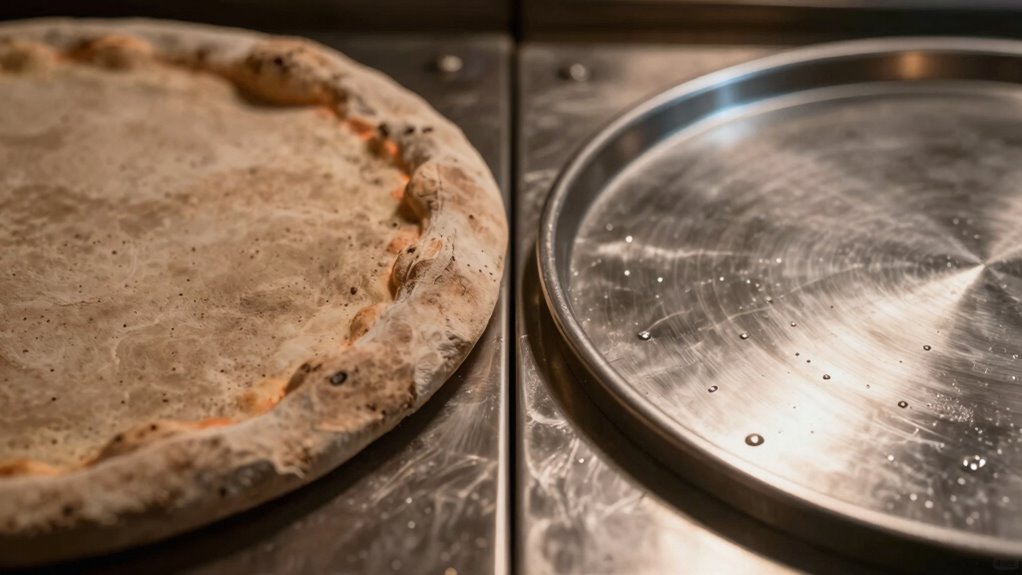

Pizza steel heats up faster and transfers heat more efficiently due to its high thermal conductivity, giving you a quick, crispy crust. A pizza stone takes longer to preheat but retains heat better, promoting even baking and a chewy crust. The choice impacts your baking time and crust texture. If you want to master the details, keep exploring how these differences shape your perfect pizza.
Key Takeaways
- Steel heats up faster than stone, often reaching optimal baking temperature in 15-20 minutes.
- Steel’s high thermal conductivity allows quicker heat transfer to dough, resulting in crisper crusts.
- Stones require longer preheating (30-45 minutes) to fully absorb and transfer heat evenly.
- Steel’s dense, thin surface promotes rapid, even heat distribution, reducing hot spots.
- Stones retain heat longer, providing consistent warmth for baking but slower to respond to temperature changes.

ThermiChef 16×16 Pizza Steel, 1/4" Thick, 17.6 lbs – Cooking Steel for Oven & Grill – Made in USA
RESTAURANT RESULTS – Achieve wood-fired-style pizza with delicious, crispy crust at home! This 16" by 16" pizza steel…
As an affiliate, we earn on qualifying purchases.
As an affiliate, we earn on qualifying purchases.
How Do Pizza Stones and Steel Conduct Heat Differently?
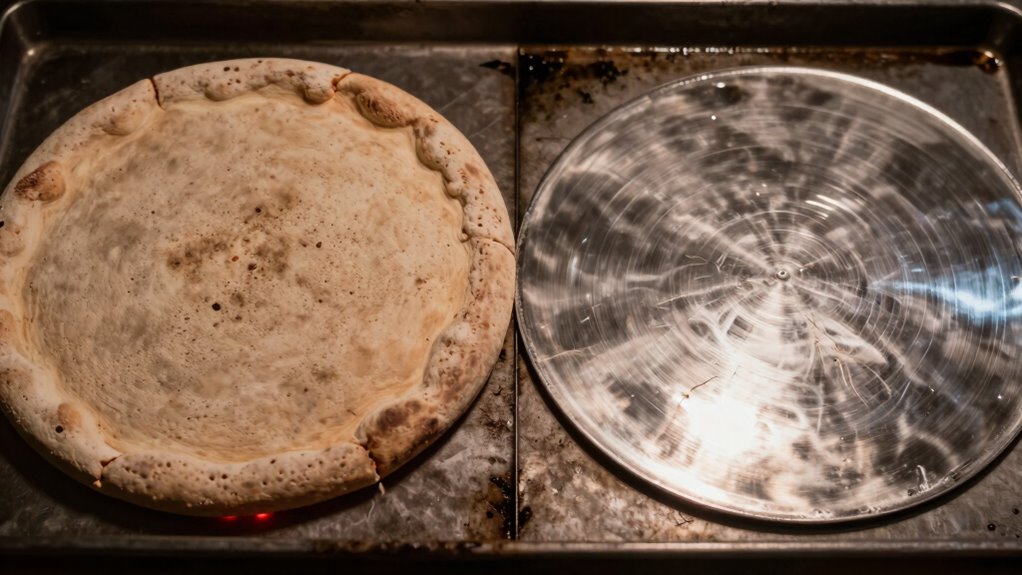
While both pizza stones and steels are popular tools for achieving a crispy crust, they conduct heat differently. Pizza steels typically have a higher thermal conductivity, meaning they transfer heat more efficiently from your oven to the dough. This quick heat transfer results in a faster, more even bake. The material density of steel is also higher, allowing it to absorb and retain heat longer, maintaining consistent temperature during cooking. In contrast, pizza stones, often made from ceramic or cordierite, have lower thermal conductivity, so they heat up more slowly and transfer heat less efficiently. Their porous structure helps absorb moisture but doesn’t conduct heat as rapidly as steel. Additionally, material composition influences how well each surface performs under different conditions, impacting the final crust texture. Understanding these differences helps you choose the right tool for your baking style and desired crust texture. Efficient heat transfer is especially important for achieving that perfect crispy crust quickly and evenly. Moreover, the heat retention capacity of each material affects how long the surface stays hot during extended baking sessions, influencing crust quality. Proper heat management can make a significant difference in your baking results, especially when aiming for professional-quality crusts.

Old Stone Round Pizza Stone, 16-Inch
Makes restaurant quality pizzas, bread, pastries and vegetables
As an affiliate, we earn on qualifying purchases.
As an affiliate, we earn on qualifying purchases.
Which Heats Up Faster: Pizza Steel or Pizza Stone?
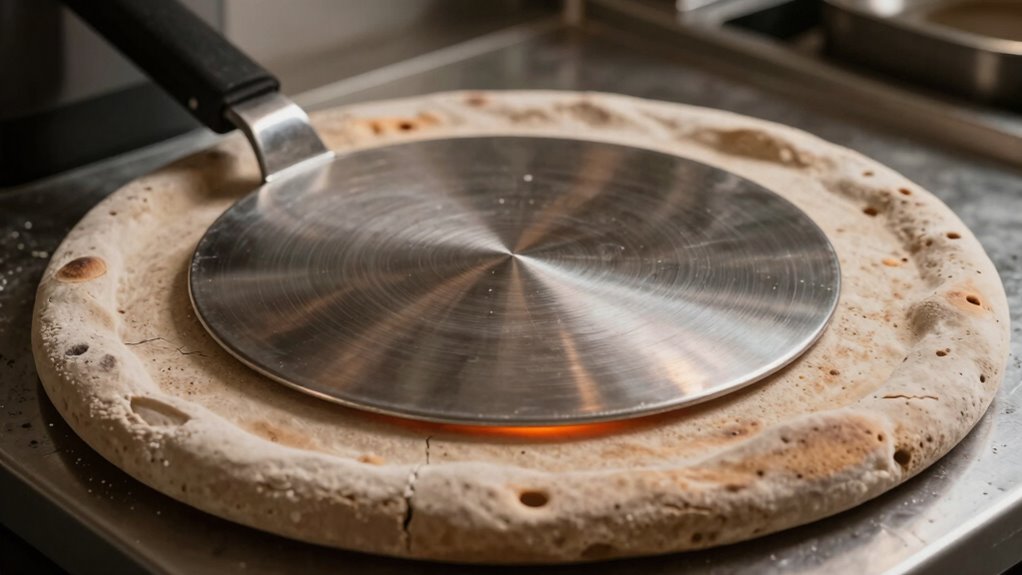
Because of their material makeup, steel heats up faster than stone. Thicker and denser options also take longer to reach temperature, affecting preheating times. Understanding these factors helps you choose the right tool for quicker or more even heating. Additionally, the thermal conductivity of the material plays a significant role in how quickly heat transfers, impacting cooking performance. Recognizing the material properties can further enhance your ability to select the most efficient cooking surface. Furthermore, the porosity of a pizza stone can influence heat retention and moisture absorption, affecting the final crust texture. The heat capacity of each material also determines how much energy is needed to raise its temperature, influencing overall cooking efficiency. A good grasp of thermal behavior can help optimize your preheating process and cooking results.
Material Composition Differences
The key difference in how quickly pizza steel and pizza stone heat up lies in their material composition. Pizza steel is made from high-quality, durable steel with excellent thermal conductivity, allowing it to transfer heat rapidly. In contrast, pizza stones are typically fired clay or ceramic, which are less conductive but more material durable over time. This means:
- Steel heats up faster, providing quick, even heat transfer for a crispy crust.
- Stones tend to warm more slowly, but their natural composition can retain heat longer.
- The material durability of steel makes it resistant to cracking under thermal stress, unlike some stones that may chip or break over time.
- The thermal properties of each material play a crucial role in how they perform during baking, affecting both heat transfer rate and heat retention. Understanding their heat capacity helps in selecting the right baking surface for specific results.
Your choice hinges on understanding these composition differences for *ideal* baking results.
Thickness and Density Impact
Thickness and density play crucial roles in determining how quickly your pizza baking surface heats up. A thicker or denser surface generally takes longer to reach the desired temperature but retains heat better, impacting your cooking techniques and results. Steel’s high density means it conducts heat efficiently, so even a thinner steel heats rapidly, making it ideal for quick, high-temperature cooking. Conversely, stones are usually thicker and less dense, which can slow their heat-up time but provide more even heat distribution once heated. This affects equipment durability as well; steel withstands rapid temperature changes better, while stones are more prone to cracking if subjected to thermal shocks. Understanding these differences helps you select the best surface for your preferred cooking style. Additionally, the heat retention properties of each material influence how evenly your pizza cooks over time, which can be a decisive factor for achieving perfect results.
Preheating Time Variations
Steel’s high density allows it to heat up much faster than stones, reducing preheating time considerably. Because of its superior thermal conductivity, a pizza steel reaches ideal oven temperature quicker, often in 15-20 minutes. This means you can start baking sooner, preserving moisture retention in your crust.
Consider these points:
- You’ll enjoy faster preheating, saving valuable time.
- The steel’s quick heat-up ensures higher oven temperatures, leading to crispier results.
- Less moisture loss in your dough, thanks to rapid heat transfer, keeps your pizza moist and delicious.
In contrast, a pizza stone takes longer to reach the desired temperature, often 30-45 minutes, affecting your overall baking efficiency and moisture retention.
ThermiChef 16×16 Pizza Steel, 1/4" Thick, 17.6 lbs – Cooking Steel for Oven & Grill – Made in USA
RESTAURANT RESULTS – Achieve wood-fired-style pizza with delicious, crispy crust at home! This 16" by 16" pizza steel…
As an affiliate, we earn on qualifying purchases.
As an affiliate, we earn on qualifying purchases.
How Does Heat Retention Affect Your Pizza Crust?
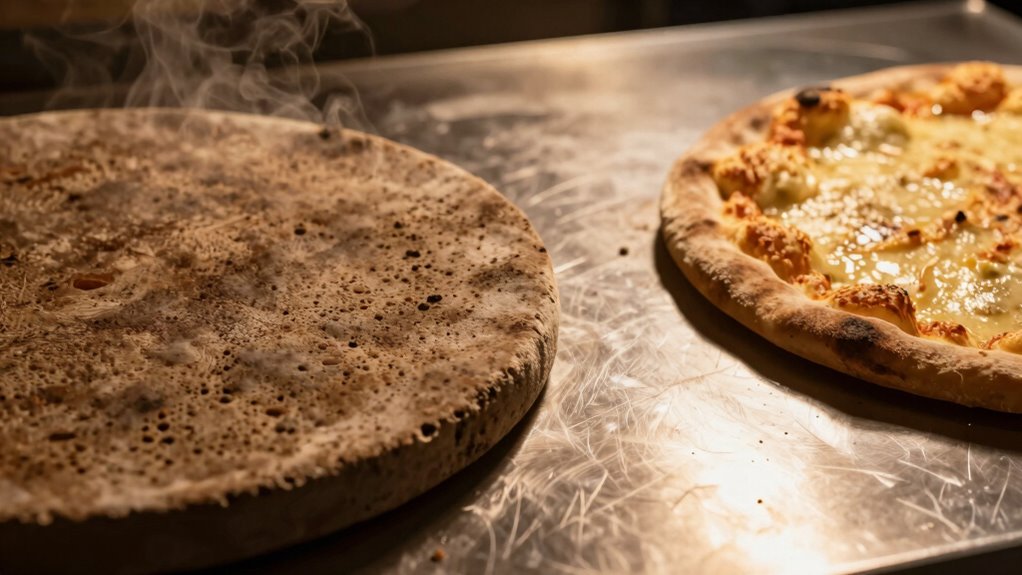
When your pizza stone or steel retains heat effectively, it creates a consistently hot surface that helps achieve a crispy, evenly cooked crust. Good heat retention means the material stays hot longer, ensuring steady transfer of heat to your dough. This steady heat promotes a uniform crust texture, preventing sogginess or uneven cooking. A well-retained heat source allows you to bake at high temperatures without losing heat rapidly, leading to a crisp exterior and a tender interior. If your stone or steel doesn’t hold heat well, the surface cools quickly, resulting in a less crispy crust and uneven cooking. Ultimately, better heat retention helps you control the crust’s texture, producing that perfect, restaurant-quality pizza at home. heat retention is also influenced by the material’s mass and thermal conductivity, which are key factors in choosing the right surface for pizza baking. Additionally, understanding the reliability of heat can help you select the most suitable baking surface for consistent results. Moreover, thermal mass plays a crucial role in maintaining consistent heat during baking sessions, contributing to more predictable outcomes. Proper insulation and preheating techniques can further enhance the heat transfer efficiency of your pizza baking surface.
Old Stone Round Pizza Stone, 16-Inch
Makes restaurant quality pizzas, bread, pastries and vegetables
As an affiliate, we earn on qualifying purchases.
As an affiliate, we earn on qualifying purchases.
How Do Thickness and Size Change Heat Transfer?
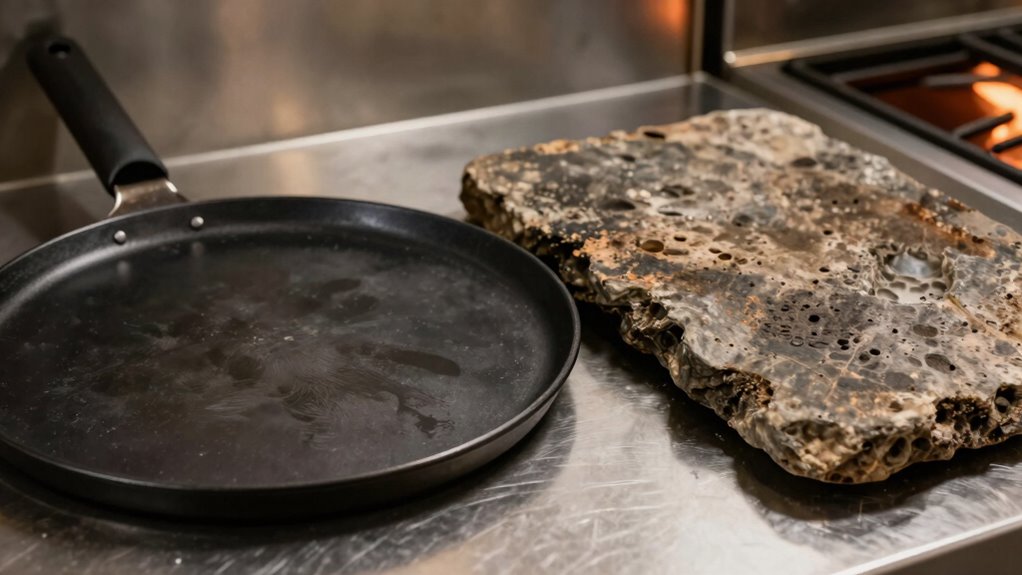
The thickness of your pizza stone or steel influences how quickly and evenly heat moves through it. A thicker piece can retain heat longer but may slow down the transfer to your crust, while a thinner one heats up faster. Additionally, larger sizes can distribute heat differently, affecting how evenly your pizza cooks. Luggage & Bags Choosing the right size and thickness helps optimize heat transfer for perfect results. Moreover, understanding the thermal conductivity of the material can further improve your cooking outcomes by ensuring efficient heat flow. Recognizing the material composition can also impact how well heat is transferred and retained during cooking, especially when considering heat retention properties for consistent baking. For optimal performance, it’s important to consider how heat transfer efficiency varies between different types of materials used in these cooking surfaces.
Thickness Impact on Heat
Thicker pizza stones and steels generally transfer heat more efficiently because their increased mass retains and distributes heat more evenly during baking. This highlights the significant thickness effects on heat conduction, ensuring a hotter, more consistent crust. As you choose your baking surface, consider these points:
- Feel the thrill of a perfectly crisp crust, thanks to enhanced heat retention.
- Experience the satisfaction of even cooking, avoiding hot spots and undercooked spots.
- Know that increased thickness means better durability, standing up to high temperatures without warping.
- Additionally, material properties influence how well a pizza stone or steel withstands thermal stress during repeated heating cycles.
- Proper ventilation considerations can help maintain optimal baking conditions and prolong the lifespan of your pizza baking surface.
Size and Heat Distribution
Larger pizza stones and steels can considerably improve heat distribution across your crust, especially when combined with appropriate thickness. A bigger surface area ensures more even heat transfer, reducing hot spots and promoting consistent baking. Thicker materials enhance durability and heat retention, allowing for sustained, uniform heat transfer during cooking. Material durability is key because thicker stones or steels resist cracking and warping over time. The surface texture also influences heat transfer; smooth surfaces transfer heat efficiently, while textured ones may create uneven heat flow. When selecting size, consider your oven’s capacity and the size of your pizzas. Larger, thicker stones or steels provide better heat distribution but require ample space. Balancing size, thickness, and material durability leads to excellent heat transfer and a perfect crust. Additionally, understanding the heat transfer properties of different materials can help you make more informed choices for optimal baking results.
How Should You Preheat a Pizza Stone vs. Steel?
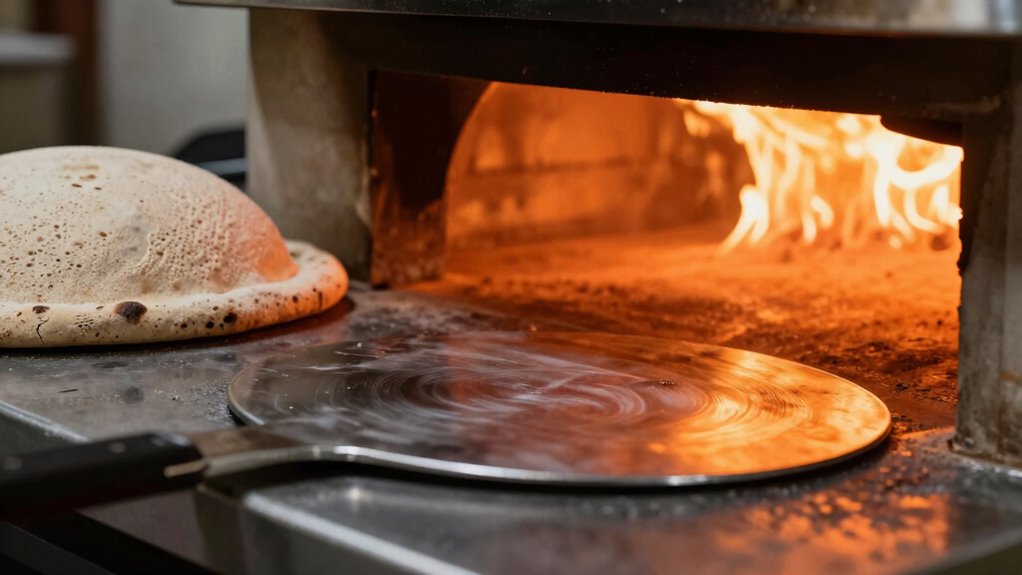
Preheating your pizza stone or steel properly is essential for getting that perfect, crisp crust. To do this safely and effectively, follow these steps:
Preheat your pizza stone or steel gradually for a perfect, crispy crust.
- Gradually increase the oven temperature to prevent thermal shock, ensuring oven safety and longevity of your tools.
- Preheat the stone or steel in a cold oven, then set the temperature high (450–500°F) and let it heat for at least 30 minutes for even heat transfer.
- Allow the tool to cool completely before handling or cleaning—hot surfaces can cause burns, and proper cleaning tips help maintain its performance.
These steps guarantee safe operation and ideal results. Remember, never skip preheating, as it’s key to that crispy crust you crave.
Which Tool Bakes a Crispy Pizza in Less Time?
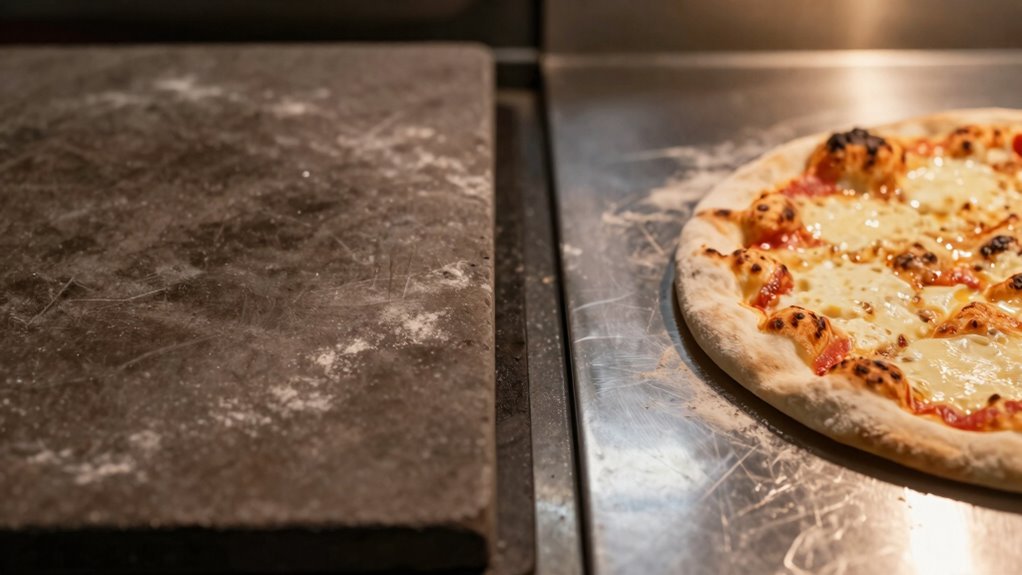
When it comes to baking a crispy pizza quickly, a pizza steel generally outperforms a stone. Steel conducts heat faster and more evenly, which means your dough reaches the right temperature sooner, resulting in a crisp crust in less time. Achieving good dough consistency is key; a well-formed, even base ensures uniform heat transfer. Proper toppings placement also plays a role—distributing toppings evenly prevents sogginess and allows heat to reach the crust more efficiently. Since steel heats up faster, you can typically bake your pizza in less time, often around 7-10 minutes, compared to a stone. This makes a pizza steel ideal if you’re after a quick, crispy result without sacrificing quality.
How Do These Heat Differences Impact Your Baking Results?
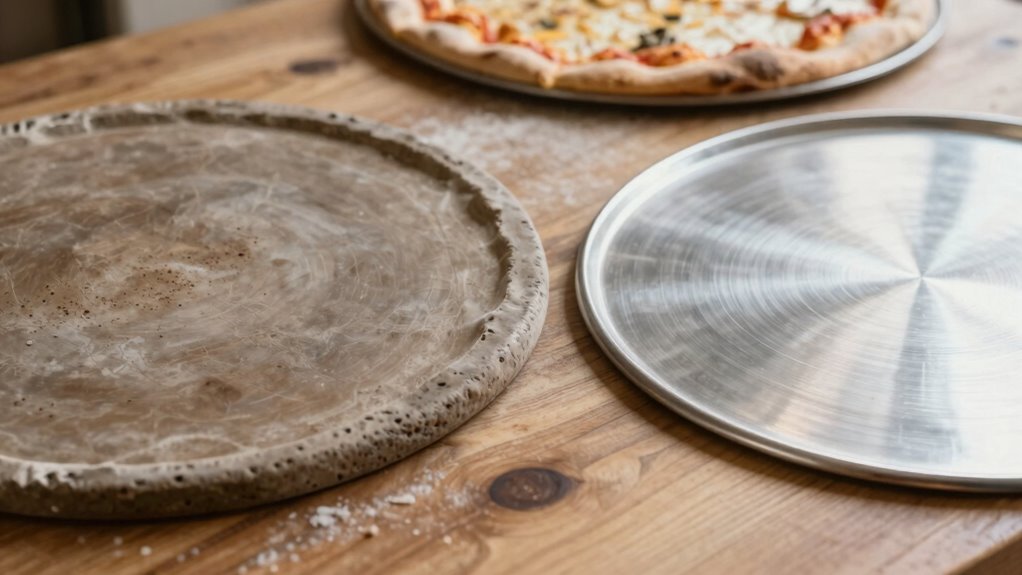
Because steel heats up faster and transfers heat more efficiently than stone, it results in a more evenly cooked crust and toppings. The high thermal conductivity of steel allows heat to quickly penetrate your pizza, ensuring a crisp crust and perfectly melted cheese. Its material density helps retain heat, providing consistent results every time. This means you’ll enjoy a beautifully browned crust with less risk of undercooking or burning.
Here’s what you can expect:
- Faster cooking times, so your pizza is ready sooner.
- More even browning, giving you that professional look and taste.
- Better heat transfer, reducing hot spots and ensuring every slice is perfect.
Frequently Asked Questions
Can You Use a Pizza Stone or Steel on an Outdoor Grill?
Yes, you can use a pizza stone or steel on an outdoor grill. Just make certain your grill reaches the right temperature, usually between 500-600°F, for proper heat transfer. Place the stone or steel on the grill grates during preheat to avoid thermal shock. Keep an eye on your outdoor setup, and adjust the heat as needed to achieve crispy crusts and evenly cooked pizzas.
Which Material Is More Durable Over Multiple Uses?
You’ll find that pizza steel generally outperforms a pizza stone in durability comparison. Its wear resistance allows it to withstand frequent use, including high-temperature grilling and handling, without cracking or chipping. Imagine a steel surface that remains smooth and intact after many sessions, unlike a stone that might develop small cracks over time. For longevity and consistent performance, steel’s durability makes it the smarter choice for multiple uses.
Are Pizza Stones or Steels Safer to Handle at High Temperatures?
You should be cautious when handling both pizza stones and steels at high temperatures. Pizza steels tend to have better handling safety because they heat evenly and are often made of metal, which stays cooler to the touch with proper tools. Pizza stones can crack or break if mishandled, especially when hot. Always use heat-resistant gloves, tongs, or a peel to guarantee safe handling, and be mindful of their temperature tolerance.
How Do Cleaning and Maintenance Differ Between the Two?
You should follow specific cleaning protocols and maintenance routines for each. For pizza stones, avoid soap and soaking; instead, scrape off residue and let them air dry. For steels, wash with warm water and mild soap, then dry thoroughly to prevent rust. Regularly inspect both for cracks or damage. Proper maintenance guarantees longevity and peak performance, keeping your cooking process safe and effective.
Does One Material Affect the Flavor of the Pizza More Than the Other?
You’ll notice the material influence on your pizza’s flavor more with a pizza stone than a steel. The stone’s porous surface can absorb oils and moisture, subtly affecting the material taste and enhancing a rustic aroma. Steel, being non-porous, doesn’t alter the flavor, providing a neutral cooking surface. So, if you’re after a pure, unaltered pizza taste, steel’s your best bet, but stone adds a unique, flavorful dimension.
Conclusion
So, whether you choose a pizza stone or steel, just remember: your crust’s destiny depends on how hot you can get it—literally. Steel’s speed might turn your kitchen into a mini pizza factory in record time, while stone’s patience rewards you with that perfect crunch. Either way, you’re now armed with the knowledge to turn your oven into a fiery battleground for deliciousness. Happy baking—may your pizza always be crispy and your oven never betray you!