To reduce the bitterness of bitter gourd without losing flavor, try slicing it thinly and soaking in salt water or vinegar for 20-30 minutes to draw out bitter compounds. Rinse thoroughly, then cook by sautéing or stir-frying in heated oil with spices like turmeric and cumin—frying until crispy helps mask bitterness. Blanching before cooking can also soften and mellow the flavor. Keep exploring to uncover more tips for tasty, less-bitter karela.
Key Takeaways
- Soak sliced bitter gourd in salt water or vinegar for 20-30 minutes before cooking.
- Use sautéing or stir-frying with spices to mellow bitterness while enhancing flavor.
- Blanch bitter gourd slices in boiling water for a few minutes, then rinse to reduce bitterness.
- Fry slices until crispy to mask bitterness and add texture without sacrificing flavor.
- Incorporate spices like turmeric and coriander during cooking to complement and diminish bitterness.
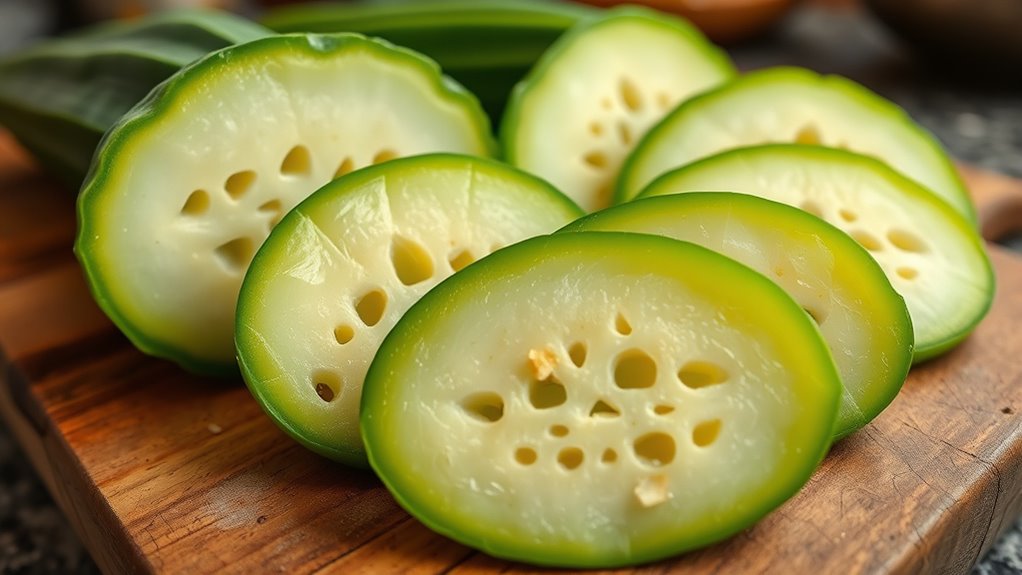
Have you ever wondered why bitter gourd, also known as karela, is a staple in many Asian cuisines? Its unique flavor and impressive nutritional benefits make it a popular vegetable, but its inherent bitterness can be a challenge for some. Luckily, there are effective cooking techniques that help reduce bitterness without sacrificing flavor, allowing you to enjoy its health benefits and culinary versatility.
One simple way to tame the bitterness is to prepare the karela properly before cooking. Start by slicing the bitter gourd thinly and then soaking the slices in salt water or vinegar for about 20 to 30 minutes. This process helps draw out some of the bitter compounds, reducing the vegetable’s sharpness. After soaking, rinse the slices thoroughly and pat them dry. This step is essential because it not only diminishes bitterness but also prepares the vegetable for various cooking methods.
To reduce bitterness, slice karela thinly, soak in salt water or vinegar, then rinse and dry thoroughly.
When it comes to cooking techniques, sautéing and stir-frying are particularly effective. Heat some oil in a pan, add mustard seeds or cumin for flavor, then toss in the prepared bitter gourd slices. Cooking over medium heat allows the bitterness to mellow while developing a rich, savory taste. You can also add ingredients like onions, tomatoes, or spices such as turmeric and coriander to enhance the flavor profile. For a different approach, try frying the slices until they turn crispy, which can mask some of the bitterness and add a delightful texture.
Another useful method is blanching the bitter gourd in boiling water for a few minutes before cooking. This technique helps break down bitter compounds and softens the vegetable, making it more palatable. After blanching, drain and rinse the slices in cold water to stop the cooking process. From there, you can proceed with your preferred cooking style—stir-fry, curry, or even stuffing the slices with spices for a flavorful dish. Additionally, understanding the nutritional benefits of bitter gourd can motivate you to incorporate it regularly into your meals, as its health advantages make the effort worthwhile.
Top picks for "bitter gourd karela"
Open Amazon search results for this keyword.
As an affiliate, we earn on qualifying purchases.
Frequently Asked Questions
Can the Bitterness Vary Between Different Types of Bitter Gourd?
Yes, the bitterness can vary between different types of bitter gourd due to variety differences and cultivar selection. Some varieties are naturally less bitter, making them more suitable if you’re sensitive to the flavor. When choosing, look for cultivars labeled as milder or less bitter. You can also select specific cultivars known for their milder taste to enjoy the health benefits without overwhelming bitterness.
Are There Health Benefits Associated With the Bitterness of Karela?
Think of karela’s bitterness as nature’s way of boosting your health. Its bitter properties are linked to benefits like blood sugar regulation and boosting immunity. I once met someone who swore that regularly eating bitter gourd helped her manage diabetes better. That bitterness signals potent compounds that support wellness, so embracing it could help you release these health benefits. Don’t shy away from the bitter; it’s a natural health booster.
How Does Cooking Method Affect Bitterness Reduction?
Cooking techniques play a crucial role in reducing bitterness while preserving flavor. You can blanch or soak karela before cooking, which helps mellow its bitterness. Stir-frying quickly or grilling over high heat can also lessen bitterness without sacrificing taste. Avoid overcooking, as it can diminish flavor. By choosing the right method, you guarantee the dish remains flavorful and less bitter, making karela more enjoyable.
Is Bitter Gourd Safe for Diabetics if Prepared Correctly?
Bitter gourd is generally safe for diabetics when prepared correctly, as it can help regulate blood sugar levels. To guarantee bitter gourd safety, remove seeds and bitter parts, and cook thoroughly to reduce bitterness and potential toxins. Keep diabetic considerations in mind—consume in moderation, and consult your healthcare provider if you have concerns or conditions like hypoglycemia. Proper preparation maximizes health benefits while minimizing risks.
Can Certain Ingredients Intensify or Reduce the Bitterness Further?
Certain ingredient combinations can intensify or reduce the bitterness of bitter gourd. Flavor enhancers like salt, lemon juice, or jaggery can mask or soften the bitterness, while ingredients like turmeric or amchur (dry mango powder) can subtly balance it. Be mindful, as some ingredients might intensify the bitterness if used excessively. Experiment with different combinations to find the perfect balance that suits your taste buds.
Conclusion
So, next time you’re dreading that bitter gourd, remember it’s not just a test of your patience but a culinary challenge you can conquer. With a little salt, some soaking, or a dash of spice, you can tame its bitterness without sacrificing flavor. Who knew that in our quest to avoid bitterness, we’d find a way to embrace and elevate it? Turns out, mastering karela’s bitterness might just be the secret to truly appreciating its unique charm.