
Choosing between Basmati and Jasmine rice depends on your dish’s flavor and texture. Basmati offers a nutty aroma, fluffy grains, and a firm bite, making it perfect for biryanis and pilafs. Jasmine has a sweet, floral scent with softer, slightly sticky grains, ideal for Thai curries and stir-fries. Knowing their differences can help you pick the best rice to enhance your meal—explore further to find the perfect match.
Key Takeaways
- Choose Basmati for dishes needing fluffy, separate grains like biryanis or pilafs, emphasizing nutty aroma.
- Select Jasmine when preparing Thai curries or stir-fries that benefit from soft, slightly sticky, fragrant rice.
- Consider Basmati’s lower glycemic index for steady energy and blood sugar control in your dish.
- Use Jasmine rice for quick-cooking, tender textures suited to Southeast Asian cuisine and comfort foods.
- Match rice texture and aroma with your dish’s flavor profile: dry and fragrant for Basmati; tender and floral for Jasmine.

Royal Basmati Rice – Authentic Long Grain White Basmati Rice – 15 lb Bag – Perfect for Biryanis, Pilafs & Curries – Cook in Microwave or on Stove Top
AUTHENTIC FLAVOR: Long and fluffy, naturally aromatic, long grain Basmati rice; Aged for non-sticky texture and sweet flavor
As an affiliate, we earn on qualifying purchases.
As an affiliate, we earn on qualifying purchases.
What Are Basmati and Jasmine Rice? An Introduction
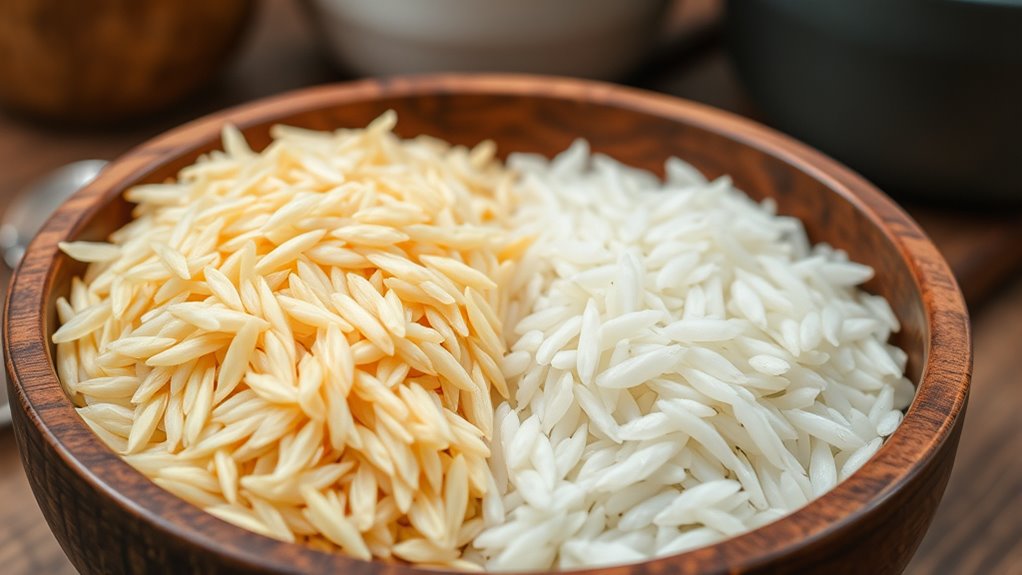
Have you ever wondered what sets Basmati and Jasmine rice apart? Both varieties originate from specific regions, with Basmati grown primarily in India and Pakistan, while Jasmine comes from Thailand. Their rice cultivation methods influence their texture and appearance, making each unique. Basmati rice is known for its long, slender grains that elongate when cooked, whereas Jasmine rice has shorter, plumper grains. Beyond their culinary uses, these rices hold deep cultural significance. Basmati is often associated with traditional Indian and Pakistani dishes, symbolizing purity and prosperity. Jasmine rice, on the other hand, is a staple in Thai cuisine, representing comfort and hospitality. Understanding these origins helps you appreciate their distinct qualities and cultural value even before tasting them.

Mahatma Jasmine, 5lb Bag of Rice, Thai, Indian, or Cambodian Fragrant Flavored Rice, Stovetop or Microwave
REIMAGINE TRADITIONAL RICE: Craft your favorite recipes in a whole new way with Mahatma Jasmine authentic aromatic rice….
As an affiliate, we earn on qualifying purchases.
As an affiliate, we earn on qualifying purchases.
How Do Basmati and Jasmine Rice Differ in Aroma and Flavor

Basmati and Jasmine rice are distinguished not only by their appearance but also by their unique aromas and flavors. The aroma comparison reveals that Basmati has a nutty, popcorn-like scent, while Jasmine offers a sweet, floral fragrance. These scent profiles influence their flavor nuances, with Basmati delivering a toasted, slightly spicy taste, and Jasmine providing a fragrant, delicate sweetness. The table below highlights these differences:
| Characteristic | Basmati | Jasmine |
|---|---|---|
| Aroma comparison | Nutty, popcorn-like | Sweet, floral |
| Flavor nuances | Toasted, spicy | Fragrant, delicate sweetness |
| Ideal dishes | Biryani, pilafs | Stir-fries, Thai dishes |
Understanding these differences helps you choose the right rice to match your dish’s aroma and flavor profile. For example, selecting aroma profiles can enhance your culinary experience by aligning the rice’s scent with the intended flavor. Additionally, the grain size of each rice type can influence cooking times and texture, further affecting dish outcomes. Moreover, the cooking techniques for each rice type are slightly different to achieve optimal texture and aroma. Knowing about appliance maintenance plans can also be helpful if you are using modern kitchen appliances to prepare your rice, ensuring they operate efficiently and safely. Recognizing the cooking methods suited for each rice enhances the overall success of your dishes.

Royal – Naturally Aged Authentic Long Grain Indian White Basmati Rice, 2 lb (Pack of 2)
Aged over 12 months For perfect non-sticky texture and sweet flavor.
As an affiliate, we earn on qualifying purchases.
As an affiliate, we earn on qualifying purchases.
What Are the Textural Differences Between Basmati and Jasmine Rice
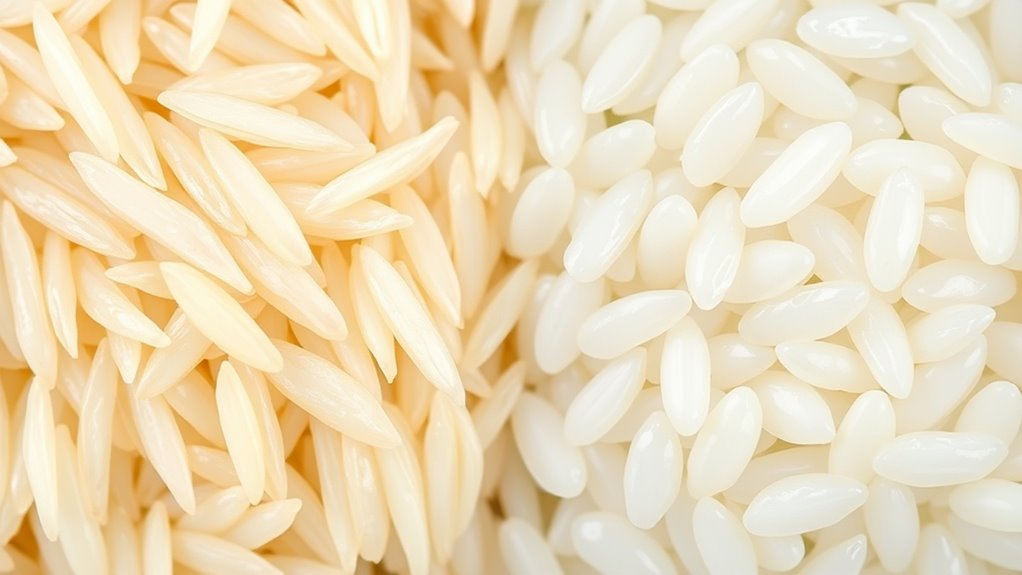
Although both Basmati and Jasmine rice are long-grain varieties, they differ considerably in texture. Basmati rice typically has a fluffy, dry feel with a firm structure, resulting in minimal grain stickiness. Its individual grains stay separate, creating a pleasing texture contrast when served. In contrast, Jasmine rice tends to be softer and slightly stickier after cooking, offering a more tender bite. Its grains cling a bit more, which can make it feel more cohesive on the plate. This variation in grain stickiness influences how you experience each rice type, depending on your dish. If you prefer a light, airy texture, Basmati is ideal. For dishes that benefit from a tender, slightly sticky quality, Jasmine works better. Additionally, grain stickiness can be affected by factors such as moisture content and cooking method, influencing the final texture of each rice type. Understanding grain composition can help you choose the right rice for your culinary needs.

Iberia Jasmine Long Grain Fragrant Rice, 18 Pound
NATURALLY SOURCED: Harvested, grown and sourced locally with the highest level of expertise from growers in the United…
As an affiliate, we earn on qualifying purchases.
As an affiliate, we earn on qualifying purchases.
How to Cook Basmati and Jasmine Rice Perfectly
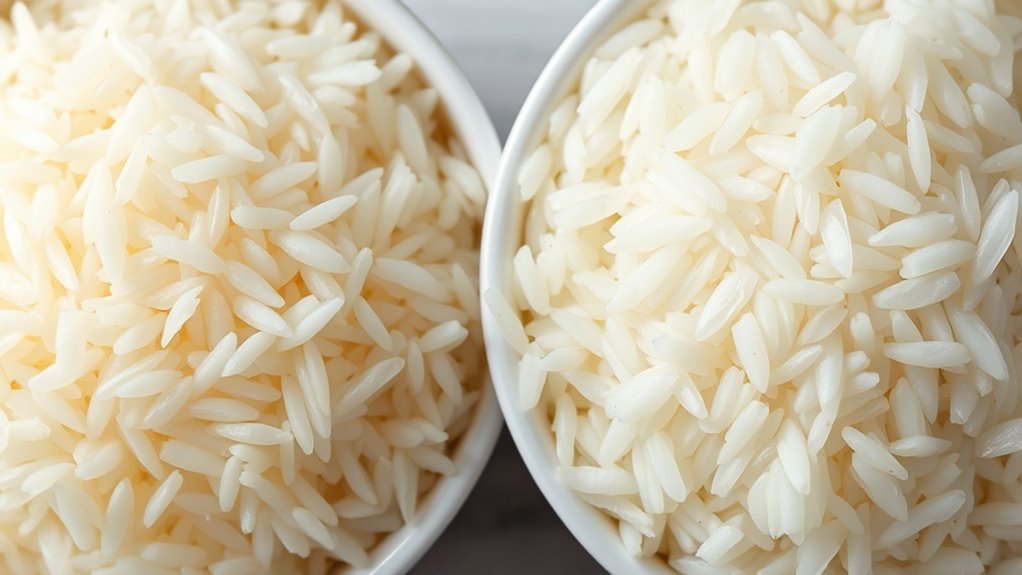
To cook perfect Basmati and Jasmine rice, start by rinsing each type thoroughly under cold water until the water runs clear. This step removes excess surface starch and helps achieve fluffy grains. Use a precise rice-to-water ratio: typically, 1 cup of rice to 1.5 cups of water for Basmati, and 1 cup of rice to 1.25 cups for Jasmine. Consider the rice cultivation practices that influence grain quality and texture. For best results, bring the water to a boil, then reduce the heat to low, cover, and simmer until the water is absorbed—about 15 minutes for Basmati and 10–12 minutes for Jasmine. Fluff with a fork before serving to preserve the grains. Choosing the right rice type and cooking techniques rooted in culinary traditions ensure consistently delicious results.
When Should You Use Basmati Rice? Best Dishes and Cuisines
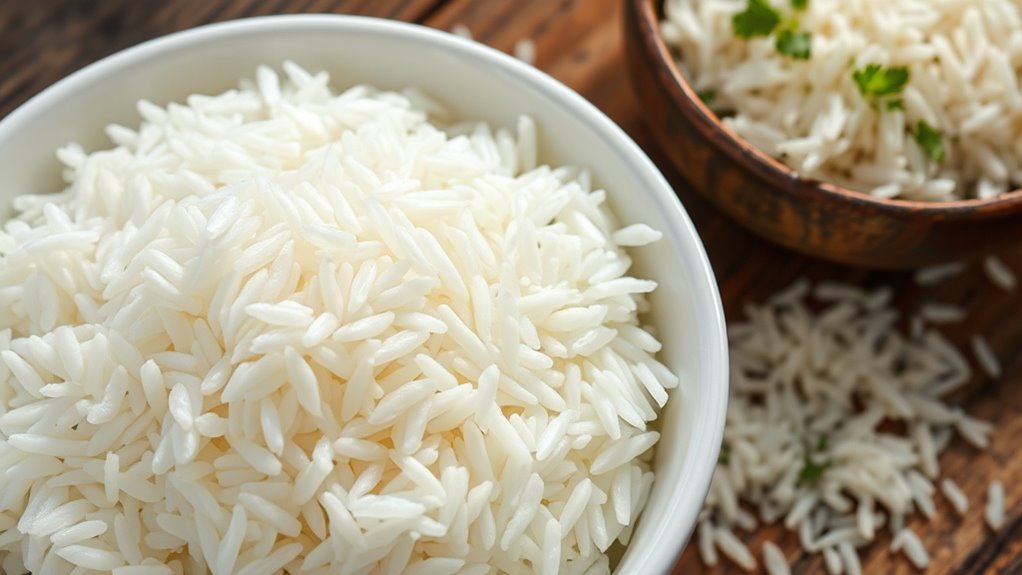
You should choose Basmati rice when you want a fragrant, fluffy grain that complements dishes with bold flavors and delicate textures. Its cultural significance is especially strong in Indian and Middle Eastern cuisines, where it’s often a centerpiece. Basmati’s regional variations, such as aged vs. non-aged, influence aroma and texture, making it versatile for specific dishes. Use Basmati for:
- Biryani and pilafs that rely on aromatic grains to enhance flavor layers
- Indian curries and Mediterranean rice dishes emphasizing fragrance and lightness
- Special occasions or festive meals where rice’s cultural importance shines through
Its long grains and delicate aroma make it ideal for dishes where rice is the star or a subtle supporting element, highlighting regional culinary traditions. Additionally, Basmati rice’s aromatic qualities contribute significantly to the overall sensory experience of these dishes, and understanding its regional variations can help you select the perfect type for each recipe.
When Is Jasmine Rice the Right Choice? Top Recipes and Pairings
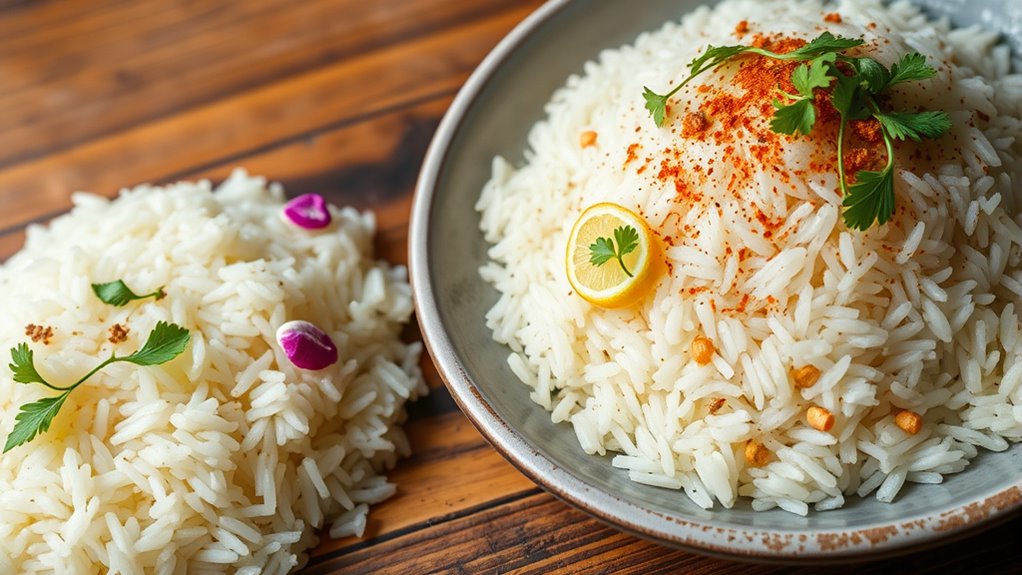
Jasmine rice is the perfect choice when you want a subtly floral aroma and a soft, sticky texture that enhances dishes with delicate flavors. Its gentle fragrance pairs well with light, aromatic ingredients, making it ideal for rice pairing in Southeast Asian cuisine. Use jasmine rice for dishes like Thai curries, stir-fries, or seafood, where its flavor matching elevates the overall experience. Its sticky quality helps it cling to sauces and spices, creating a harmonious bite. When selecting recipes, consider dishes that benefit from a mild, fragrant backdrop. Jasmine rice’s versatility makes it a go-to for meals that emphasize subtle, layered flavors, ensuring your dish remains balanced without overpowering other ingredients. Additionally, understanding the history of rice varieties can help you appreciate how jasmine rice became a staple in certain culinary traditions, and proper filtration and pump protection can be essential in maintaining rice processing equipment for optimal quality. Recognizing the distinct qualities of rice types can also assist in choosing the best rice for specific cooking methods and flavor profiles, and exploring grain processing techniques provides insight into how rice quality and texture are achieved through different milling and polishing methods.
What Are the Nutritional Benefits of Basmati and Jasmine Rice
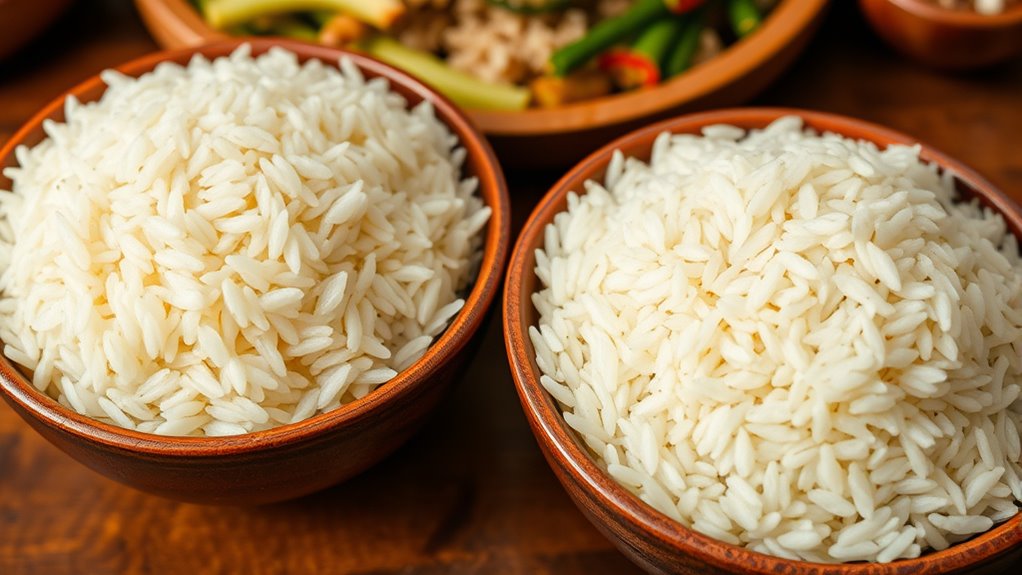
Both Basmati and Jasmine rice offer unique nutritional benefits that can impact your energy and health. You’ll find differences in their nutrient content and how they affect your blood sugar levels. Understanding these variations helps you choose the rice that best supports your dietary goals. For instance, some varieties may have different glycemic index levels, influencing blood sugar control. Additionally, their fiber content can vary, affecting digestion and satiety. Exploring the nutritional composition of each rice type can further assist in making an informed choice for your diet. Moreover, the sustainability practices involved in their cultivation may influence your decision if environmental impact is a concern. Recognizing the agricultural methods used in growing these rice varieties can also provide insights into their overall health and environmental footprint.
Nutrient Content Comparison
While Basmati and Jasmine rice share similarities in appearance and aroma, their nutritional profiles differ slightly. You’ll notice variations in fiber content and mineral levels that can influence your dietary choices. Basmati rice generally contains a bit more fiber, aiding digestion and promoting fullness, while Jasmine rice has higher mineral levels like magnesium and potassium, supporting muscle function and overall health.
Key differences include:
- Slightly higher fiber content in Basmati rice
- Variations in mineral levels, with Jasmine often richer in magnesium and potassium
- Both rice types are low in fat and calories but offer different micronutrient profiles
Understanding these nuances helps you choose the rice that aligns best with your nutritional goals and dish preferences.
Impact on Energy Levels
Ever wondered how your choice between Basmati and Jasmine rice can impact your energy levels? Both types offer different nutritional benefits that influence how energized you feel throughout the day. Basmati rice, with its moderate carbohydrate content, provides a steady energy boost without causing spikes and crashes. Jasmine rice, slightly higher in calories and carbs, can deliver quick energy but may lead to rapid fatigue once the effect wears off. Choosing the right rice depends on your activity level and energy needs. If you want sustained energy and fatigue reduction, Basmati might be the better option. For immediate, short-term energy, Jasmine rice can be effective. Your choice can help optimize your energy levels, keeping you alert and focused longer. Additionally, selecting rice with proper storage and quality can further support consistent energy release.
Glycemic Index Variations
Understanding the glycemic index (GI) of Basmati and Jasmine rice can help you make smarter nutritional choices. Basmati rice generally has a lower GI, meaning it causes a slower rise in blood sugar levels, making it a better option for blood sugar management. Jasmine rice, on the other hand, often has a higher GI, which can lead to quicker spikes in blood sugar. This variation affects how your body processes these grains and impacts your energy levels throughout the day. Choosing rice with a lower GI can help you maintain steady blood sugar and avoid energy crashes. Additionally, whole-grain processing can influence the GI of these rice varieties, further affecting their nutritional impact.
Which Rice Is Easier for Beginners to Cook? Basmati or Jasmine?
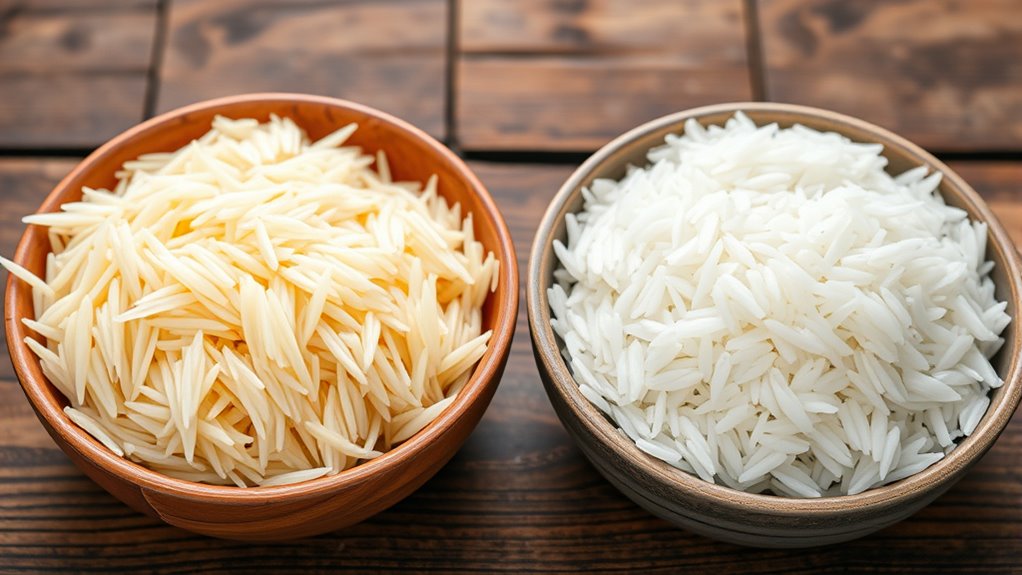
When choosing rice for beginners, ease of preparation matters. Basmati and Jasmine differ in rinsing requirements, water ratios, and cooking times, which can influence how simple they are to cook. Understanding these points can help you pick the rice that fits your cooking style best. Additionally, technological innovations in rice cookers can further simplify the process for beginners.
Ease of Rinsing
Rinsing rice is a simple step that can make a big difference in the final dish, especially for beginners. Both Basmati and Jasmine rice are relatively easy to rinse, but Jasmine rice tends to be more forgiving due to its surface starches. Rinsing helps remove excess surface starches, preventing clumping and ensuring even cooking. When rinsing, use cool water and gentle swirling to avoid damaging the grains. Proper rinsing also supports good cooking techniques and helps with storage tips, like keeping rice dry and fresh.
- Jasmine rice often rinses quickly with less water needed
- Basmati rice may require a couple of rinses to remove surface starches
- Consistent rinsing ensures better texture and easier handling
Water-to-Rice Ratio
Because rinsing helps remove surface starches and improves texture, choosing the right water-to-rice ratio becomes even more important for beginners aiming for perfect results. For both Basmati and Jasmine rice, standard cooking techniques recommend a 1:1.5 or 1:2 ratio of rice to water, but slight adjustments can make a difference. Basmati often benefits from a bit less water, which keeps the grains fluffy and separate. Jasmine rice can handle a slightly higher water ratio for a softer, stickier texture. Proper rice storage—keeping rice in a cool, airtight container—helps maintain consistent quality, reducing the risk of moisture or spoilage that could affect cooking. mastery the water-to-rice ratio simplifies cooking and ensures the rice turns out well, even for beginners.
Cooking Time Variations
Choosing which rice is easier for beginners often depends on cooking time and simplicity. Basmati and jasmine rice differ in how long they take to cook and their resulting rice texture. Basmati usually requires a slightly longer cooking time, around 15-20 minutes, producing fluffy, separate grains. Jasmine rice cooks faster, typically in about 10-15 minutes, resulting in a softer, slightly sticky texture. Additionally, jasmine rice’s water absorption rate makes it more forgiving for beginners who may not measure water precisely.
- Basmati: Longer cooking time, drier and fluffy rice
- Jasmine: Shorter cooking time, moist and tender rice
- Ease of cooking: Jasmine is generally simpler for beginners due to quicker prep and consistent rice texture
Understanding these differences helps you choose the right rice based on your skill level and dish needs.
Tips for Choosing the Right Rice for Your Dish
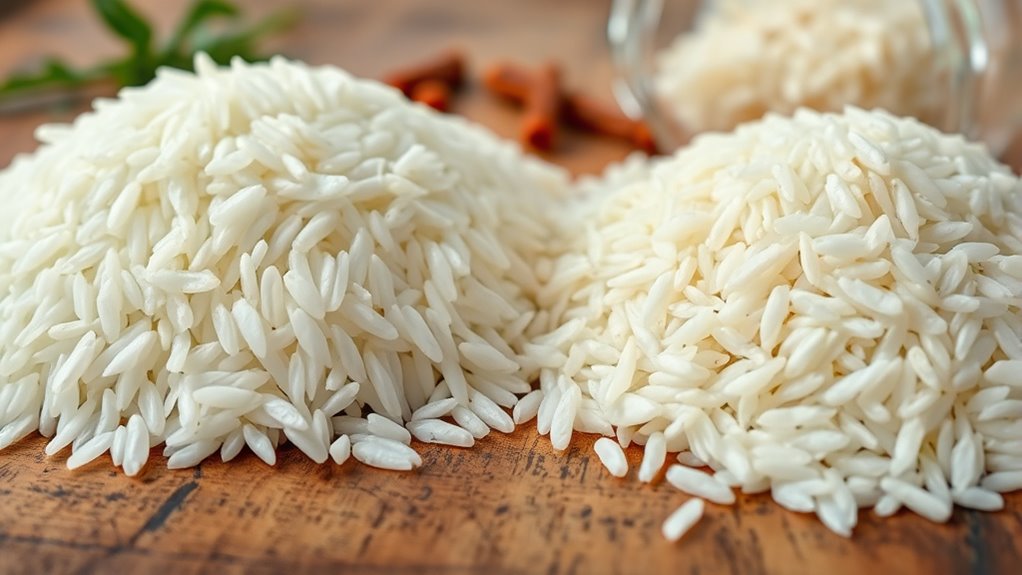
Selecting the right rice for your dish depends on understanding how different varieties behave in cooking. Consider the rice pairing to match the rice’s characteristics with your recipe’s flavor and texture goals. Basmati’s long grains and aromatic profile excel in dishes that benefit from separate grains, like biryanis or pilafs, showcasing culinary versatility. Jasmine, with its sticky texture and fragrant aroma, suits dishes like stir-fries or sticky rice desserts. Think about whether you need a fluffy, distinct grain or a slightly sticky, tender bite. Also, factor in cooking time and water absorption to guarantee perfect results. By understanding these factors, you can choose the rice variety that complements your dish’s flavor, texture, and overall culinary intent, elevating your cooking experience. Additionally, considering the cultural context of each rice type can enhance authenticity and appreciation of traditional dishes.
Frequently Asked Questions
Can Basmati or Jasmine Rice Be Used in Desserts?
Yes, you can use both Basmati and Jasmine rice as dessert rice options, but they aren’t traditional choices. Basmati’s fluffy texture works well in rice puddings, while Jasmine adds a fragrant touch to sweet rice dishes. For classic desserts, consider using sticky or sweet rice varieties like glutinous rice, which better absorb flavors and have the right chewy texture. Experiment to see which rice best complements your dessert.
Which Rice Types Are Gluten-Free and Suitable for Gluten-Free Diets?
Think of gluten-free grains as a safe harbor for your rice diet compatibility. Both white and brown rice are naturally gluten-free, making them perfect choices for your diet. Basmati and jasmine rice are also gluten-free, so you can enjoy their fragrant aroma without worries. Just make certain you check packaging labels to avoid cross-contamination. These rice types seamlessly fit into a gluten-free lifestyle, offering variety and flavor without compromising your dietary needs.
How Do Storage Conditions Affect Rice Freshness and Quality?
Proper storage keeps your rice fresh and maintains its quality. You should store rice in a cool, dry place with low humidity, as high humidity causes it to spoil or develop mold. Use airtight packaging methods to protect it from moisture, pests, and odors. Avoid exposure to sunlight, and make sure the storage area is clean. This way, your rice stays fresh, flavorful, and safe for longer periods.
Are There Any Health Concerns Associated With Consuming Jasmine Rice Frequently?
You might worry about health concerns with frequent jasmine rice consumption, but for most, it’s safe. However, keep in mind that rice can sometimes contain heavy metal contamination, posing risks like arsenic buildup. If you’re allergic to rice or notice symptoms, you should avoid it. Staying informed about rice allergy and choosing reputable sources helps you enjoy jasmine rice without letting potential issues spoil your health.
Can Basmati or Jasmine Rice Be Frozen for Later Use?
Yes, you can freeze both basmati and jasmine rice for later use. For proper rice preservation, let the rice cool completely, then transfer it to airtight containers or freezer bags. Use freezing techniques like removing excess air and labeling with dates. When you’re ready to eat, reheat the rice thoroughly, adding a splash of water if needed, to guarantee it stays fresh and safe.
Conclusion
Choosing between basmati and jasmine rice is like picking the perfect brush for your painting—each brings its own unique touch. Consider your dish’s flavor, texture, and aroma, and you’ll find the right rice that elevates your meal. Whether you prefer the fragrant, fluffy grains of basmati or the soft, floral jasmine, trust your taste buds to guide you. After all, the right rice can turn a good dish into a memorable feast.