
The pinch grip involves pinching the blade just above the handle with your thumb and index finger, offering maximum control and precision for delicate tasks like slicing or julienning. The handle grip, on the other hand, involves gripping the handle firmly for heavy chopping or extended use, providing more safety and fatigue relief. Choosing the right grip depends on your task, but switching between the two can boost your safety and performance—learn more to master both.
Key Takeaways
- The pinch grip involves holding the blade near the bolster with thumb and forefinger, offering superior control for precision tasks.
- The handle grip involves gripping the handle firmly, ideal for heavy-duty chopping and extended use for safety and comfort.
- Use the pinch grip for delicate cuts like julienning, and switch to the handle grip for tougher ingredients or prolonged chopping.
- Proper technique and ergonomics in both grips reduce fatigue, enhance safety, and improve cutting accuracy.
- Transitioning between grips based on task demands optimizes control, safety, and efficiency during different cooking stages.

KEEMAKE Chef Knife – 8 Inch High Carbon Stainless Steel Kitchen Knife with Ergonomic Handle, Professional Kitchen Gadgets with Gift Box for Men and Women, Father Day Gifts
【Premium Material Chef Knife】Crafted from high-end 1.4116 high carbon stainless steel with 58±2 HRC hardness, this professional chef’s…
As an affiliate, we earn on qualifying purchases.
As an affiliate, we earn on qualifying purchases.
Why Your Knife Grip Matters: Foundations for Safe and Precise Cutting
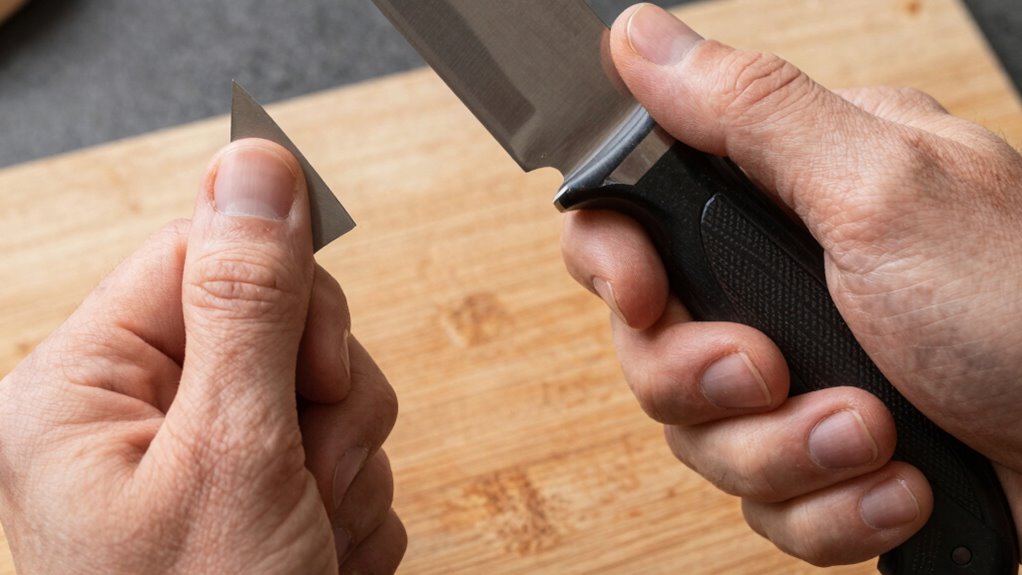
Your grip on a knife markedly impacts both safety and precision in cutting. Proper knife handling guarantees you maintain control, reducing the risk of slips or accidents. When your grip aligns with good cutting ergonomics, you experience less fatigue and better comfort, enabling longer chopping sessions without strain. A secure grip helps you apply force efficiently, making cuts cleaner and more accurate. It also allows for smoother, more confident movements, which is essential when working with delicate ingredients or tough textures. Poor handling can lead to uneven cuts, wasted food, and potential injuries. By understanding the importance of a proper grip, you lay a solid foundation for safe, effective, and enjoyable cooking experiences. Mastering your knife handling is the first step toward cutting precision and safety in the kitchen. Additionally, choosing the right grip style can influence blade control, improving your overall cutting technique. Developing proper grip techniques enhances cutting safety, making your kitchen tasks more efficient and reducing the risk of accidents. Practicing these grips builds muscle memory, which further supports safe and accurate cutting motions. Incorporating ergonomic principles into your grip can also help prevent strain injuries, ensuring long-term comfort during extended kitchen work.

BAOUROUGE' Precision Slicing Knife (Right-Handed) – 8 and 1/4 Inches Stainless Serrated Blade With Cutting Guide for Exact Slices Up To 5/8 Inch Thick
Slicing / Carver knife with adjustable aluminum guide for cutting widths of 1-16 mm (3/64″ to 0.62")
As an affiliate, we earn on qualifying purchases.
As an affiliate, we earn on qualifying purchases.
What Is the Pinch Grip and How to Hold Your Knife for Better Control
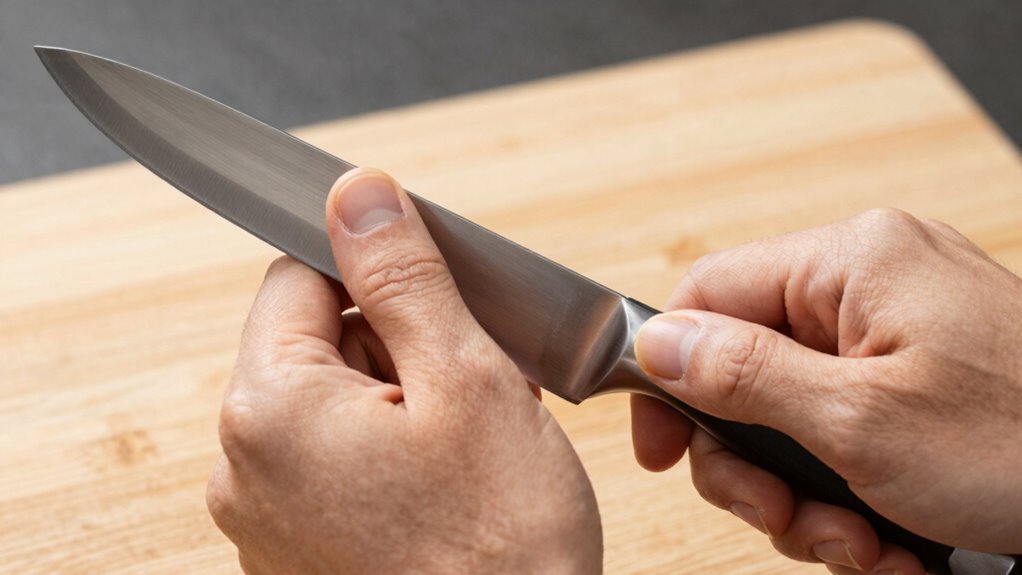
The pinch grip is a key technique that involves anchoring your knife securely for better control. Proper finger placement is essential to enhance your cutting precision and maintain safety. Be mindful of common mistakes to avoid, so you can master the grip and improve your overall technique. Utilizing modern kitchen technology such as smart knives with ergonomic designs can further optimize your grip and cutting performance. Incorporating correct technique is crucial for achieving efficiency and safety during your food preparation, ensuring a more comfortable and confident cutting experience.
Proper Finger Placement Technique
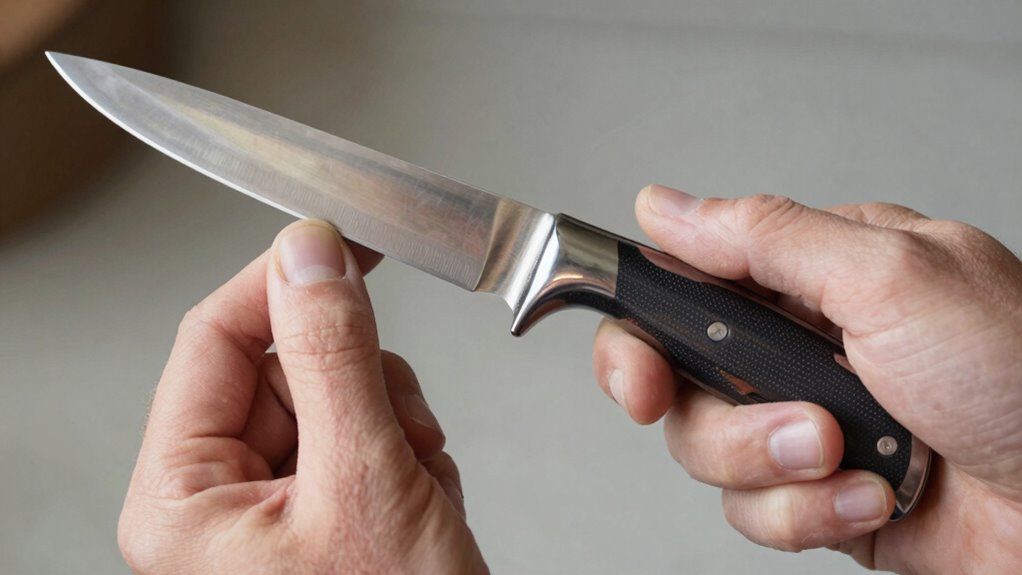
Mastering the pinch grip is essential for gaining better control and precision when handling a knife. To achieve this, focus on proper finger placement: position your thumb and forefinger on opposite sides of the blade’s bolster or spine, just above the handle. Keep your remaining fingers curled around the handle for stability. This grip allows you to have direct contact with the blade, giving you more control over your cuts. Be mindful of grip pressure—apply just enough force to hold the knife securely without tensing your hand. Too tight, and your movements become stiff; too loose, and you risk slipping. Consistently maintaining correct finger placement and balanced grip pressure helps improve your cutting accuracy and reduces fatigue during extended use. Developing a proper grip technique is fundamental to becoming a more confident and effective knife user.
Enhancing Cutting Precision
Enhancing cutting precision starts with understanding and properly applying the pinch grip. This grip gives you better control and minimizes slipping, allowing for cleaner, more accurate cuts. To optimize your grip, focus on maintaining a relaxed hand that leverages the ergonomic design of your knife. Proper blade maintenance guarantees your knife remains sharp, reducing the force needed and increasing precision. When using the pinch grip, your thumb and forefinger grip the blade directly just above the handle, while the rest of your hand supports the handle. Visualize this: proper grip technique ensures you develop a secure, comfortable hold that feels natural, leading to less fatigue during extended cutting tasks, increased stability for slicing thin or delicate items, reduced risk of slipping or accidents, and better control over every cut you make.
Common Mistakes to Avoid
Many people make the mistake of holding the knife too tightly, which can lead to fatigue and reduce control. Excessive grip pressure prevents smooth, precise movements and can cause your blade to lose proper alignment. Instead, aim for a relaxed grip that allows the knife to move fluidly through food. Pay attention to your blade alignment, ensuring the edge stays steady and centered during cuts. Overly tight grips can also strain your hand muscles, making your technique less effective. Focus on applying just enough pressure to maintain control without squeezing too hard. This balance improves your precision and reduces fatigue, helping you perform safer, more accurate cuts. Remember, a light but firm grip enhances your overall control and efficiency in the kitchen. Additionally, understanding ergonomic design in knife handles can help reduce strain and improve comfort during extended use. Being aware of proper grip techniques can further enhance your safety and cutting efficiency over time. Incorporating technique adjustments based on ergonomic principles can also lead to better control and comfort during prolonged chopping sessions. Paying attention to grip strength and adjusting it as needed ensures optimal performance and reduces the risk of injury.

DICEVICE EverGrip Ergonomic Grip for Chef Knife & Kitchen Knives – Helper for Precise Cutting & Improved Cutting Comfort | Cooking Knife Tool Accessory & Pinch Grip Trainer
🔪 REDUCE HAND STRAIN & CHOP IN COMFORT – Say goodbye to hand fatigue and wrist pain during…
As an affiliate, we earn on qualifying purchases.
As an affiliate, we earn on qualifying purchases.
Using the Handle Grip: When and Why It’s the Best Choice
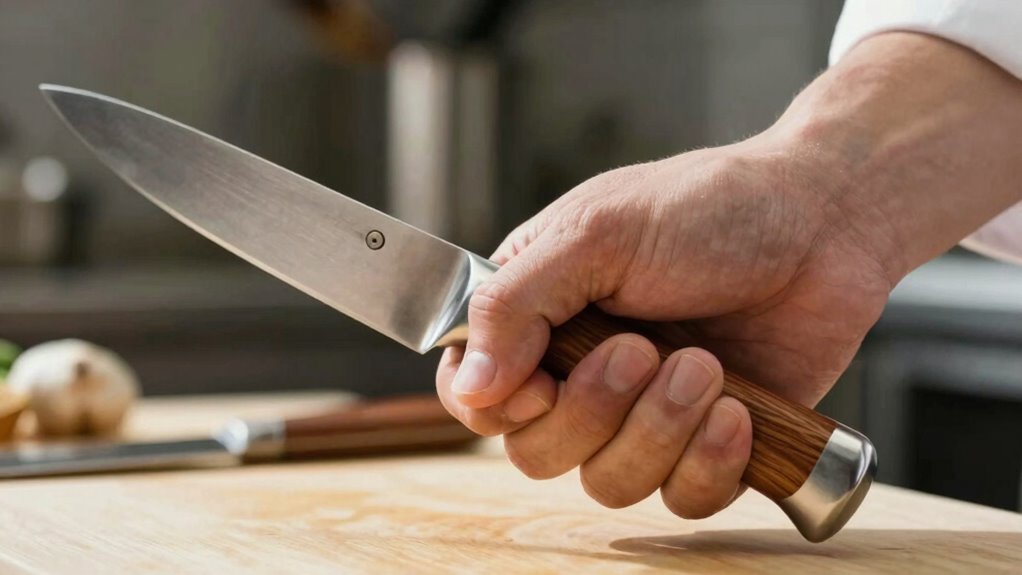
The handle grip offers improved control and safety, making it ideal when you need precision or extra security. It’s especially useful for heavy tasks that require more force and stability. Plus, it’s comfortable for extended use, helping you avoid fatigue during long cutting sessions. Incorporating ergonomic design into your grip technique can further enhance comfort and reduce strain. Additionally, choosing an ergonomic grip can help prevent repetitive strain injuries and promote better muscle alignment. Proper grip techniques also support joint health and ensure safer, more effective cutting. Using the handle grip with proper technique can further optimize safety and efficiency during cutting tasks.
Improved Control and Safety
Using the handle grip provides better control and safety because it allows you to maintain a firm, stable hold on the knife. This grip improves knife safety by minimizing slips and accidental cuts, especially during precise cuts. Its grip ergonomics ensure your hand stays comfortable and reduces fatigue during extended use. With a secure hold, you can apply consistent pressure, making chopping and slicing more accurate. The handle grip also enhances your confidence, preventing sudden movements that could cause injury. Additionally, proper knife grip technique helps distribute force evenly, reducing strain on your hand and wrist. Developing a consistent training and practice routine can further improve your proficiency with this grip. Focusing on technique refinement can help you maximize safety and control during your cutting tasks, especially when you incorporate proper grip mechanics to optimize your cutting efficiency.
Suitable for Heavy Tasks
When tackling heavy-duty tasks like chopping through thick vegetables or breaking down tough meats, the handle grip is your best choice because it provides the stability and strength needed to handle forceful cuts. With this grip, you can apply more pressure without compromising control, making it ideal for challenging cuts. Proper knife sharpening ensures your blade remains efficient, reducing the effort required during heavy tasks. Additionally, the handle grip aligns well with good kitchen ergonomics, minimizing fatigue and strain on your hand and wrist during prolonged use. This grip distributes force evenly, allowing you to work safely and effectively. When dealing with tough ingredients, the handle grip gives you the confidence and leverage necessary for efficient, safe, and precise cutting.
Better for Long Use
Because the handle grip provides comfort and control over extended periods, it’s your best choice for long kitchen sessions. This grip promotes better knife grip ergonomics, reducing fatigue and strain on your hand and wrist. It allows you to maintain a steady, secure hold without overexerting your grip strength. If you regularly perform grip strength exercises, you’ll find the handle grip easier to sustain over hours of chopping, slicing, and dicing. Its ergonomic design minimizes discomfort, making prolonged use more manageable. Plus, the handle grip helps prevent cramping and repetitive strain injuries. With consistent use, you’ll notice improved endurance and comfort during long cooking sessions. This grip is ideal when precision and sustained control matter most, especially during extended prep work.

Mueller 7-Inch Meat Cleaver Butcher Knife – German High Carbon Steel, Laser-Tested Razor-Sharp Blade, Heavy Duty Bone Chopper for Meat & Vegetables, Home & Restaurant, Gift for Him
LASER-TESTED GERMAN STEEL EDGE — Mueller's 7-inch cleaver is precision-forged from premium high-carbon German stainless steel and hand-sharpened…
As an affiliate, we earn on qualifying purchases.
As an affiliate, we earn on qualifying purchases.
Pinch Grip vs. Handle Grip: Which Is Right for Different Cutting Tasks?

Choosing the right grip depends on the task at hand, as each offers distinct advantages for different cutting needs. The pinch grip provides excellent blade stability and precision, making it ideal for delicate or detailed cuts. In contrast, the handle grip offers greater grip comfort and control for heavier tasks or longer use. Use the table below to decide which grip suits your task:
| Task Type | Recommended Grip | Key Benefit |
|---|---|---|
| Fine chopping | Pinch Grip | Blade stability |
| Cutting tough ingredients | Handle Grip | Grip comfort |
| Slicing thin slices | Pinch Grip | Precise control |
| Heavy-duty chopping | Handle Grip | Robust control |
Select the grip based on your needs, focusing on blade stability and grip comfort to optimize performance.
How to Master the Pinch Grip: Step-by-Step Technique
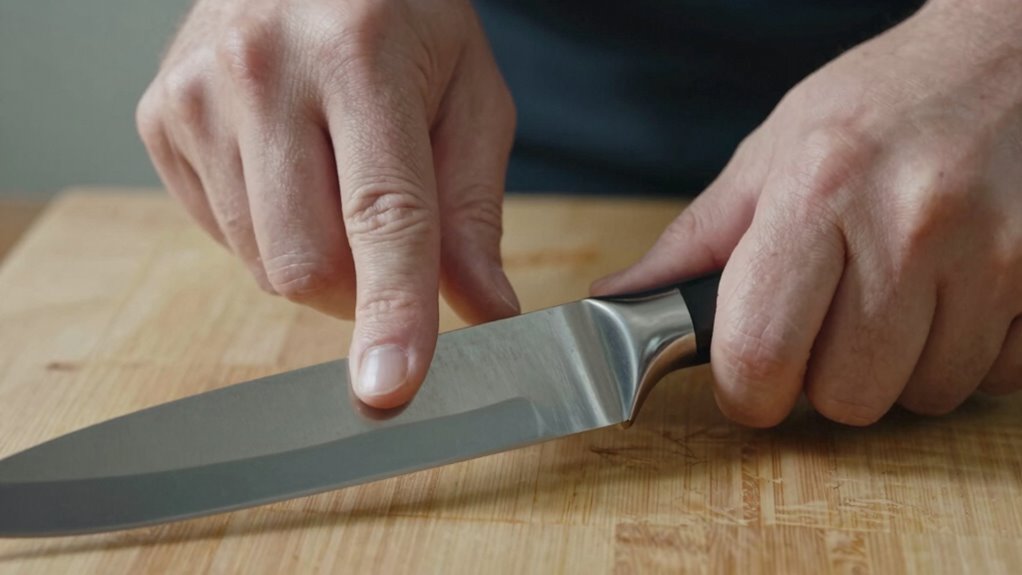
Mastering the pinch grip starts with understanding how to position your hand for maximum control and precision. Focus on proper knife grip ergonomics by pinching the blade just above the handle with your thumb and index finger, while the remaining fingers support the side. To develop grip strength and stability, incorporate grip strength exercises into your routine. Follow these steps:
- Grip the knife with your thumb and index finger pinching the blade firmly
- Let the remaining fingers lightly rest on the handle for support
- Keep your knuckles aligned with the blade for better control
- Maintain a relaxed grip to prevent fatigue
- Practice grip strength exercises to improve finger and hand strength over time
This technique ensures precision and reduces fatigue during extended use.
When Should You Switch to a Handle Grip During Cooking?
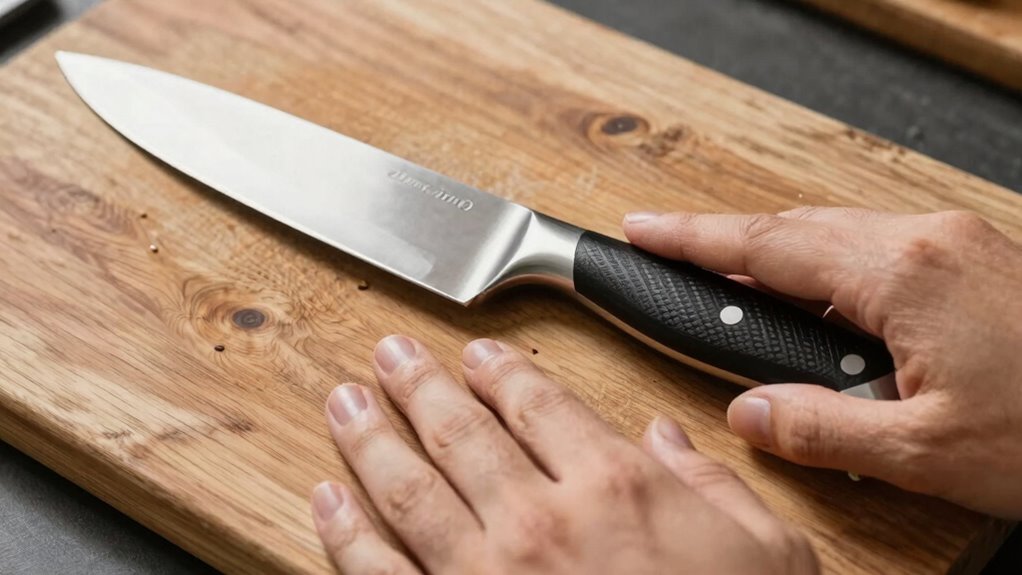
Ever wonder when it’s better to switch from a pinch grip to a handle grip while cooking? You should switch when precision and control become less effective, especially during tougher cuts or prolonged tasks. Using a handle grip can improve knife safety and reduce fatigue, guaranteeing a safer cutting technique. Consider the following scenarios:
| Situation | Recommended grip |
|---|---|
| Heavy chopping or rocking | Handle grip |
| Delicate slicing or julienning | Pinch grip |
| Extended prep sessions | Handle grip |
| Fine detail work | Pinch grip |
Switching helps maintain safety and efficiency, adapting your cutting technique to the task at hand. Recognizing when to change grips ensures safer, more precise handling during your cooking process.
Common Mistakes in Knife Gripping and How to Correct Them

One common mistake in knife gripping is applying too much pressure with your entire hand, which can lead to fatigue and reduce control. This compromises knife safety and makes precise cuts harder. To improve grip ergonomics, avoid these errors:
Applying too much grip pressure hampers control, safety, and precision—keep your grip relaxed for better results.
- Gripping the handle too tightly, causing unnecessary strain
- Using your palm instead of your fingers for control
- Holding the knife too far from the handle’s end
- Resting your hand in an awkward, uncomfortable position
- Neglecting proper finger placement to secure the blade
Tips to Improve Your Knife Grip for More Confidence and Safety
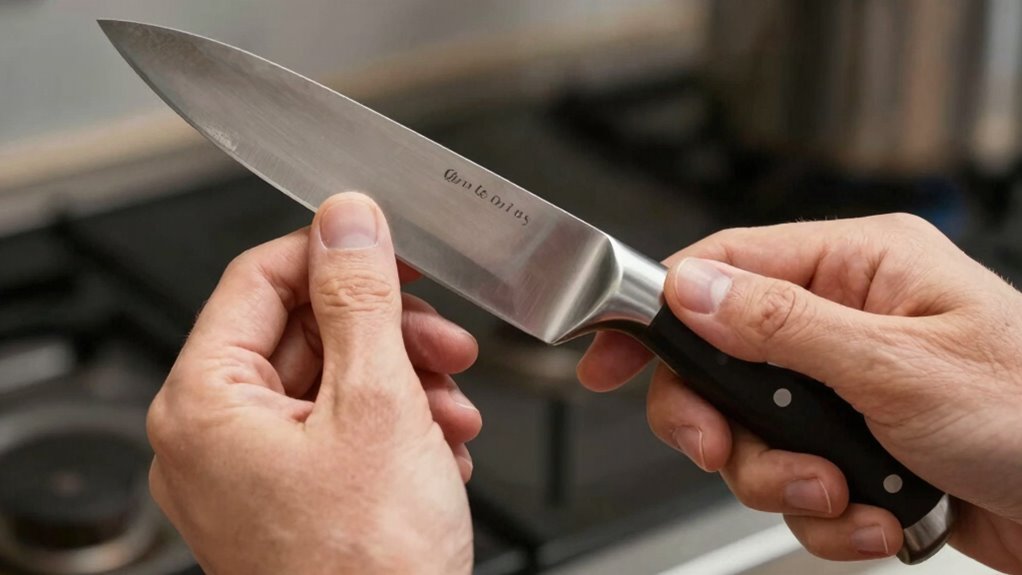
To improve your knife grip for more confidence and safety, focus on mastering proper finger placement and pressure. Make sure your fingers wrap securely around the handle or position correctly in the pinch grip, depending on your style. Consistently applying the right amount of grip strength helps maintain control without causing fatigue, reducing the risk of slips or accidents. Practice gripping the knife firmly but not overly tight, allowing for precise movements and better knife safety. Strengthening your grip through exercises can also boost confidence, making each cut safer and more efficient. Remember, a secure grip minimizes the chances of slipping and enhances overall control, so prioritize proper technique and grip strength to handle your knives with confidence.
Choosing the Best Knife Grip for Your Cooking Style

Choosing the right knife grip depends on your cooking style and the types of tasks you perform most often. Your choice influences comfort, precision, and safety. If you handle delicate slicing, a pinch grip offers control, especially with lighter knives made from high-quality knife material. For heavier tasks like chopping, a handle grip provides leverage and stability, aligned with good kitchen ergonomics. Consider the knife’s weight and balance to prevent fatigue. Think about your typical prep: fine dicing or heavy chopping. Your grip should optimize control without strain. The right style enhances efficiency and safety, making your cooking more enjoyable. Ultimately, experimenting with different grips will help you find one that suits your unique needs and kitchen setup.
Frequently Asked Questions
How Does Grip Choice Affect Cutting Speed and Efficiency?
Your grip choice directly impacts cutting speed and efficiency by influencing cutting precision and grip ergonomics. With a pinch grip, you gain better control and accuracy, allowing for smoother, more precise cuts, but it may slow you down. The handle grip offers a more relaxed hold, increasing cutting speed but potentially sacrificing some precision. Choosing the right grip depends on your task, balancing control and efficiency for ideal results.
Can Grip Techniques Prevent Wrist Fatigue During Extended Use?
Sure, grip techniques can help prevent wrist fatigue during long tasks—if you’re lucky. Using ergonomic tools and practicing grip training can make a difference, but don’t expect miracles. Proper technique minimizes strain and boosts comfort, yet even the best grip can’t defy physics. So, switch grips, take breaks, and invest in ergonomic tools to actually give your wrist a fighting chance against fatigue.
Are There Specific Knives Better Suited for Pinch or Handle Grips?
You’ll find that some knives are better suited for pinch grips, especially those with handle materials like wood or textured grips, which provide better control and reduce fatigue. Knives with smooth, ergonomic handles work well with handle grips. Proper knife maintenance, including keeping handles clean and free of debris, guarantees a secure grip. Choosing the right knife based on handle material and grip style helps prevent wrist strain during extended use.
How Do Grip Styles Influence Knife Blade Longevity?
Your grip style influences knife blade longevity by affecting how evenly you apply force. A proper grip, considering grip ergonomics, reduces undue stress on the blade and minimizes wear. For example, a pinch grip offers better control, preventing uneven cutting that can dull the blade faster, especially with softer knife materials. Conversely, a handle grip might cause uneven pressure, resulting in faster blade dulling over time.
Can Improper Grip Cause Long-Term Hand or Wrist Injuries?
Like a medieval swordsman, if you don’t use proper grip techniques, you risk long-term hand or wrist injuries. Improper grip can strain muscles and tendons, especially if you ignore ergonomic design and grip training. To prevent this, focus on maintaining a natural hand position and practicing correct grip methods. This helps reduce fatigue and injury, ensuring your hand stays healthy and functional for years to come.
Conclusion
Choosing the right knife grip is like finding your perfect dance partner—it makes every move smoother and more confident. Whether you prefer the precise control of the pinch grip or the comfort of the handle grip, mastering both will elevate your cooking. Practice consistently, stay mindful of your technique, and don’t be afraid to switch grips as needed. With time, your knife skills will become as natural as breathing, making your kitchen adventures safer and more enjoyable.